How Ready to Die Turned a Brooklyn Hustler Into The Notorious B.I.G.
In the spring of 1994, a 21-year-old former crack dealer from Bedford-Stuyvesant walked into a Manhattan recording studio carrying two things: a stack of rhymes he’d been perfecting on his mother’s stoop, and a title for his debut album that sounded less like a boast and more like a warning. He called it Ready to Die. Six months later, Christopher Wallace wasn’t just another voice in Golden Age hip-hop — he was The Notorious B.I.G., and Brooklyn finally had its own throne again after years of watching the West Coast dominate the conversation.
A Corner on St. James Place
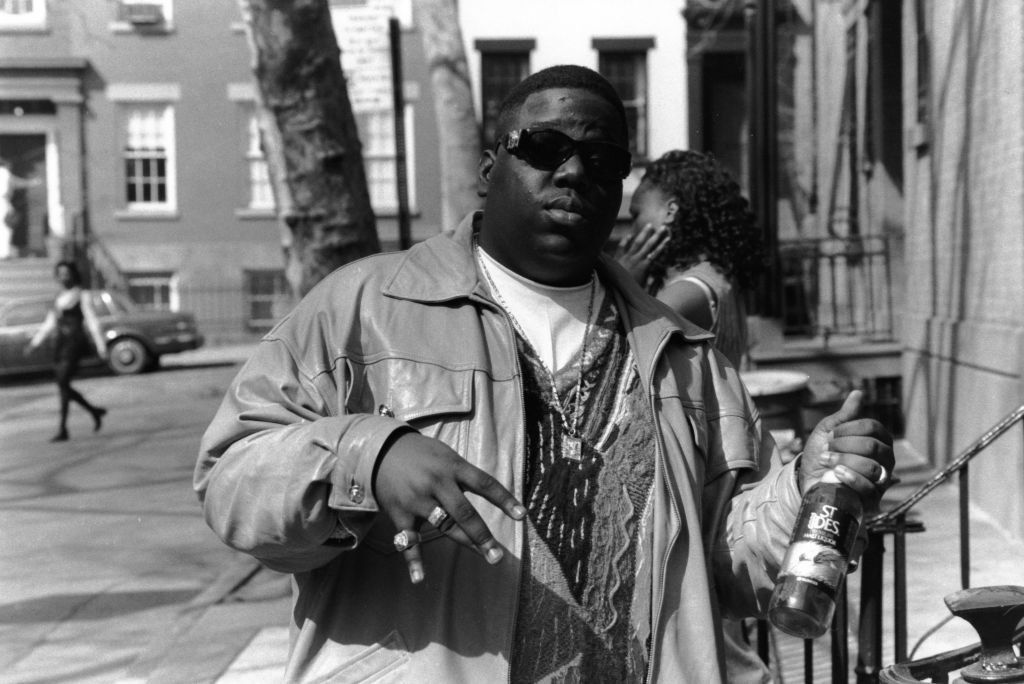
Wallace grew up on St. James Place in Bed-Stuy, the only child of a Jamaican preschool teacher who worked double shifts to keep him in Catholic school. By his early teens he was also working the corner, moving crack in a neighborhood where the economy of the block often made more practical sense than the economy of a classroom. He was smart — sharp enough that teachers remembered him for it years later — and he was funny, the kind of funny that made him the center of any cypher he stepped into, whether it was on the stoop or in the back of a bodega.
Freestyling wasn’t a side hustle for him so much as a release valve. Word traveled fast in Brooklyn hip-hop circles about a heavyset kid with an impossibly smooth, unhurried flow who could out-rap anyone who stepped to him. That word eventually reached a demo tape, and the demo tape eventually reached a 23-year-old A&R at Uptown Records who was building a reputation for finding voices nobody else had noticed yet: Sean “Puffy” Combs.
The Retro Almanac
A monthly roundup of "on this day" highlights from that month, decades back — plus first dibs on new retro merch drops. No spam, just the good stuff.
Puffy Takes a Chance
Combs heard the tape in 1992 and signed Wallace to Uptown almost immediately, convinced he’d found the East Coast answer to the gangsta-rap dominance West Coast acts were building through labels like Death Row. It was an unlikely partnership on paper — a label executive obsessed with polish and crossover appeal, and a rapper whose entire identity was rooted in the unglamorous reality of the corner. But Combs understood something a lot of executives missed: authenticity sold just as hard as spectacle, if you knew how to frame it correctly for radio.
Then Uptown fired Combs in 1993 in a well-publicized falling-out with label head Andre Harrell. Rather than let his prized signing walk to a rival, Combs took Wallace with him and launched his own label, Bad Boy Records, betting his entire early career on the idea that this one artist could anchor an empire built from scratch.

From Uptown to Bad Boy
The gamble paid off almost immediately. Wallace’s guest verse on Mary J. Blige’s “Real Love” remix and his own single “Party and Bullshit,” from the Who’s the Man? soundtrack, put his name in rotation before he’d even released an album. Radio DJs and rival rappers alike started saying the same thing: nobody rode a beat like Biggie. His voice was low, patient, almost conversational — he never seemed to be trying hard, which made everything he said land harder than rappers twice as frantic.
Building Ready to Die
Recording sessions for the album stretched across 1993 and into 1994, with Combs assembling a murderers’ row of East Coast production talent — Easy Mo Bee, DJ Premier, Chucky Thompson — to build a sound that could sit comfortably next to the G-funk dominating West Coast radio without imitating it. The result was something distinctly Brooklyn: soul samples slowed into something moodier, drums that hit harder than they needed to, and a rapper whose storytelling turned street survival into something closer to literature than braggadocio.

Wallace structured the record almost like a novel. It opens with the sound of his own birth in 1972 and closes, on the title track, with the sound of a gunshot — a concept album about a life he genuinely believed might end young. In between, songs like “Things Done Changed” and “Everyday Struggle” documented the drug trade with a clinical, unromantic eye that made the glamorized version of gangsta rap other artists were selling look almost cartoonish by comparison. It was bleak in a way few debut albums before it had dared to be, and that honesty is a big part of why critics latched onto it so fast.
Juicy: The Autobiography Nobody Expected
But the record’s biggest hit was also its warmest. “Juicy” flipped a Mtume sample into a rags-to-riches origin story so specific — the Kris Kringle Christmas gifts, the food stamps, the birthday cards with no cash inside — that it turned personal hardship into something universally recognizable. It became the song that introduced casual listeners to Biggie’s world, and it remains one of the most quoted opening lines in Golden Age hip-hop: “It was all a dream.”
September 13, 1994
Ready to Die hit shelves on September 13, 1994, and critics reacted almost instantly to what they were hearing. The Source gave it a coveted five-mic rating, a distinction reserved for records the magazine considered genuinely classic. Rolling Stone and The New York Times both singled Wallace out as the most technically gifted rapper to emerge that year. The album eventually went quadruple platinum, but the commercial numbers almost undersell what it did culturally — it gave New York rap a genuine flagship artist again at a moment when the coast’s relevance was being seriously questioned by the industry.
1994 turned out to be one of the defining years of the entire Golden Age, and Wallace released his debut into extraordinarily crowded company. Nas dropped Illmatic that same spring, and Wu-Tang Clan’s Enter the Wu-Tang (36 Chambers) had already rewired the East Coast underground the previous November. Rather than getting lost in that traffic, Ready to Die stood apart precisely because it wasn’t chasing anyone else’s blueprint — it was a mainstream record with an underground rapper’s honesty, which is a much harder balance to strike than either extreme on its own.

Combs, meanwhile, was proving his ear was as sharp as his ambition. Bad Boy Records used the momentum from Ready to Die to sign Craig Mack, then Faith Evans, then a growing roster that would define East Coast rap’s commercial peak for the rest of the decade. Wallace and Faith Evans married just months after the album’s release, and within a year he was arguably the most famous rapper alive, name-checked in songs by artists who had never met him.
The Sound That Took Over Golden Age Hip-Hop
What made Wallace’s rise matter beyond his own catalog was how much other artists borrowed from it. The unhurried, storytelling cadence he perfected became a template other East Coast rappers chased for years. Producers who worked with him carried his sensibility — soulful, cinematic, unafraid of a slow tempo — into records for other artists across the mid-90s. Bad Boy’s shiny-suit era that followed in 1997 gets remembered as pure pop crossover, but its foundation was built entirely on the credibility Wallace established with a much darker, rawer record three years earlier.
He was also, by most accounts of people who worked with him, still the same funny, sharp kid from St. James Place underneath the fame. Studio engineers and fellow artists frequently described a rapper who wrote almost nothing down, composing entire verses in his head before stepping to the mic and delivering them in a single take — a skill that stunned even the most seasoned producers in the room. He mentored a young Brooklyn rapper named Shawn Carter around this same period, and Jay-Z has said publicly for decades that watching Wallace work in the booth changed how he approached writing entirely.
A Legacy Cut Short, A Sound That Never Left
Wallace was murdered in Los Angeles in March 1997, just weeks before the release of his follow-up album, Life After Death — a title that, like his debut, now reads as unbearably prophetic. But the three years between Ready to Die and his death reshaped what East Coast hip-hop sounded like for the rest of the decade and beyond. Every rapper who came out of Brooklyn after him has had to reckon, in some way, with the corner he came from and the throne he built on top of it.

Three decades later, Ready to Die still turns up on virtually every list of the greatest hip-hop albums ever recorded, not because it perfected a formula, but because it refused to follow one. It took the unglamorous truth of a Brooklyn stoop and made it sound like the most important story in the world — which, for one record, it was. Walk down St. James Place today and there’s a mural where the corner used to be, a small, permanent reminder that the Golden Age’s biggest voice never actually left the block that made him.
Sources
The Retro Almanac
A monthly roundup of "on this day" highlights from that month, decades back — plus first dibs on new retro merch drops. No spam, just the good stuff.