Sea-Monkeys: The Comic Book Ad That Sold Millions of Fake Pets
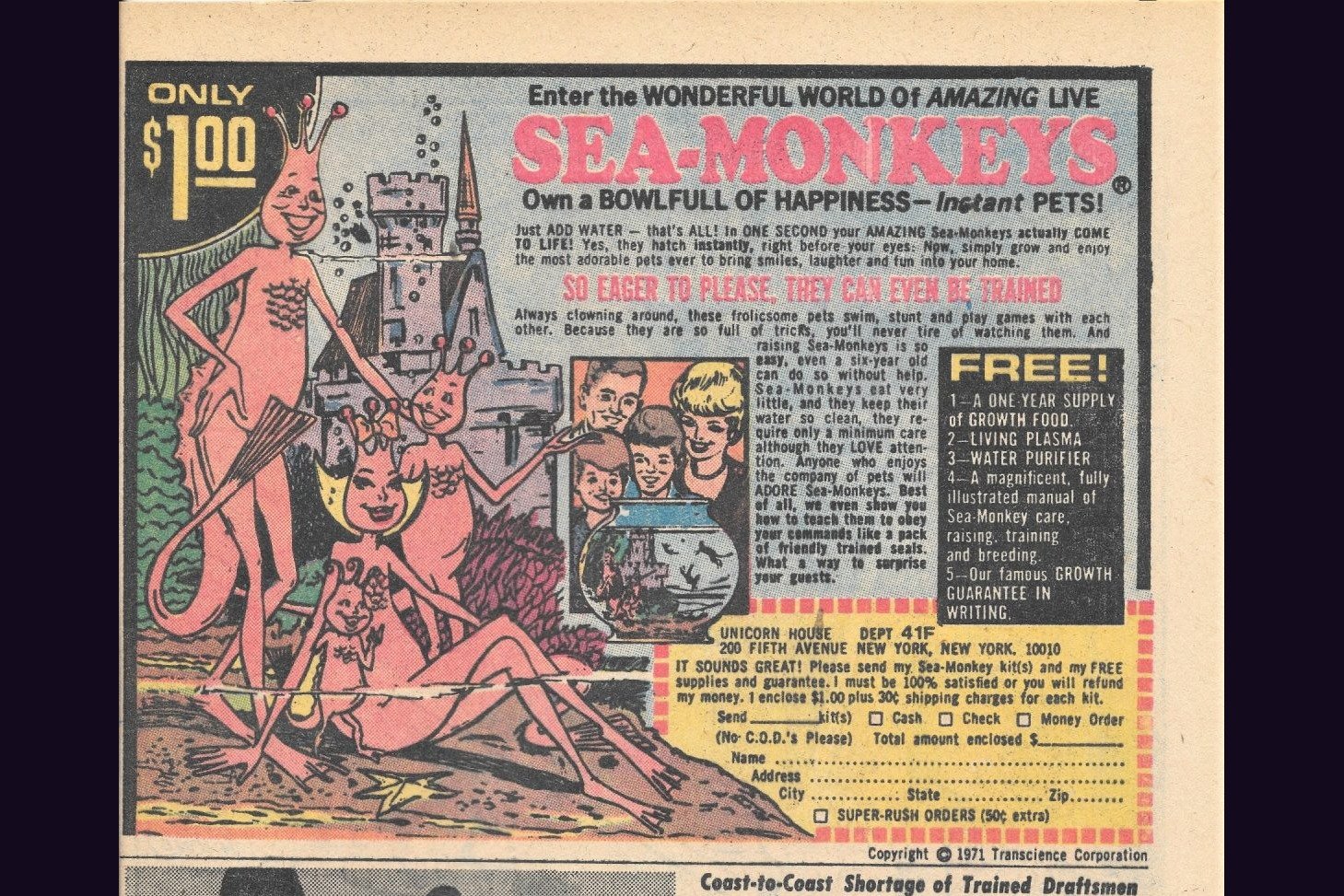
You saw it wedged between a Hostess Fruit Pie ad and a coupon for X-Ray Specs: a grinning, crowned family of pink, tailed humanoids waving from behind a castle, over the words “OWN A BOWLFUL OF HAPPINESS — Instant Pets!” For a dollar and a stamp, Sea-Monkeys promised you a trainable, smiling little family of your own. What showed up in the mail a few weeks later was a packet of powder that turned into brine shrimp. It remains one of the greatest bait-and-switches in advertising history — and it somehow made a tiny company rich for over sixty years, got sued by a state Attorney General, and even flew to space with a U.S. Senator.
The Ad That Promised Way More Than Brine Shrimp
The illustration that sold millions of kids on Sea-Monkeys was drawn in the early 1970s by Joe Orlando, an artist who’d go on to become a VP at DC Comics and associate publisher of MAD Magazine. His cartoon “Sea-Monkey family” — crowned, smiling, strutting around a little castle — had nothing to do with what was actually in the box. Real Sea-Monkeys are a type of brine shrimp, translucent and barely visible without magnification, nothing like the winking anthropomorphic pets in the ad.
The ads ran across comic books from multiple publishers for decades, reaching kids who’d never seen a brine shrimp in their life and had no reason to doubt the artwork. Exact circulation numbers from the era are all over the map and mostly self-reported by the company, so take any specific “millions of copies per year” claim with a grain of salt — but the ad’s reach across the comic rack was real, and for a generation of kids, it was impossible to miss.
The Retro Almanac
A monthly roundup of "on this day" highlights from that month, decades back — plus first dibs on new retro merch drops. No spam, just the good stuff.
Who Actually Invented Sea-Monkeys
The man behind the ad was Harold von Braunhut, a prolific novelty inventor who also patented X-Ray Specs and “Crazy Crabs.” He first noticed brine shrimp in a pet store around 1957 and launched the product commercially in 1960 under the name “Instant Life,” rebranding it Sea-Monkeys a few years later. The scientific legwork came from Anthony D’Agostino, a real marine biologist who earned his PhD studying brine shrimp at NYU and later worked at the New York Ocean Science Laboratory. Over several years, von Braunhut and D’Agostino bred a hardier hybrid brine shrimp strain and developed the chemical “water purifier” packet that made the instant-hatching trick work.
The Real Science Behind the “Instant” Pets
The “instant” part isn’t a total scam — it’s real biology. Brine shrimp eggs can enter a dormant state called cryptobiosis, where their metabolism essentially shuts down entirely. In that state, the eggs can survive dry storage in an envelope for years and hatch within hours once they hit water. That’s genuinely remarkable, and it’s the one part of the pitch that holds up to scrutiny: these aren’t eggs that were freshly laid right before shipping, they’re eggs that have been biologically paused, sometimes for a long time, waiting for a kid somewhere to finally add water.
What’s marketing rather than science is the name “Artemia NYOS” that appeared on packaging — it sounds like an official species name, but it was a branding term the company invented, not a recognized scientific classification. The actual hatching kit works in three steps: a “water purifier” packet treats the tap water first, the egg packet goes in a day later, and a “growth food” packet follows about a week after that. Skip a step or add them out of order and the hatch rate drops — which is probably why so many kids in the 70s and 80s remember an empty tank more than a thriving one.
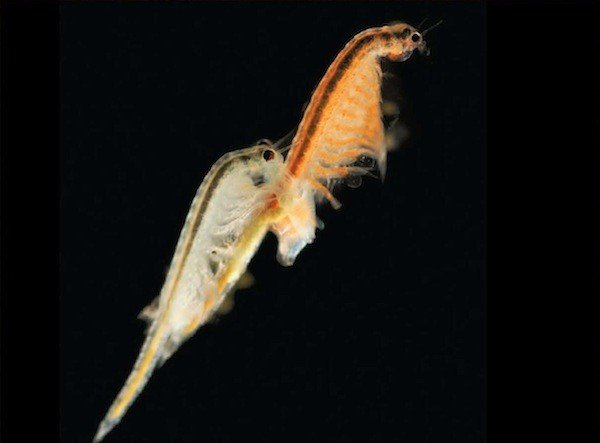
What you actually got: magnified brine shrimp, not a smiling crowned family.
The Lawsuit Over the Bait-and-Switch
Parents and regulators noticed the gap between the ad and the product too. In 1973, the New York State Attorney General sued von Braunhut’s company, Transcience Corporation, arguing the ads falsely implied the creatures looked like monkeys, could be trained, and even came with a “Sea Monkey Life Insurance Policy” — a total fabrication. The case, filed in federal court in Manhattan, zeroed in on exactly the kind of kid-targeted exaggeration that made the ad so effective in the first place: implying you’d get something closer to a pet than a crustacean.
Transcience actually won the case; secondhand accounts describe the court reasoning that sponge cake doesn’t have to be made of sponge and butterflies aren’t made of butter, so a cartoon mascot on a toy box wasn’t legally fraudulent either. The ads kept running essentially unchanged for years afterward, crowned family and all. It’s worth noting the suit came from a state Attorney General, not the FTC — a detail that gets mixed up a lot in retellings of the story, since the federal consumer-protection angle is the version most people assume happened.
Watch the Original TV Commercial
Comic books weren’t the only place the pitch ran. Sea-Monkeys got a full-blown TV commercial too, with the same “instant pet family” promise translated into a jingle and live-action demo. Here’s the original spot:
Sea-Monkeys Got Their Own CBS Sitcom
In 1992, Sea-Monkeys briefly got the full Hollywood treatment. The Amazing Live Sea-Monkeys, created by comedian Howie Mandel, aired 11 episodes on CBS from September to November 1992. The premise: three microscopic Sea-Monkeys — Dave, Bill, and Aquarius — get enlarged to human size by a mad scientist called the Professor and have to navigate the human world, played by actors Rob LaBelle, Peter Pitofsky, and Sean Whalen. It didn’t last past its first season, but for one strange fall, a toy you added water to had a Saturday morning show.
Sea-Monkeys Went to Space
In one of the stranger footnotes in toy history, Sea-Monkeys actually flew on a NASA mission. When Senator and former astronaut John Glenn returned to space in October 1998 aboard the Space Shuttle Discovery on mission STS-95, he carried roughly 400 million Sea-Monkey eggs as part of a student-designed experiment studying how cryptobiosis held up after spaceflight. The eggs hatched normally once they got back to Earth and hit water, proving the dormant brine shrimp trick works even after a trip to orbit.
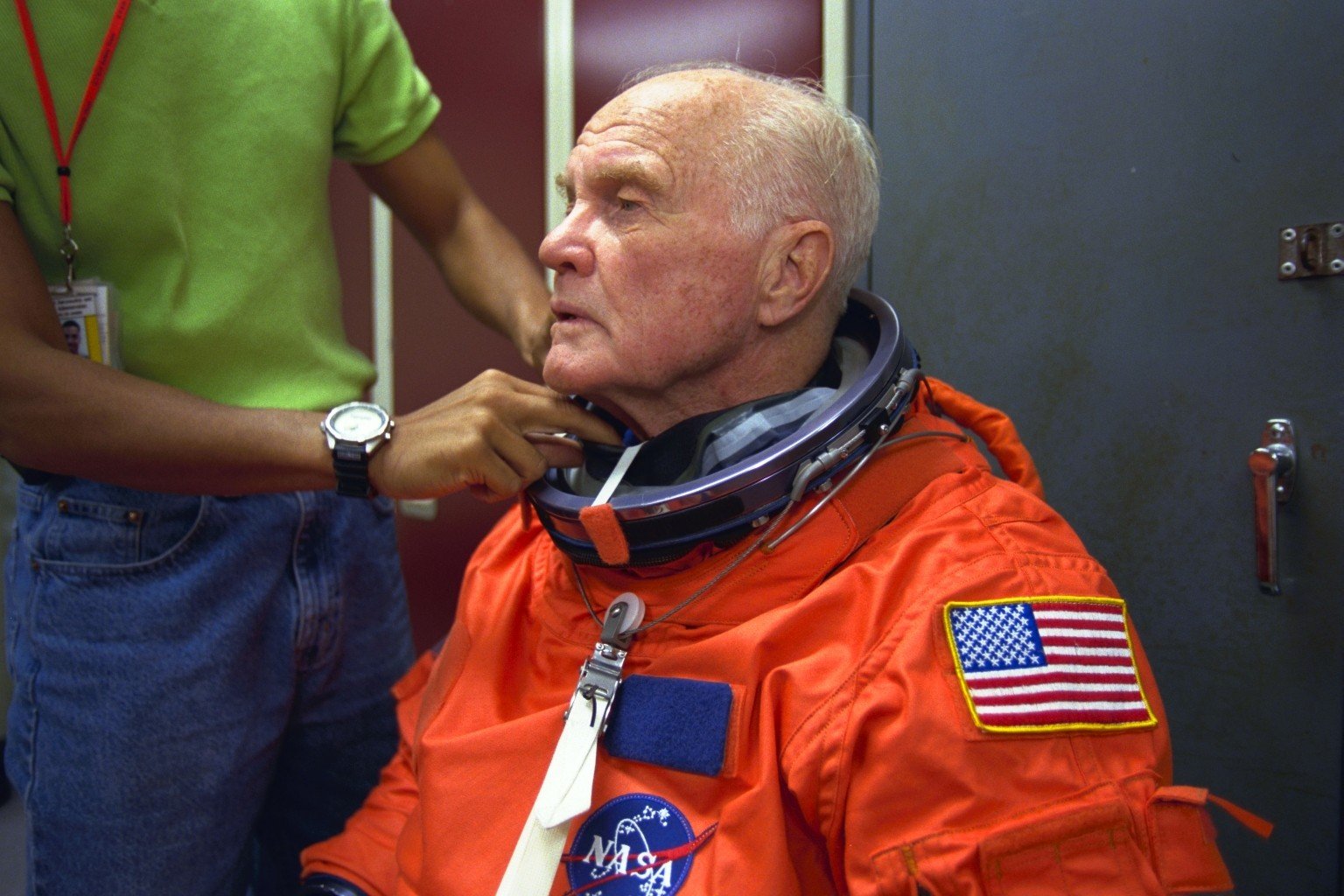
John Glenn training for STS-95, the 1998 shuttle mission that carried Sea-Monkey eggs into orbit.
Glenn’s return to space was a massive national moment on its own — he was 77, and his first spaceflight had been back in 1962. When he and the STS-95 crew got home, Houston threw them a parade.
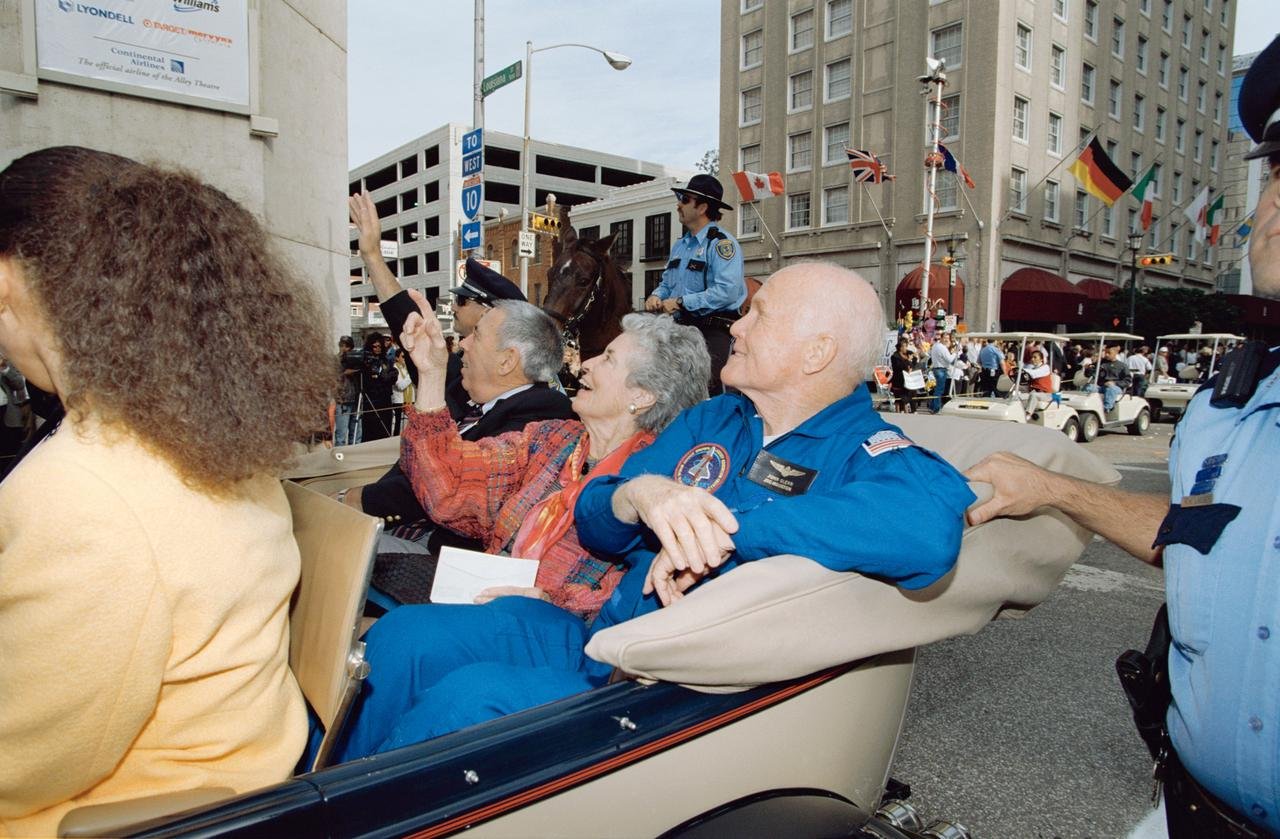
Houston’s welcome-home parade for Glenn and the STS-95 crew, the same mission that carried Sea-Monkey eggs to orbit.
The Crowned Mascot Became a Merchandising Empire
Once the ad illustration caught on, the company leaned all the way into it. The crowned, caped Sea-Monkeys mascot stopped being just an ad gimmick and became an actual character with his own backstory, trading cards, comic strips, and tie-in merchandise — greeting cards, collector cards, even an “Executive Super-Sized Suite” tier that bundled the tank with trading cards and comic inserts starring the mascot. It’s a strange parallel to how toy brands like Transformers or G.I. Joe built out comic-book lore around a product — except here, the “lore” was built around something that, biologically, has none.
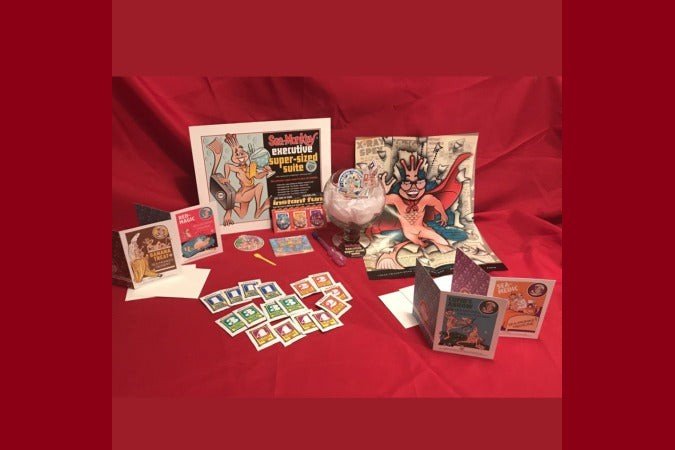
The Sea-Monkeys “Executive Super-Sized Suite,” complete with trading cards and comic-style inserts starring the mascot.
Sea-Monkeys Are Still Around
The brand never actually went away. Transcience LLC, now run by von Braunhut’s widow, still owns the formula and trademark, and kits are still sold today through major retailers for roughly $10 to $30 depending on the tier — from the basic tank to the “Magic Castle” playset pictured below. The core pitch hasn’t changed since 1960: add water, add the growth food packet a week later, and watch something that looks nothing like the box art start swimming around.
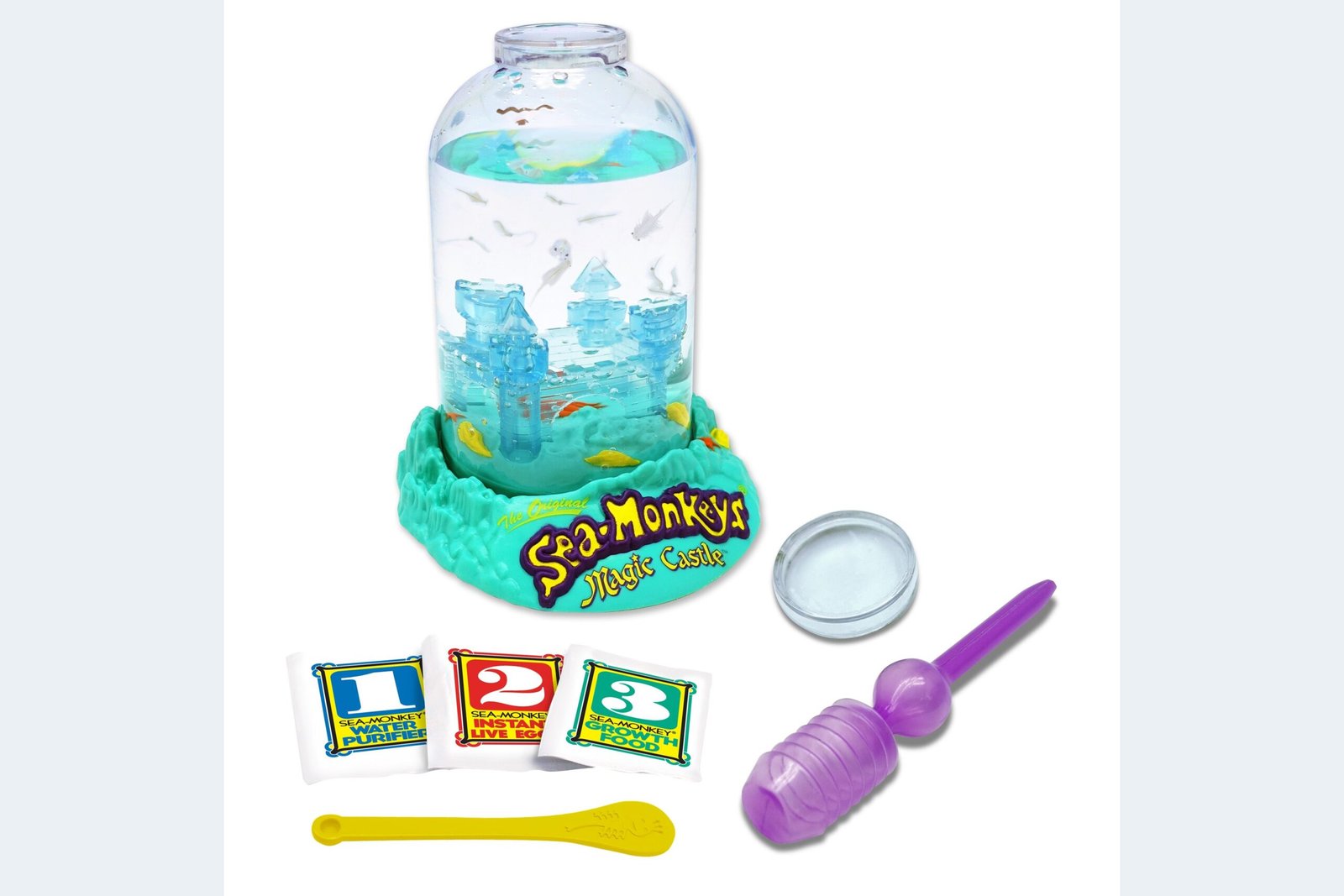
The modern Sea-Monkeys Magic Castle kit — same instant-hatching trick, fancier tank.
There’s also a retro-branded “Instant Life” reissue kit that brings back the original 1960s box art for anyone who wants the full nostalgia hit on their desk.
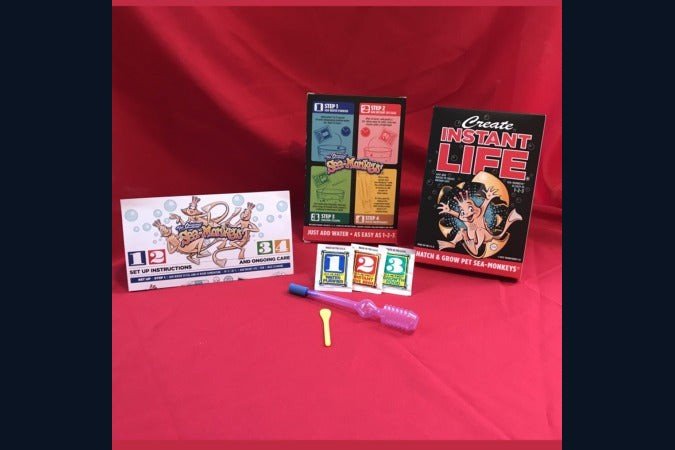
A modern “Instant Life” reissue kit, reviving the original 1960s branding.
The product even crossed over into pop culture well past its own sitcom — SpongeBob SquarePants introduced its own fictional “Sea Monkey” species as a direct parody of the toy, first appearing in a 2008 episode. Six decades after that first comic book ad, kids are still adding water to a packet and waiting to see what hatches — even if it’s never quite the smiling, crowned family on the box.
What makes Sea-Monkeys such a durable piece of Gen X and Gen Y nostalgia isn’t really the brine shrimp — it’s the gap between the promise and the delivery. Almost everyone who ordered a kit remembers the same arc: seeing the ad, begging for the dollar, waiting weeks for the envelope, and then staring into a plastic tank trying to convince themselves the tiny swimming specks were worth it. That shared disappointment, oddly, is what turned it into a bonding story instead of a forgotten toy. Six decades later, the ad is more famous than the product it was selling, and that might be the most honest legacy any mail-order gimmick could ask for.
The Retro Almanac
A monthly roundup of "on this day" highlights from that month, decades back — plus first dibs on new retro merch drops. No spam, just the good stuff.