When Calculators Killed the Abacus: The Math Revolution Nobody Saw Coming
Somewhere around the mid-1970s, a tiny electronic device showed up in shirt pockets and desk drawers across America, and an ancient counting tool that had survived literally thousands of years suddenly found itself on the endangered species list. The pocket calculator didn’t just replace the abacus — it steamrolled an entire way of thinking about numbers that had worked perfectly fine since before the Roman Empire.
And honestly? Most people didn’t even notice it happening.

The Abacus Had a Pretty Good Run
Before we talk about what killed it, let’s give credit where it’s due. The abacus wasn’t some primitive cave-person tool that humans grudgingly used until something better came along. This thing was sophisticated. The earliest versions showed up in ancient Mesopotamia around 2700 BCE, and variations popped up independently across virtually every major civilization — China, Japan, Rome, Russia, you name it.
The Japanese soroban was particularly elegant. Five beads per rod, a dividing beam, and in the hands of a trained operator, it could rip through calculations with jaw-dropping speed. We’re talking addition, subtraction, multiplication, division, and even square roots. There are documented cases of soroban masters beating early electronic calculators in speed competitions. That’s not a joke — human fingers flying across wooden beads outperformed transistors.
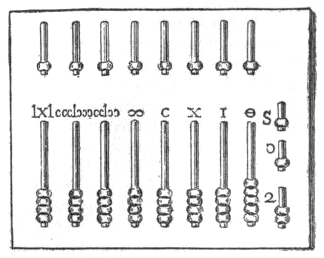
In China, the suanpan had been the backbone of commerce for centuries. Every shopkeeper, every accountant, every merchant worth their salt knew how to work one. It wasn’t optional — it was as fundamental to business as knowing how to read. The clicking of abacus beads was literally the soundtrack of commerce across Asia for over two millennia.
Russia had the schoty, with its distinctive ten-bead design. Schools across the Soviet Union taught arithmetic on these things well into the 1980s. Even in parts of the Middle East, merchants were still using counting boards when pocket calculators started showing up in electronics stores.
Who Invented the Calculator? The Surprising Answer
Here’s something that might surprise you: the calculator’s origin story stretches back way further than most people think. Blaise Pascal built a mechanical calculator in 1642 — he was only 19 years old at the time. His “Pascaline” could add and subtract using a system of interlocking gears. It was brilliant, but it was also expensive, fragile, and about as portable as a toaster oven.

For the next three hundred years, various inventors kept taking runs at the problem. Leibniz improved on Pascal’s design. Charles Babbage designed his famous Difference Engine. Mechanical desktop calculators from companies like Monroe and Friden became standard equipment in offices by the 1920s — but these were heavy metal beasts that sat on desks, weighed twenty-plus pounds, and sounded like a typewriter having a nervous breakdown when you cranked them up.
The real revolution started with transistors. In 1957, the Casio Computer Company — yes, the same Casio that would later put calculators on watches — released the 14-A, an all-electric calculator. It weighed 140 kilograms. That’s not a typo. Three hundred pounds of electronic calculator, and it could only handle fourteen digits. But it was fast, and it didn’t need mechanical gears.
When Calculators Invented the Future
The 1960s saw calculator technology shrinking at a pace that would’ve made science fiction writers nervous. Texas Instruments, Hewlett-Packard, and Sharp all jumped into the race, each trying to make calculators smaller, cheaper, and more capable. The key breakthrough came in 1971 when Texas Instruments figured out how to cram an entire calculator onto a single microchip.
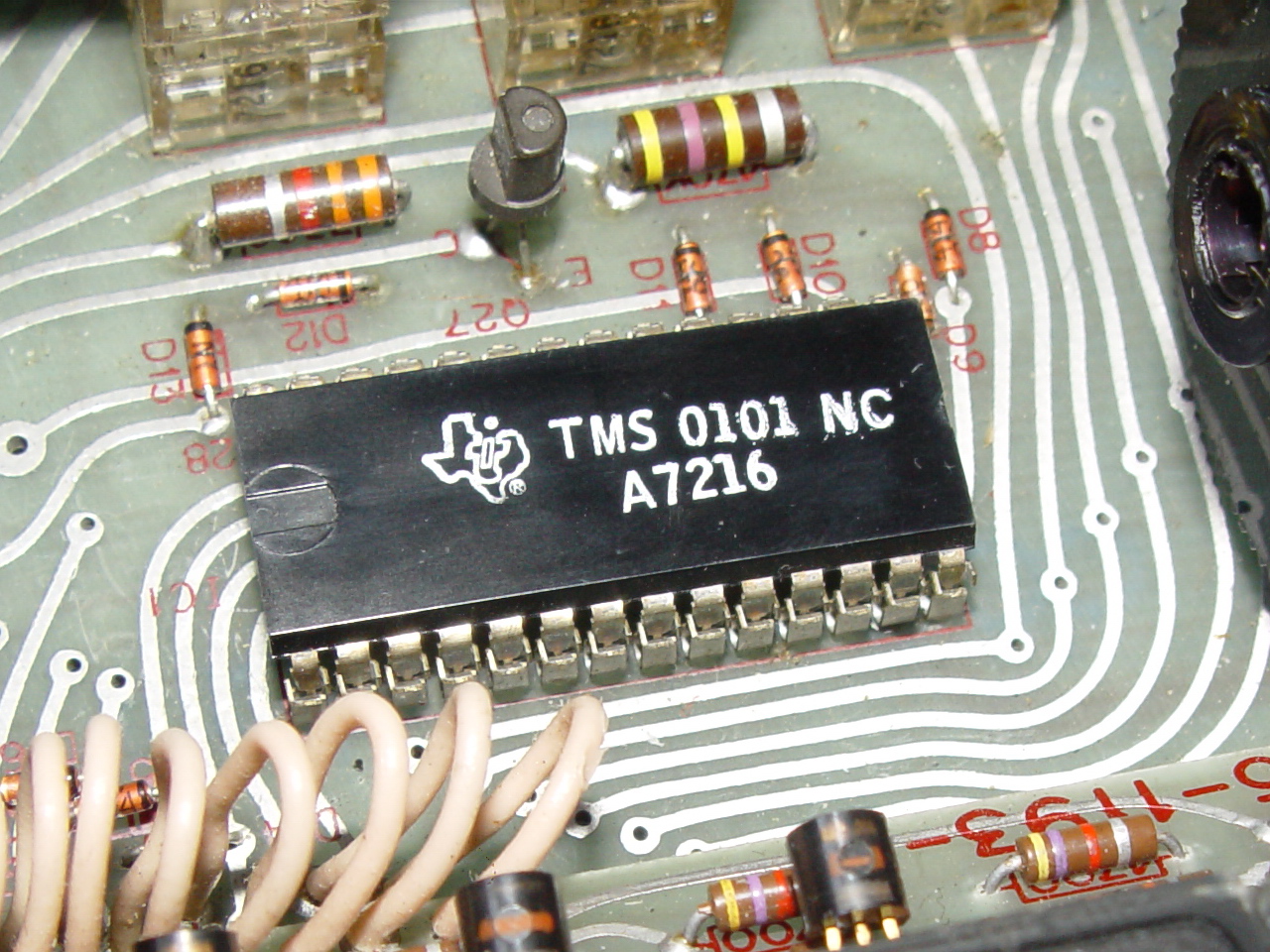
The TMS0100 chip was a game-changer. Suddenly you didn’t need a desk full of discrete components — you needed one chip, a display, a keyboard, and a battery. The calculator-on-a-chip made pocket-sized devices not just possible but inevitable. By 1972, Hewlett-Packard released the HP-35, the first handheld scientific calculator. It cost $395 — roughly $2,800 in today’s money — and engineers absolutely lost their minds over it.
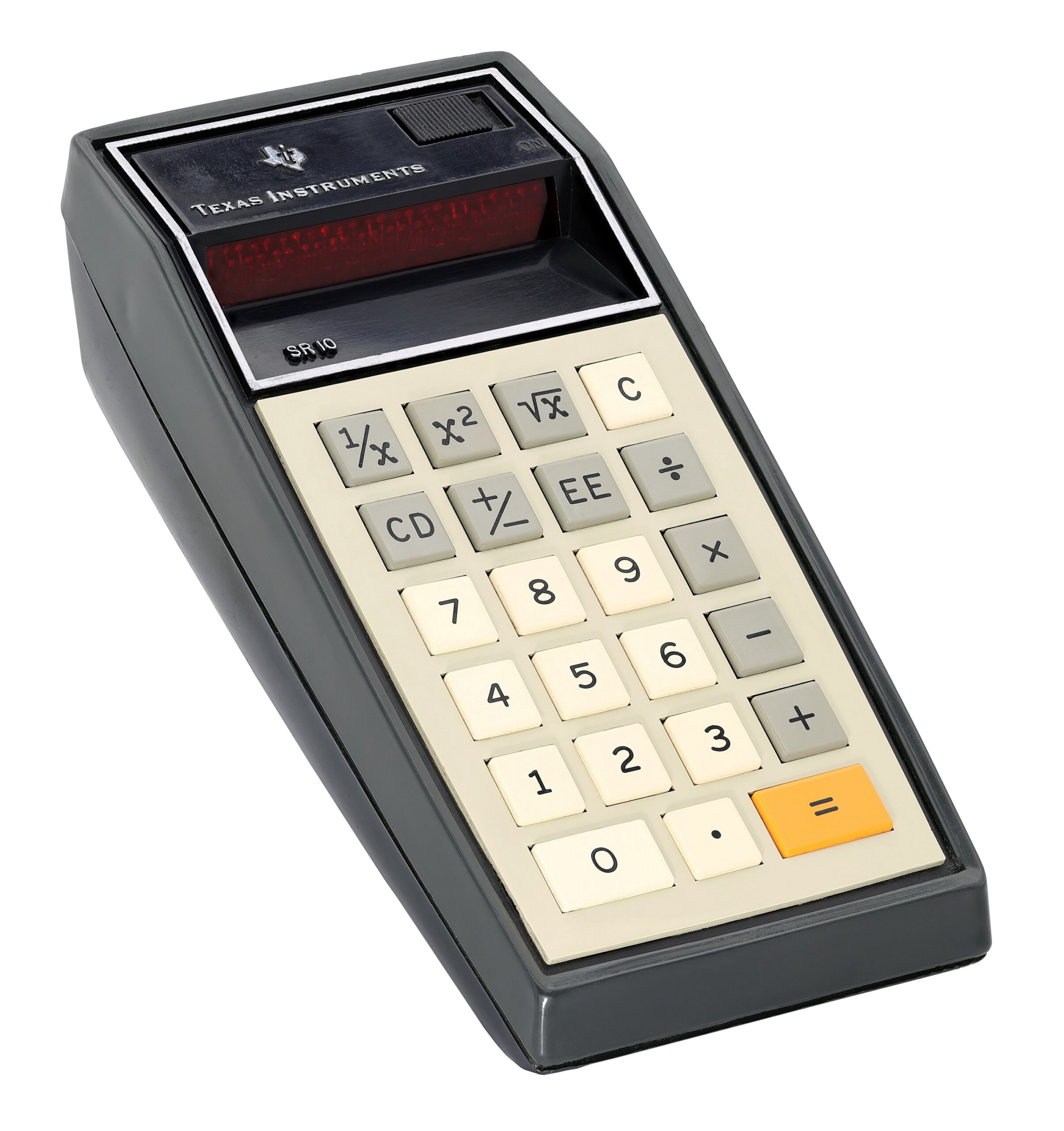
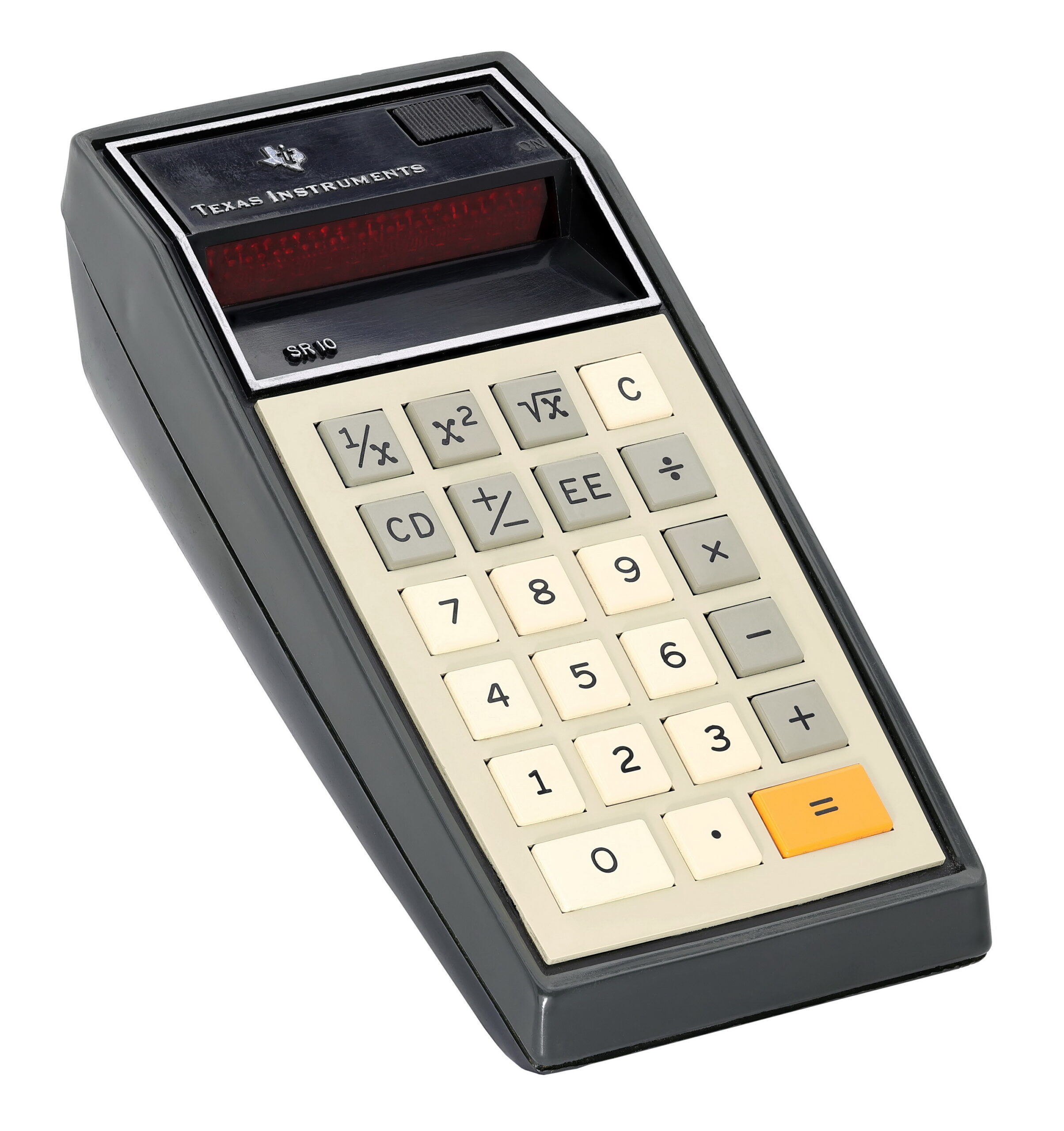
But it was the Texas Instruments SR-10 in 1973 that really started the fire. At $150, it was still expensive, but it was within reach of students and small business owners. For the first time, ordinary people could own a device that did complex math instantly, without training, without practice, without years of learning bead manipulation.
The Price War That Changed Everything
What happened next was pure capitalism at its most ruthless. Between 1972 and 1976, the price of a basic pocket calculator dropped from around $200 to under $10. That’s not gradual decline — that’s a cliff. Companies like Commodore, National Semiconductor, and dozens of Japanese manufacturers flooded the market with cheap four-function calculators. By 1976, you could buy a basic calculator at a drugstore for the price of a meal.

The effect on abacus usage was devastating, though it didn’t happen overnight. In Japan, where the soroban was deeply embedded in culture and education, the transition was actually slower than you might expect. Japanese schools continued teaching soroban alongside calculator use well into the 1980s, and some still include it in their curriculum today. The argument was — and still is — that learning the abacus develops mental arithmetic skills and number sense that pressing buttons simply doesn’t.
But in commerce? The abacus was done. Why would a shop clerk spend years learning to use a soroban when a $5 calculator could do the same job faster with zero training? Why would an accountant maintain their bead-sliding skills when an electronic device could handle tax calculations without breaking a sweat?
The Casio Factor
If Texas Instruments lit the fuse, Casio dropped the bomb. The Japanese company had been making calculators since the late 1950s, but their aggressive pricing strategy in the mid-1970s was what truly democratized electronic calculation. The Casio Mini, released in 1972, was marketed as a personal calculator — not a business tool, not a professional instrument, but something for everyone.
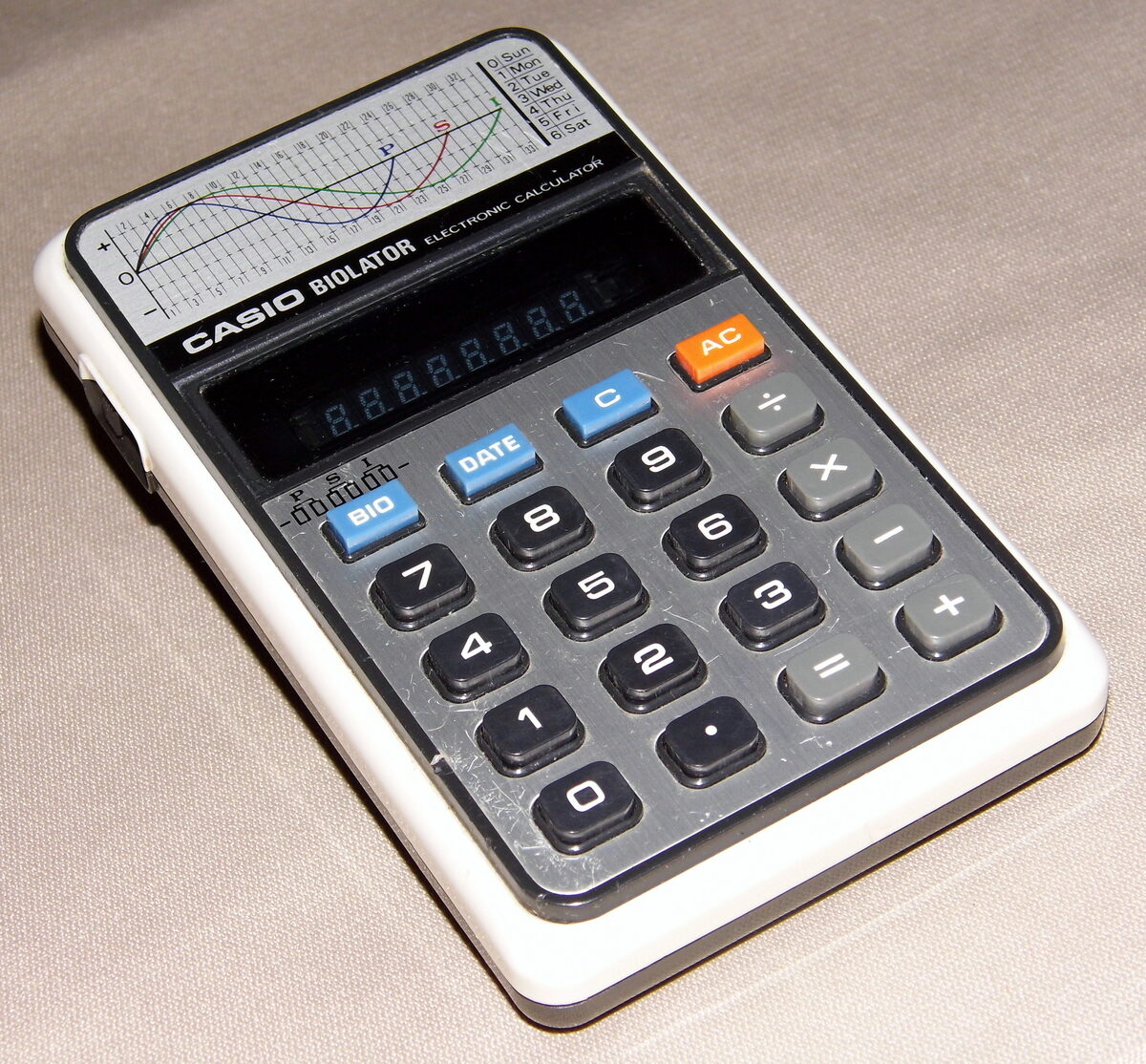
By the late 1970s, Casio was pumping out novelty calculators with game functions, musical calculators that played little tunes, credit-card-thin calculators that fit in a wallet, and waterproof calculators for some reason nobody could quite explain. They turned the calculator from a serious tool into an everyday commodity — like a pen or a notepad.
The abacus, meanwhile, was becoming a curiosity. Something grandparents used. Something you saw in museums or traditional shops, kept more for atmosphere than actual function. The few remaining competitive abacus users became the equivalent of people who still ride horses to work — technically possible, kind of cool, but objectively impractical.
What We Lost When the Beads Stopped Clicking
Here’s the thing nobody talks about: we actually lost something real when calculators killed the abacus. And no, this isn’t some Luddite rant about how things were better in the old days.
Abacus training develops spatial reasoning, working memory, and mental visualization skills in ways that calculator use simply doesn’t. Studies have shown that children trained on the abacus develop stronger number sense and can perform mental arithmetic faster than their calculator-dependent peers. There’s a reason some Asian schools never fully abandoned soroban instruction.
The abacus also required physical engagement with numbers. You felt quantities as you moved beads. The number 47 wasn’t just a symbol on a screen — it was a specific arrangement of wooden beads under your fingertips. That tactile connection to mathematics created a different kind of understanding, one that’s been almost entirely erased by digital displays.
The Calculator Kept Evolving (The Abacus Didn’t Need To)
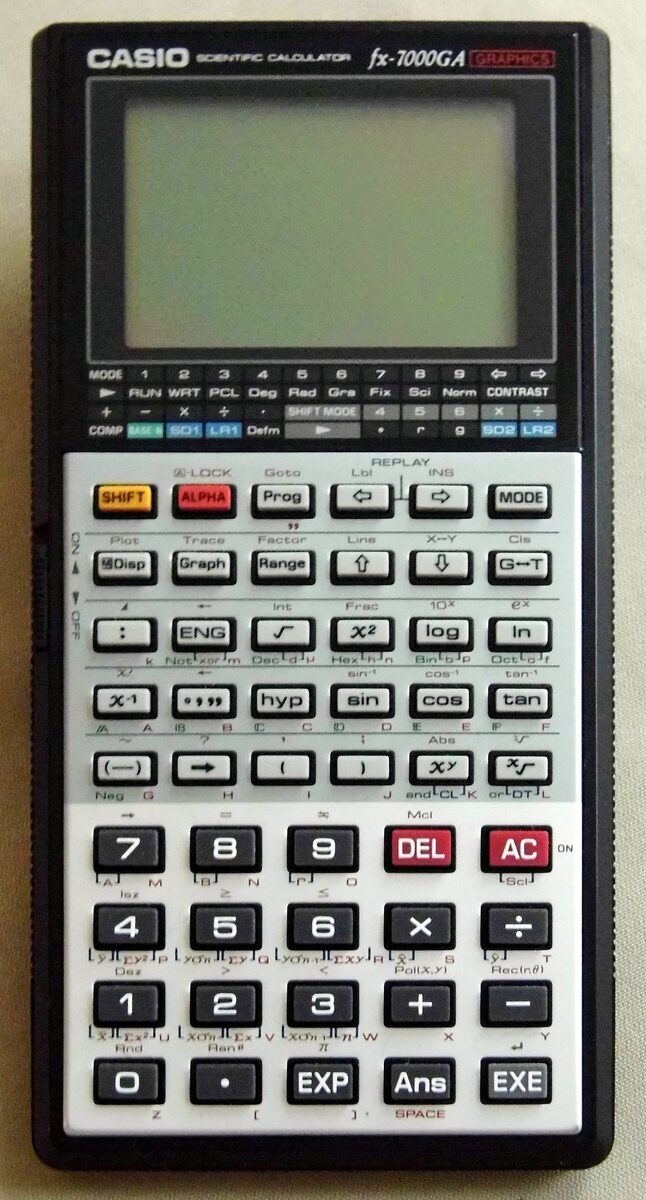
By the 1980s, calculators had gone from simple four-function devices to programmable scientific instruments. The Casio fx-7000G, released in 1985, was the world’s first graphing calculator, and it basically turned high school math class into a completely different experience. Suddenly you could visualize functions, plot equations, and explore mathematical concepts that had previously required graph paper and a lot of patience.
Texas Instruments followed with the TI-81 in 1990, and the graphing calculator wars were officially on. These weren’t just tools anymore — they were platforms. Students wrote games on them (who among us didn’t play Drug Wars on a TI-83?), teachers built entire curricula around them, and standardized testing organizations had to write whole new policies about what kind of calculators were allowed in exam rooms.
Meanwhile, the abacus sat in its corner, unchanged, unhurried, and honestly kind of smug about the whole thing. It didn’t need firmware updates. It never crashed. Its batteries never died because it didn’t have batteries. You could drop one from a second-story window and it would still work perfectly — which is more than anyone could say about a TI-89.
The Abacus Fights Back (Sort Of)
Reports of the abacus’s death have been slightly exaggerated. While it’s been effectively eliminated from daily commercial use worldwide, the abacus has found a surprising second life as an educational tool. Mental abacus programs — where students visualize and manipulate an imaginary soroban in their heads — have become popular in math education circles across Asia, the Middle East, and increasingly in Western countries.
The International Abacus Mathematics Competition draws thousands of participants annually. YouTube is full of videos showing kids performing impossibly fast mental calculations using abacus visualization techniques. Some neuroscience research suggests that abacus training activates different brain regions than calculator use, potentially offering cognitive benefits that go well beyond simple arithmetic.
There’s also a thriving collectors’ market for vintage abaci. Beautiful wooden sorobans from Japanese craftsmen, ornate Chinese suanpans, and rare European counting boards command serious prices at auction. The abacus may have lost the utility war, but it’s winning the aesthetic one.
A Math Revolution Nobody Saw Coming
Looking back, the calculator’s conquest of the abacus was really just the opening battle in a much larger war — the digitization of everything. The same logic that made wooden beads obsolete eventually came for typewriters, film cameras, vinyl records, paper maps, and about a thousand other analog technologies that had worked perfectly well for perfectly long times.
The pocket calculator taught us something profound about technology adoption: it’s not always the best tool that wins — it’s the easiest one. The abacus was arguably superior in several ways. It required no power source, it was virtually indestructible, it developed real mathematical skills, and a trained operator could match or beat early calculators in speed. But the calculator required zero training. You pressed buttons, you got answers. That’s it. Game over.
For those of us who grew up in the transition era — watching our parents’ generation do mental math that seems almost superhuman by today’s standards — there’s something bittersweet about the whole thing. We gained convenience and lost competence. We traded wooden beads for LCD screens and never looked back.
Except sometimes, in a quiet corner of a traditional Japanese shop, you can still hear the soft click-click-click of a soroban in the hands of someone who remembers what it felt like to hold numbers between your fingers. And honestly? That sound hits different now.