Reagan’s Star Wars Speech: The Night SDI Changed the Cold War Forever
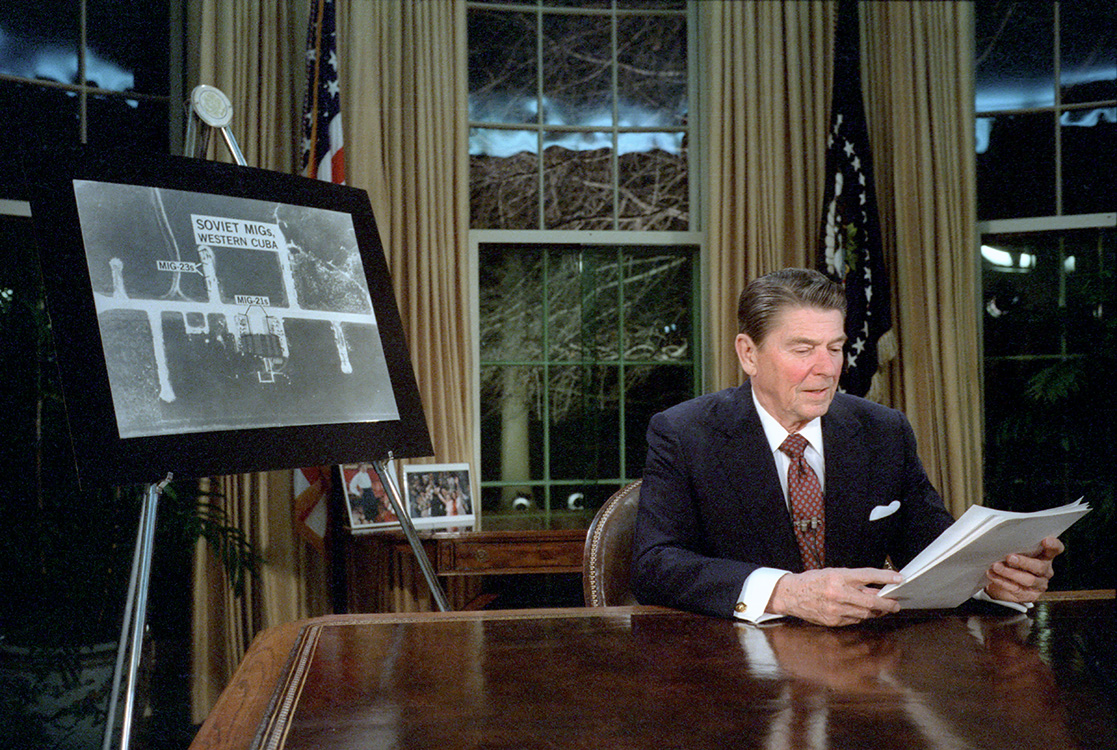
On March 23, 1983, President Ronald Reagan sat behind his desk in the Oval Office and delivered a televised address that would reshape the Cold War, terrify the Soviet Union, and earn one of the most famous nicknames in military history. In a speech ostensibly about defense spending, Reagan stunned the world by announcing the Strategic Defense Initiative (SDI) — a sweeping proposal to build a space-based missile defense system capable of shooting down Soviet nuclear warheads before they could reach American soil.
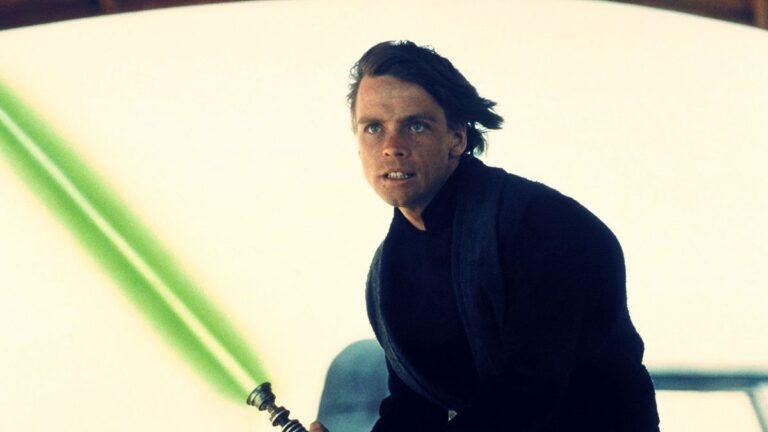
Critics immediately dubbed it “Star Wars” after George Lucas’s blockbuster film franchise, and the name stuck. But behind the Hollywood nickname lay a deadly serious gamble that would cost billions of dollars, push the boundaries of known science, and ultimately help bring the Cold War to its end. This is the full story of the night Ronald Reagan challenged America’s scientists to make nuclear weapons “impotent and obsolete.”
The Seeds of an Idea: From Governor to Commander-in-Chief
Reagan’s fascination with missile defense technology didn’t begin in the White House. It traced back to 1967, when he was still governor of California. During a visit to the Lawrence Livermore National Laboratory, Reagan met physicist Edward Teller — the so-called “father of the hydrogen bomb” — who briefed him on directed-energy weapons like lasers and microwaves. Teller argued that these technologies could potentially defend against a nuclear attack, calling them the “third generation of nuclear weapons.” Reagan was captivated. As Teller later recalled, “Fifteen years later, I discovered that he had been very interested in those ideas.”
The Retro Almanac
A monthly roundup of "on this day" highlights from that month, decades back — plus first dibs on new retro merch drops. No spam, just the good stuff.
The idea crystallized further in 1979, when Reagan visited the North American Aerospace Defense Command (NORAD) headquarters deep inside the Cheyenne Mountain Complex near Colorado Springs. Impressed by the massive fortifications built into the mountain, Reagan asked General James Hill a simple question: what would happen if a Soviet nuclear missile hit nearby? “It would blow us away,” Hill replied. They could track an incoming missile, but there was absolutely nothing they could do to stop it. “There must be something better than this,” Reagan said, visibly shaken.



Browse retro and vintage-inspired apparel at the RetroRadical shop →
Get a Geek Crate
Shop Geek Crate →
We may earn a commission when you shop through our Geek Crate link.
The Retro Almanac
A monthly roundup of "on this day" highlights from that month, decades back — plus first dibs on new retro merch drops. No spam, just the good stuff.