On This Day: June 24, 1982 — British Airways Flight 9
Two hundred and sixty-three people were strapped into a powerless Boeing 747 falling out of the night sky over the Indian Ocean, and the man in the left seat reached for the cabin intercom. What Captain Eric Moody said next became one of the most famous announcements in aviation history — not because it was dramatic, but because it was so absurdly calm. British Airways Flight 9 is the story of a routine red-eye that turned into a 16-minute glide nobody on board was supposed to survive, and almost everybody did.
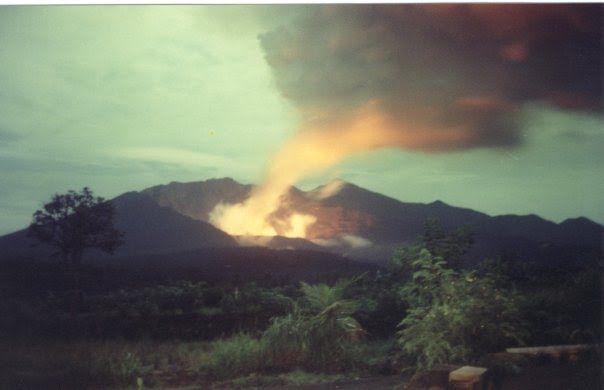
Mount Galunggung in West Java throwing ash into the night sky during its 1982 eruption.
The Retro Almanac
A monthly roundup of "on this day" highlights from that month, decades back — plus first dibs on new retro merch drops. No spam, just the good stuff.
What happened to British Airways Flight 9?
British Airways Flight 9 — call sign Speedbird Nine — was the long-haul slog from London Heathrow to Auckland, broken into legs through Bombay, Kuala Lumpur, Perth, and Melbourne. On the evening of June 24, 1982, the Kuala Lumpur-to-Perth leg lifted off into clear weather with 248 passengers and 15 crew aboard. The forecast was good. The flight should have been forgettable.
Cruising at 37,000 feet over the Indian Ocean south of Java, the crew started noticing something strange on the windscreen — flickering streaks of light like St. Elmo’s fire, the kind of static glow pilots see in storm clouds. There was no storm on the radar. In the cabin, passengers looked out at the engines and saw them lit up an eerie electric blue, light flickering through the spinning fan blades like a strobe. What none of them could see was the reason: the 747 had flown straight into a cloud of fine volcanic ash, pumped 50,000 feet into the sky by Mount Galunggung, an Indonesian stratovolcano that had been erupting on and off since April.
How does volcanic ash stop a jet engine?
Volcanic ash doesn’t show up on weather radar. It isn’t water — it’s pulverized rock and glass, dry and razor-fine, and radar pings right through it. That single fact is why nobody saw the trap. The ash poured into all four Rolls-Royce RB211 engines, where temperatures run hot enough to melt it. The molten silica then fused onto the turbine blades and the inside of the combustion chambers, choking off the airflow each engine needed to keep running.
The engines didn’t all quit at once, which somehow made it worse. Number four surged and flamed out first. Seconds later, before the crew had finished working that problem, engines two and three died together. Then number one. At 13:44 UTC, Flight Engineer Barry Townley-Freeman said the words no 747 crew had ever had to confirm before: all four engines were gone. A fully loaded jumbo jet was now a glider.
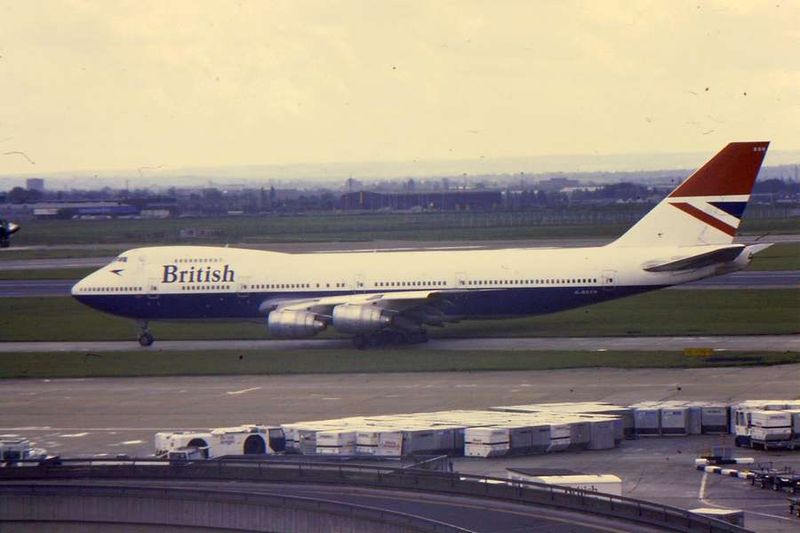
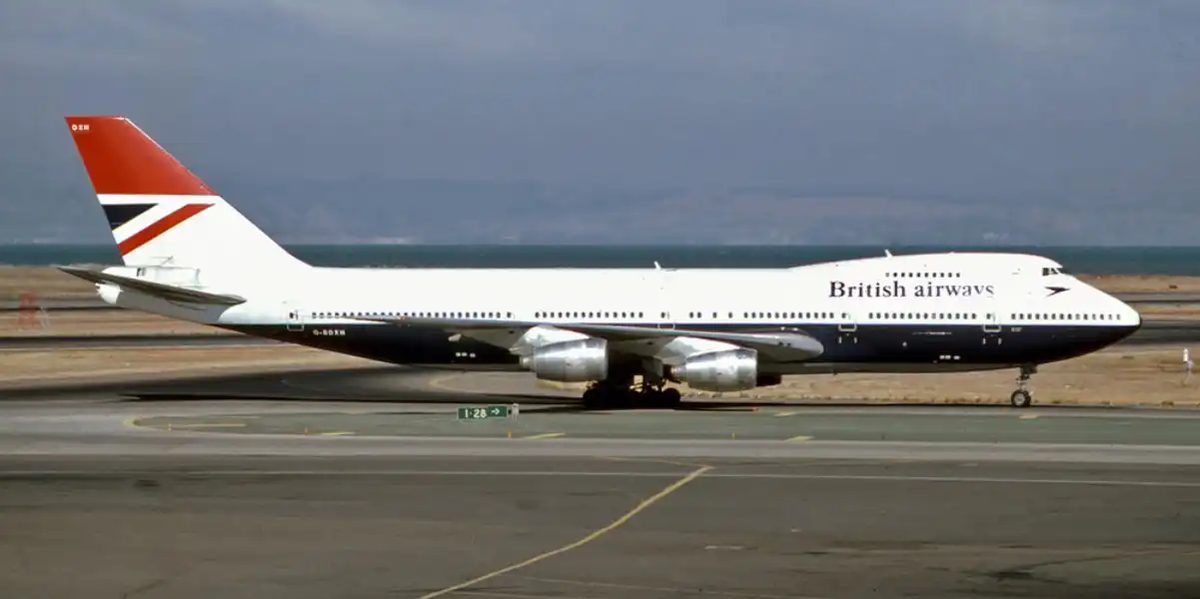
A British Airways 747-200 in the 1980s “Negus” livery — the jumbo jet that became the world’s largest glider for 16 minutes.
The most British announcement ever made
Here is the part that made the story legend. With the engines silent and the cabin lights dimmed, Captain Moody picked up the intercom and told 248 frightened passengers exactly what was happening — in a tone you’d use to report a slight delay at the bar:
“Ladies and gentlemen, this is your captain speaking. We have a small problem. All four engines have stopped. We are doing our damnedest to get them going again. I trust you are not in too much distress.”
A “small problem.” Crews still study that line in human-factors training. Panic is contagious, and so is composure — by refusing to sound afraid, Moody kept a cabin full of people from coming apart at exactly the moment a stampede would have made everything harder. That understatement is half the reason this incident is remembered fondly instead of as a tragedy.
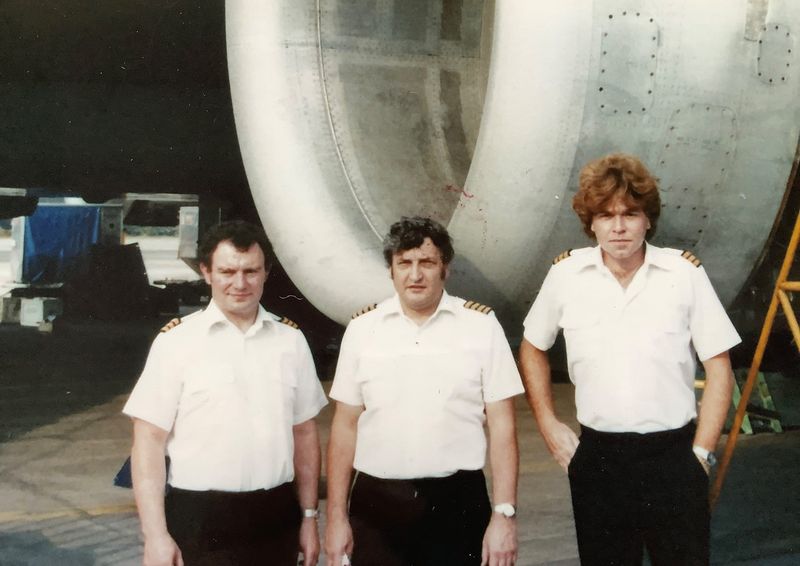
The flight deck crew the day after — First Officer Roger Greaves, Captain Eric Moody (center), and Flight Engineer Barry Townley-Freeman.
16 minutes as the world’s largest glider
A 747 with dead engines doesn’t drop like a stone — it sinks. The big Boeing glides roughly 15 kilometers forward for every kilometer it loses, which bought the crew time and distance: about 23 minutes of flight and 91 nautical miles if they played it right. They needed every second. The crew turned the jet back toward the open sea and away from the mountains of Java, and started doing the one thing they could: trying, over and over, to relight the engines.
There was a hard floor on the clock. To clear the high terrain on the Indonesian coast, they had to keep at least 11,500 feet. Below that, with no engines, the only options left were ditching in the ocean at night. The 747 sank from 37,000 feet toward that line as the restart attempts kept failing. They glided through roughly 25,000 feet of darkness — the descent lasted about 16 minutes — before anything changed.
Then it did. Once the aircraft fell below the ash cloud and out of the worst of it, the cooled, cracked silica started flaking off the engines. At around 12,000 feet, number four caught and roared back to life. Moments later three relit, then one, then two. The crew nursed the jumbo back up to a safe altitude. Engine two began surging badly and had to be shut down again, but three working engines was a miracle compared to none.
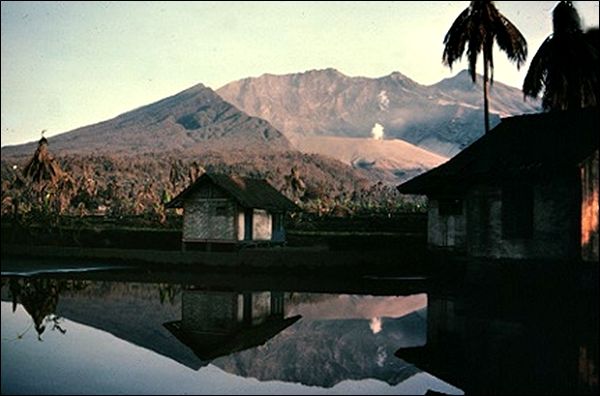
Galunggung looming over a Javanese village in 1982. The eruption pushed ash far higher than any airliner cruised.
Landing a jet you can’t see out of
Getting the engines back didn’t end the emergency. That same ash had sandblasted the cockpit windscreen so thoroughly it was nearly frosted over — Moody later described being able to see only through a thin strip on one side. The landing lights were scoured useless too. Diverting to Jakarta’s Halim Perdanakusuma Airport, the crew flew the approach almost entirely on instruments, leaning on the runway’s distance-measuring equipment because they couldn’t trust their own eyes through the glass.
Moody put the 747 down safely. Every one of the 263 people aboard walked off. In a detail that fits the whole episode, the flight engineer reportedly knelt and kissed the tarmac at the bottom of the steps; when Moody asked why, he invoked the Pope, and Moody shot back, “He flies Alitalia.”
For more legendary moments from the same year, see our look back at E.T. landing in theaters in June 1982 — a much friendlier visitor from the skies.
Watch the full story of the Jakarta Incident
This breakdown from Mentour Pilot — a working airline captain — walks through the timeline minute by minute, with cockpit detail you can only get from someone who flies the type:
Why the Jakarta Incident changed flying forever
British Airways Flight 9 wasn’t a freak with no consequences — it rewrote the rulebook. Five months later, a Singapore Airlines 747 hit the same Galunggung ash and lost three engines. Two near-disasters with the same cause made it impossible to ignore: aviation had no system for tracking volcanic ash. The response was the global network of Volcanic Ash Advisory Centers, nine offices worldwide whose entire job is warning aircraft away from ash plumes. Anyone who remembers flights grounded across Europe by Iceland’s Eyjafjallajökull eruption in 2010 was watching that lesson being applied — the industry chose mass cancellations over another silent glide.
Engine makers and regulators also dug into how jets behave in ash and rewrote crew procedures for what to do if it happens again. The blunt takeaway from 1982 still holds: you do not fly through volcanic ash, because radar will never warn you it’s there.
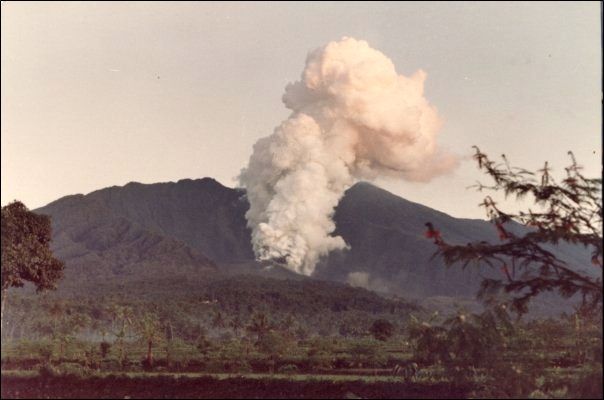
A daytime ash plume from Galunggung. The fine, dry ash is invisible to weather radar — which is exactly why Flight 9 never saw it coming.
What happened to the people and the plane
The crew were showered with honors. Moody received the Queen’s Commendation for Valuable Service in the Air, and the whole flight deck took medals from the British Airline Pilots’ Association. The engineless glide earned a spot in the Guinness Book of Records as the longest glide by a non-purpose-built aircraft. Moody flew on for British Airways until 1996, retiring with more than 17,000 hours and the aircraft’s control yoke as a keepsake. He died in March 2024 at 82, still telling the story with the same dry humor.
The passengers carried their own version forward. One of them, Betty Tootell, wrote a book about the flight — All Four Engines Have Failed — and tracked down around 200 of the people who’d shared that night. She ended up marrying a fellow survivor who’d been sitting one row ahead of her. Moody, for his part, founded the tongue-in-cheek “Galunggung Gliding Club” and held reunions for years.
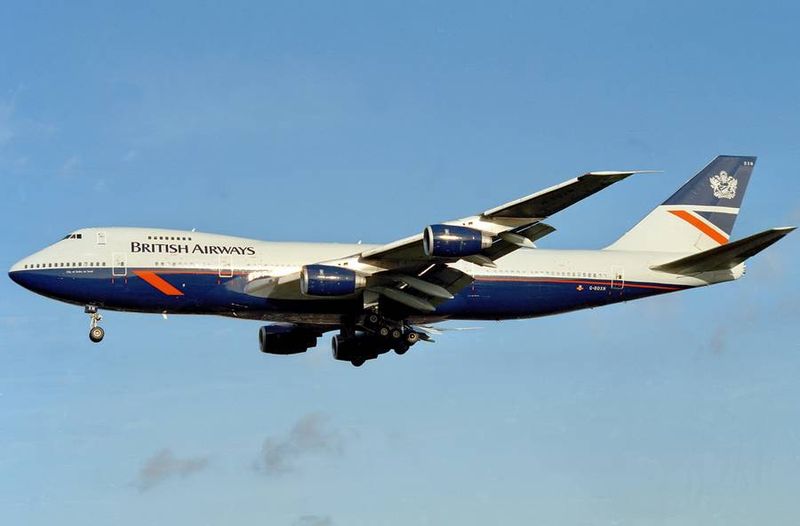
The 747 stayed the backbone of British Airways’ long-haul fleet for decades after 1982.
And the jet itself? The 747 in question, registration G-BDXH, got four new engines and a new windscreen in Jakarta, flew home to London, and returned to service. It outlived its famous night by two decades, eventually flying for a charter operator before being retired. Survivor planes have a way of sticking around — much like the survivors who keep telling stories from the era, from Maradona’s Hand of God in 1986 to the arcade obsession that started when Tetris was born in 1984.
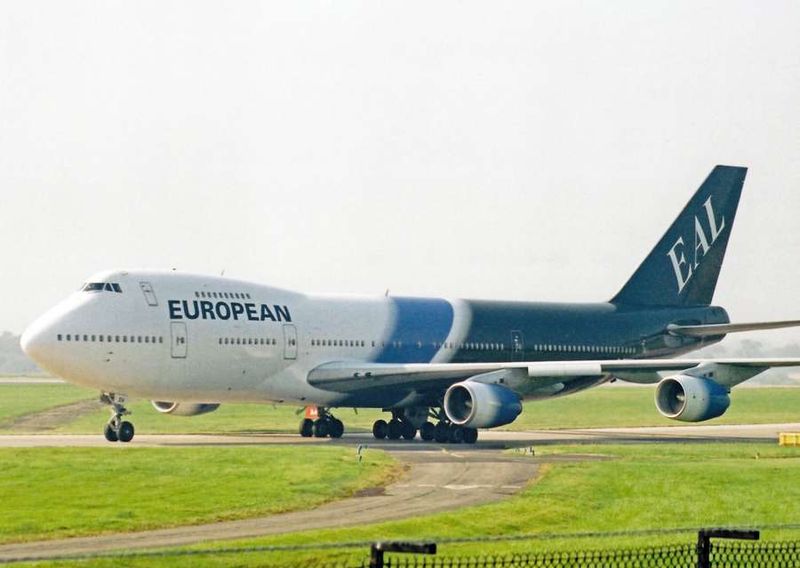
The same airframe, G-BDXH, in later life flying for a charter operator — proof the “glider of Galunggung” kept right on flying.
The legend of British Airways Flight 9 lasts because it flips the usual disaster script. The thing that should have killed everyone — fine ash melting onto the turbines — was also the thing that saved them, flaking back off once they fell low enough. Add a captain who refused to lose his cool and a glide skill no simulator had ever asked for, and you get the rare aviation story people actually enjoy retelling. Next time a flight gets scrubbed for an ash cloud half a world away, you’ll know which June night in 1982 wrote that rule.
Sources
- British Airways Flight 009 — Wikipedia — incident timeline, crew, aircraft, and aftermath details
- Smithsonian Global Volcanism Program: Galunggung — 1982 eruption data and column heights
- The Aviation Geek Club — engine failure sequence and glide details
- Flight Safety Australia — Eric Moody obituary — crew profile and the famous announcement
The Retro Almanac
A monthly roundup of "on this day" highlights from that month, decades back — plus first dibs on new retro merch drops. No spam, just the good stuff.