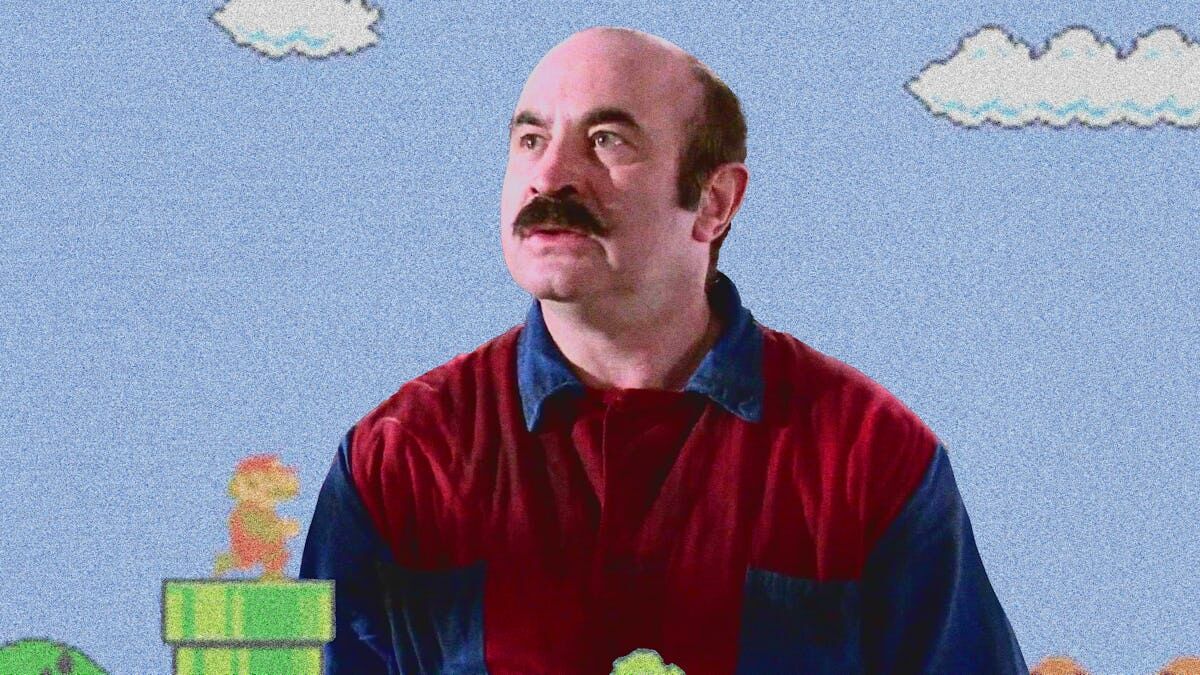
Super Mario Bros 1993 movie premiere and official promotional image
| |

Super Mario Bros 1993: 7 Wild Facts From April 9

Super Mario Bros. 1993 hit theaters on April 9, 1993, and even now it feels like a transmission from the weirdest possible alternate timeline. This was the first live-action movie ever built from a video game juggernaut, years before Hollywood figured out how to make game adaptations feel remotely coherent. For kids who grew up with an NES controller in hand, the release felt huge. Nintendo’s cheerful Mushroom Kingdom was suddenly a grimy cyberpunk dinosaur city full of fungus walls, flamethrowers, leather coats, and Dennis Hopper chewing scenery like he’d been trapped in another dimension himself.

And that is exactly why people still talk about it. The movie was a commercial disappointment and critics hammered it on release, but the phrase Super Mario Bros. 1993 still pulls serious search interest because the film lodged itself in pop culture as one of the great beautiful messes of the 90s. It was baffling, loud, expensive, ambitious, and impossible to ignore. On this day in 1993, Hollywood rolled the dice on the first big-screen video game adaptation, and the result became a cult artifact that only looks stranger, funnier, and somehow more lovable with time.
Super Mario Bros 1993 movie stars Bob Hoskins and John Leguizamo as Mario and Luigi
Bob Hoskins and John Leguizamo as Mario and Luigi, still one of the strangest buddy pairings in 90s movie history.

Super Mario Bros. 1993 Arrived Before Hollywood Knew What a Video Game Movie Should Be

That is the first thing worth remembering. In April 1993, there was no proven template for a successful modern video game movie. Nobody had the blueprint yet. Today studios know they can lean on lore, fan service, and franchise continuity. Back then, executives saw a wildly popular game with recognizable characters and figured they could translate the brand into a feature film by force of money and production design.

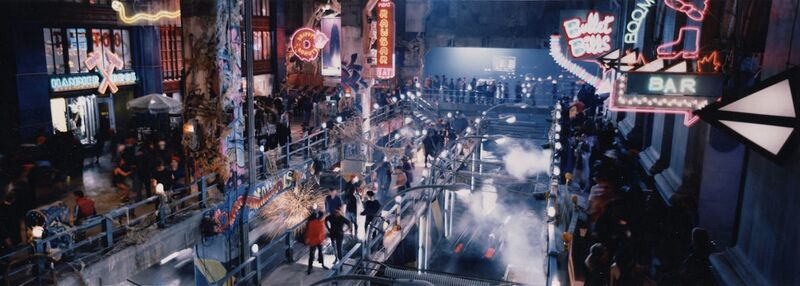
That made Super Mario Bros. a genuine leap into the unknown. It was produced by Hollywood Pictures, backed by Disney money, and tasked with adapting a series whose actual plot in the games was paper-thin. Save the princess. Jump on enemies. Eat mushrooms. Rescue the kingdom. The filmmakers had to invent almost everything around that, and their answer was not bright fantasy. It was dystopian sci-fi with de-evolution guns, industrial sets, and a version of King Koopa who looked like he ruled a nightclub inside a sewage plant.

Seen from 2026, that choice is insane. Seen from 1993, it’s the kind of swing studios used to make when they weren’t being supervised by ten layers of franchise management. The result was a movie that barely resembled the game and yet absolutely reflected the era that made it, an era obsessed with dark comic-book aesthetics, oily industrial futurism, and the idea that every kids’ property needed more edge.

Why April 9, 1993 Felt Like a Big Deal to Nintendo Kids

If you were a kid in the late 80s or early 90s, Mario was not just a character. He was the character. The original Nintendo Entertainment System had already turned him into the face of home gaming, and by 1993 he was a household icon on lunchboxes, cartoon shows, cereal promotions, and playground conversations. A live-action movie starring Mario and Luigi sounded less like a questionable experiment and more like an event.

That’s what makes the release date memorable. April 9, 1993 was the moment one of the biggest game properties on Earth crossed into blockbuster movie territory. Long before Sonic movies or prestige TV game adaptations, this film had to carry the burden of being first. It was trying to prove a video game could support a theatrical universe. Even if it stumbled badly, it kicked open a door Hollywood never closed again.

The cast only added to the curiosity. Bob Hoskins was a respected actor, John Leguizamo brought restless, scrappy energy, Samantha Mathis played Daisy, and Dennis Hopper somehow agreed to become this version of Koopa. For adults, that lineup made the project look bizarre. For kids, it just made the whole thing feel bigger.

Super Mario Bros 1993 directors Rocky Morton and Annabel Jankel before the movie
Directors Rocky Morton and Annabel Jankel came in with style to spare, even if the production nearly ate itself alive.

How the Movie Turned the Mushroom Kingdom Into Dinohattan

The wildest creative decision in Super Mario Bros. 1993 was building an alternate dimension called Dinohattan instead of trying to reproduce the colorful Mushroom Kingdom straight. According to later oral histories and production recollections, the filmmakers leaned into the idea that dinosaurs evolved in another dimension after the meteor strike that wiped them out on Earth. That gave them an excuse to create a grim urban world of reptilian politics, fungus-infested infrastructure, and punkish fashion.

It’s a choice that sounds like a dare. And honestly, part of the movie’s afterlife comes from the fact that they committed to it so hard. The sets were massive. The design was tactile. The city looked sweaty and overbuilt in a way modern CG fantasy often doesn’t. Even people who hate the movie usually admit it has a real look. You can feel the physical environment, the grime, the industrial scaffolding, the wet concrete, the weird practical creatures.

That tactile quality is part of why cult audiences eventually came around. Plenty of failed blockbusters are just dull. Super Mario Bros. is never dull. It’s a swing-for-the-fences production where every set, costume, and creature seems to exist in a completely sincere attempt to turn game imagery into a live-action fever dream.

Super Mario Bros 1993 movie concept art showing Dinohattan design ideas
Concept art for the movie shows how seriously the production took its strange cyber-dinosaur world.

The Production Was Famous for Chaos Almost Immediately

One reason Super Mario Bros. 1993 became legendary is that the behind-the-scenes stories are nearly as famous as the film itself. Writers were replaced. The script kept changing. Tones clashed. Actors reportedly drank to get through parts of the shoot. Designers and crew members later described the production as huge, overheated, unstable, and often improvised under pressure.

That chaos leaks into the final movie, and weirdly that helps its identity. You can feel different ideas wrestling onscreen. One version wants to be a family adventure. Another wants to be a cyberpunk satire. Another wants broad slapstick. Another wants a darker comic-book movie before that was a standard category. They all survive in the finished cut, which is probably why the film feels so singular.

There is also something very 90s about that kind of oversized studio disaster. The era gave us plenty of glossy entertainment, but it also produced a specific kind of expensive misfire that later generations couldn’t stop revisiting. Like the articles we run about 90s pop culture swings that changed the medium anyway, the Mario movie matters partly because it failed in such a loud, memorable way.

Super Mario Bros 1993 cast and crew group photo during production
The cast and crew pose during production, before the movie became one of the most discussed misfires in game-adaptation history.

Bob Hoskins, John Leguizamo, and Dennis Hopper Understood Different Movies

That mismatch is part of the charm now. Hoskins played Mario with a bruised working-class sincerity that belonged in a much more grounded movie. Leguizamo, younger and more elastic, gave Luigi an anxious manic energy that fit the film’s chaos better. Dennis Hopper, meanwhile, delivered a version of King Koopa that felt like he had dropped in from an entirely separate planet, stylish, sneering, and delightfully unrestrained.

None of these performances quite lock together, but that disconnect is why specific scenes still linger in people’s memory. Hopper’s hair alone belongs in the museum of 90s villain decisions. Hoskins and Leguizamo bicker like blue-collar guys who accidentally wandered into a reptile nightclub. Samantha Mathis grounds Daisy with more sincerity than the script really deserves. Fiona Shaw gives Lena a mix of menace and camp that somehow works.

It should be a total collapse. Sometimes it is. But sometimes the clash of styles creates exactly the kind of accidental magic cult movies thrive on.

Super Mario Bros 1993 Lena and King Koopa scene with Dennis Hopper
Fiona Shaw and Dennis Hopper helped push the film toward full-on camp spectacle.

Why Critics Rejected Super Mario Bros. 1993 So Hard

The movie opened to poor reviews and confused audiences for reasons that are not hard to understand. Parents expecting Nintendo whimsy got a noisy dystopian oddity. Game fans expecting a faithful translation got something almost unrecognizable. General audiences got a movie that veered between kid-friendly gags and genuinely strange body-horror ideas. It was too dark for one crowd, too goofy for another, and too sloppy for critics who already distrusted game adaptations.

It also did not help that 1993 was a competitive year for spectacle. You couldn’t just be curious. You had to be good enough to survive word of mouth. Super Mario Bros. wasn’t. It made money, but not enough to justify the budget, and its reputation hardened quickly into punchline territory.

But that’s the thing about notorious failures from the 80s and 90s. Time changes the temperature. Once the pressure to be a hit disappears, all the weird details become more interesting. The movie could finally be watched for what it actually was instead of what everybody wanted it to be.

The Goombas, the Fungus, and the Exact Kind of Weird Kids Never Forgot

Ask anyone who saw the film young and they may not remember the plot cleanly, but they remember images. The tiny-headed Goombas. The pulsating fungus. The de-evolution gun. The powered boots. The bizarre nightclub energy of Koopa’s world. That visual weirdness imprinted itself on a generation even when the movie didn’t fully work as storytelling.

That is an underrated form of pop-cultural success. Not every movie becomes beloved by being polished. Some survive because they create unforgettable fragments. Super Mario Bros. 1993 has fragments for days. It is basically a conveyor belt of choices so odd they stay lodged in your head for decades.

And because the production used practical effects and physical sets, those fragments still feel tangible. The Goombas are goofy, but they are there. The city is there. The gross walls are there. The movie has texture, and texture ages better than empty spectacle.

Super Mario Bros 1993 Goomba scene showing one of the movie's strangest creatures
The Goombas alone were enough to convince kids they had entered a very different Mushroom Kingdom.

The Cult Reappraisal Happened Because the Movie Was Never Generic

For years the film sat in the cultural penalty box, mostly invoked as an example of how badly Hollywood could fumble a beloved game. Then the internet did what it does best, it gave every strange artifact its own afterlife. Fans traded memories. Bootleg versions circulated. Oral histories surfaced. Production art appeared. People who had once dismissed it started recognizing just how handmade and specific the movie felt.

By then, the entertainment landscape had changed too. Audiences had seen enough formula to appreciate a glorious mess. Suddenly Super Mario Bros. 1993 looked less like a failed product and more like a one-off studio hallucination that would never get greenlit now. That gave it value.

It also helped that later game adaptations improved. Once the category had real successes, the original live-action Mario movie no longer had to carry the shame of the entire medium. It could simply be itself: the first, the strangest, and arguably the boldest.

Super Mario Bros 1993 movie concept art from the production design process
More concept art from the production shows the movie’s ambition was never the problem. It was abundance without control.

What Super Mario Bros. 1993 Means in 2026

Today the film functions as a time capsule of 90s studio thinking. It captures the moment when executives realized video games were too culturally massive to ignore, but still had no idea how to respect the source material. It captures the pre-CGI blockbuster habit of building huge practical worlds. It captures a decade that loved turning everything into something darker, stranger, and more ironic.

It also stands as proof that failure can still matter. Without this movie, the path to modern game adaptations looks different. Someone had to go first and get it wrong in public. Someone had to prove there was both danger and opportunity in trying to translate controller-era magic to the big screen. On April 9, 1993, that somebody was Mario.

And honestly, I kind of love that the first attempt was this deranged. A safe, forgettable adaptation would have vanished completely. Super Mario Bros. didn’t vanish. It became folklore. That’s a very different kind of win, but a win all the same.

Super Mario Bros 1993 movie premiere and official promotional image
The official promotional image promised a major event. In a weird way, that part was true.

On This Day, Mario Jumped Into Hollywood History

There are cleaner legacies than this one, but not many more entertaining. Super Mario Bros. 1993 was released on April 9, 1993, and instantly became one of the most baffling pop culture artifacts of its generation. It disappointed, confused, and fascinated in equal measure. Three decades later, it still sparks conversation because it represents the exact moment Hollywood tried to turn game culture into blockbuster cinema and created a cult oddity instead.

For Retro Radical readers, that’s catnip. We don’t only celebrate flawless classics. We celebrate the gloriously specific stuff that tells you what an era felt like. This movie feels like 1993, all overbuilt ambition, tonal whiplash, practical-effects grime, and total belief that audiences would follow anything if the brand was big enough. Sometimes that belief creates masterpieces. Sometimes it creates a live-action Mario movie with fungus walls and Dennis Hopper in leather. Either way, it leaves a mark.

Sources

  1. Inverse, “Inside the Wild, True, Hot Mess That Was 1993’s Super Mario Bros.” — detailed oral history with cast and crew recollections plus production photos.
  2. Box Office Mojo, “Super Mario Bros.” — release date and box office performance data.
  3. IMDb, “Super Mario Bros. (1993)” — cast, release, and production reference data.
  4. Wikipedia, “Super Mario Bros. (film)” — summary reference for production history and reception.

Similar Posts

Leave a Reply

Your email address will not be published. Required fields are marked *