Birth of Hip Hop: How NYC Block Parties Built the 80s
If you grew up flipping cassettes and watching Yo! MTV Raps after school, you probably take it for granted that hip hop was always here. It wasn’t. Forty-something years ago, hip hop didn’t exist as a genre, a culture, or a word anyone said out loud. It was just a Jamaican kid named Clive Campbell plugging two turntables into the rec room of a Bronx apartment building and accidentally inventing the soundtrack of the future.
This is the story of how hip hop crawled out of NYC’s burning boroughs, conquered the 80s, and turned a generation of kids into b-boys, taggers, and rap fans for life. Pull up a milk crate.
August 11, 1973: The Block Party That Started It All
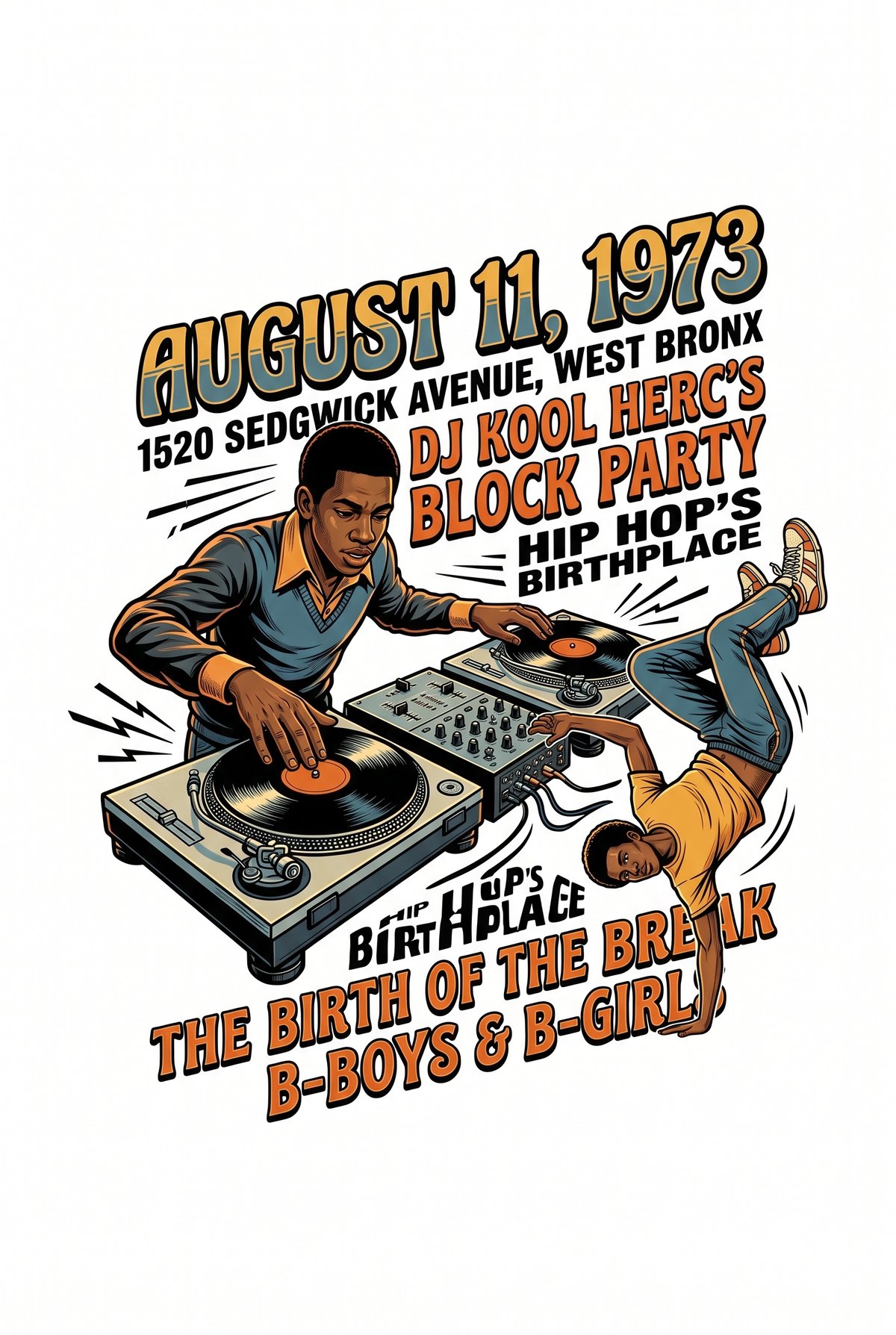
Most music genres don’t have a birthday. Hip hop kind of does. On August 11, 1973, in the rec room at 1520 Sedgwick Avenue in the West Bronx, a teenager named Cindy Campbell threw a back-to-school party and put her older brother in charge of the music. That brother went by DJ Kool Herc.
Herc had been watching how Bronx dancers reacted to records. They didn’t lose their minds during the verses — they lost their minds during the break, that little instrumental section where the drums and bass took over. So Herc grabbed two copies of the same record, two turntables, and a mixer, and started cutting back and forth between the breaks. Suddenly the 10-second drum break became three minutes long. Dancers went off. The kids who killed it during these stretched-out breaks got a name: b-boys and b-girls.
That party charged a quarter for guys, fifteen cents for girls. It also lit a fuse under an entire culture.
The Four Elements
By the late 70s, this thing brewing in the Bronx had crystallized into four pillars that any Gen Xer with a fat lace and a Members Only jacket can rattle off:
- DJing — turntablism, breaks, scratching, beat juggling
- MCing — rapping, hyping the crowd, telling stories over beats
- B-boying — breakdancing, locking, popping, windmills, headspins
- Graffiti — bombing subway cars and walls with style names
Afrika Bambaataa, a former gang member from the Bronx River Houses, formalized this framework through his Universal Zulu Nation, turning a street scene into something like a movement with rules, mythology, and elders.
Grandmaster Flash and the Tools of the Trade
Kool Herc had the vision. Grandmaster Flash brought the precision. A Barbadian-born tinkerer, Flash was obsessed with making the cuts cleaner. He pioneered the “clock theory” — using the spinning record label as a visual cue to know exactly where the break was — and developed cutting and back-spinning techniques that DJs still use today.
Then there was Grand Wizzard Theodore, a Bronx kid who, according to legend, accidentally invented scratching in 1975 when his mom yelled at him to turn the music down. He stopped a record with his hand mid-spin, heard that signature zik-zik-zik, and the rest is history.
Hip hop was DIY engineering before anyone called it that. No 808s yet. Just two turntables, a mixer, and whatever soul, funk, and rock breaks you could dig out of your dad’s record collection — James Brown, The Incredible Bongo Band’s “Apache,” Bob James’ “Take Me to the Mar-di Gras.”
1979: “Rapper’s Delight” Breaks Containment
For most of the 70s, hip hop existed exclusively as a live, in-person thing — block parties, park jams in Cedar Park, rec rooms, community centers. There were no hip hop records because nobody believed it could survive being put on vinyl. It was a scene, not a product.
Then Sylvia Robinson, a Harlem-born R&B singer running a small label called Sugar Hill Records, decided to gamble. She rounded up three guys who weren’t even from the established Bronx scene — Big Bank Hank, Wonder Mike, and Master Gee — and recorded them rapping over Chic’s “Good Times.” The result, “Rapper’s Delight,” hit the radio in late 1979 and went on to sell millions worldwide.
Suddenly, kids in suburban Ohio and rural Texas were reciting “a hip-hop, the hippie, the hippie, to the hip-hip-hop, you don’t stop” without ever having seen a Bronx park jam. The genie was out of the bottle.
The Message Hits Different
If “Rapper’s Delight” proved hip hop could be fun, Grandmaster Flash and the Furious Five’s “The Message” (1982) proved it could be journalism. Melle Mel’s verses about broken glass everywhere, rats in the front room, and the constant pressure of inner-city life turned rap from party music into a microphone for stories the evening news wasn’t telling.

That same year, Bambaataa dropped “Planet Rock,” built on a Roland TR-808 drum machine and a Kraftwerk sample. The 808 boom that would define everything from Miami bass to modern trap traces back to that record.
Hip hop was no longer just a Bronx thing. By 1983, it had its own movie — Wild Style, shot on location in the South Bronx with real graffiti writers, real DJs, and real b-boys. The next year came Beat Street and Breakin’, and suddenly every kid in America wanted a cardboard sheet and a pair of fat laces.
Run-DMC Kicks the Door In
Old-school hip hop had a uniform problem. The early acts dressed in studded leather, sequins, and disco glitz. Then in 1984, three guys from Hollis, Queens, walked onstage in black fedoras, black leather jackets, untied Adidas Superstars, and matching tracksuits — and changed everything.
Run-DMC didn’t just look different. They sounded different. Stripped-down beats, no melody, two MCs trading lines over Jam Master Jay’s cuts. By 1986, their Raising Hell album had sold three million copies, their Aerosmith collab “Walk This Way” had the rock kids paying attention, and Adidas had cut them a million-dollar endorsement deal — the first of its kind for a rap act.
Hip hop was now mainstream enough to sell sneakers. That was the moment.
The Class of ’86–’88
The mid-to-late 80s is what old heads call the Golden Age. The talent in this stretch is absurd:

- LL Cool J — “I Need Love,” “Mama Said Knock You Out,” the boombox on the shoulder
- Beastie Boys — three white Jewish kids from NYC who turned Licensed to Ill into a frat-house phenomenon
- Public Enemy — Chuck D, Flavor Flav, and the loudest political rap ever recorded
- Eric B. & Rakim — the most quietly devastating MC of the era
- Boogie Down Productions — KRS-One, the Teacha
- Salt-N-Pepa — proof that the boys didn’t have a monopoly on the mic
- EPMD, Slick Rick, Big Daddy Kane, Kool G Rap — the bench was deep
Represent the Culture
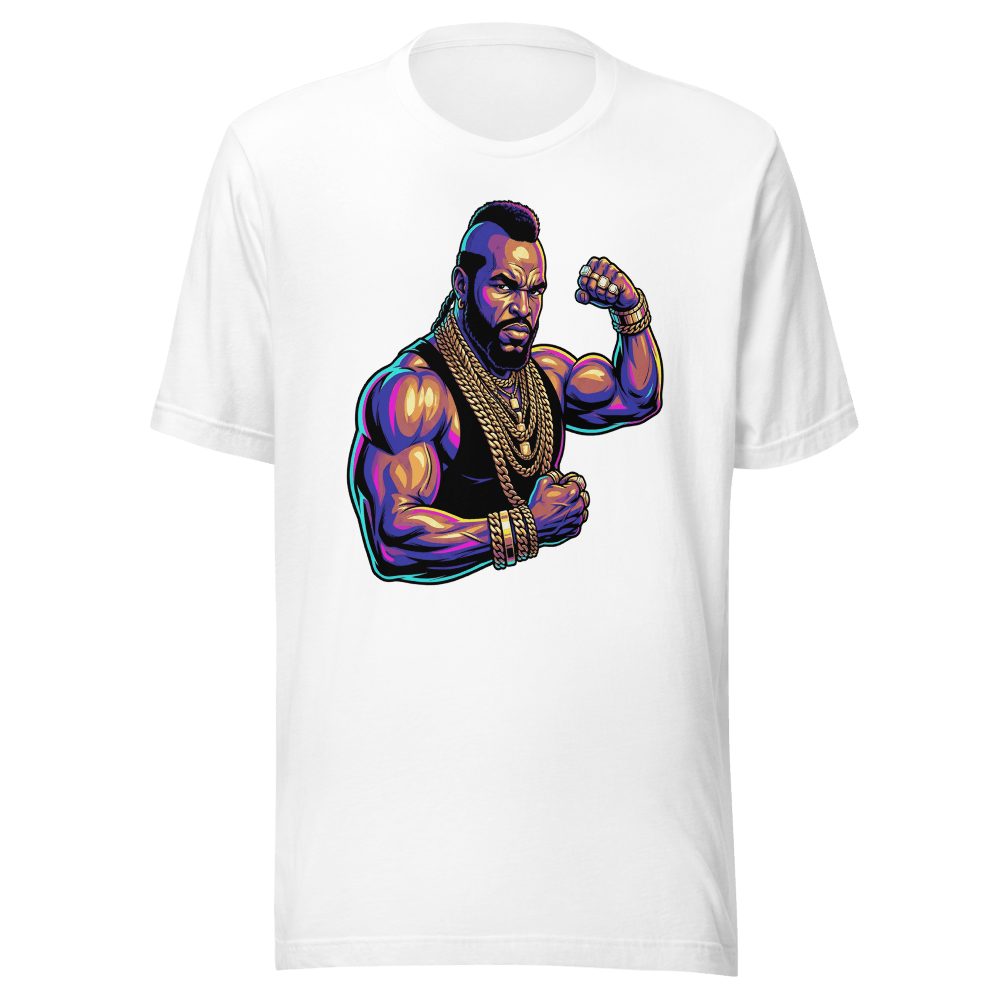
The man who started it all deserves a spot on your chest. Grab the official DJ Kool Herc August 11, 1973 tee from the RetroRadical shop.
The Boombox, the Walkman, and the Streets
If you were Gen X in the 80s, hip hop wasn’t just music — it was a thing you carried. The boombox on the shoulder, blasting LL or Run-DMC down a city block, was a status symbol. Then the Sony Walkman miniaturized it into your back pocket, and suddenly you were rapping along on the bus to school with foam-padded headphones squashing your hair.
NYC subway cars rolled through the city covered in spray-paint masterpieces by writers like Dondi, Lady Pink, and Seen. The MTA waged war on graffiti through the decade and eventually won — but for a few magical years, every train was a moving art gallery.
1988: Yo! MTV Raps Brings It to the Suburbs
For most of the 80s, MTV refused to play rap. The genre was relegated to local radio shows and a handful of late-night video programs. That changed on August 6, 1988, when Yo! MTV Raps debuted with Fab 5 Freddy as host. Within months it became one of the highest-rated shows on the network.
Suddenly, kids in Iowa farm towns and California beach suburbs were watching Public Enemy videos, learning who Big Daddy Kane was, and copping their first Cross Colours hoodie. The show ran until 1995 and is arguably the single biggest accelerator of hip hop’s transition from regional NYC subculture to global pop monoculture.
Why It Still Hits
Hip hop’s 80s era hits Gen X right in the chest because it’s the genre we watched grow up alongside us. We saw it go from a thing your cousin in the Bronx mentioned to a thing on the radio to a thing on TV to the dominant cultural force on Earth. We were there for the boomboxes, the cardboard, the fat laces, the Cazals, the four-finger rings, the Adidas with no laces.
And the records still slap. Throw on “Sucker M.C.’s” or “Eric B. Is President” or “Paid in Full” right now and tell me they sound dated. They don’t. They sound like the moment a Bronx kid named Herc figured out how to loop a drum break and accidentally rewrote the next 50 years of music.
Represent the Culture
The man who started it all deserves a spot on your chest. Grab the official DJ Kool Herc August 11, 1973 tee from the RetroRadical shop.
Sources
- History.com — How Hip-Hop Got Its Start
- Smithsonian Magazine — The Birthplace of Hip-Hop
- Britannica — Hip-Hop history and origins
- Rolling Stone — 50 Greatest Hip-Hop Songs
- PBS — Hip Hop: Beyond Beats and Rhymes