MC Hammer: The Rise, the Pants, the Bankruptcy, and the Legacy
On February 12, 1990 — the same day Nelson Mandela walked free from Victor Verster Prison — a 27-year-old kid from Oakland named Stanley Kirk Burrell released his third studio album and accidentally changed pop culture forever. By August, it was selling 100,000 copies a day. By the following spring, it had gone diamond with over 10 million copies sold in the U.S. alone. Please Hammer, Don’t Hurt ‘Em remains the best-selling rap album in history, and MC Hammer remains one of the most fascinating cautionary tales — and unsung cultural architects — in American music.
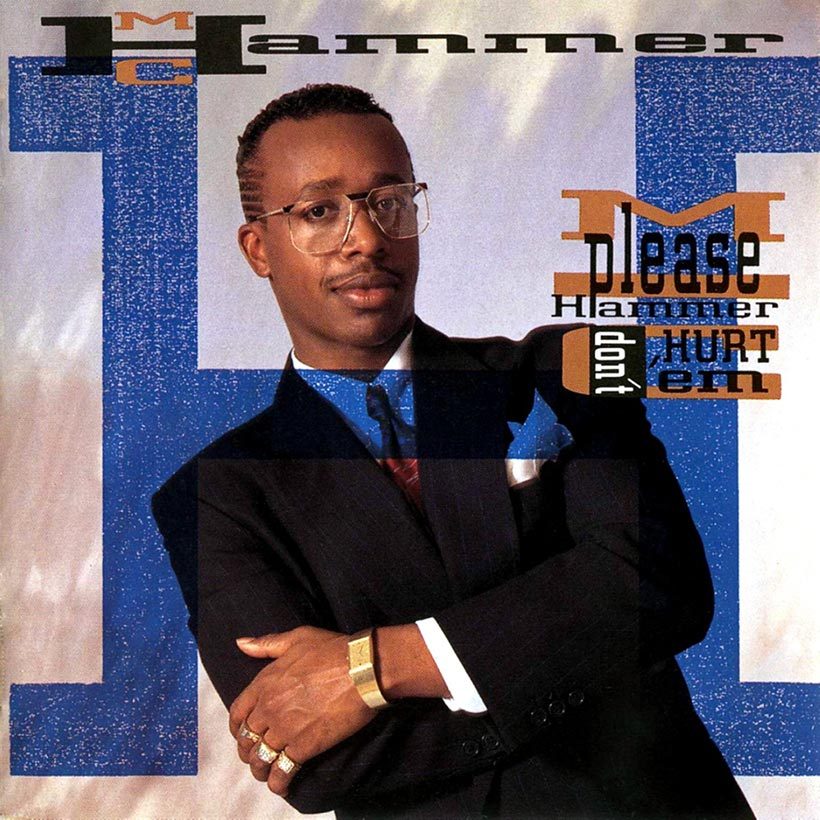
From Oakland Parking Lots to Capitol Records
Before the pants, before “Stop! Hammer Time,” before the bankruptcy, there was a kid doing splits in a baseball stadium parking lot. Hammer — born Stanley Burrell in 1962 — grew up poor in East Oakland, one of eight children. At age 11, he was dancing outside Oakland A’s games at the Coliseum when team owner Charlie Finley spotted him and hired him as a clubhouse assistant. The A’s players nicknamed him “Hammer” because they thought he resembled Hank Aaron. Reggie Jackson helped coin the nickname. That origin story — poverty, hustle, a chance encounter with the right person at the right time — would define everything that followed.
After high school and a three-year Navy stint, Hammer came back to Oakland with music on his mind. He borrowed $40,000 from two former A’s players, Mike Davis and Dwayne Murphy, and launched Bust It Productions. His 1986 independent debut, Feel My Power, sold 60,000 copies — enough for Capitol Records to notice. They signed him in 1988 with a $1.75 million advance. Two years later, they were watching him become the biggest thing in American pop music.
U Can’t Touch This: The Sample That Broke Hip Hop Open
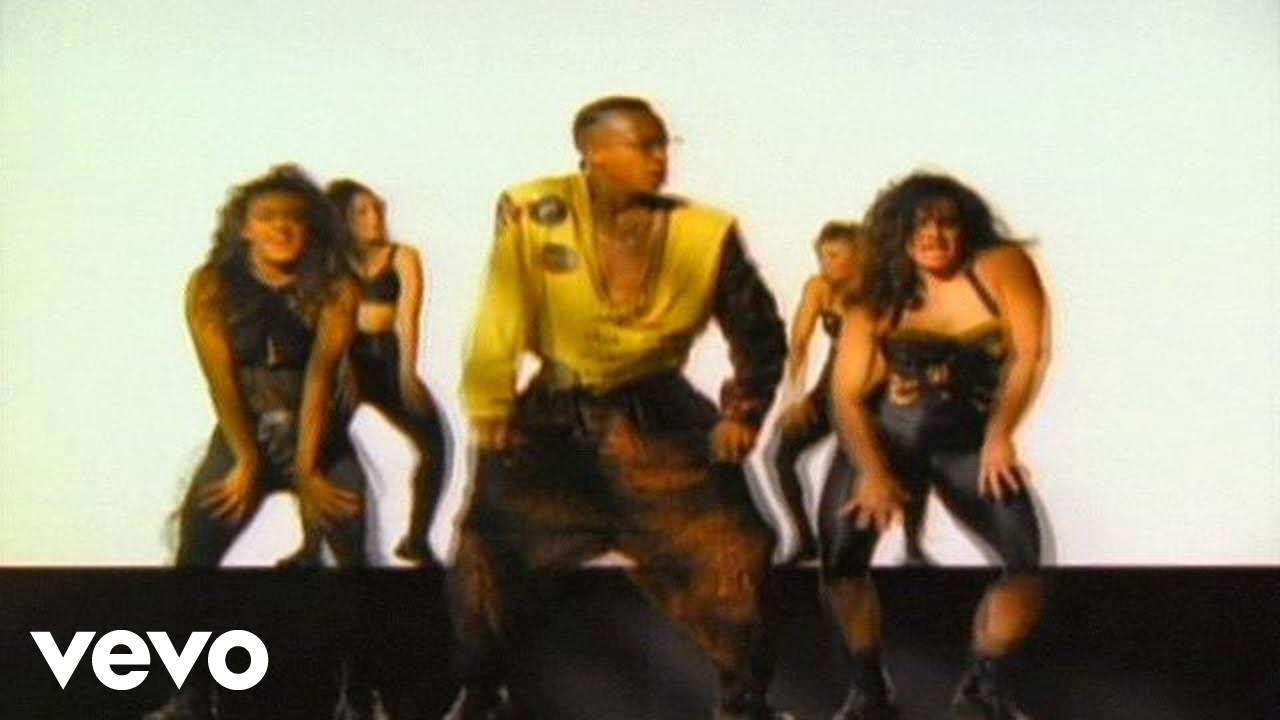
The key to understanding “U Can’t Touch This” is understanding what it borrowed and what it added. The foundation is Rick James’ 1981 funk monster “Super Freak” — that unforgettable opening bassline riff, looped and flipped into a hip hop engine. Rick James initially hated it. He later sued for copyright infringement. They settled out of court, with James receiving a songwriting credit and a cut of the royalties that probably set him up for the rest of his life.
But here’s the thing: Hammer knew exactly what he was doing with that sample. He wasn’t hiding from it. He was using it as a bridge. Older listeners — the parents, the aunts and uncles — heard that bassline and felt something familiar. It lowered their guard. And then Hammer walked right through the door they’d left open, bringing hip hop with him into living rooms across the country that had previously been off-limits to the genre. “U Can’t Touch This” peaked at No. 8 on the Billboard Hot 100 — genuinely remarkable for a rap track in 1990 — and hit No. 1 in Australia, the Netherlands, New Zealand, and Sweden. At the 33rd Grammy Awards, it won Best Rap Solo Performance and Best R&B Song. It was the first rap song ever nominated for Grammy Record of the Year.
The Pants. Yes, We Have to Talk About the Pants.
Here is an objective fact: no single item of clothing in the 1990s was more instantly recognizable than MC Hammer’s parachute pants. Wide at the crotch, tapered at the ankle, often made of shimmering material in colors that could blind you from three rows back — they became so synonymous with him that they’re still called “Hammer pants” today, 35 years later. That’s a level of fashion brand recognition that most designers spend careers trying to achieve.
They weren’t just a costume choice. The pants were functional. Hammer was a genuinely exceptional dancer — BET would later rank him the No. 7 best dancer of all time — and those wide-cut trousers allowed him to execute his rapid-fire footwork, the splits, the Running Man, the Hammer Dance, without restriction. The music video for “U Can’t Touch This” was essentially a 4-minute dance showcase, and it worked because Hammer could actually move. MTV ate it up. The clip was in heavy rotation for most of 1990.
What often gets lost in the nostalgia is how genuinely skilled Hammer was as a performer. His live show was a full-scale spectacle: backup dancers, elaborate choreography, costume changes, a band. He wasn’t just a rapper who could dance a little. He was a showman in the tradition of James Brown, and the pants were part of the presentation.
The Grammy Moment and the Album That Redefined Hip Hop’s Ceiling

Please Hammer, Don’t Hurt ‘Em wasn’t just a commercial success. It was a demonstration. Before that album, hip hop’s commercial ceiling was the R&B chart. After it, everything changed. The album spent 28 weeks at No. 1 on the Billboard 200. It was certified diamond — the first rap album ever to achieve that distinction. It sold 18 million copies worldwide. It was hip hop’s first undeniable mainstream crossover moment, predating Eminem and Jay-Z by a decade, making it possible for the genre to be taken seriously as a commercial force.
The Grammy performance in February 1991 was another milestone — Hammer performed on national television in his full theatrical regalia, and America watched. Three Grammy wins. Endorsement deals with Pepsi and British Knights sneakers. Cartoon appearances. A level of visibility that no rapper had achieved before.
The hip hop purists hated it, of course. The knock was that Hammer was too pop, too clean, too corporate — that he was “watering down” the artform. Even Tupac Shakur initially took shots at him. (Tupac later apologized and, in a remarkable turn, ended up co-writing tracks for Hammer’s unreleased Death Row album.) The criticism wasn’t entirely wrong. Hammer’s music was deliberately accessible. But accessible doesn’t mean empty, and opening doors for an artform is worth something, even if the doorman doesn’t get invited to the party.
The Entourage, the Mansion, and the Point of No Return

At his peak, Hammer was earning around $33 million a year. By most rational measures, that is an enormous amount of money. Hammer found ways to spend it faster.
The mansion came first. He purchased a property in Fremont, California for $5 million in 1990, then spent another $12 to $20 million building a 40,000-square-foot palace on the site. The gates were gold-plated and inscribed with “Hammer Time.” Inside: Italian marble floors, a 33-seat theater, two swimming pools (one shaped like his famous pants), a bowling alley, a recording studio, a baseball diamond, tennis courts, and a 17-car garage. The monthly maintenance alone ran into the hundreds of thousands.

Then there was the entourage. At its peak, Hammer employed approximately 200 people — friends, family members, security, dancers, producers, and hangers-on — at a cost of somewhere between $500,000 and $1 million per month. He also owned 17 to 20 luxury cars, a private jet, two helicopters, and at one point maintained a stable of 21 racehorses. He gave generously to his community in Oakland, funding educational programs and community initiatives, which is genuinely admirable but also expensive.
The “Too Legit to Quit” era (1991-1992) saw Hammer double down instead of scale back. The “2 Legit 2 Quit” music video — a 14-minute spectacle featuring cameos from Jose Canseco, Wayne Gretzky, Isiah Thomas, Jerry Rice, and others — reportedly cost $3.5 million to make and remains one of the most expensive videos in history. The album sold well but not Please Hammer well, and the gap between income and expenditure was closing fast.

The Fall: Gangsta Rap, Overexposure, and the Bankruptcy Filing
The mid-1990s were not kind to MC Hammer. Hip hop was changing rapidly — Dr. Dre’s The Chronic (1992) and Snoop Dogg’s Doggystyle (1993) repositioned the genre’s cultural center of gravity toward West Coast gangsta rap. What had been Hammer’s greatest asset — his mainstream accessibility, his family-friendly image — became a liability almost overnight. He was suddenly uncool in a genre where cool was the only currency that mattered.
He tried to adapt. The Funky Headhunter (1994) was Hammer’s attempt at a harder sound, complete with new tattoos and a more aggressive persona. It didn’t convince anyone. The pop audience had moved on; the hip hop community never entirely bought in. Album sales cratered. The touring revenue dried up. And the payroll — those 200 people, those helicopters, those racehorses — kept coming due every month.
On April 1, 1996, MC Hammer filed for Chapter 11 bankruptcy protection in Oakland, California. His debts exceeded $13 million. His listed assets were approximately $1 million. The IRS was owed around $800,000. The state of California wanted $500,000 in back taxes. The Fremont mansion was put up for sale at $6.8 million — a dramatic loss on what had cost several times that to build — and eventually sold for $5.3 million in 1997. It now goes by the name Vista Del Sol Estate, which is considerably less memorable than “Hammer Time.”
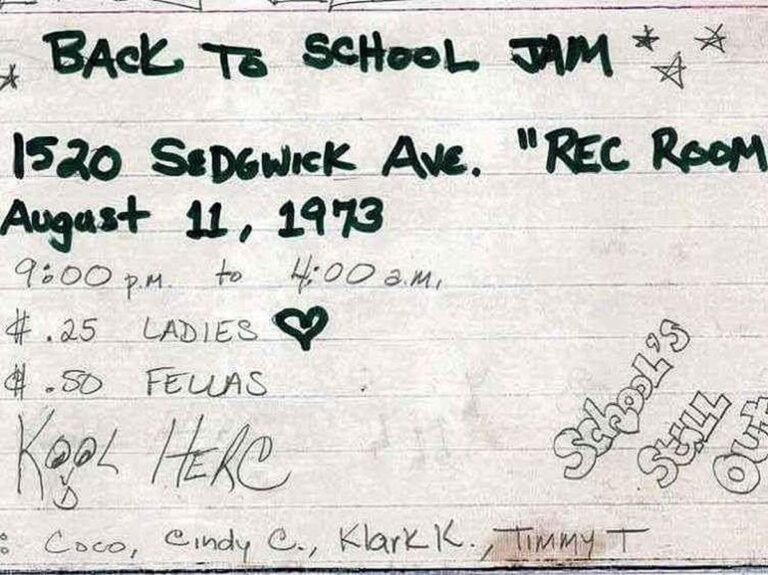
Rep the roots of hip hop. Our DJ Kool Herc shirt celebrates the August 11, 1973 Bronx block party that started it all.
🛒 Shop the DJ Kool Herc Hip Hop Birth T-Shirt →
Or browse all retro gear at the Retro Radical Shop
The Legacy: More Than a Punchline
Pop culture has a tendency to reduce MC Hammer to the pants and the bankruptcy, as though the cautionary tale is the entire story. It isn’t.
He was the first hip hop artist to go diamond. He proved that the genre could sustain arena tours, sell out venues across Europe and Asia, land major corporate endorsements, and win Grammy Awards in categories beyond rap. The business infrastructure of modern hip hop — the touring apparatus, the brand partnerships, the multi-media presence — Hammer helped build the blueprint even if he didn’t benefit from it long-term.
His influence on performance culture runs deep. Look at modern hip hop shows — the elaborate stage productions, the synchronized dancers, the theatrical spectacle — and you can draw a straight line back to Hammer’s 1990-91 world tour. Missy Elliott, Chris Brown, the entire school of hip hop performers who understand that the visual element is inseparable from the music — they all owe something to a kid from Oakland who understood that before anyone else did.
After the bankruptcy, Hammer reinvented himself repeatedly. He became an ordained minister. He launched tech ventures — DanceJam.com, a WireDoo search engine — that never quite caught on but earned him genuine respect in Silicon Valley circles. He invested early in companies that included Pandora, Salesforce, YouTube, and Twitter. He performed at the Super Bowl halftime show in 2012 alongside Lil Wayne and Nicki Minaj, doing his dance moves at 50 years old, and the crowd lost its mind.
He’s 64 years old now. He still goes by MC Hammer. And when that bassline drops at a party — the Rick James riff, the one that’s been in your head since 1990 — everybody in the room knows every word. That’s a legacy. U can’t touch that.
If the story of early 90s pop culture interests you, check out our deep dives into grunge’s strange trip from Aberdeen basements to Anna Wintour’s front row and how Cameron Crowe’s Singles captured the grunge moment before America noticed. The early 90s were a strange, fascinating time for American music — and MC Hammer was right in the middle of it, for better and worse.
Sources
- MC Hammer — Wikipedia
- Please Hammer Don’t Hurt ‘Em — Wikipedia
- U Can’t Touch This — Wikipedia
- MC Hammer Net Worth & Biography — AfroTech
- The Hammer Time Mansion — Celebrity Net Worth
- 30 Years of Please Hammer Don’t Hurt ‘Em — Level/Medium
- Grammy Rewind: MC Hammer 1991 — Grammy.com
- U Can’t Touch This sampling Super Freak — WhoSampled
- MC Hammer: From Oakland’s Streets to Global Hip-Hop Fame — OldSchoolHipHop.com
- MC Hammer: Hip-Hop’s Unacknowledged Trendsetter — Shatter the Standards