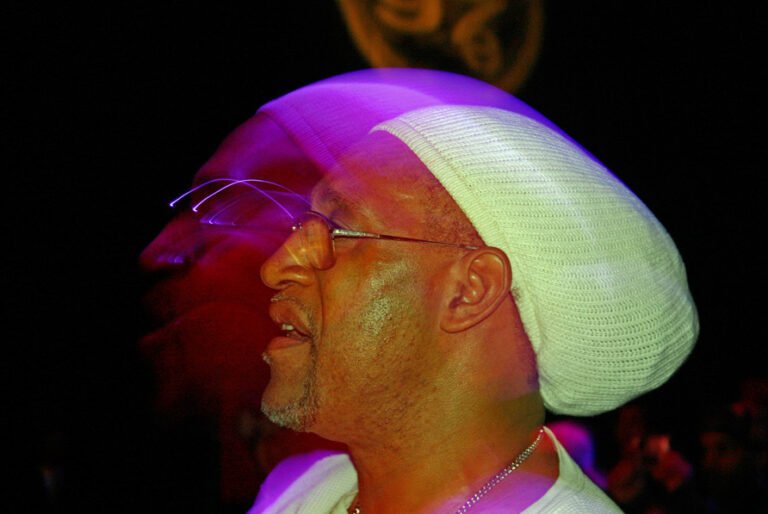
DJ Kool Herc spinning records at 1520 Sedgwick Avenue, marking the birth of hip hop in 1973
|

The Night Hip Hop Was Born: What Really Happened in the Bronx

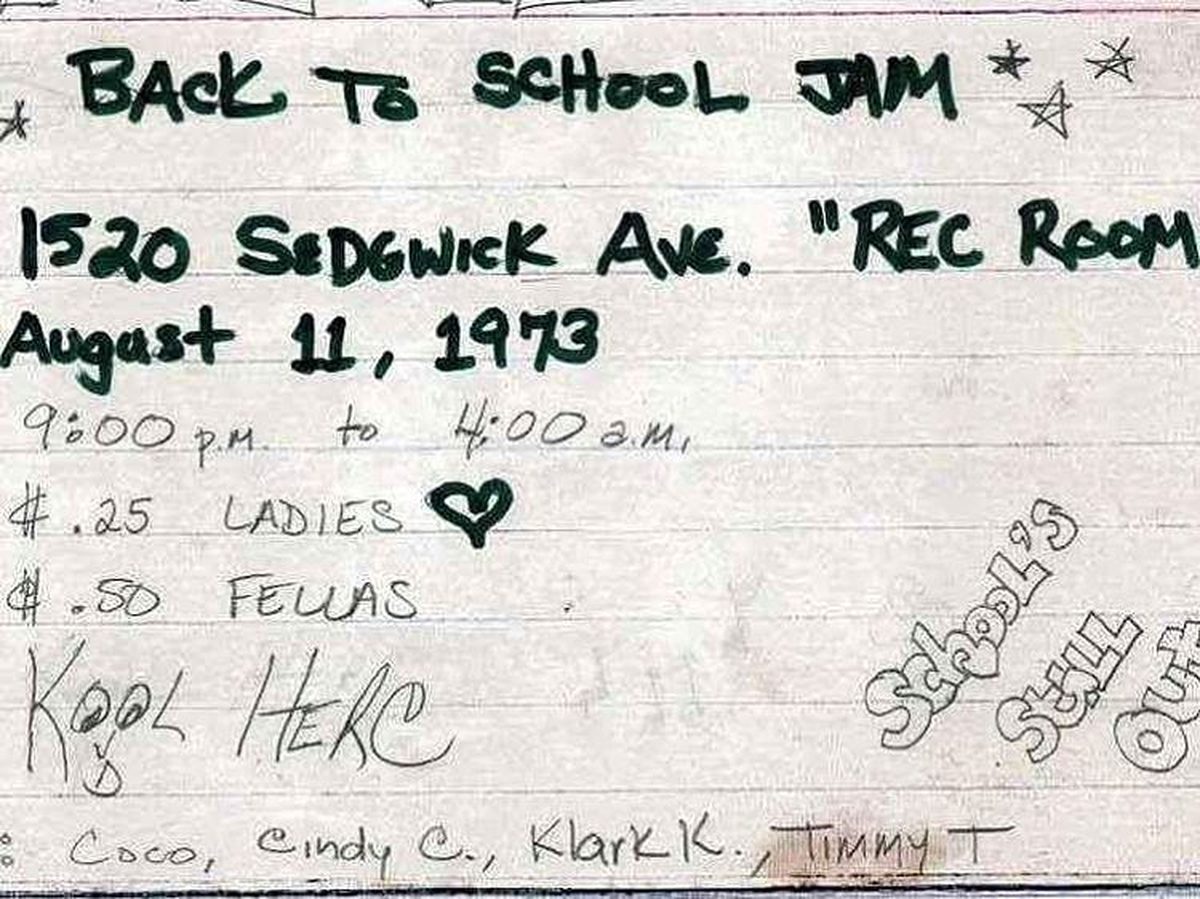
The history of hip hop begins on one specific night: August 11, 1973, in the recreation room of an apartment building at 1520 Sedgwick Avenue in the West Bronx. An 18-year-old Jamaican kid named Clive Campbell — who the neighborhood would soon know as DJ Kool Herc — hooked up two turntables, grabbed a microphone, and played a back-to-school party his little sister Cindy had thrown to raise money for clothes. That party, charging a quarter for girls and fifty cents for boys, is now recognized worldwide as the birth of hip hop culture.

What makes the history of hip hop so wild is how fast it moved. In the span of roughly thirteen years — from that Sedgwick Avenue rec room in 1973 to Run-DMC’s “Walk This Way” in 1986 — an underground block-party sound became the most influential youth culture on the planet. Here are seven nights, records, and moments that tell the real story.
History of hip hop DJ Kool Herc 1520 Sedgwick Avenue 1973

1. August 11, 1973: The Night DJ Kool Herc Invented Hip Hop

The history of hip hop has a real address: 1520 Sedgwick Avenue, Bronx, New York. That night Cindy Campbell rented the building’s rec room for $25 and handwrote invitations on index cards. Her brother Clive lugged his sound system down from their apartment and set up two turntables between the columns.

What Herc did was brand new. He noticed that dancers went wild during the “break” — the short drum-and-percussion section of a funk record where the vocals dropped out. So instead of playing one song at a time, he cued two copies of the same record on different turntables and kept looping the break. He called it the “merry-go-round.” When one break ended on turntable A, he dropped the same break fresh on turntable B. The dancers never had to stop. According to the Smithsonian’s oral history of the block party, this simple trick is the genetic code of every hip hop song ever made.

His friend Coke La Rock grabbed the mic and started shouting rhymes over the breaks — “rock on my mellow,” “ya rock and ya don’t stop.” That’s the first recorded instance of someone MCing over a DJ. The four elements of hip hop — DJing, MCing, breaking, graffiti — all trace back to the room that night.

2. Why the Bronx? The Conditions That Birthed a Culture

1520 Sedgwick Avenue Bronx birthplace of hip hop

You can’t tell the history of hip hop without talking about what the Bronx actually looked like in 1973. The borough was on fire — literally. Landlords were torching buildings for insurance money. The Cross Bronx Expressway, rammed through working-class neighborhoods by Robert Moses in the 1960s, had gutted the South Bronx. Unemployment, poverty, and gang violence were the baseline.

Yet that pressure cooker produced one of the most creative cultural explosions of the 20th century. Teenagers had no money for clubs, no access to Manhattan studios, and not enough space at home to practice instruments. So they made music out of two turntables, a crossfader, and their parents’ funk records. They made art out of spray paint and subway cars. They made dance out of cardboard on a sidewalk.

This was the same stretch of years when the death of disco was giving way to new wave on the pop charts, but in the Bronx something entirely different was bubbling up. Hip hop wasn’t a reaction to disco — it was a whole new language built from scratch in a neighborhood the city had basically written off.

3. Grandmaster Flash and the Science of the Turntable

Grandmaster Flash Bronx hip hop pioneer turntablism

If Kool Herc invented the format, Joseph Saddler — Grandmaster Flash — turned it into a science. A teenager studying electronics at Samuel Gompers Vocational School, Flash wanted to know exactly when the break would hit so he could drop it clean every time. He developed what he called the “Quick Mix Theory” — marking the run-in groove on a record with a grease pencil so he could spin back and cue the break within a beat.

Flash also pioneered “punch phrasing” (stabbing in a horn or drum hit on the upbeat) and popularized scratching — the technique Grand Wizzard Theodore had accidentally discovered at home when his mother yelled at him to turn the music down. By 1981 Flash put all of it together on The Adventures of Grandmaster Flash on the Wheels of Steel, a seven-minute turntable clinic still regarded as the Rosetta Stone of DJing. His original custom mixer is now in the collection of the Smithsonian’s National Museum of American History.

Then came the record that changed everything. In 1982 Flash and the Furious Five dropped “The Message.” Over a cold electro bassline, Melle Mel rapped about broken glass, rats, and the daily reality of the South Bronx. Rap wasn’t just party music anymore. It was reporting.

4. Afrika Bambaataa, the Zulu Nation, and the Four Elements

Kool Moe Dee old school hip hop pioneer Treacherous Three

Over in the Bronx River Houses, a former Black Spades gang member named Kevin Donovan was watching Kool Herc and taking notes. He renamed himself Afrika Bambaataa after the 19th-century Zulu chief, and in 1973 he started organizing block parties of his own. By 1977 he had founded the Universal Zulu Nation — a cultural organization that gave the hip hop scene its name, its philosophy, and its four elements.

Bambaataa’s codification was huge. Before him, there was no umbrella term for what DJs, MCs, b-boys, and graffiti writers were all doing. He argued they were expressions of one culture: DJing, MCing, breaking, and writing. (A fifth element — knowledge — got added later.) That framework is how we still describe hip hop half a century later.

Then in 1982 Bambaataa and producer Arthur Baker released “Planet Rock.” It sampled Kraftwerk’s “Trans-Europe Express,” ran vocoders over a Roland TR-808 drum machine, and sold over 650,000 copies. Suddenly hip hop had crossed over into electro, dance music, and pop. Every synth-driven rap track from Dr. Dre’s G-funk to 2010s Atlanta trap owes a debt to that record.

5. The Sugarhill Gang Puts Rap on Wax (1979)

DJ Kool Herc and KRS-One early hip hop pioneers

For six years hip hop existed only in parks, clubs, and on cassette tapes passed hand to hand. Then in the summer of 1979 a former R&B singer named Sylvia Robinson walked into a pizzeria in Englewood, New Jersey, heard a kid named Henry “Big Bank Hank” Jackson rap behind the counter, and decided rap music could sell records.

Sylvia and her husband Joe Robinson ran a tiny label called Sugar Hill Records. She recruited Hank, Michael “Wonder Mike” Wright, and Guy “Master Gee” O’Brien, named them the Sugarhill Gang, and recorded “Rapper’s Delight” in one take over a live band playing Chic’s “Good Times.” The 12-inch single ran almost 15 minutes.

“Rapper’s Delight” hit number 36 on the Billboard Hot 100 in January 1980 — the first rap record ever to crack the top 40. The Library of Congress inducted it into the National Recording Registry in 2011. The Bronx pioneers were conflicted about it — Big Bank Hank’s verse used lyrics borrowed from Grandmaster Caz without credit — but the song did what it needed to do. It put rap on the radio, worldwide, for the first time.

6. Block Parties, Breakdancing, and the Birth of B-Boy Culture

DJ Red Alert Grandmaster Caz early hip hop block parties Bronx

The reason Kool Herc looped the break in the first place was because the dancers demanded it. He called them “break boys” — b-boys. When the drum break hit, they dropped to the floor and went off. Top rocks, drops, floor rocks, freezes, power moves. By 1977, crews like the Rock Steady Crew (originally from the Bronx, then famous out of Manhattan) had turned breaking into a full competitive sport.

Breaking went mainstream fast. The 1983 PBS documentary Style Wars put Rock Steady and the graffiti scene on TV. Then came the 1984 cannonball of breakdancing movies: Breakin’, Beat Street, and Breakin’ 2: Electric Boogaloo. Suddenly every kid in every mall in America was trying to pop, lock, and windmill on a flattened cardboard box. We broke down the whole breakdancing movie craze and its impact in a separate piece, and it’s worth noting how weird it was that a Bronx street culture ended up as a suburban mall activity inside of ten years.

The same years, graffiti writers like Dondi, Lady Pink, Lee Quinones, and Futura 2000 were turning New York’s subway cars into rolling art galleries. Photographer Henry Chalfant’s 1984 book Subway Art — co-authored with Martha Cooper — exported the aesthetic to Berlin, Tokyo, and São Paulo before the MTA even finished its graffiti crackdown.

7. How Hip Hop Went Global by 1986

Grandmaster Flash and the Furious Five turntables The Message era

By the middle of the 1980s, hip hop had escaped the Bronx. Run-DMC — three kids from Hollis, Queens — stripped rap down to hard drum machines, rock guitars, and Adidas sneakers. Their 1986 collaboration with Aerosmith on “Walk This Way” went top 5 on the Billboard Hot 100 and became the first rap video in heavy rotation on MTV. The same year their album Raising Hell went triple platinum.

The Beastie Boys’ Licensed to Ill hit number one in 1987. LL Cool J, Public Enemy, Eric B. & Rakim, Salt-N-Pepa, and a new wave of California artists — Ice-T, N.W.A — pushed the sound in every direction. By the end of the decade, hip hop was outselling rock in several American markets.

Kool Herc’s looped break in a Bronx rec room had become a global industry. The sampler, the turntable, and the breakbeat were now standard tools. And the culture Afrika Bambaataa had named had conquered the world the same way the Thriller-era Michael Jackson phenomenon had: through MTV, sneakers, and unrelenting teenage obsession.

Hip Hop Evolution: How Kool Herc Threw the First Party

If you want to hear the story straight from the man himself and the people who were in the room, the Netflix documentary Hip Hop Evolution covers it better than any article can. Here’s the key clip on the Sedgwick Avenue party:

The Record That Started It All

Rakim and DJ Kool Herc hip hop legends history of hip hop

There’s a question hip hop heads still argue about: what record did Kool Herc actually play on August 11, 1973? The consensus among the people who were there is that the two records Herc looped most that night were James Brown’s “Give It Up or Turnit a Loose” and the Incredible Bongo Band’s cover of “Apache.” That second one — a 1973 instrumental originally recorded by a session group in Vancouver of all places — has been called the “national anthem of hip hop.” Its drum break has been sampled on thousands of records, from the Sugarhill Gang to the Roots to Jay-Z.

The other workhorse was the Winstons’ 1969 B-side “Amen, Brother,” whose six-second drum break (the “Amen break”) would later become the foundation of not just hip hop but jungle, drum and bass, and hardcore techno. Kool Herc picked a handful of records he thought had the best breaks, and unknowingly programmed the DNA of global dance music for the next fifty years.

Why the History of Hip Hop Still Matters

The history of hip hop is now its own subject taught at Harvard, Cornell, and NYU. The Cornell University Library’s Hip Hop Collection holds more than 10,000 of Joe Conzo Jr.’s photographs documenting the South Bronx scene from 1976 to 1984. The Smithsonian has Grandmaster Flash’s mixer. 1520 Sedgwick Avenue is on the National Register of Historic Places.

But the real significance isn’t in the museums. It’s that a group of teenagers in a neighborhood nobody cared about, with no money and almost no institutional support, built the most dominant popular culture of the last half-century out of what they had in their bedrooms and on the sidewalk. Every time you hear a sampled drum break, every time an MC grabs a mic, every time a kid tries to spin on his head, you’re hearing Sedgwick Avenue, 1973. The NPR 50-year retrospective said it cleanest: “It started as a party. It became a language.”

If you’re a Gen X kid who grew up taping 98.7 Kiss FM, wearing Adidas shell toes, trying to pop-and-lock on your kitchen linoleum, or copying graffiti tags into your school notebook — this is your history too. It started in that rec room. And it never really stopped.

Sources

  1. Smithsonian Magazine — How the Block Party Became an Urban Phenomenon — Oral history of Bronx block parties and DJ Kool Herc.
  2. NPR — 50 Years Ago, A Summer Party in the Bronx Gave Birth to Hip-Hop — Detailed account of the August 11, 1973 party.
  3. Rolling Stone — Kool Herc and the History (and Mystery) of Hip-Hop’s First Day — Interviews with Herc, Cindy Campbell, and Coke La Rock.
  4. Library of Congress — National Recording Registry essay on “Rapper’s Delight”
  5. 1520 Sedgwick Avenue — The Official Birthplace of Hip Hop — History and legacy of the building.
  6. Cornell University Hip Hop Collection — Joe Conzo Jr. Archive — 10,000+ photographs documenting the South Bronx scene, 1976–1984.

Similar Posts

Leave a Reply

Your email address will not be published. Required fields are marked *