Livin’ on a Prayer Meaning: The Story Behind Bon Jovi’s Working-Class Anthem
Jon Bon Jovi almost threw the biggest song of his career onto a movie soundtrack and walked away from it. That’s not band mythology padded out for a VH1 special — it’s the guy who sang it telling the truth about the day he nearly buried “Livin’ on a Prayer” before anyone outside a Vancouver studio ever heard it. Four decades later, it’s the song wedding DJs play to get the whole room screaming, the song that turns a half-empty sports bar into a chorus, and the one Bon Jovi still can’t get through a set without.
Here’s the real Livin’ on a Prayer meaning — how a “spooky, moody” leftover about a dockworker and a diner waitress turned into the biggest rock anthem of the 1980s, and why it still works.
The Song Nobody Wanted to Write
By early 1986, Bon Jovi’s label had a problem. Their second album, 7800° Fahrenheit, had underperformed, and the band needed outside help to find the hits buried in their sound. That help came in the form of Desmond Child, a Florida-born songwriter already known around the industry as “the Hit Doctor” for his work turning KISS’s “I Was Made for Lovin’ You” into a disco-rock smash and shaping hits for Cher.
The Retro Almanac
A monthly roundup of "on this day" highlights from that month, decades back — plus first dibs on new retro merch drops. No spam, just the good stuff.
Jon Bon Jovi didn’t love the idea of an outsider fixing his songs, but he made peace with it fast. “What’s wrong with collaborating with people like him, who can help to give us the extra 10 per cent out of a song?” he said, comparing Child’s role to George Martin’s with the Beatles. For Slippery When Wet, Child co-wrote four tracks with Jon Bon Jovi and guitarist Richie Sambora — including the album’s two biggest singles, “You Give Love a Bad Name” and “Livin’ on a Prayer.”
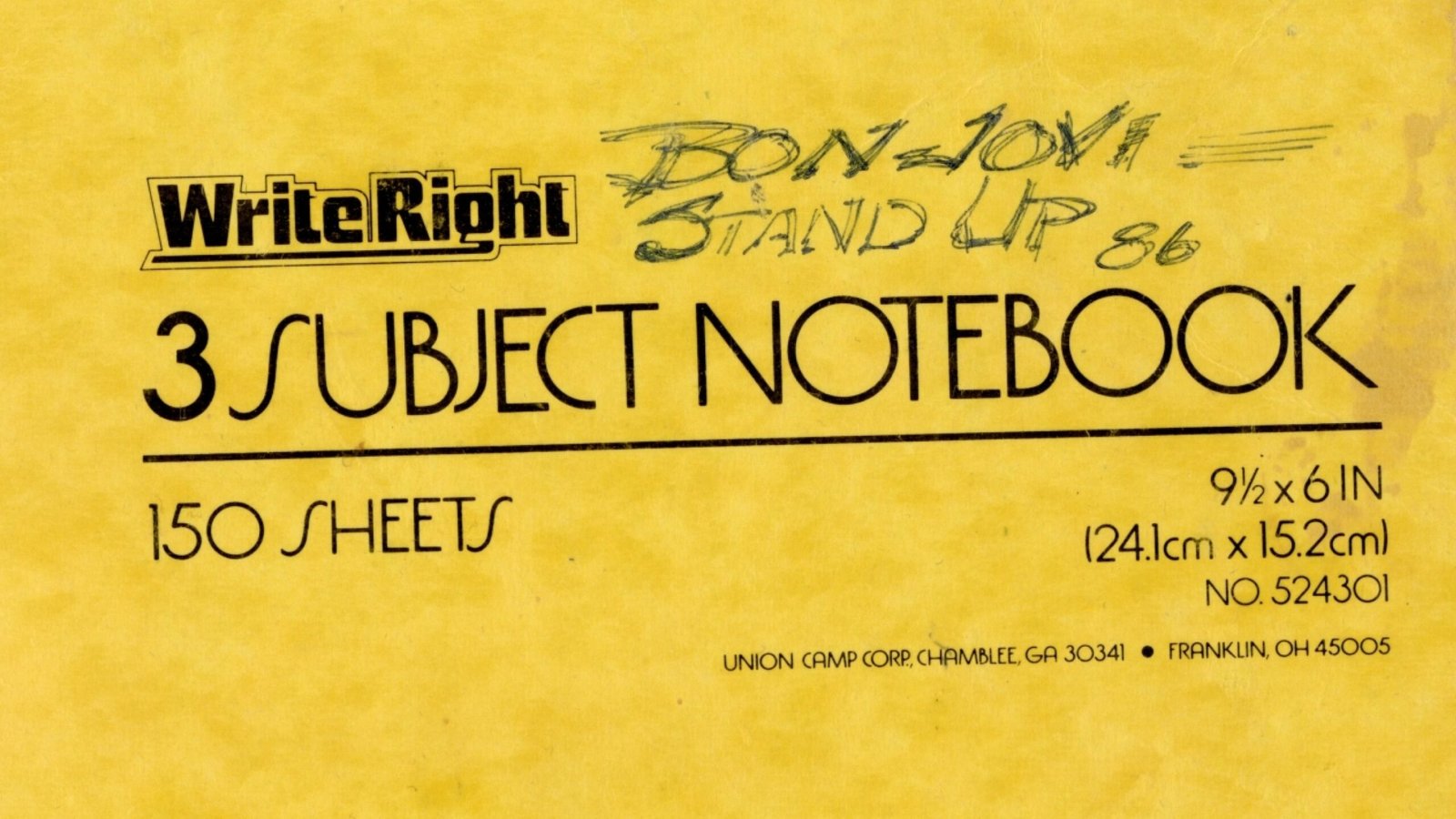
Jon Bon Jovi and Richie Sambora working out songs at Sambora’s family home, January 1986.
“Livin’ on a Prayer” came together on a day, by Bon Jovi’s own account, when “none of us had any ideas.” The three writers started talking about where they’d come from instead — Jon and Richie both grew up working-class in New Jersey, and Desmond Child had spent the ’70s driving a cab in New York. Out of that conversation came two characters who didn’t have a cent between them and refused to let go of each other anyway.
Meet Tommy and Gina
The couple at the center of the song weren’t invented from nothing. Desmond Child had dated Maria Vidal, a singer in his group Desmond Child & Rouge, back when she waited tables at a New York diner — her coworkers nicknamed her “Gina” because she resembled the actress Gina Lollobrigida. When Child first sketched out the lyric, the male lead shared his own birth name: Johnny. Jon Bon Jovi pointed out the obvious problem — his own name was already Jon — so Child renamed him Tommy instead.
Tommy’s job loss wasn’t invented either. The line “Tommy used to work on the docks / union’s been on strike, he’s down on his luck” was pulled straight from the real 1977 dockworkers’ strike that Sambora, Bon Jovi, and Child had all witnessed growing up around New Jersey and New York. It’s the detail that turns “Livin’ on a Prayer” from a generic power ballad into something closer to a short story — specific enough to feel true, universal enough that anyone broke and in love could see themselves in it.
The band liked the pair so much they never really let them go. In 2000’s “It’s My Life,” Bon Jovi sings, “This one’s for the ones who stood their ground / for Tommy and Gina, who never backed down” — a direct callback that turned two characters from a 1986 single into a recurring couple in the band’s mythology, fourteen years and several albums later.
The Bassline That Saved the Song
The first draft almost didn’t survive its own writers. Desmond Child remembered it starting out “like this spooky, moody, sensitive thing” — nothing close to the arena-sized rock song it became. Jon Bon Jovi was unconvinced. By his own account, he walked out of the writing session and told Sambora, “Eh, it’s OK. Maybe we should just put it on a movie soundtrack.” Sambora wasn’t having it: “You’re an idiot. It’s really good.”
Part of the problem was structural. Without a real bassline, the central riff sat on a single note, and by Bon Jovi’s own comparison, it “almost sounded like ‘London Calling’ by the Clash” — moody and tense, but not a hit. The band went back to the drawing board looking for, in Bon Jovi’s words, “some kind of bopping baseline.” Session player Hugh McDonald built the driving bass part that ultimately locked the song together — uncredited on the record, but the piece that turned a demo into a single.
Little Mountain Sound Studios in Vancouver, where producer Bruce Fairbairn cut Slippery When Wet.
Producer Bruce Fairbairn ran the sessions at Little Mountain Sound Studios in Vancouver, tightening the arrangement and pushing the band toward the bigger, more polished rock sound that would define the whole album.
A “Goofy” Guitar Effect Nobody Believed In
The other piece that made “Livin’ on a Prayer” instantly recognizable almost got laughed out of the room. Richie Sambora wanted to open the song with a talk box — a device that routes a guitar’s signal through a tube into the player’s mouth, where lip movement shapes the sound into something between a voice and an instrument. Sambora had been inspired by Peter Frampton’s use of the effect in the ’70s, but by 1986 it hadn’t been on mainstream radio in years.
“When I brought it up to everybody in the band, they all started laughing at me like I was a goofy bastard,” Sambora said. He kept pushing anyway. Once the reworked bassline was in place, the talk box riff — the “woah, we’re halfway there” hook that opens the track — became inseparable from the song’s identity. It was the first time Sambora ever used a talk box on record, and it may be the most famous use of the effect in rock history.
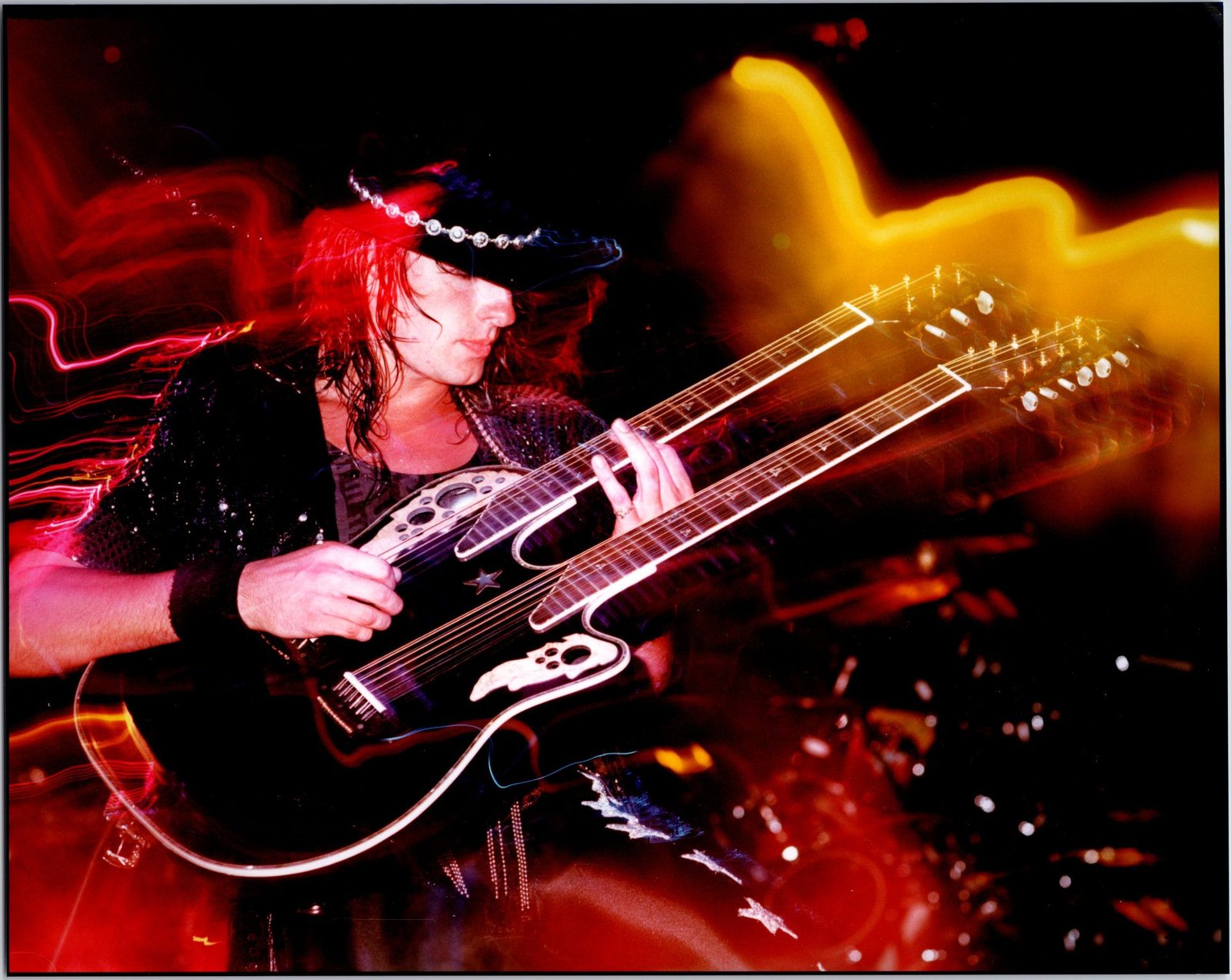
Richie Sambora on stage during the Slippery When Wet tour, the era that made the talk box famous again.
From “Just OK” to Four Weeks at Number One
“Livin’ on a Prayer” shipped as the second single from Slippery When Wet in late 1986, following “You Give Love a Bad Name” to the top of the charts. It held the #1 spot on the Billboard Hot 100 for four straight weeks, from February 14 to March 14, 1987, and became Bon Jovi’s first song to top the Mainstream Rock chart. It also went to #1 in Canada, New Zealand, and Norway.
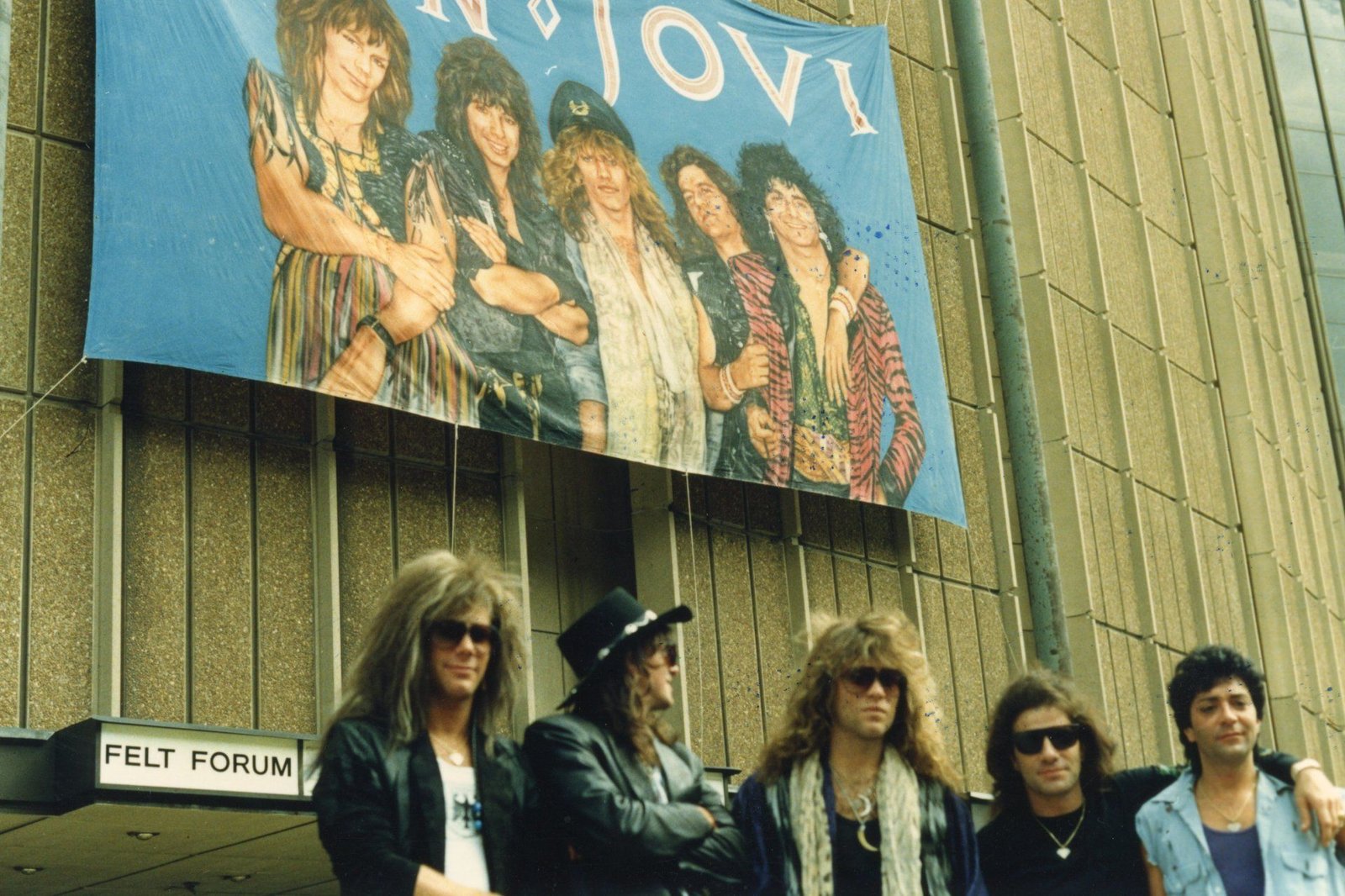
Bon Jovi at Madison Square Garden in 1987, at the peak of the Slippery When Wet tour.
The band toured the song relentlessly through 1986 and 1987 — a stretch documented in tour jackets, backstage passes, and a private aircraft that carried them from arena to arena as “Livin’ on a Prayer” turned Bon Jovi from a hair-metal opening act into a headliner. Music magazines that had barely covered the band a year earlier were suddenly putting them on covers.
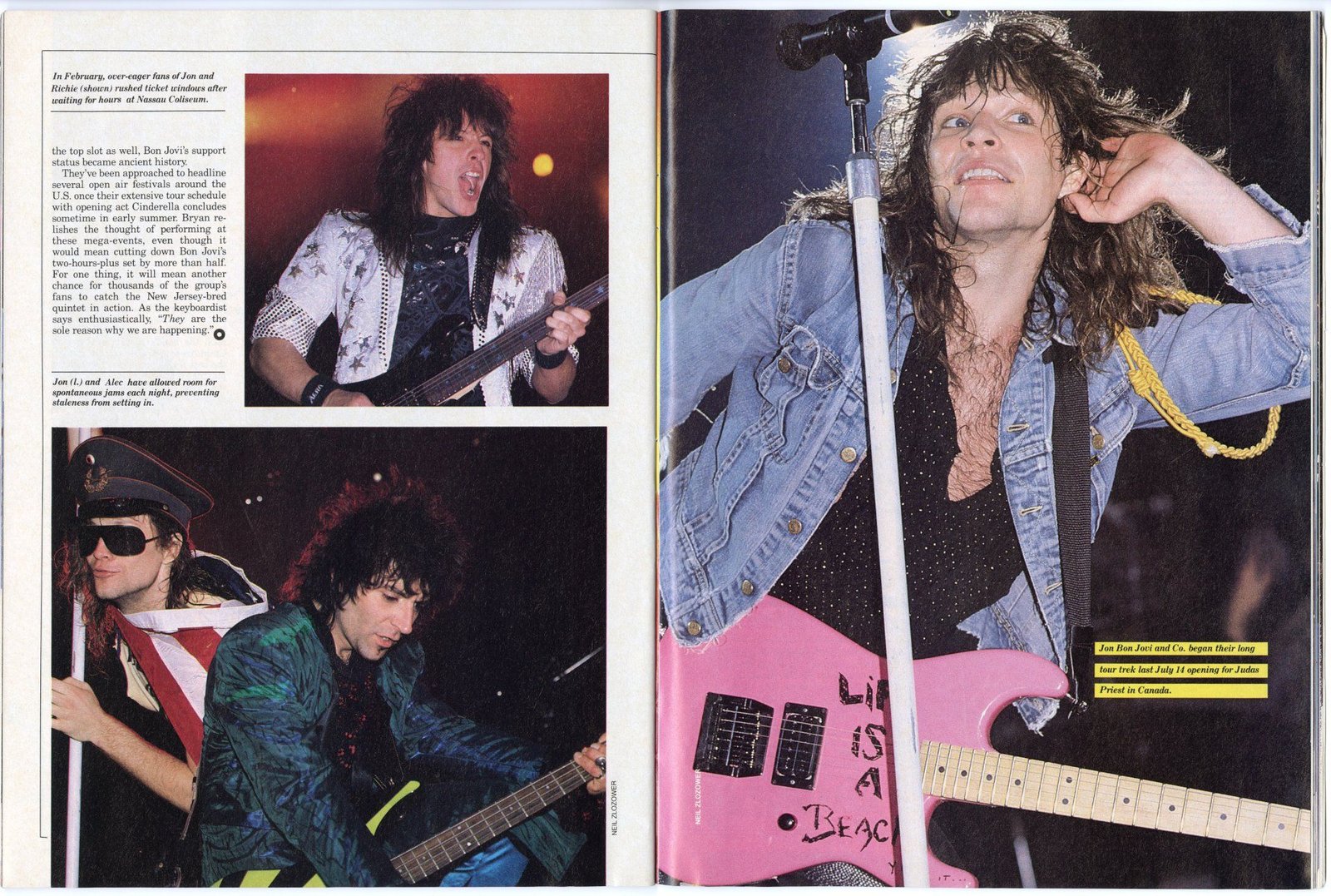
Circus Magazine’s coverage of Bon Jovi during the song’s chart run — the press attention followed the hit, not the other way around.
By the numbers, the song has only grown since: Diamond certification in the US (10 million units sold), 11x Platinum in Australia, 5x Platinum in the UK, and more than 13 million copies sold worldwide. In 2006, VH1 viewers voted it the #1 song of the 1980s — beating out everything else the decade produced. The music video, shot at the Grand Olympic Auditorium in Los Angeles in September 1986, has racked up over a billion YouTube views.
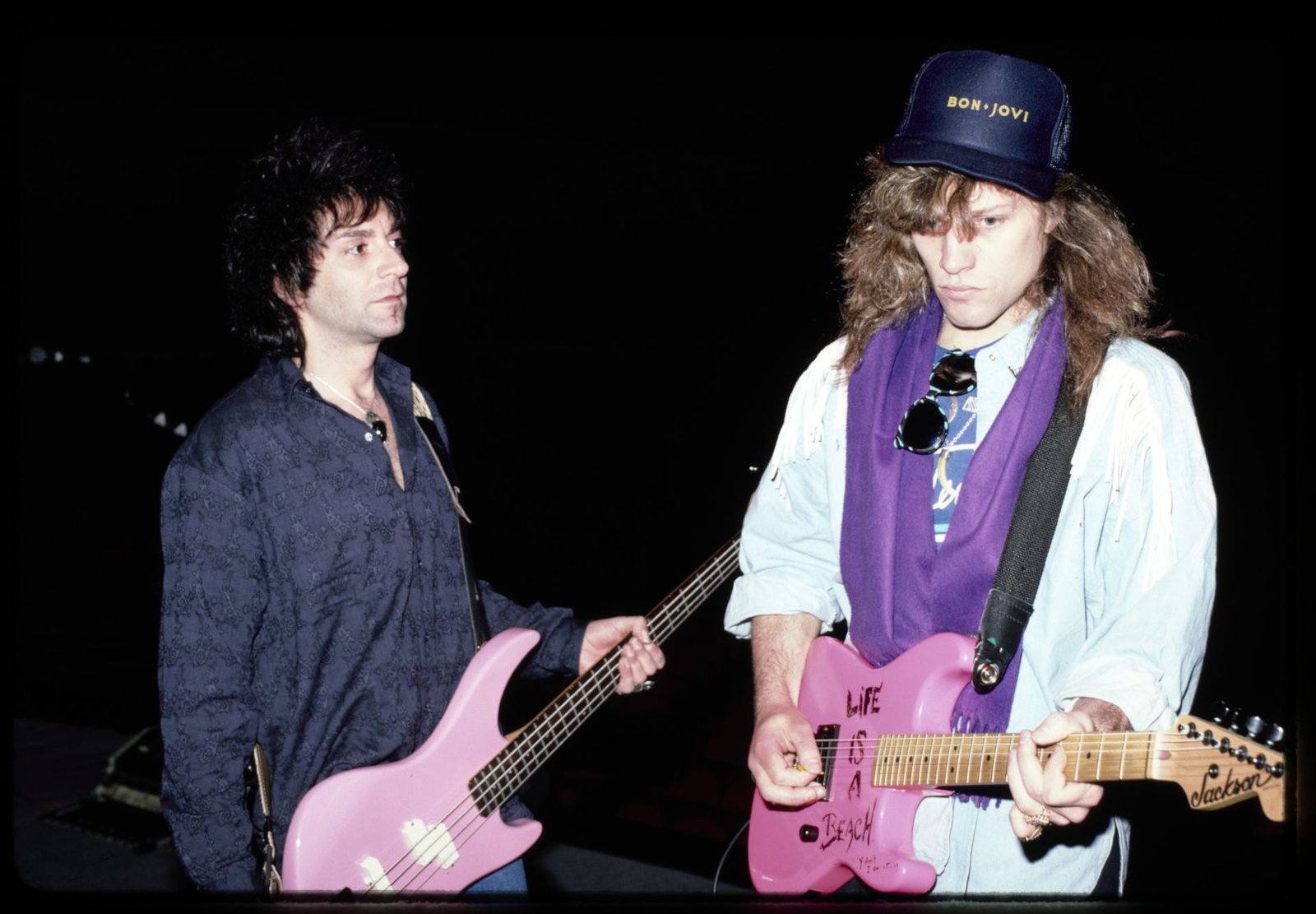
Richie Sambora’s Kramer guitars from the Slippery When Wet era — the same gear behind that talk box riff.
Why It Never Stopped Working
Strip away the hair spray and the talk box and what’s left is a song about two people with nothing who decide that’s not a reason to quit. That’s a harder trick to pull off than it sounds — most 80s power ballads reach for spectacle, but “Livin’ on a Prayer” reaches for specificity: a strike, a diner shift, a phone call at the end of a bad day. It’s a blue-collar love story dressed up as a stadium anthem, and audiences have never stopped responding to it.
It’s also why the song survived past its decade. Sports arenas adopted it as a comeback anthem. Karaoke bars built entire nights around it. Bon Jovi themselves never stopped leaning on Tommy and Gina, bringing them back into “It’s My Life” and keeping their story alive well into the 2000s. Forty years on, “Livin’ on a Prayer” isn’t a nostalgia act — it’s still the song that gets people to grab a stranger’s shoulder during the chorus and mean it.
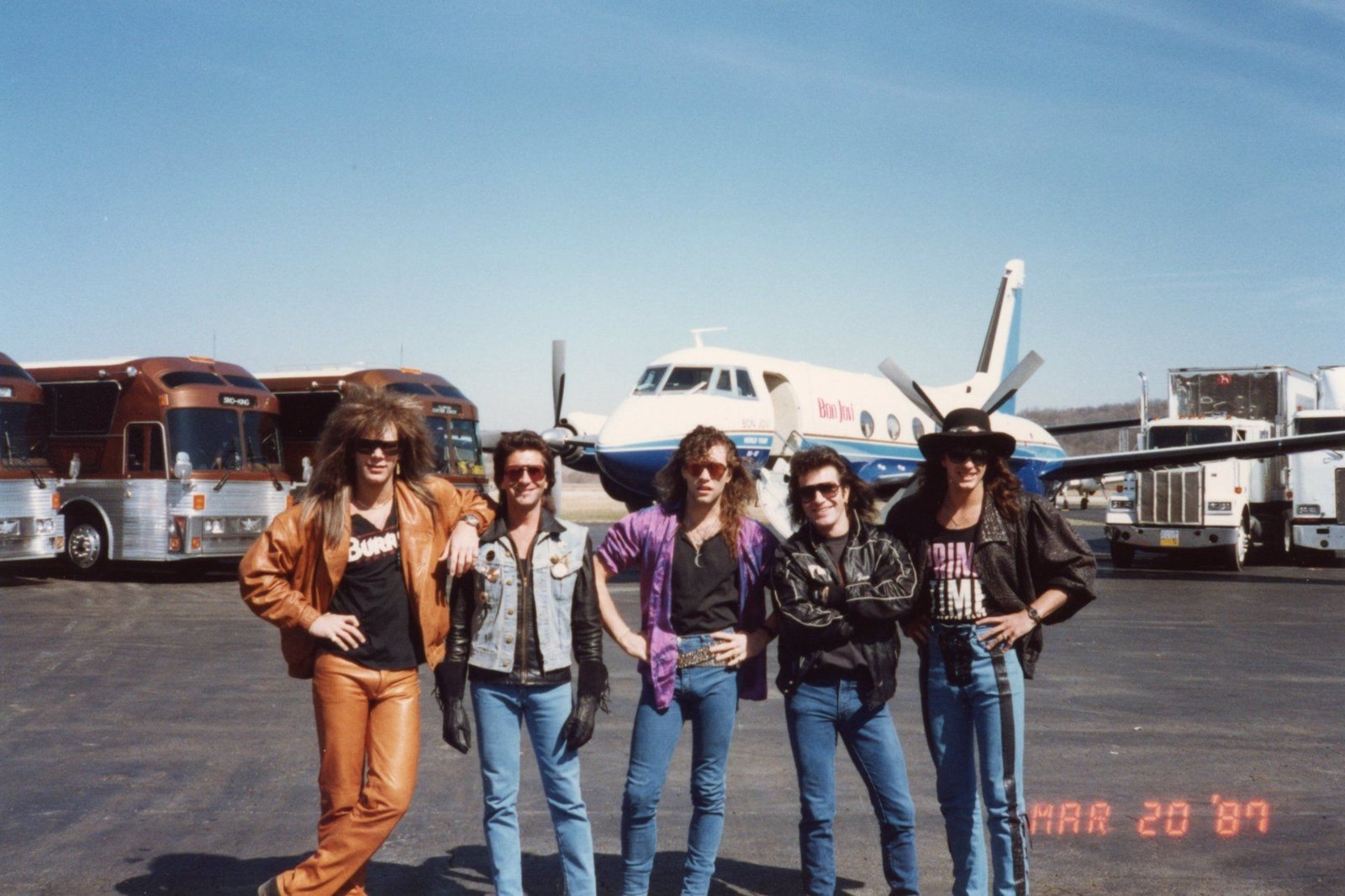
The Slippery When Wet Tour aircraft that carried Bon Jovi across the world in 1986-1987, chasing the song’s success.
Jon Bon Jovi once thought this song belonged in the credits of a forgettable movie. Instead, it became the reason people still hold their lighters — or their phone flashlights — up half-way through his set, thirty seconds before the talk box even kicks in.
Sources
- Livin’ on a Prayer — Wikipedia — Songwriting credits, chart history, certifications
- Bon Jovi’s Video Joins YouTube’s Billion-View Club — Billboard — Music video milestone and background
- Slippery When Wet — Wikipedia — Album production, Desmond Child collaboration
The Retro Almanac
A monthly roundup of "on this day" highlights from that month, decades back — plus first dibs on new retro merch drops. No spam, just the good stuff.