Wrath of Khan: The Movie That Saved Trek
Three years earlier, Star Trek: The Motion Picture had crawled into theaters padded with long effects shots and not much story, and Paramount quietly started asking whether Trek belonged back on television where it came from. Nicholas Meyer, a novelist and director with no real science-fiction background, got handed the sequel almost by accident. He turned it around in twelve days, brought back a cast that didn’t fully trust him, and delivered a film that beat its predecessor’s entire opening week in three days flat. Forty-four years on, every Trek film and show still gets measured against it — and almost none of them clear the bar.
What makes the turnaround strange is how little continuity there is between the two productions. Robert Wise, who directed the first film, came from an old-school prestige-picture background and treated the Enterprise like a character to be admired in long, lingering shots. Fans started calling the result “the motionless picture” within months of release. Paramount’s answer wasn’t to fix that approach — it was to throw it out entirely and hire someone who had never worked on a science-fiction set in his life.

The Retro Almanac
A monthly roundup of "on this day" highlights from that month, decades back — plus first dibs on new retro merch drops. No spam, just the good stuff.
Why Was The Motion Picture Such a Disappointment?
Star Trek: The Motion Picture cost $44 million — an enormous sum for 1979 — and still finished $139 million worldwide, which sounds fine until you compare it to what it should have made on name recognition alone. Paramount had rushed the production after canceling a planned Star Trek: Phase II TV series, and it showed: long, meditative effects sequences replaced the character banter fans actually wanted. Gene Roddenberry’s creative control over the troubled production left studio executives nervous enough that they stripped him of authority for the sequel entirely.
That decision is the whole story. Without a disappointing first film, there’s no reason for Paramount to hand a tiny budget and total creative freedom to an outsider like Meyer. The failure built the conditions for the comeback.
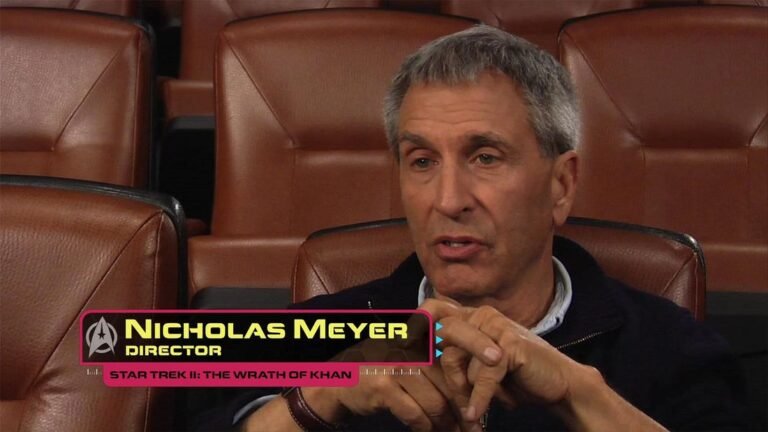
How Did Nicholas Meyer Write the Script in Twelve Days?
Meyer wasn’t the credited writer of record — he took the job uncredited and unpaid, because Industrial Light & Magic needed a shootable script immediately to start effects work on a tight schedule. He later said he treated it like a submarine movie crossed with a 19th-century naval adventure, which is why Wrath of Khan feels more like a chase thriller than a space opera. Roddenberry, watching from the sidelines, reportedly sent memos to the production that Meyer described as venomous.
None of that friction made it on screen. James Horner, composing his first major film score at four and a half weeks with a 91-piece orchestra, gave the picture a militaristic urgency the first film never had. The combination of a tight script and a score that sounded like it belonged in a war movie is most of why the pacing works even now.
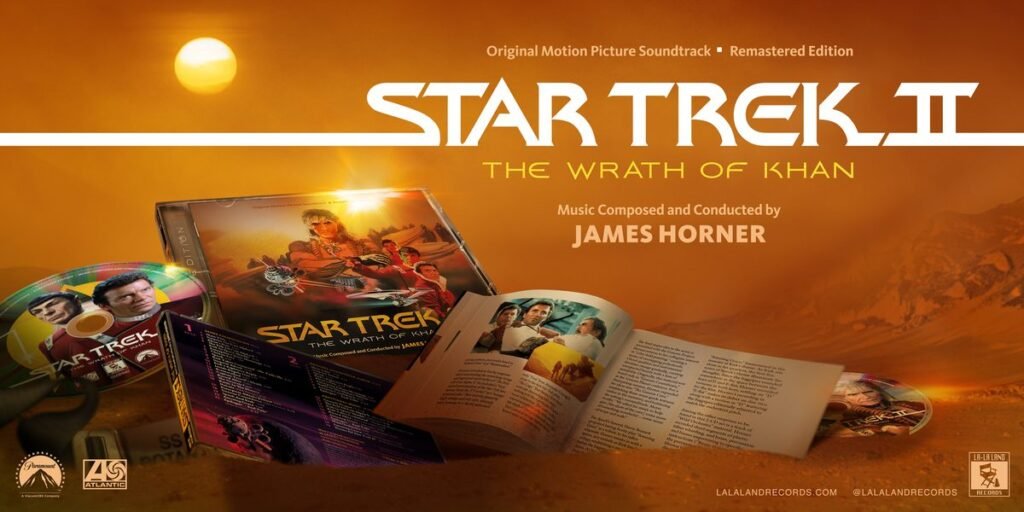
The score outlasted the controversy around it. La-La Land Records put out a remastered 2-CD limited edition in 2021 — pulled from newly discovered first-generation analog tapes, limited to 10,000 units, and padded out with more than two hours of previously unreleased alternate cues. A soundtrack getting that kind of archival treatment almost 40 years later tells you Horner’s work aged into something closer to a standalone classic than a movie tie-in.

Who Played Khan, and Was That Really His Chest?
Ricardo Montalban was 61 years old when he stepped back into the role he’d originated 16 years earlier on the original series episode “Space Seed.” Fans assumed the studio had built him a muscle suit for the villain’s bare-chested scenes. It wasn’t a suit — Montalban credited his physique to what he simply called a lot of push-ups, and the production left it exactly as shot.
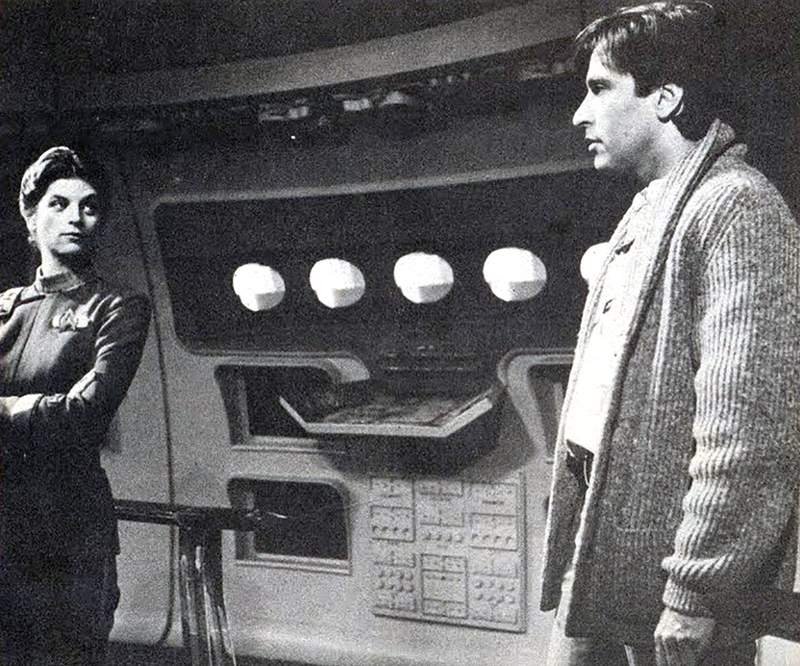
Montalban wasn’t the only cast member doing something unusual. Kirstie Alley, in her first major film role as the half-Vulcan Lieutenant Saavik, spent hours in the makeup chair every shooting day getting prosthetic ears applied and reapplied — a process the cast and crew treated as routine but that modern audiences rarely see documented.

What Is the Kobayashi Maru, and Why Do People Still Say It?
The Kobayashi Maru is a Starfleet Academy training simulation introduced in this film: a no-win scenario designed to test how a cadet reacts to certain failure, not whether they can succeed. Kirk, we learn, is the only cadet in Starfleet history to beat it — because he secretly reprogrammed the simulator rather than accept that it couldn’t be won.
The phrase escaped the movie years ago. People now use “Kobayashi Maru” in business meetings and sports commentary to describe any unwinnable situation, usually without knowing it came from a scene that runs barely five minutes. That’s a rare thing for a 1982 sci-fi sequel to pull off — inventing a piece of vocabulary that outlived the film itself.
Did Spock Really Die in Wrath of Khan?
Yes, and the production nearly didn’t let it happen. Leonard Nimoy had grown tired of being identified only as Spock and initially had no interest in returning for a sequel. Meyer and producer Harve Bennett got him back by offering a dramatic death scene — the idea being Nimoy would finally, permanently be done with the character.
Test screenings changed the plan. Audiences reacted so badly to losing Spock that the studio ordered revisions: a casket scene was filmed, and Nimoy’s closing “I have been, and always shall be, your friend” monologue was added to soften the blow and leave the door open. Meyer objected to softening his ending but didn’t fight it. Crew members on set reportedly cried through the take. Meyer, directing, didn’t — he said the job didn’t allow it.
Word had leaked out months before release, and fans didn’t wait quietly. A group calling itself the Concerned Supporters of Star Trek, led by a New York AT&T executive named Laura Leach, took out an ad in a trade publication warning Paramount that killing Spock would cost the studio an estimated $28 million in lost revenue. The studio released the film anyway. Spock died anyway. And the backlash Leach predicted never came — audiences showed up in record numbers, which is probably the only time in Hollywood history a fan protest ad turned out to be exactly backwards about the box office.

How Much Money Did Wrath of Khan Actually Make?
The film opened on 1,621 screens and took in $14,347,221 in three days, a figure Paramount had never seen from any release. It went on to earn $78.9 million domestically and $97 million worldwide against a budget that started at $8.5 million and grew to $12 million once early effects footage convinced the studio to loosen the purse strings slightly. That’s roughly eight times its cost back — a return The Motion Picture, at under 3.2 times its $44 million budget, never came close to matching.
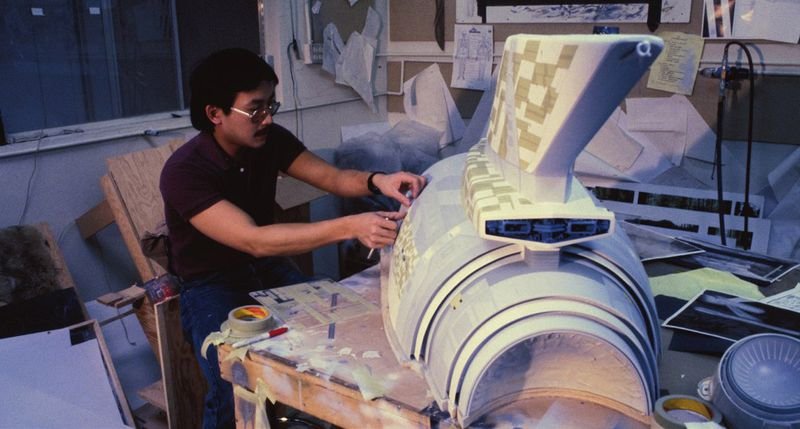
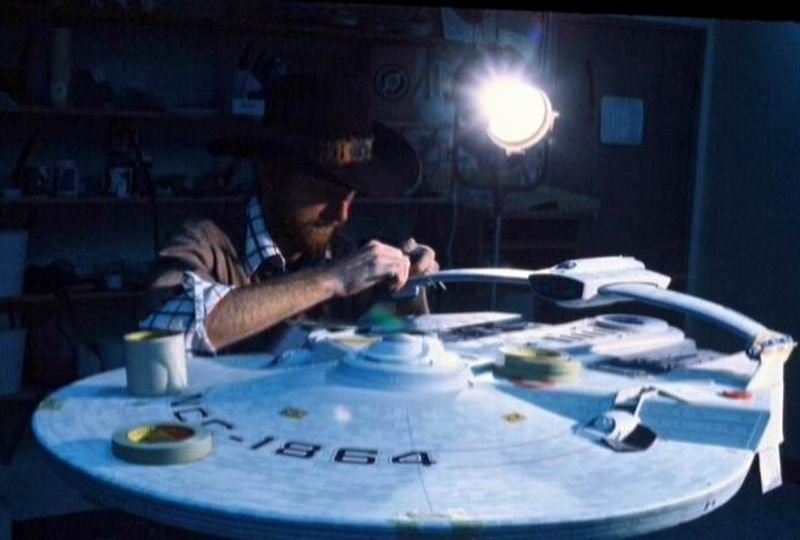
Some of that money went straight into the special effects department. The Genesis Device sequence — a 60-second demo reel showing a planet being terraformed from a lifeless rock into a living world — was cinema’s first entirely computer-generated sequence, built on particle-system technology at a company that would later become Pixar. ILM’s model shop built physical miniatures of the Enterprise and the USS Reliant for every other shot, work that still holds up decades after CGI became the default.
Why Do Fans Still Call It the Best Star Trek Movie?
Partly because nothing before or since has matched its combination of a credible villain, a genuine cost to the heroes, and a script that trusted the audience to sit through a slow-burn revenge plot before the action paid off. Partly because the stakes were real: a major character actually died, and the film didn’t flinch from showing the funeral.
It also landed in a year that was unusually generous to risky bets. That same June, the first Terminator was still two years away from proving a $6.4 million sci-fi sequel could out-punch a $200 million one — but the logic was already visible in Wrath of Khan: smaller budget, tighter story, bigger result. A few months later, on September 20, The Cosby Show would do something similar for an entire struggling network, and ten days after that, Cheers quietly premiered to mediocre ratings before becoming one of the defining sitcoms of the decade. 1982 and the years around it were full of underdogs that turned into institutions.
Paramount didn’t just get a hit in the summer of 1982 — it got proof that Star Trek worked better as a lean, character-driven thriller than as a special-effects showcase. Every good Trek film since has followed that same rule, whether the studio remembered where it came from or not.
Sources
- Star Trek II: The Wrath of Khan — Wikipedia — release date, box office figures, budget, and production background.
- Star Trek: The Motion Picture — Wikipedia — budget and box office for the first film.
- Kobayashi Maru scenario — Memory Alpha — canon explanation of the no-win training test.
- Wrath of Khan box office breakdown — TrekCore — detailed theater count and weekend gross data.
The Retro Almanac
A monthly roundup of "on this day" highlights from that month, decades back — plus first dibs on new retro merch drops. No spam, just the good stuff.