On This Day: June 15, 1992 — Dan Quayle Misspells Potato
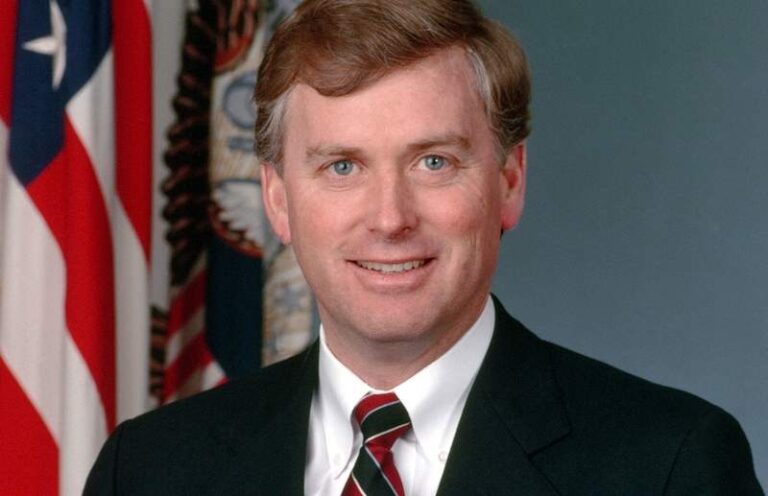
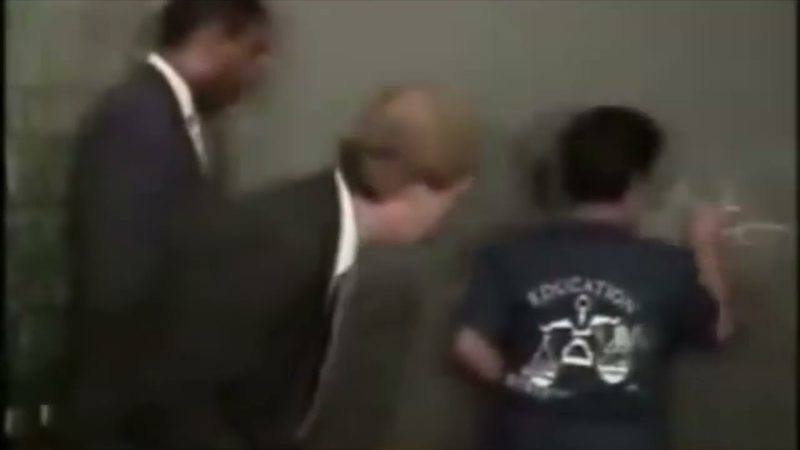
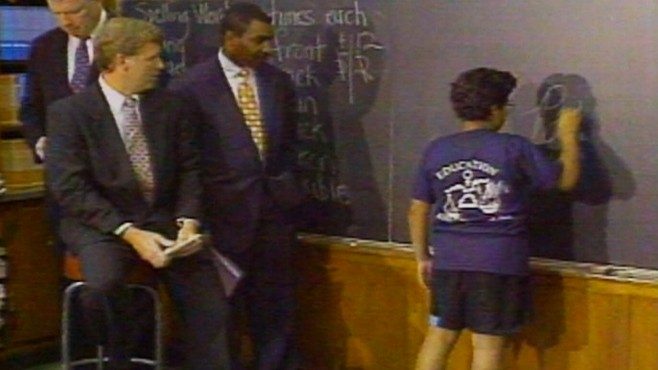
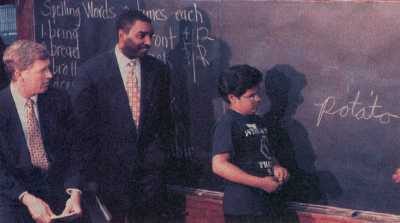
One letter, one classroom, one career. On June 15, 1992, Vice President Dan Quayle walked into a sixth-grade spelling bee at Luis Munoz Rivera Elementary School in Trenton, New Jersey, and walked out with the most famous misspelling in American political history. A 12-year-old named William Figueroa had just written “potato” on the chalkboard, exactly right. Quayle, reading from a flashcard a teacher had printed earlier that morning, told the kid to add an “e.” The kid added it. The cameras kept rolling. By dinner, “potatoe” was on every network.
How a Trenton Spelling Bee Became the Defining Moment of 1992
The visit was supposed to be a five-minute photo op. The Bush-Quayle reelection campaign had been bleeding in the polls since spring, and the Vice President’s team built him a schedule that leaned hard into family-values and education stops. Trenton was a soft landing — a friendly sixth-grade classroom, a few photographers, a kindly nod from the local press. Quayle was scheduled to officiate a mock spelling bee at the Luis Munoz Rivera Elementary School, picking flashcards out of a stack and asking students to write the words on a chalkboard.
The Retro Almanac
A monthly roundup of "on this day" highlights from that month, decades back — plus first dibs on new retro merch drops. No spam, just the good stuff.
The cards had been prepared overnight by the school’s teachers. One of them, in a hurry, wrote “potatoe” on a card and didn’t think twice. Quayle drew the card, called William Figueroa to the board, and asked him to spell potato. William wrote P-O-T-A-T-O. The classroom applauded. He turned to sit down. Quayle, glancing at his cue card, stopped him.
“You’re close,” the Vice President said, “but you left a little something off. The ‘e’ on the end.”
William hesitated. He looked at the chalkboard. He looked at Quayle. The room of reporters went briefly quiet, then briefly louder, then completely silent. William added the e. The Vice President smiled and clapped. The photo op was over. So, in a real sense, was the campaign.
Who Was William Figueroa, the Kid Caught in the Middle?
William Figueroa was a regular sixth-grader at Munoz Rivera, the son of Puerto Rican parents, a Trenton kid who liked baseball and didn’t know he was about to become the most famous twelve-year-old in America. Reporters tracked him down before lunch the next day. By the weekend, he’d been booked on Late Night with David Letterman, where he sat across from Dave in a polo shirt and politely explained that yes, the Vice President had been wrong, and yes, he had known the Vice President was wrong, and no, he hadn’t wanted to embarrass him.
Figueroa was promptly recruited by the Democrats. That summer at the Democratic National Convention in New York, he led the Pledge of Allegiance in front of millions of TV viewers, a sly piece of political theater that ran for roughly four seconds and accomplished four hours of damage. He endorsed a spelling video game. He got asked to spell things on local radio. And then, like most accidental celebrities, he went back to being a kid.
By 2005, the Newark Star-Ledger found him working as a Wal-Mart department manager and raising two children. He had not, despite the easy joke, become a writer.
The Card That Started It All
The flashcard defense came out within hours. Quayle’s press secretary, David Beckwith, called reporters from the motorcade and explained that the Vice President had been working from a cue card the school had handed him. The card said “potatoe.” Quayle had simply trusted the teacher. The teacher, embarrassed, confirmed it the next morning. The card existed. The misprint was real. The Vice President had not, technically, invented an extra vowel out of his own head.
It didn’t matter. The visual was already in the world: a sitting Vice President of the United States, looking at a perfectly correct word, telling a child to add a letter that made it wrong. The card was an explanation. It was not a fix.
The networks ran the clip in heavy rotation for three straight nights. ABC, CBS, NBC, CNN, the morning shows, the late-night monologues, the editorial cartoons. By the weekend, you couldn’t pick up a paper without a “potatoe” joke. Letterman built a recurring bit around it. Leno opened a week of monologues with it. Saturday Night Live, already running brutal Quayle sketches with Dana Carvey, had a whole new arsenal.
Quayle Had Already Been Fighting an Image Problem
The Vice President had been the campaign’s punching bag from the start. Bush had picked him as a running mate in August 1988 at the Republican National Convention in New Orleans, partly because Quayle was young, telegenic, and conservative enough to keep the Reagan base happy. The trouble started immediately. Quayle stumbled through his first press conference. He compared himself to John F. Kennedy in a vice-presidential debate and got eviscerated by Lloyd Bentsen with the line “Senator, you’re no Jack Kennedy.”
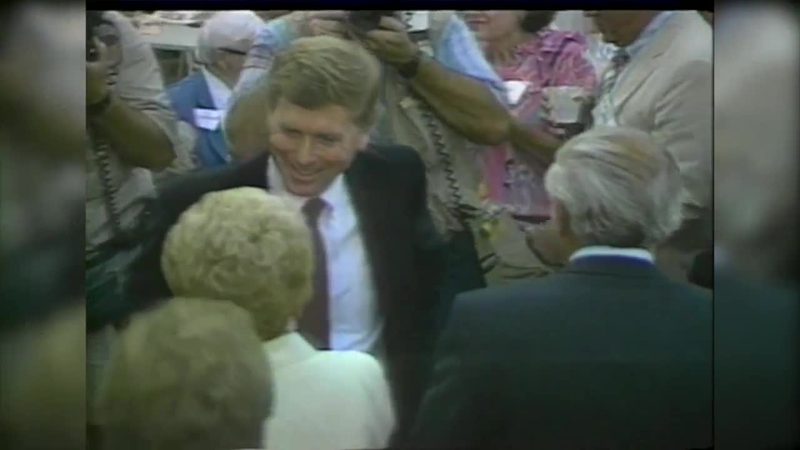
By 1992, Quayle was working overtime to rebuild his reputation. He had given a substantive speech to the Commonwealth Club of California in May about welfare reform, single motherhood, and what he called the breakdown of family values. The speech was thoughtful in places, controversial in others, and remembered today almost entirely for one paragraph attacking the TV sitcom Murphy Brown for having its lead character become a single mother. The Murphy Brown line was meant to provoke. It did. CBS responded by writing a whole episode around it the following fall, and Candice Bergen, in character, fired back from prime time.
The Murphy Brown speech was a real argument about real issues. The “potatoe” moment was a wordless punchline. Guess which one stuck.
Why the 1992 Campaign Was Already in Trouble
Step back from the chalkboard for a second. By June 1992, the Bush-Quayle ticket was in serious electoral trouble. The economy had stalled. Unemployment was creeping up. Ross Perot had jumped into the race as an independent and was, briefly, leading both Bush and Bill Clinton in the polls. The Republican base was angry about the broken “Read my lips, no new taxes” pledge. The Cold War win that should have been Bush’s signature accomplishment now felt like ancient history, because the country was worried about jobs at home, not victories abroad.
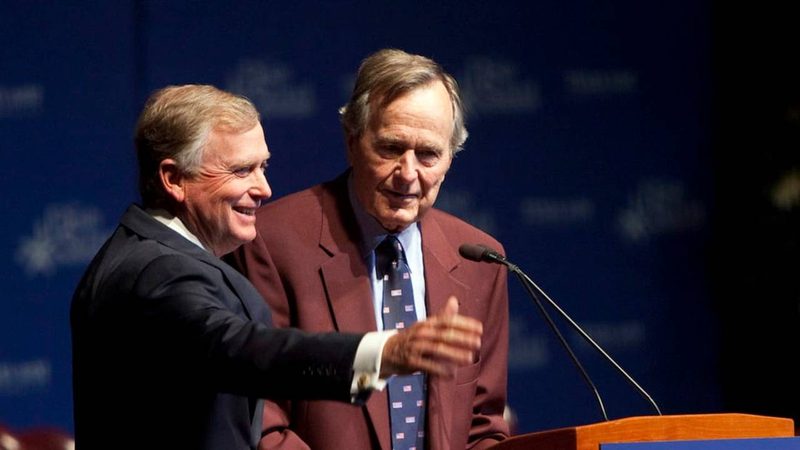
The Quayle visit to Trenton was a small, careful attempt to win back the suburban families who liked the Vice President’s family-values message and were tuning out his policy speeches. It was supposed to produce a 30-second clip on the local news of the Vice President being kind to a child. Instead, it produced a 30-second clip of the Vice President being wrong in front of a child.
The Clinton campaign, watching from Little Rock, didn’t even need to gloat. They just made sure the footage kept playing.
The Press Reaction Was Brutal — and Telling
The headlines the next morning weren’t subtle. The New York Daily News went with “POTATOE? OY!” The Star-Ledger ran “Quayle Plants the ‘E’ in Potato.” The Trenton Times, the local paper for the very school Quayle had visited, ran a front-page story that the rest of the country picked up by lunch. UPI’s archive entry for the day was filed under the headline “To Quayle it’s potatoe.”
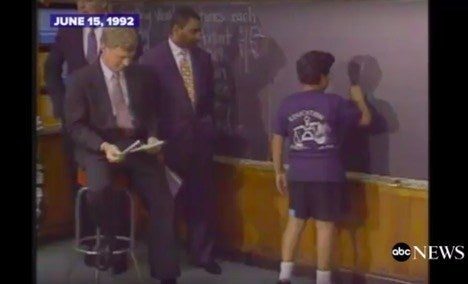
The brutal part wasn’t the jokes. It was the way the story slotted neatly into a frame the press had already built. Quayle as lightweight. Quayle as not ready. Quayle as a guy who shouldn’t be a heartbeat away from the presidency. The misspelling didn’t create the narrative. It just gave the narrative a perfect, repeatable visual.
You can argue the press was unfair. You can argue, as Quayle did in his memoir, that the misprint was the school’s fault and the Secret Service’s fault and the staff’s fault but never really his. Watch the clip and you’ll see a Vice President who trusted a flashcard more than a twelve-year-old, and that, in the end, is the part voters remembered.
What the Spelling Bee Actually Sounded Like — On Tape
The footage is worth watching with the volume up. You can hear William Figueroa’s small, careful voice. You can hear Quayle’s confident “the e on the end.” You can hear, faintly, a reporter in the back of the room start to laugh and then catch himself. It is one of the most-replayed pieces of American political video from the entire decade.
If you grew up in the 90s, you’ve probably seen this clip a dozen times without remembering exactly why. It became the visual shorthand for “politician embarrasses himself.” It got recycled into VH1 nostalgia specials, ESPN Top Plays parody segments, every “biggest political gaffes” listicle the early internet ever produced. The clip is older now than the politicians it mocked.
The Aftermath: Did “Potatoe” Cost Bush the Election?
Probably not, by itself. Bush lost in November 1992 by a wide margin — 370 electoral votes to 168, with 19 percent of the popular vote bleeding off to Ross Perot. The economy, the broken tax pledge, and Clinton’s superior campaign discipline did the heavy lifting. But the potatoe moment hardened a belief the Bush team had been trying to soften all year: that the ticket was unserious, that Quayle was a liability, that the administration was not paying attention. You can’t measure the cost of a vibe. You can only count the votes that didn’t come back.
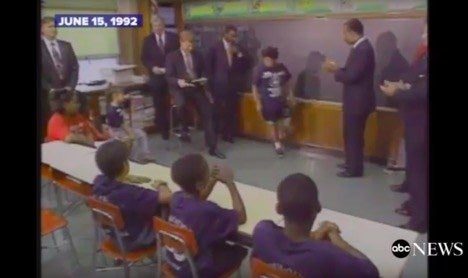
Quayle’s own assessment, years later in his memoir Standing Firm, was bracingly honest. He called the moment “a defining moment of the worst kind imaginable.” He blamed the flashcard but acknowledged that no voter was going to remember the flashcard. They were going to remember him telling a child the wrong answer. He was right about that.
The Slow Rehabilitation of Dan Quayle
Quayle never ran a successful campaign again. He launched a 2000 presidential bid that ended before the New Hampshire primary. He moved into private equity, joined Cerberus Capital Management, and lived a quiet post-political life in Arizona. The Murphy Brown speech, ironically, has been semi-rehabilitated by social scientists who later argued his points about single-parent families weren’t as wrong as the 1992 backlash made them seem. The Brookings Institution ran a 20-year-anniversary piece in 2012 titled “It Turns Out Dan Quayle Was Right.” Even the New York Times conceded the point in editorials.
None of that erased the chalkboard. You can be right about welfare reform and still be the guy who spelled potato wrong. American politics is unfair that way.
Why the Potatoe Moment Still Resonates in the 2020s
What makes the story sticky, thirty-plus years later, is not just the misspelling. It’s the way the moment captured something specific about the early 90s: the rise of the round-the-clock cable news cycle, the consolidation of late-night comedy as a political force, the slow death of the friendly photo op. CNN had launched in 1980 and was, by 1992, big enough to make a single clip travel across the country in hours. Letterman and Leno were locked in their own ratings war, and a fresh gaffe was rocket fuel for the monologue. Saturday Night Live had perfected the art of the political impression.
Quayle walked into a classroom in a media environment that had quietly changed under him. A misstep that would have died in 1972 became a national story in 1992. The lesson got learned and re-learned by every politician who followed. George W. Bush avoided unscripted classroom moments after this. Barack Obama’s team built scripted education stops with no flashcards. Donald Trump’s team, for better or worse, treated every moment as a flashcard with no spell-check.
What Else Happened on This Day in Retro History
For more 90s “On This Day” stories, see our coverage of the British Airways pilot sucked out of Flight 5390 on June 10, 1990 and Emerson Fittipaldi’s bizarre orange juice celebration at the 1993 Indy 500. And if you want to understand why a single news clip could travel so fast in 1992, our piece on the launch of CNN on June 1, 1980 explains the cable news machine that put “potatoe” on every screen in America within hours.
Sources
- UPI Archives — “To Quayle it’s potatoe” (June 15, 1992) — Original wire story filed the day of the spelling bee.
- BuzzFeed News — “We Tracked Down The Kid Vice President Dan Quayle Made Misspell ‘Potato'” — Follow-up interview with William Figueroa years later.
- Washington Post — “Quayle misspelled potato” — Contemporary retrospective in the Post’s 1992 campaign archive.
- Mental Floss — “Never Forget the Time Dan Quayle Misspelled ‘Potato'” — Anniversary deep dive on the gaffe.
- Brookings — “Twenty Years Later, It Turns Out Dan Quayle Was Right About Murphy Brown and Unmarried Moms” — On the partial rehabilitation of the Murphy Brown speech.
- Wikipedia — Dan Quayle — Biographical background and full vice-presidential timeline.
The Retro Almanac
A monthly roundup of "on this day" highlights from that month, decades back — plus first dibs on new retro merch drops. No spam, just the good stuff.