The Cosby Show: 8 Seasons That Changed Sitcom TV
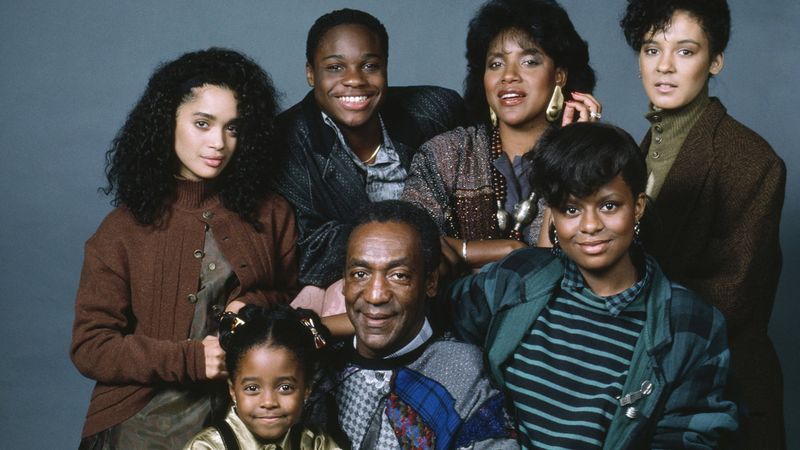
The Cosby Show debuted on September 20, 1984, and within seven weeks it was the highest-rated program on American television — a position it held, almost unbroken, for the next five seasons. NBC was so close to cancellation as a network in early 1984 that internal memos floated selling the prime-time block. One Thursday-night sitcom about a Brooklyn obstetrician and his lawyer wife rebuilt the entire schedule and rewrote what audiences thought a Black family on television could look like. Forty years later, the show’s legacy is impossible to separate from the criminal conviction of its star — and that complication is exactly what makes the Huxtables worth revisiting honestly.
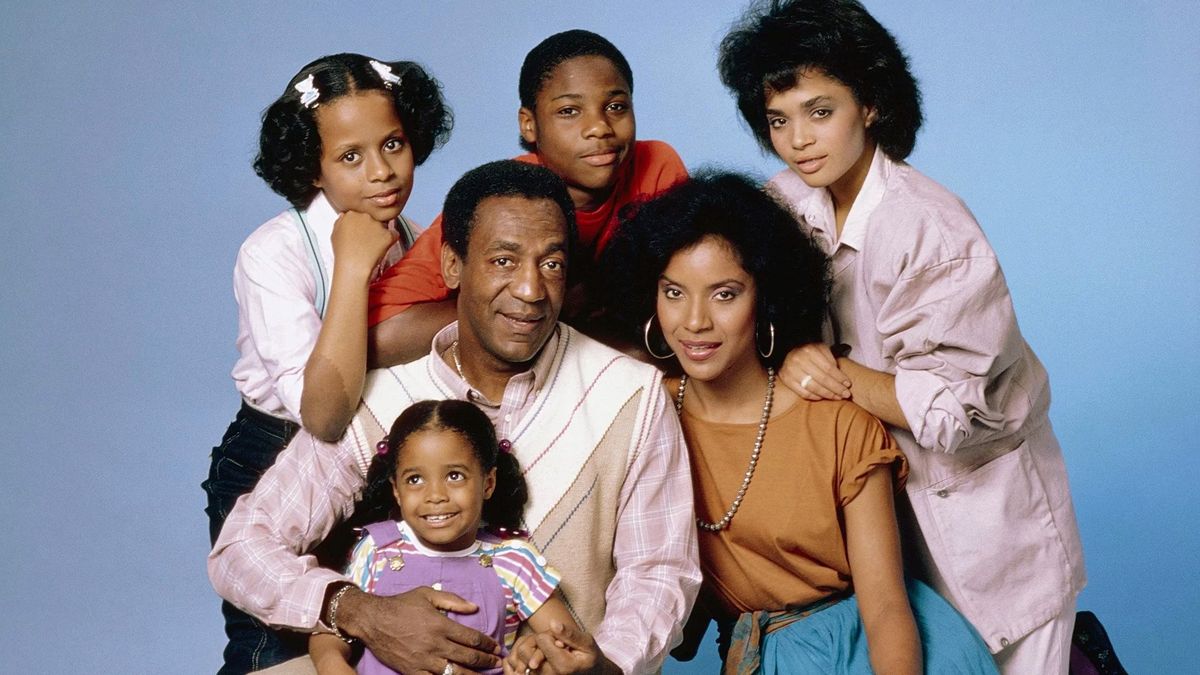
The original 1984 Huxtable family publicity portrait. Image: NBC / TMDB.
The Retro Almanac
A monthly roundup of "on this day" highlights from that month, decades back — plus first dibs on new retro merch drops. No spam, just the good stuff.
The Cosby Show Premiered on a Network That Was Dying
NBC was last in the Nielsen ratings when Brandon Tartikoff greenlit the pilot. The pitch came together fast: Bill Cosby wanted to play a working dad whose kids did not call him “sir” and whose wife was not a sitcom shrew. The original concept had Cliff as a limo driver and Clair as a plumber, but Cosby pushed both characters upmarket so the family’s class status would not be the joke. Cliff Huxtable became an OB-GYN with a home practice in the brownstone basement. Clair Huxtable became a partner at a Manhattan law firm.
That single creative choice — making the Huxtables wealthy, educated, and unambiguously upper-middle-class — was the show’s whole premise. By the end of season one, NBC had its first top-five hit since the 1970s, and Thursday night had become “Must See TV” before that slogan even existed.
The Huxtable Family Cast — Who Played Who
The household at 10 Stigwood Avenue, Brooklyn Heights ran on a six-kid pyramid that grew weirder as the seasons stretched on. Here is the lineup as it stood through the show’s eight-year run:
- Cliff Huxtable — Bill Cosby. Obstetrician. Sweater connoisseur. The dad whose discipline was usually a long pause followed by a question.
- Clair Huxtable — Phylicia Rashad. Senior partner attorney. The actual moral authority of the household and arguably the most quietly radical Black woman on 1980s prime-time TV.
- Sondra Huxtable — Sabrina Le Beauf. Princeton-bound oldest, written in late because Cosby decided mid-season one that the family needed a college-age daughter.
- Denise Huxtable — Lisa Bonet. The eccentric one, eventually shipped off to fictional Hillman College for the spinoff A Different World.
- Theo Huxtable — Malcolm-Jamal Warner. The only son. The “Gordon Gartrell” shirt episode alone earned him cultural immortality.
- Vanessa Huxtable — Tempestt Bledsoe. Middle daughter, mostly grounded in shopping, secret boyfriends, and one infamous drinking episode.
- Rudy Huxtable — Keshia Knight Pulliam. The little one. Five years old when the show started and the single biggest reason advertisers paid premium rates for the Thursday slot.
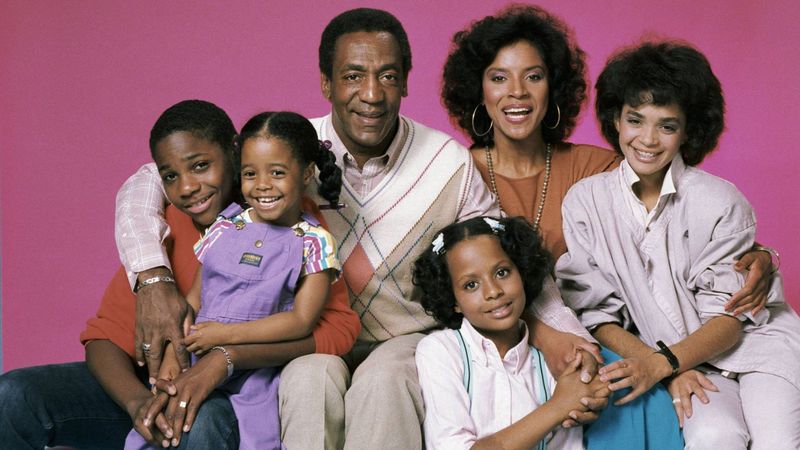
Later-season cast still — Lisa Bonet’s Denise, Malcolm-Jamal Warner’s Theo, Phylicia Rashad as Clair. Image: NBC.
Add the long-running supporting cast — Cockroach, Bud, Olivia, Pam, the cousin invasion of seasons six and seven — and the household became less a sitcom family than a rolling cultural snapshot of Black middle-class life from 1984 to 1992.
Why The Cosby Show Was a Cultural Earthquake
Black families on American television before 1984 were almost always either struggling (Good Times, Sanford and Son) or fish-out-of-water rich (The Jeffersons). The Huxtables were neither. They were just affluent, normal, and frequently the smartest people in any room they walked into. That sounds modest now. It was incendiary in 1984.
The show also did something almost no sitcom had attempted: it treated Black art, history, and music as ambient set dressing. Cliff’s home office held Romare Bearden prints. The kids’ bedrooms had posters of jazz musicians. Episodes built entire B-plots around the Alvin Ailey American Dance Theater, civil rights marches, or Stevie Wonder showing up to play himself. Cosby was personally responsible for most of this — he had a doctorate in education from UMass and used the show as a kind of stealth curriculum.
Hillman College, the fictional HBCU featured in the spinoff A Different World, drove a measurable spike in real HBCU enrollment during the late 1980s. Spelman, Howard, and Hampton all reported application surges tied to the show’s run. That is not a soft cultural impact — that is a quantifiable demographic shift.
The Theme Song Changed Every Season — And Nobody Noticed Until They Did
The opening theme, written by Stu Gardner and Cosby himself, was reworked every season. Season one’s version was a relatively straight jazz-funk arrangement. By season four, Bobby McFerrin had done a vocal scat version. Seasons five through eight cycled through Latin jazz, gospel, and a brassy New Orleans second-line arrangement that played over the cast dancing through the kitchen.
That dance sequence is the iconic image. Each season opener filmed the entire family doing a different choreographed bit — sometimes formal, sometimes loose, occasionally chaotic when Rudy could not stop laughing. The show treated the title sequence like a mini-music-video, which was unusual for a sitcom in 1984 and basically unheard of for one that ran eight seasons.
The Show Saved NBC — And Sitcom Television
By 1986, The Cosby Show was pulling roughly 30 million viewers a week. To put that in context: a top-rated show today gets between 6 and 9 million live viewers. NBC went from last place to first place in two seasons on the back of Cosby’s Thursday-night anchor slot. Cheers, Family Ties, and Night Court — all the shows that defined Must See TV — were boosted by the lead-in audience.
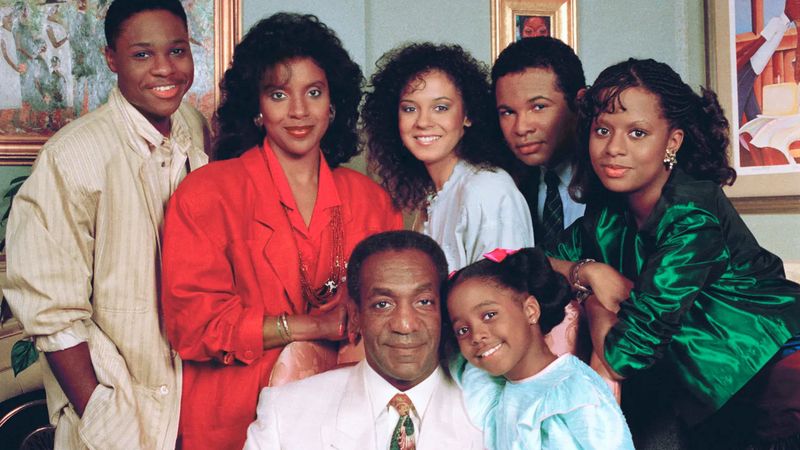
The full ensemble in the Huxtable living room — Bill Cosby, Phylicia Rashad, and the kids. Image: NBC.
The economic numbers are wild. The first syndication deal sold for roughly $600 million in 1988 — at the time, the most lucrative syndication contract in television history. Stations bid against each other so aggressively that some markets paid more than $300,000 per episode for the rerun rights.
The truth is, most network programmers in 1984 thought a Black-family sitcom could not sustain a 9 PM slot in a major-market schedule. The Cosby Show did not just disprove that — it bankrolled the rest of NBC’s decade. Without it, there is a real argument that the network gets sold to a strategic buyer before the Seinfeld era ever starts.
What Made the Writing Different from Every Other 80s Sitcom
Most sitcoms in 1984 ran on a four-act structure with a B-plot and an obvious moral at the end. The Cosby Show often did not have a B-plot at all. Entire episodes were built around a single conversation — Cliff trying to teach Theo about money using Monopoly money, Vanessa hiding a boy in the basement, Rudy demanding a goldfish funeral. The writers’ room called these “long sketches” rather than full plots.
This was a Cosby insistence. He thought the family-sitcom format had become predictable and that audiences would respond to material that felt closer to observational comedy than to broad farce. He was right. The “Gordon Gartrell shirt” sequence — Theo’s $95 designer knockoff sewn by Denise into something that looked nothing like the original — is one of the most-replayed sitcom scenes of the decade for a reason. It’s barely a plot. It’s just a punchline that builds for six minutes.
The household conversations also borrowed structure from Black church and family-reunion rhythms in a way that white-led sitcoms did not. Tempo, call-and-response, the long setup-then-pivot — Cosby’s stand-up DNA was visible in nearly every script.
The Spinoffs, the Merch, and the Sweater Industrial Complex
A Different World launched in 1987 as a Denise-Huxtable-goes-to-college spinoff, then transformed under showrunner Debbie Allen into a culturally vital portrait of HBCU life that ran six seasons. Cosby Show licensing also fueled a measurable mid-80s sweater boom. The Coogi-style and Koos van den Akker sweaters Cliff wore were genuinely expensive — some retailing for over $2,000 in 1986 dollars — and copycat versions flooded mall department stores for the next three years.
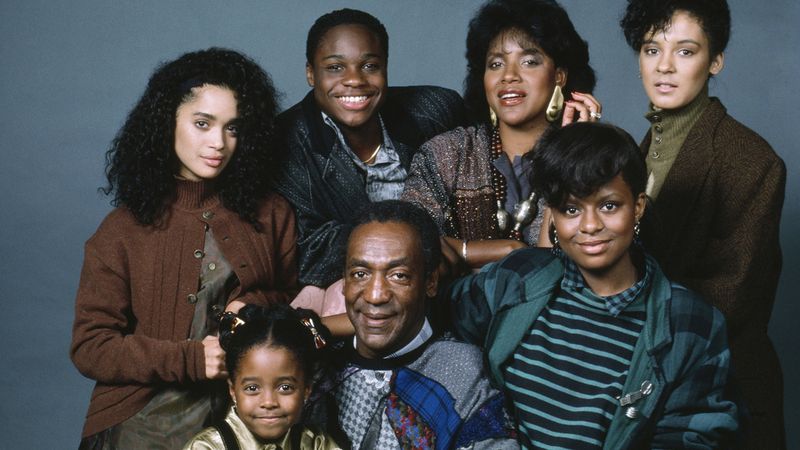
The later-season ensemble — extended family including Sondra, Elvin, Denise. Image: NBC.
Books, board games, lunchboxes, a soundtrack album, even a short-lived Cosby Show-branded line of educational software. By 1990 the franchise was generating roughly $1 billion annually across all revenue streams when you counted syndication, merchandise, and ad rates. It set the template that every successful sitcom — Friends, Seinfeld, eventually Modern Family — used to monetize a hit show across formats.
The Real Brooklyn House Was Actually in Greenwich Village
The exterior of the Huxtable brownstone — the one establishing shots of the show used for eight seasons — is not in Brooklyn Heights. It’s at 10 St. Luke’s Place in Manhattan’s West Village. The address has become a small-time pilgrimage stop for the kind of nostalgia tourist who also visits the Friends apartment building and the Seinfeld diner exterior.
The interior was a soundstage at Kaufman Astoria Studios in Queens. The living room set was famously oversized — about 40% larger than a realistic Brooklyn brownstone parlor — to accommodate the three-camera setup and the constant ensemble traffic. Real African-American art hung on the walls, much of it from Bill Cosby’s personal collection, which at the time was one of the largest privately held archives of Black fine art in the country.
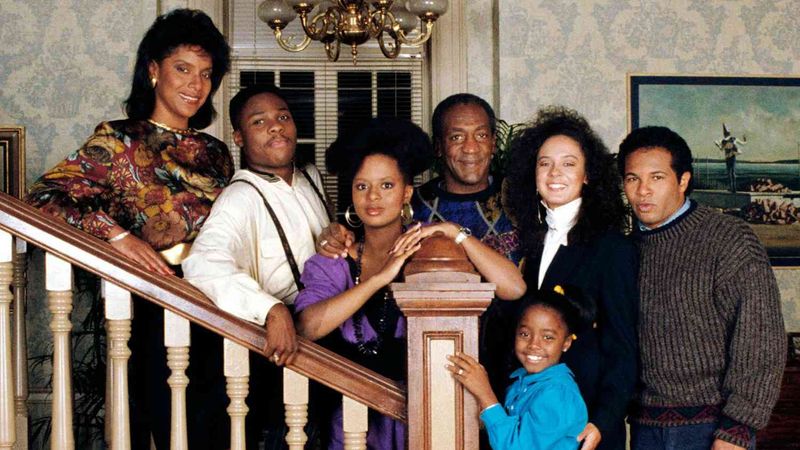
The signature Huxtable staircase set — interior was soundstage, exterior was Greenwich Village. Image: NBC.
The Conviction That Changed the Show’s Legacy
It is impossible to write honestly about The Cosby Show without addressing Bill Cosby’s 2018 sexual assault conviction in Pennsylvania, later overturned in 2021 on a due-process technicality involving a prior prosecutor’s non-prosecution agreement. The technicality is legal, not exonerative — the underlying conduct described by more than 60 accusers remained credible to prosecutors, the public, and the appeals court that overturned the verdict on procedural grounds.
Reruns of the show were pulled from most major syndicators by 2015. TV Land, Bounce TV, and Centric all dropped it. As of 2024, the show is available through limited streaming and DVD release only. Phylicia Rashad, Malcolm-Jamal Warner, and the rest of the cast have spent the last decade in the strange position of defending the cultural value of a project whose star they cannot defend.
That tension does not erase the show. It does not erase Clair Huxtable’s law career, A Different World’s HBCU impact, or the fact that 30 million Americans gathered around a Black family every Thursday for eight years. But pretending the conviction never happened is dishonest, and pretending the show itself never mattered is just as wrong. Both things are true, and they sit uncomfortably together, which is the actual responsibility of anyone writing about Cosby’s work in 2026.
How The Cosby Show Compares to Other Black Sitcoms of the Era
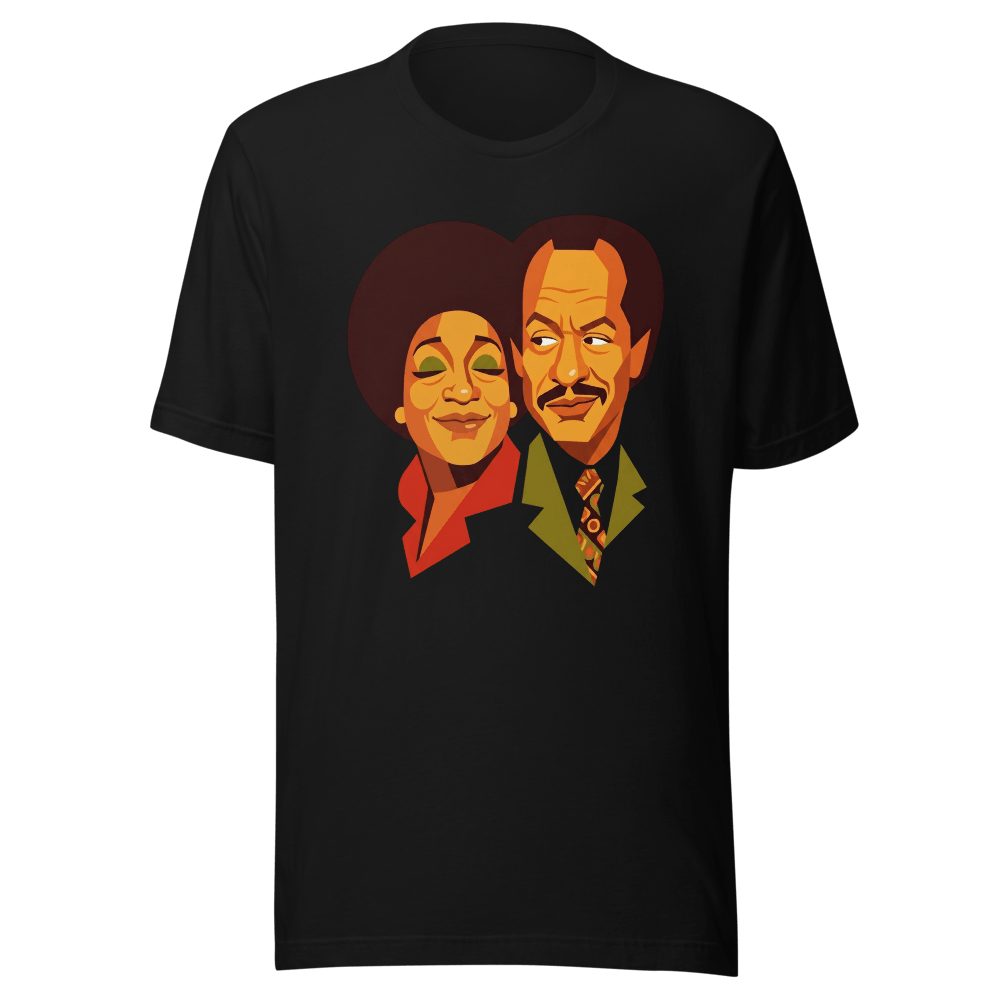
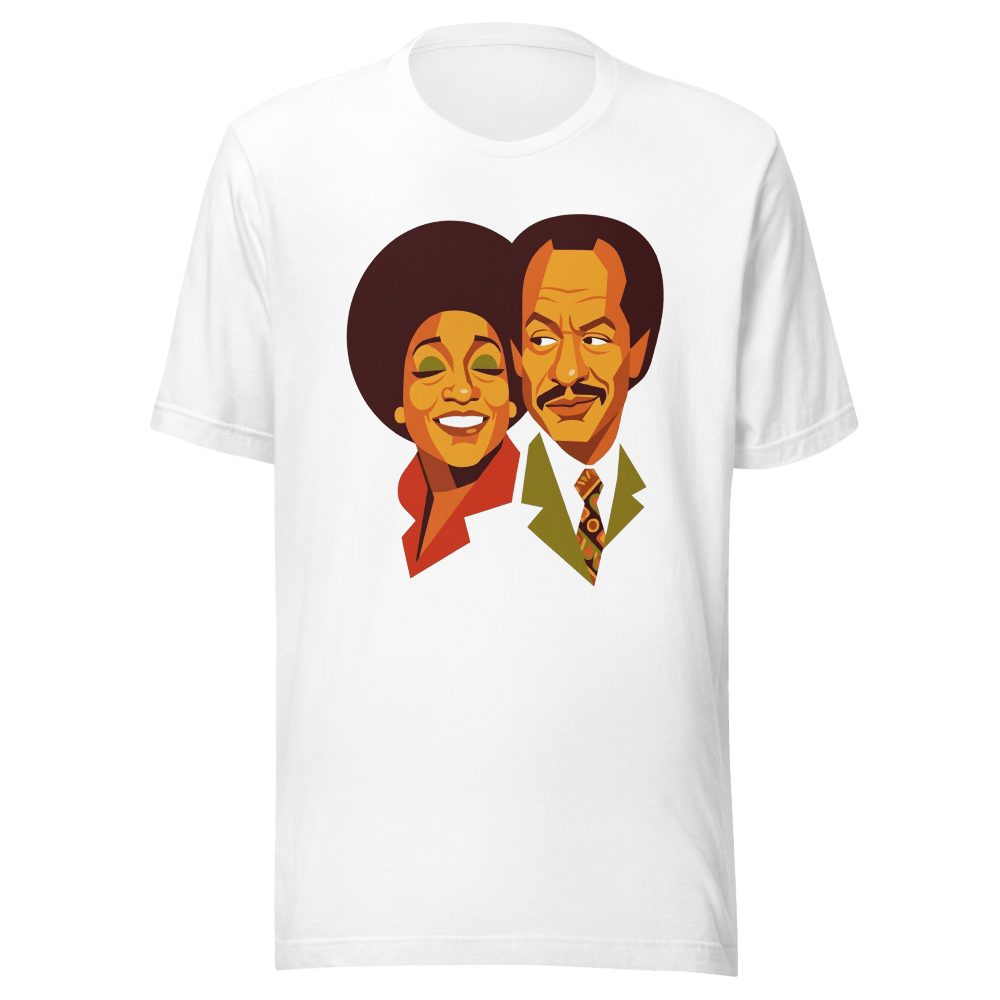
It helps to triangulate. The Jeffersons walked so The Cosby Show could run — George and Weezy moved on up in 1975 and demonstrated that an upwardly mobile Black family could anchor a long-running CBS hit. But The Jeffersons was about the climb. The Huxtables had already arrived, and the show refused to make their arrival the source of comedy.
Meanwhile Diff’rent Strokes took the inverse approach — two Black boys adopted into a white Park Avenue household — which played the class and race gap for both comedy and drama. The Cosby Show simply refused to use either as a punchline. That was new. And it informed everything that came after, from A Different World to Family Matters to Fresh Prince to Black-ish.
You can also draw a straight line from the show’s cultural ambition to the rise of confrontational Black art in the same period. While the Huxtables were lecturing Theo about Langston Hughes on NBC, Public Enemy was telling Black America to fight the power on Def Jam. Same era, opposite tactics, both essential.
What Holds Up and What Does Not
Rewatch the show now and certain things still land. The writing is sharper than it has any right to be. The ensemble chemistry — particularly between Phylicia Rashad and Malcolm-Jamal Warner, who developed a genuine mother-son rhythm by season three — is the kind of thing networks now spend pilot budgets trying to manufacture. The musical guest appearances (Stevie Wonder, Lena Horne, Sammy Davis Jr., B.B. King, Joe Williams) are time capsules.
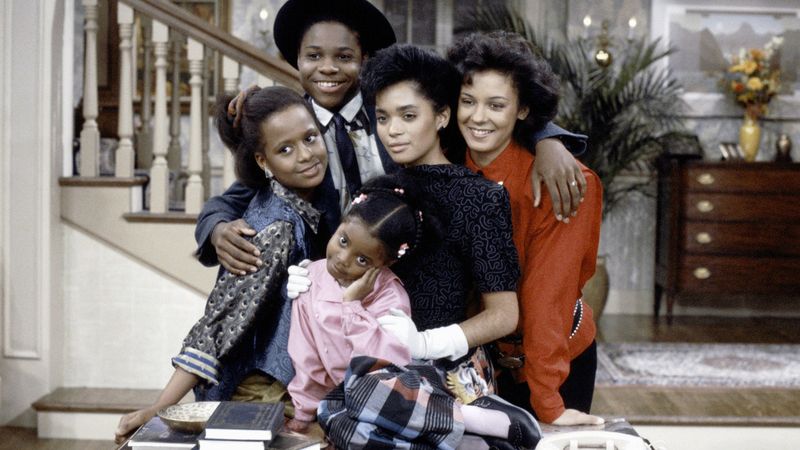
The kid cast on the Huxtable staircase — Denise, Theo, Rudy. Image: NBC.
What does not hold up is the same thing that did not hold up in the late 90s: the late-period cousin invasion, the increasing tendency to deliver lectures rather than jokes, and the moments where Cliff’s parenting reads less like wise patience and more like a guy who is used to being the smartest voice in the room. Season eight, in particular, sags. The 1992 series finale aired the same week as the LA riots — a coincidence that gave the show’s polite middle-class universe a strange, almost surreal final-episode tone.
The Show’s Real Legacy Is the Door It Held Open
Family Matters, Fresh Prince of Bel-Air, Living Single, Moesha, The Bernie Mac Show, Black-ish, Insecure, Atlanta — every one of these traces back to the door The Cosby Show pried open in 1984. Networks discovered that affluent, complicated, fully realized Black families could anchor a top-five show, and they spent the next four decades quietly chasing that lightning.
The complicated part of legacy work is that you do not get to pick which pieces of the past stay relevant. The Huxtables stayed relevant because the show was genuinely good and culturally seismic. Bill Cosby stayed relevant because of what he was convicted of doing. Both things travel together now. Watching the show in 2026 means sitting with that, not skipping past it.
Sources
- The Cosby Show — Wikipedia — Series production history, cast, ratings data
- The Cosby Show — Encyclopedia Britannica — Production, cast, and reception
- List of The Cosby Show characters — Wikipedia — Full character and cast reference
- The Cosby Show — The Movie Database — Cast credits and episode information
- The Cosby Show (1984–1992) — IMDb — Episode history and crew credits
- The Cosby Show TV Locations — On Location Tours — Brownstone exterior and shooting locations
Browse retro and vintage-inspired apparel at the RetroRadical shop →
The Retro Almanac
A monthly roundup of "on this day" highlights from that month, decades back — plus first dibs on new retro merch drops. No spam, just the good stuff.