

Olivia Rodrigo Borrowed Her Whole Closet From 1993
Watch any clip from the Guts World Tour and you’ll see something Gen X recognizes immediately. Olivia Rodrigo walks out in a slip dress two sizes too big, a flannel knotted at her waist, scuffed Doc Martens, and a Hole t-shirt that her mom probably wore in 1995. She is twenty-one years old. She was born in 2003. And she has, almost single-handedly, dragged the entire grunge wardrobe out of the storage unit and onto every magazine cover in 2024.
This isn’t a coincidence. It isn’t even a trend in the usual sense. This is a pop star looking at a photograph of Courtney Love at the 1994 Reading Festival and saying, out loud, that’s the uniform. And because she has 40 million Instagram followers and a Grammy for Best New Artist, the rest of the industry had to figure out very quickly how to manufacture something that was originally invented to look unmanufactured.

The Closet She Actually Wears
If you’ve been keeping track, the Rodrigo wardrobe is almost item-for-item identical to the one Sub Pop bands were assembling at Seattle thrift stores in 1991. Plaid flannel button-downs, oversized and often borrowed-looking. Slip dresses in washed-out lilac and bone white. Combat boots scuffed enough to suggest mileage. Ripped tights under tartan skirts. Chunky cardigans that hang off one shoulder. Smudged black eyeliner that has never met a sharpening cycle. And the band tee, always the band tee, usually a real one and not a Urban Outfitters reproduction.
The Retro Almanac
A monthly roundup of "on this day" highlights from that month, decades back — plus first dibs on new retro merch drops. No spam, just the good stuff.
What’s wild is that none of this is irony. Rodrigo isn’t dressing in grunge as a costume or a wink. She is, by every account from her stylist Chloe and Chenelle Delgadillo, genuinely obsessed with the era. The Sour album cover already telegraphed it — purple velvet, butterfly motifs, that slightly sour-candy nineties color palette. By the time Guts dropped in 2023, the references had hardened into a whole identity. The single ‘Vampire’ had her in a corset and a slip skirt. The ‘Bad Idea Right?’ video looked like an outtake from a Liz Phair record sleeve.

Courtney Love Wrote the Playbook
Here’s the part Rodrigo would happily tell you herself. Courtney Love built this look. In 1993 and 1994, Love appeared on stage and in tabloid photos in torn babydoll dresses, smeared lipstick, bleached hair with dark roots grown out on purpose, and a permanently dazed expression that became as much a fashion statement as the clothes. The look had a name, kinderwhore, and it was a deliberate provocation — combining the most aggressively feminine pieces in the thrift store with combat boots and a tiara worn at the wrong angle.
Love didn’t invent the slip dress or the flannel, but she fused them into a single language and shoved that language onto the cover of Spin magazine. Her 1994 Reading Festival outfit — white slip, mussed bleach hair, Doc Martens, eyes ringed in last night’s makeup — is the source code for what Rodrigo wears to sound check thirty years later. The Smashing Pumpkins were watching. So was Marc Jacobs. So was every art student in Olympia, Washington. And now, somehow, so is a twenty-something pop princess who wasn’t even born when Live Through This dropped.

Why Gen Z Picked This Decade and Not Some Other One
You can’t have a grunge revival without a generation feeling some version of what Gen X was feeling in 1991, and Gen Z is feeling exactly that. Recession-adjacent anxiety. A housing market that prices them out of cities. A wage gap with their parents that looks like a canyon. Climate dread. A pandemic that hollowed out three formative years. The economic data isn’t identical to 1991, but the emotional tonality is — a generation that doesn’t trust shiny optimism, that’s allergic to anything that smells like a brand performing wellness at them.
Grunge fashion works because it was built around the same allergic reaction. The whole point of pulling a flannel off a thrift store hanger and pairing it with your dad’s Levi’s was that you were refusing to buy what the mall was selling. It looked sloppy because sloppy was a position. It was anti-aspirational. You couldn’t tell who was rich and who was broke because everyone looked the same kind of broke on purpose. For a generation that grew up watching influencer culture turn aspiration into a panic attack, the grunge aesthetic offers a way out that doesn’t require buying a Birkin.
TikTok Did the Distribution
The other piece is that TikTok is the perfect delivery mechanism for a look that’s supposed to be about authenticity. Rodrigo doesn’t need a Vogue spread to show 18-year-olds in Topeka what to wear. She posts a backstage photo in a Hole tee and a slip skirt and within twelve hours there are #grungecore videos showing teenagers raiding their mothers’ closets for the exact same combination. The fashion magazines are no longer the gatekeepers. The pop star is the gatekeeper, and the algorithm is the distribution channel.
The Vintage Band Tee Became Currency
One of the strangest secondary effects of the Rodrigo grunge moment is what it did to the vintage band tee market. A real, authenticated, single-stitch Nirvana smiley face shirt from 1992 now sells on Grailed for between $400 and $1,200 depending on condition. A 1994 Hole Live Through This tour shirt regularly clears $600. A washed-out Pearl Jam Ten era tee can hit four figures if the pit doesn’t have holes. These are not collector-aimed prices anymore. These are buyer-aimed prices, and the buyers are largely under twenty-five.
Depop, the resale app that didn’t exist when most of these shirts were printed, has turned into the trading floor for the entire revival. Gen X parents who held onto their 1993 concert tee in a tub in the garage are suddenly receiving texts from their kids asking if they can have it. The smart ones are selling. The smarter ones are gifting, because no money in the world replaces the feeling of your seventeen-year-old wearing the shirt you bought at the Lollapalooza tour stop in Tinley Park.
The Industry Plays Catch-Up, Badly
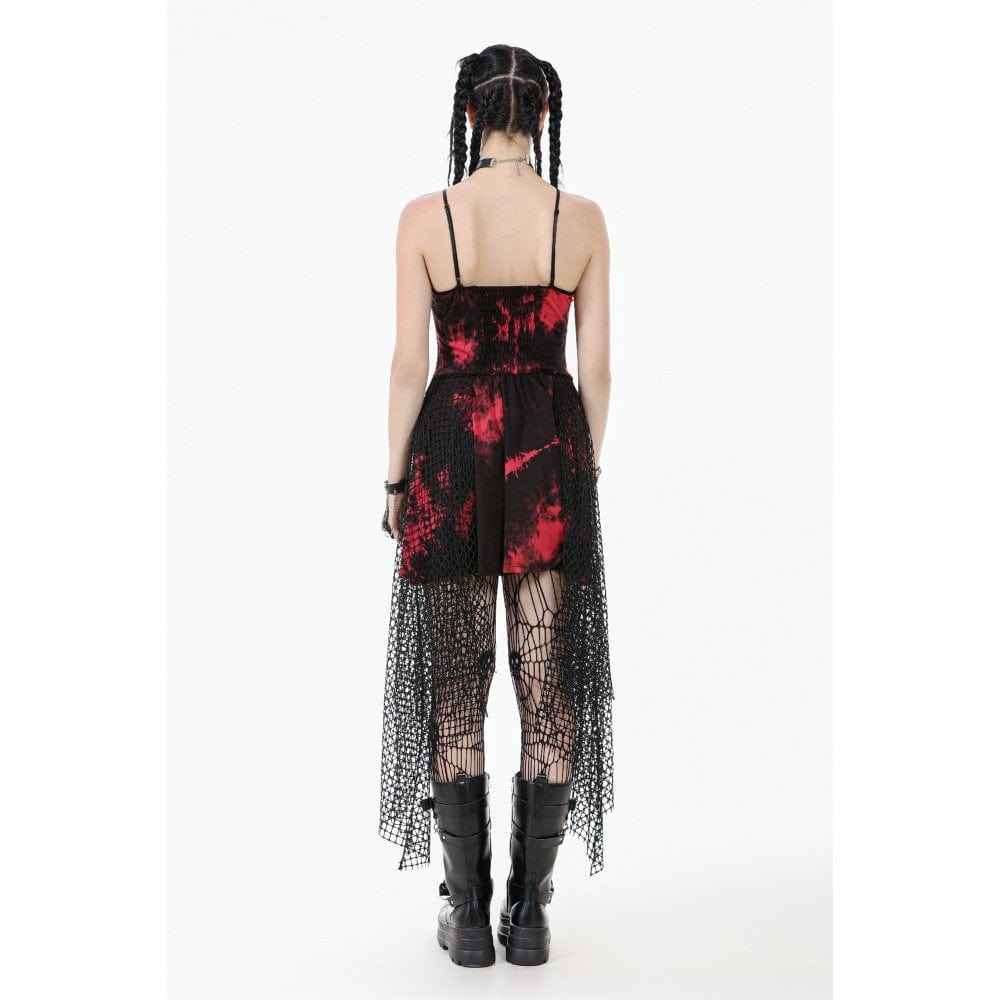
Every grunge revival eventually gets the fashion industry into trouble, because the fashion industry cannot stop trying to sell you a $600 flannel shirt that’s supposed to look like it costs $4 at Goodwill. R13, the boutique denim label, is selling distressed plaid button-downs for $475. Saint Laurent’s recent collections have leaned hard into the slip-and-boots silhouette at four-figure price points. Even Zara and H&M are pumping out fast-fashion grunge knockoffs that will fall apart in six months, which is its own kind of authentic, just not the kind anyone wanted.
This is the loop the industry can’t escape. Grunge originally happened because kids couldn’t afford the official-looking stuff. The minute the official-looking stuff starts being grunge, the original premise breaks and the next generation has to invent something new to refuse to buy. We’ve watched this cycle play out three times now — 1992, 2008, and 2024 — and every time the major fashion houses end up firing a creative director over it. Marc Jacobs got pushed out of Perry Ellis in 1993 for his Grunge collection. He’s the patron saint of getting this wrong on purpose.
What Rodrigo Actually Changed
The interesting thing isn’t that grunge came back. Grunge has been coming back in cycles for thirty years, and it always will, because the underlying conditions that produced it — economic uncertainty, anti-corporate sentiment, a generation looking at the previous one’s pretensions and gagging — are evergreen. What Rodrigo changed is the cultural permission slip. Before her, grunge was something that resurfaced periodically in a Saint Laurent runway show and then retreated into the cool-kid subcultures.
Rodrigo took it mainstream in a way that no one has managed since the original wave. She made it acceptable for a Top 40 pop star to look like she got dressed in a Seattle basement in 1993, and the rest of the music industry took the cue. Billie Eilish has been migrating in this direction. Phoebe Bridgers built her whole brand on a more whispered version of it. The Last Dinner Party showed up at the Brit Awards in lace slips and combat boots and won Best New Artist. It’s no longer a niche reference. It’s the dominant aesthetic of female pop musicians in 2024, and that is, weirdly, a Rodrigo accomplishment.

The Part That Stings If You’re Gen X
There’s something disorienting about watching a generation thirty years younger than you adopt the wardrobe you wore in high school and treat it like an exciting new discovery. The flannel you bought at a thrift store in 1994 because you couldn’t afford anything else is now a $475 R13 product. The slip dress you cut up to look more punk is being sold pre-cut by Reformation. The Doc Martens you broke in over six painful months are now coming in pre-distressed versions that ship that way from the factory.
But here’s the gift. The kids actually mean it. Rodrigo’s not wearing this stuff because a brand paid her — she’s wearing it because she sat in her bedroom in Murrieta, California, watching Hole concert footage on YouTube and decided that was the most exciting visual she’d ever seen. That’s exactly the relationship Gen X had with the wardrobe in the first place. Someone showed it to us through a screen — MTV, a record sleeve, a magazine spread — and we tried to recreate it from our own closets. The medium changed. The impulse didn’t. And honestly, looking at the kids at the Guts Tour in their inherited flannels and their thrifted slip dresses and their eyeliner that won’t come off until Tuesday, the impulse looks pretty good in 2024 too.
Sources
For more on the original grunge wave and its style legacy, see Wikipedia: Grunge Fashion, Courtney Love, and Olivia Rodrigo. For vintage band tee market data, browse vintage band tees on Amazon or check resale platforms. Concert tour history at Guts World Tour.
Browse retro and vintage-inspired apparel at the RetroRadical shop →
The Retro Almanac
A monthly roundup of "on this day" highlights from that month, decades back — plus first dibs on new retro merch drops. No spam, just the good stuff.