On This Day: June 20, 1986 — The Karate Kid Part II Premieres
The Karate Kid Part II opened wide on June 20, 1986, and ended its first weekend with $12.6 million in the bank — a franchise record at the time, more than half a million dollars above what the original earned in its 1984 debut. By Labor Day, John G. Avildsen’s sequel had outgrossed The Karate Kid domestically. By the time the dust settled, it had pulled in roughly $115 million worldwide, finishing as the third-highest-grossing film of 1986 behind only Top Gun and Crocodile Dundee.
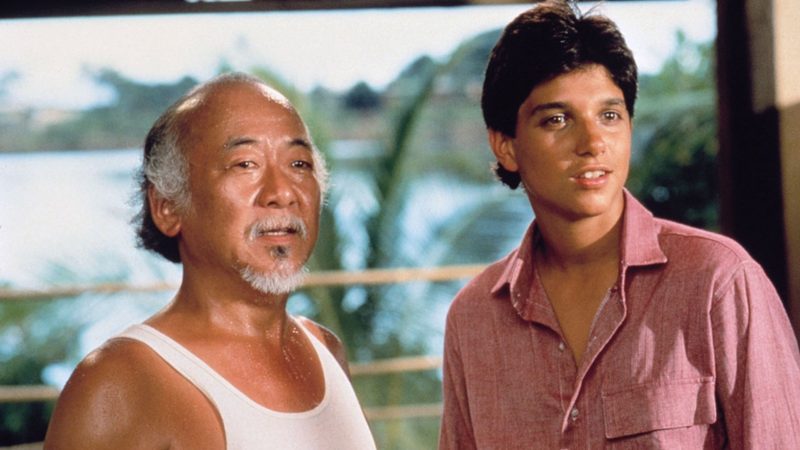
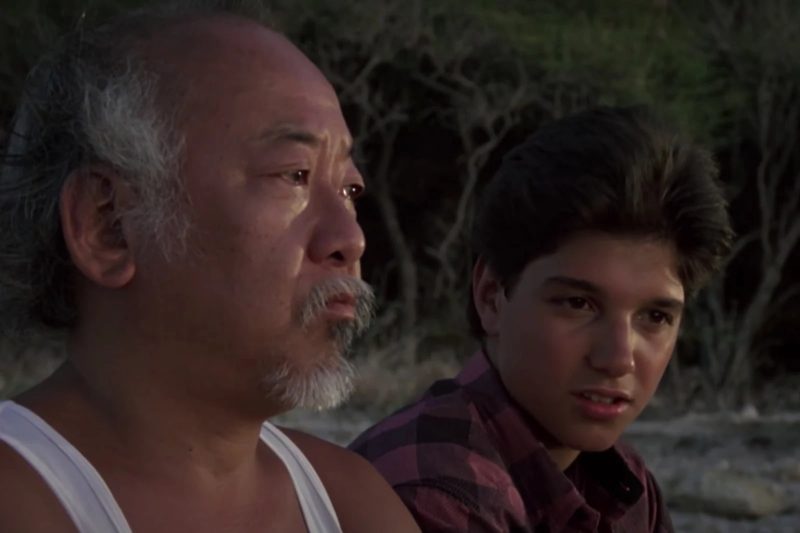
That kind of summer takeover does not happen by accident. Columbia Pictures bet that audiences would follow Daniel LaRusso and Mr. Miyagi out of the San Fernando Valley and into a story that traded suburban revenge plots for ancestral honor. The gamble worked, partly because of an unforgettable Peter Cetera ballad, partly because of Pat Morita’s quiet performance, and partly because the trailer promised the most beautiful sunset you had ever seen on a movie screen.
The Retro Almanac
A monthly roundup of "on this day" highlights from that month, decades back — plus first dibs on new retro merch drops. No spam, just the good stuff.
Mr. Miyagi Goes Home: The Premise That Almost Was Not
The Karate Kid Part II picks up minutes after the All Valley Tournament ends. Within the first ten minutes, Mr. Miyagi receives a letter from Okinawa: his father is dying, and an old rival named Sato is still waiting for the duel Miyagi refused to fight forty years earlier. Daniel — passport problems handwaved — comes along for the trip.
Robert Mark Kamen, who wrote the original, was reluctant to write a sequel at all. He has said in interviews that he only agreed when producer Jerry Weintraub gave him room to explore the Okinawan backstory the first film had only hinted at. The result is a movie that feels less like Karate Kid 2 and more like a standalone story about Miyagi confronting the life he ran from in 1947. Daniel is the audience surrogate, not the lead. That structural choice — putting Pat Morita at the center — is the single most interesting decision in the screenplay.
The “Okinawa” You Saw Was Actually Oahu
None of the film was shot in Okinawa. The production looked at the real island during scouting and concluded that forty years of postwar American military development had erased the visual world the script needed. Hawaii’s North Shore stood in instead. The crew built seven traditional Okinawan-style houses, planted three acres of crops, and shot the village exteriors in Haleiwa and surrounding agricultural land on Oahu.
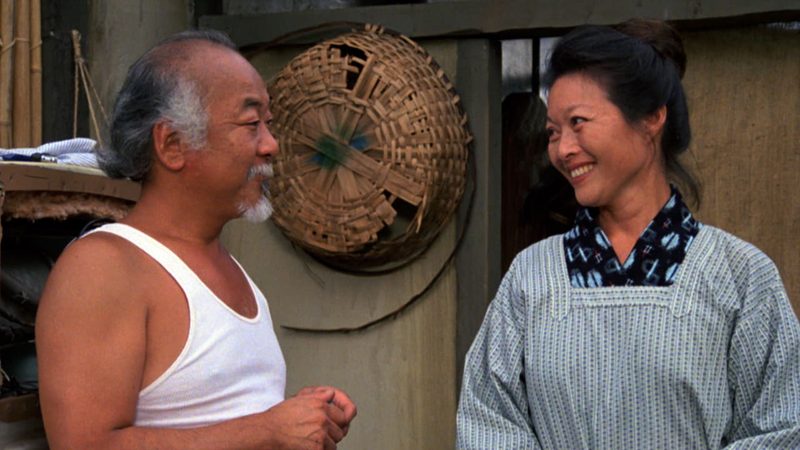
The flashback to Miyagi’s boyhood village and the dramatic typhoon sequence both used Waimea Valley. Kualoa Ranch — the same property that would later host Jurassic Park — provided the mountainous backdrops. Some of the dojo interiors were finished at Warner Bros. in Burbank. To populate the village, the production recruited about fifty Okinawan-born residents of Hawaii as extras, which is the reason so many of the background faces feel right in a way that big-studio crowd scenes usually do not.
“Glory of Love” Was a Bigger Hit Than the Movie
Bill Conti returned to score the sequel, but the song everyone remembers came from outside his orchestra pit. Peter Cetera, freshly departed from Chicago after eighteen years as their bassist and lead vocalist, co-wrote “Glory of Love” with David Foster and his then-wife Diane Nini. It was the lead single from his first solo album, Solitude/Solitaire, and it became the closing-credits theme for Karate Kid Part II.
The song hit number one on the Billboard Hot 100 on August 2, 1986, and stayed there for two weeks. It also earned an Academy Award nomination for Best Original Song and a Golden Globe nomination in the same category. For Cetera — who had been written off by some critics as commercially finished when he left Chicago — “Glory of Love” was vindication on a chart it was almost impossible to argue with.
The video pads itself with clips from the film, but it also did something more interesting. It connected the song to a specific image — Daniel and Kumiko standing together as the credits rolled — that fused the romantic ballad with the movie’s atmosphere. For years afterward, hearing the opening synth line in a grocery store could drop a Gen Xer straight back into a sticky-floor multiplex on Long Island in the summer of ’86.
Tamlyn Tomita’s First-Ever Role Was Kumiko
Tamlyn Tomita was nineteen, a UCLA student, and a recent Nisei Week Queen when she landed the role of Kumiko after responding to an open call that drew thousands of young Asian-American actresses. It was her first job. She had no agent. Avildsen reportedly cast her on the spot.
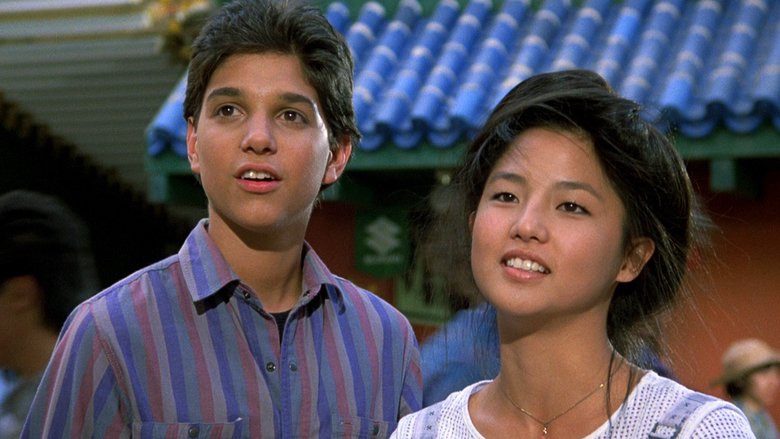
What makes Kumiko interesting on rewatch is that the script gives her a real ambition — she wants to study dance in Tokyo — and she does not abandon it for Daniel. Most teen-romance subplots in 80s blockbusters end with the love interest staying put. Kumiko leaves. Tomita has said in interviews that she spent years frustrated by the role, particularly the dance she did not actually want to perform, but she returned to play an adult Kumiko on Cobra Kai in 2020, and the character’s reappearance was one of the show’s most-discussed third-season moments.
Tomita’s career went on to include The Joy Luck Club, Babylon 5, and steady television work for the next three decades. The fact that her debut was the highest-grossing summer movie of her year is the kind of opening résumé credit most actors would forge a deal with the devil to get.
The Typhoon Scene Was Built Practically
Around the ninety-minute mark, a typhoon hits the village. Miyagi and Daniel race to a tower where a child is trapped — Daniel uses a beam-and-pulley trick from Miyagi’s earlier story to get her down — and on the way back Miyagi rescues Sato from his own collapsed dojo. The two former friends reconcile, and the third act gets its starting whistle.
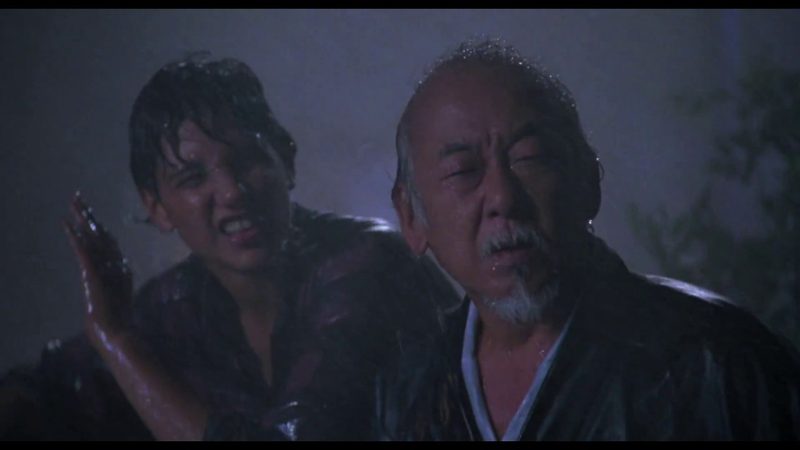
The sequence was shot on a soundstage with rain rigs, wind machines, and a partial set of the village built specifically to be destroyed. Crew members have said the scene took two weeks to film. You can feel the practical scale on screen in a way modern CGI typhoons rarely match — every drop of rain is real water, and the actors look genuinely cold because they were.
The Drum Technique and the Most-Quoted Fight Scene of 1986
The climax is the Obon festival, where Kumiko performs a fan dance on a moat-encircled wooden platform. Chozen — Sato’s vengeful nephew, played by Yuji Okumoto — interrupts and challenges Daniel to a fight to the death. The honking horns of Sato’s drumheads, twirled by Miyagi to remind Daniel of the technique, set the rhythm for the entire showdown.
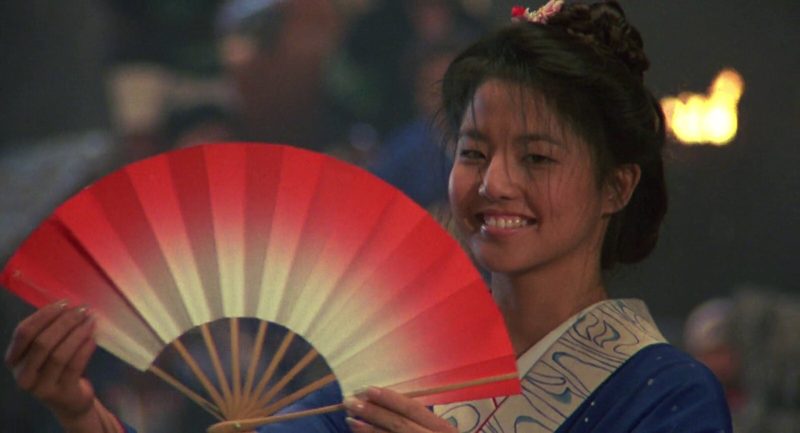
The “drum technique” — block with one hand, strike with the other in a turning, alternating rhythm — was invented entirely for the movie. It does not exist in any martial-arts lineage. Pat Morita was very clear in interviews that Miyagi-Do is a fictional style, which is part of why martial arts purists have always treated the franchise with suspicion. The movie is not interested in your dojo’s curriculum. It is interested in whether Daniel can find a way to fight that he can live with.
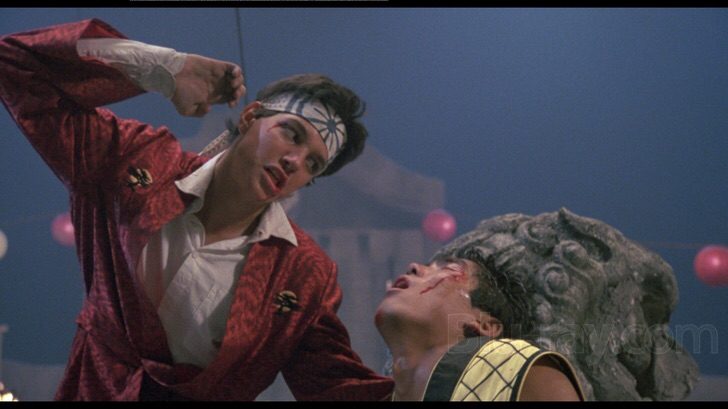
Daniel wins, of course. But the way he wins is the thing — he gives Chozen the choice of “live or die,” echoes Miyagi’s earlier line about karate as a path of honor, and spares him. The decision to let the bad guy live mattered to fans, because it set up Chozen’s eventual redemption arc thirty-four years later on Cobra Kai. Yuji Okumoto has said in podcast interviews that he gets recognized in airports more often now than he did in 1987.
Why Karate Kid Part II Outgrossed the Original
The first Karate Kid earned $90.8 million domestically. The sequel pulled in $115.1 million worldwide and roughly $115 million domestically depending on which source you trust — a small bump in raw dollars, but a substantial bump in 1986 ticket prices. Part of that came from the goodwill of the original. Part of it came from a smart June release date that gave it the full summer corridor before the back-to-school slump.
And part of it, honestly, came from “Glory of Love.” Songs sell tickets. A theme on the radio is a free advertisement for a movie every fifteen minutes on every Top 40 station in America. Top Gun’s “Take My Breath Away” pulled the same trick the same summer. The lesson — soundtrack as marketing engine — would not be lost on any studio that watched 1986 unfold.
Where the Sequel Stumbled
The honest answer is that Part II is a more emotionally serious movie than Part I, and the script does not always know what to do with that seriousness. The pacing sags in the middle. Daniel and Kumiko’s romance has fewer real scenes than it deserves. Chozen and his cousin Toguchi function more as obstacles than characters. Sato’s heel turn-redemption arc happens almost entirely in two scenes.
The most-cited critique — that the film flattens Okinawan culture into a tourist-brochure version of itself — is the one that has aged hardest. Even Tamlyn Tomita has spoken publicly about her discomfort with how Kumiko was written, and how the film treated Okinawa as a backdrop rather than a real place. Watch it in 2026 and you can see why she said that. The movie is gorgeous, and it is also a 1986 Hollywood version of a place none of the principal creators had ever lived.
Still: the truth is that no Karate Kid sequel was going to please everyone, and Avildsen and Kamen took a real swing here instead of just running back the tournament-fight formula. That choice is the reason the film is still talked about. Karate Kid Part III, by contrast, brought back the All Valley tournament — and is the least-loved entry in the original trilogy.
The Movie’s Long Shadow
Cobra Kai, which began on YouTube Red in 2018 and moved to Netflix in 2020, treats Part II as canon. Chozen reappears. Kumiko reappears. Miyagi’s letters from Okinawa become a plot device in Season 5. The drum technique gets a callback. None of that happens without June 20, 1986.
Pat Morita died in 2005, but his performance as Miyagi — particularly in this film, where he is asked to carry grief, regret, and quiet love alongside the karate — is the reason the franchise has a heart at all. He was nominated for the Best Supporting Actor Oscar for the first film. Part II is the movie that justified the nomination in retrospect.
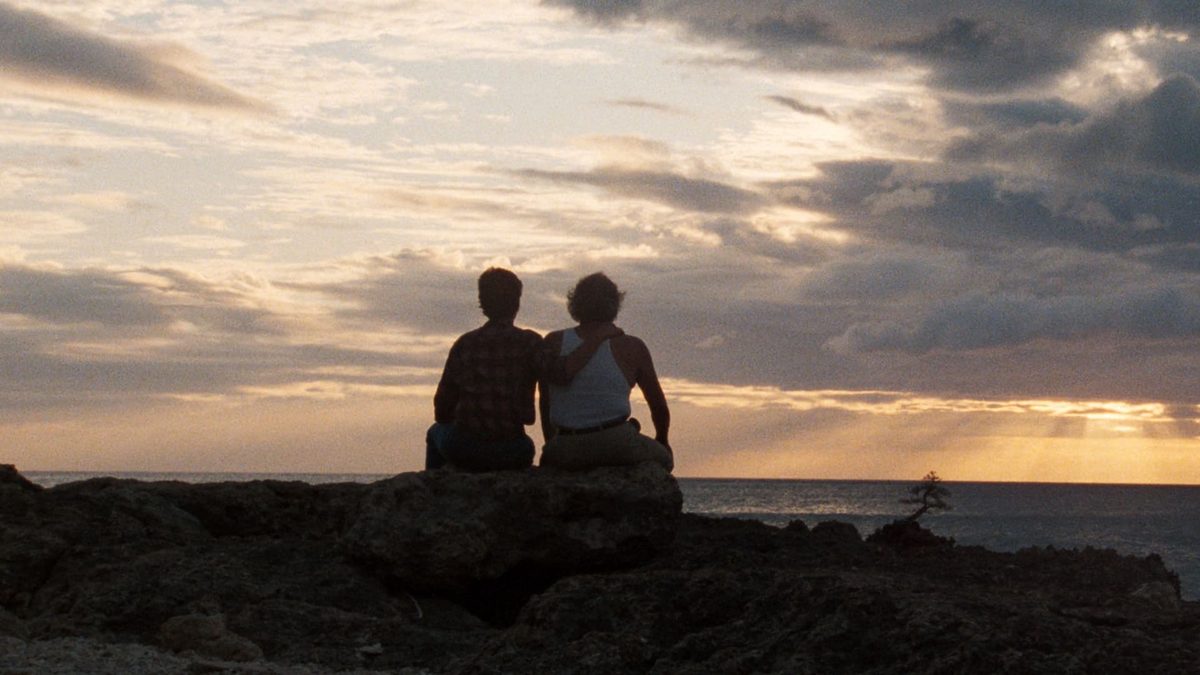
If you want to mark the anniversary properly, the move is simple. Queue up the Blu-ray. Skip the credits warning. Wait for the synth-line intro of “Glory of Love” to come in over the Okinawa sunset. The same image that sold a million theater tickets in the summer of 1986 still works. That is the test, and Karate Kid Part II still passes it forty years later.
For more 1980s release-day deep dives, see our coverage of Raiders of the Lost Ark and E.T. the Extra-Terrestrial, or jump forward to the 1995 premiere of Batman Forever for a different kind of summer blockbuster.
Sources
- The Karate Kid Part II — Wikipedia — production background, box office, cast.
- Box Office Mojo: The Karate Kid Part II (1986) — domestic and worldwide gross figures.
- IMDb: The Karate Kid Part II — cast, crew, release info.
- Glory of Love (Peter Cetera song) — Wikipedia — Billboard Hot 100 history and Academy Award nomination.
- 35 Years Ago: ‘Karate Kid II’ Honors Original Style and Substance — Ultimate Classic Rock — anniversary retrospective.
The Retro Almanac
A monthly roundup of "on this day" highlights from that month, decades back — plus first dibs on new retro merch drops. No spam, just the good stuff.