Purple Rain Movie: 9 Wild Facts About Prince’s 1984 Hit
For one stretch of the summer of 1984, Prince held the No. 1 movie, the No. 1 album, and the No. 1 single in America all at the same time — a feat matched only by Elvis Presley and the Beatles. The vehicle for all of it was Purple Rain, a low-budget drama that Warner Bros. executives almost buried after an early screening convinced them it was unreleasable. They were spectacularly wrong. Here are nine things worth knowing about the film, the record, and the motorcycle that launched a legend.
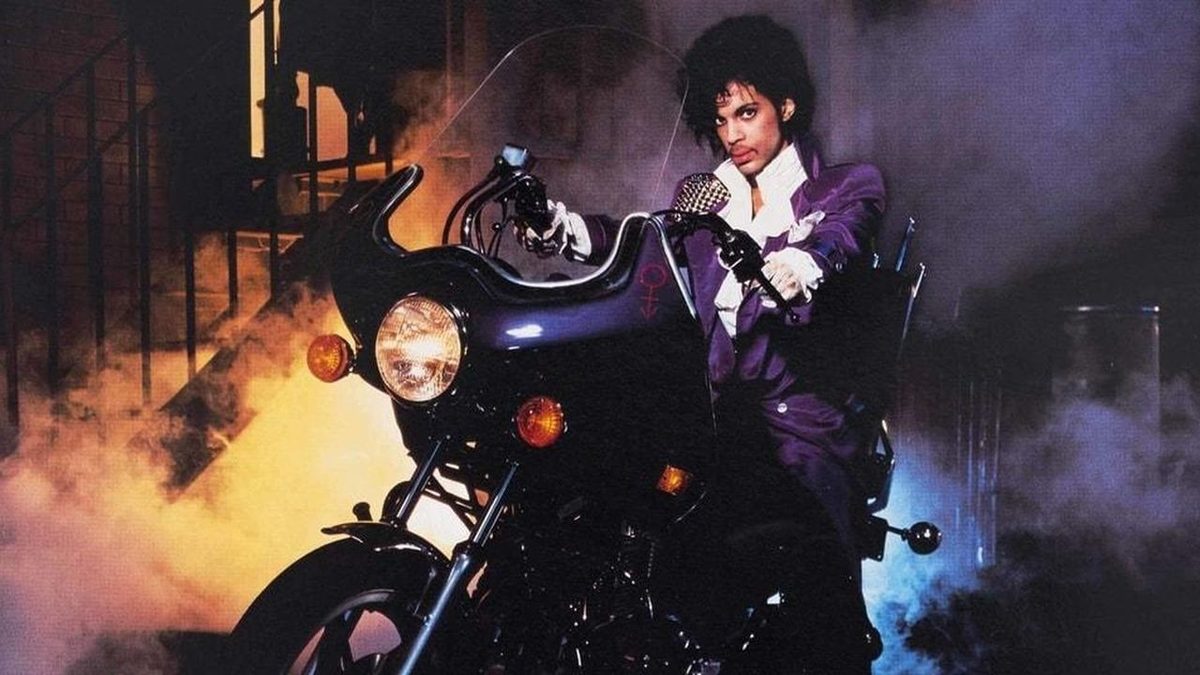
What Is the Purple Rain Movie About?
The Purple Rain movie follows The Kid, a gifted but volatile singer played by Prince, as he battles for a regular spot at Minneapolis nightclub First Avenue. He’s chasing a romance with an aspiring singer named Apollonia, sparring with rival bandleader Morris Day, and dodging the violence of an abusive household where his father — a washed-up musician — beats his mother. The plot is thin on paper. What carries it is the music and the menace Prince brings to every frame, plus some of the best concert footage ever committed to film.
The Retro Almanac
A monthly roundup of "on this day" highlights from that month, decades back — plus first dibs on new retro merch drops. No spam, just the good stuff.
The Minneapolis setting isn’t a backdrop dressed up on a Hollywood lot. First Avenue is a real venue, the motorcycle is a real Honda, and the cold, neon-lit city is the one Prince actually came up in. That authenticity is a big reason the film still plays better than its clunky dialogue should allow.
Is the Purple Rain Movie a True Story?
Not exactly. Purple Rain is semi-autobiographical — it borrows the shape of Prince’s life without being a documentary. Prince really did grind through the Minneapolis club circuit, and his parents were both musicians whose marriage fell apart. But the abuse, the suicide attempt, and the central romance were dramatized and, in early drafts, far darker. Prince’s original story had The Kid witnessing his father murder his mother before killing himself; that version got softened considerably once the script was reworked.
Prince himself shut down the true-story question bluntly. “I didn’t write Purple Rain,” he once said. “Someone else did. And it was a story, a fictional story, and should be perceived that way and nothing else.” The screenplay credit went to director Albert Magnoli and William Blinn, working from plot points Prince supplied.
Vanity, Apollonia, and the Lake Minnetonka Scene
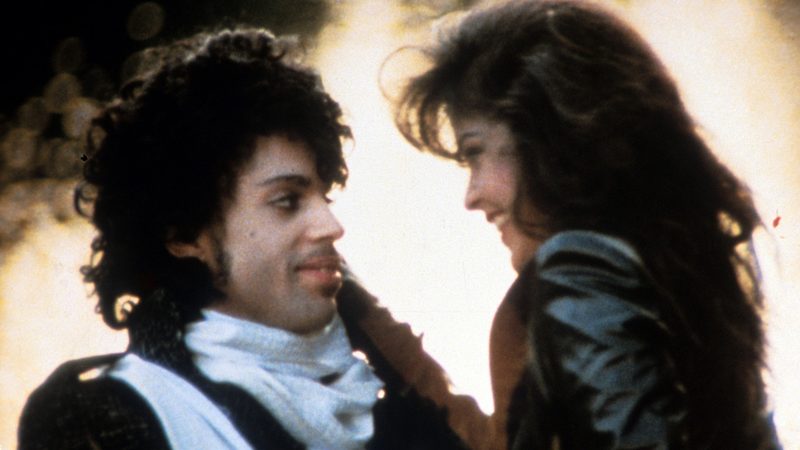
The female lead was written for Vanity, the singer of Prince’s protégé group Vanity 6 and his girlfriend at the time. They fell out before filming, Vanity walked, and a then-unknown actress named Patricia Kotero was cast and renamed Apollonia. Here’s the wild part: she couldn’t sing the part. Her vocals on “Take Me With U” were dubbed by Revolution keyboardist Lisa Coleman.
The film’s most quoted moment is the “purify yourself in the waters of Lake Minnetonka” scene, where The Kid tricks Apollonia into stripping and jumping into a freezing lake — then drives off without her. Kotero has said the water was brutally cold and that the lake wasn’t even Lake Minnetonka. Prince also reportedly demanded that Kotero break up with her then-boyfriend, Van Halen frontman David Lee Roth, so audiences would wonder whether the on-screen chemistry was real.
The Cast Took Dance Class Three Times a Week
Prince did not treat this like a vanity project he could coast through. Before cameras rolled, he arranged for the entire cast and band — most of them non-actors — to take acting and dance lessons three times a week at the Minnesota Dance Theatre. When dialogue wasn’t landing on set, he’d reportedly sit on the floor and rewrite it on the spot until it “popped.” For a 25-year-old in his feature debut, that’s a startling amount of creative control.
Morris Day and The Time Nearly Stole the Film
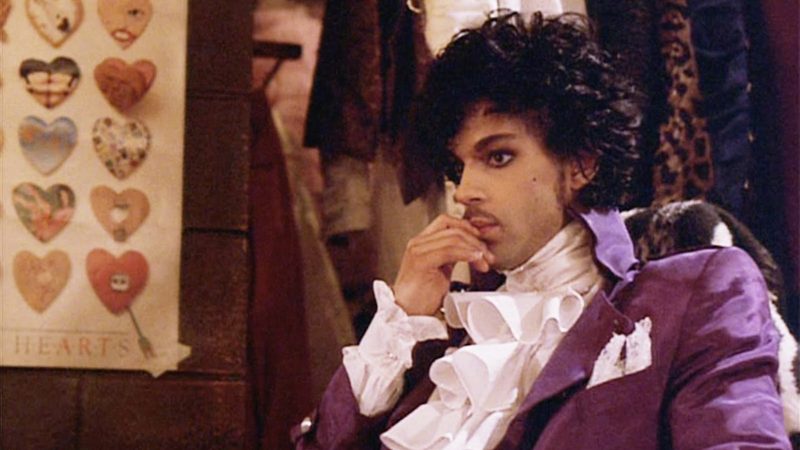
For all of Prince’s intensity, the funniest and loosest thing in Purple Rain is Morris Day. As the preening, mirror-obsessed frontman of rival band The Time — flanked by his hype-man valet Jerome — Day turns every scene into a comedy routine. Plenty of viewers walked out quoting “What time is it?” instead of any Prince line. The on-set tension was real, too: a genuine feud between Day and Prince reportedly caused scheduling headaches during the shoot, which only sharpened the rivalry you see on screen.
How a “Mess” Became a Blockbuster
When Warner Bros. executives first screened Purple Rain, they thought it was a disaster — too strange, too raw, not commercial enough to open wide. The plan was a token release on around 200 screens. Producer Robert Cavallo, desperate, tipped off three critics to a secret San Diego screening. When Rolling Stone, the Los Angeles Times, and Newsweek all came back with glowing reviews, the studio reversed course and pushed the film onto roughly 900 screens nationwide.
The gamble paid off at a level nobody predicted. Against a budget of about $7.2 million, the movie pulled in more than $70 million worldwide. The truth is, most studios would have quietly dumped a film they hated — Cavallo’s refusal to do that is the reason Purple Rain exists as anything more than a footnote.
The Purple Rain Album Outran the Movie
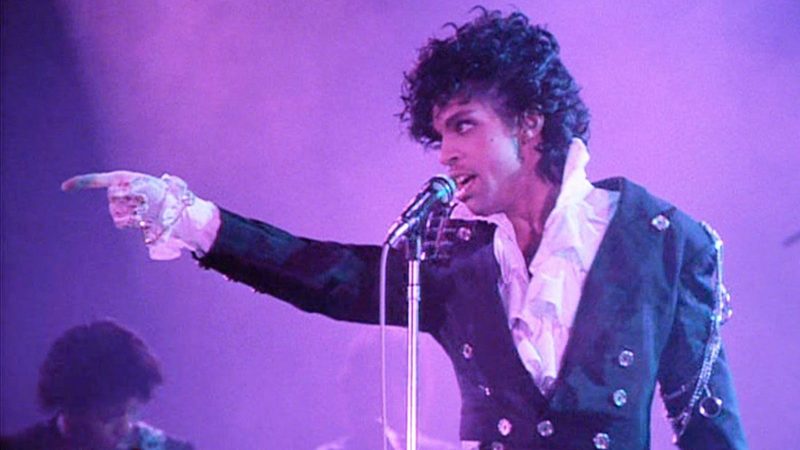
If the film made Prince a star, the Purple Rain album made him an institution. Released June 25, 1984, the soundtrack spent 24 consecutive weeks at No. 1 on the Billboard 200 and has since sold more than 13 million copies in the U.S. alone, certified 13× Platinum. Lead single “When Doves Cry” became Prince’s first Hot 100 No. 1, holding the top for five weeks — and it famously has no bass line at all, a choice that sounded wrong to everyone but him and turned out to be the hook. “Let’s Go Crazy” followed it to No. 1, and the title track stalled at No. 2.
That chart dominance is what produced the rare triple: for a moment in 1984, Prince had the No. 1 film, the No. 1 album, and a No. 1 single in America simultaneously. Before him, only Elvis and the Beatles had ever pulled it off.
An Oscar, a Grammy, and a Category That No Longer Exists
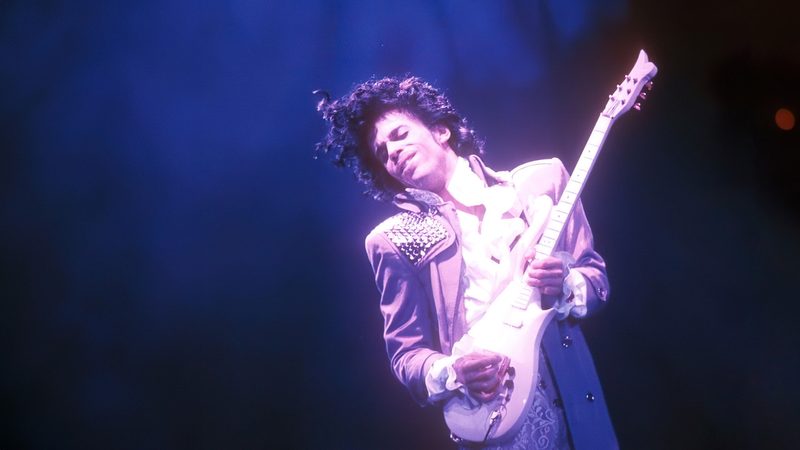
At the 1985 Academy Awards, Purple Rain won Best Original Song Score — a category the Academy retired not long after, making Prince one of the last people to ever take it home. The four credited composers shared the statue. The soundtrack also collected two Grammy Awards, including Best Rock Performance by a Duo or Group with Vocal for Prince and the Revolution, and earned a nomination for Album of the Year. For a project the studio nearly shelved, that’s a remarkable hardware haul.
The reach went well past the trophy case. “When Doves Cry” was the best-selling single of 1984 in the United States, beating out Bruce Springsteen and Cyndi Lauper in a year stacked with hits. Few debuts have ever announced an artist this loudly — Prince didn’t just break through with Purple Rain, he ran the whole table.
What Does Purple Rain Mean?
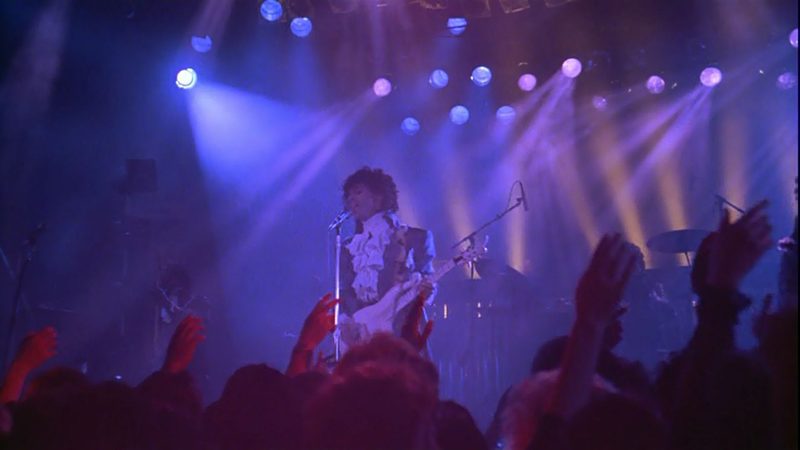
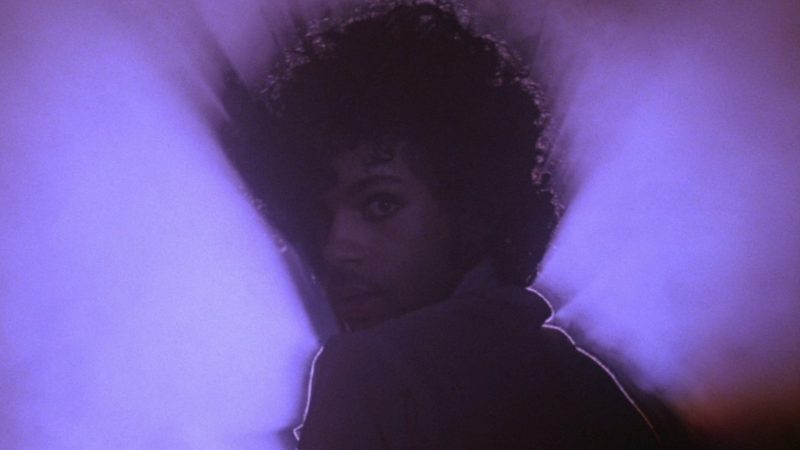
Prince gave more than one answer over the years, but the one that stuck describes the purple rain meaning as a kind of hopeful apocalypse: when the end comes and there’s someone you love beside you, the blue sky bleeds into red and you’re left under a purple sky. It’s faith dressed as a power ballad. The nearly nine-minute live performance that closes the film — shot at First Avenue with the real Revolution — is the emotional payoff the whole movie builds toward, and it’s the take that became the hit single.
The Real Minneapolis Behind Purple Rain
One of the reasons the concert scenes hit so hard is that a lot of them aren’t acting. The title track, “Computer Blue,” and “Baby I’m a Star” were recorded live at First Avenue on August 3, 1983 — at a real benefit show for the Minnesota Dance Theatre, months before principal photography on the Purple Rain 1984 shoot even began. What you hear on the record and see in the film’s climax is a genuine crowd reacting to a song most of them had never heard. That’s why the energy feels uncontainable; it was.
The locations are real, too. First Avenue still operates as a working nightclub in downtown Minneapolis, its black exterior now dotted with silver stars honoring the artists who played there — Prince’s star, painted gold after his death in 2016, is the one fans line up to photograph. The Honda CM400 he rides on the album cover became one of the most recognizable motorcycles in pop culture. All of it grew out of what came to be called the Minneapolis Sound: the funk-rock-synth hybrid Prince and his peers built in cold-weather studios through the early ’80s, and the thing Purple Rain finally sold to the rest of the world.
Why the Purple Rain Movie Still Matters
Forty years on, the clunky subplots have aged worse than the music — but nobody watches Purple Rain for the dialogue. They watch it for a once-in-a-generation performer at the exact moment he figured out how to put his whole self on a screen. The film invented a template every pop star since has chased: the concert-movie-as-myth, the artist playing a barely-fictional version of himself. Lady Gaga’s A Star Is Born and a dozen others owe it a debt.
If you only know Prince from the radio, the movie is the missing context — the place where the look, the guitar, the purple, and the First Avenue stage all snapped into the icon we remember. Start with the closing number, then go back and watch the whole strange, brilliant thing. And if you came up in the ’80s, it pairs perfectly with the era’s other defining moments, from Michael Jackson’s Thriller-era reign to the blockbuster Prince soundtracked five years later, Tim Burton’s Batman (1989). For more neon-soaked nostalgia, our Lost Boys retrospective is a fine next stop.
Sources
- CNN — ‘Purple Rain’ turns 40: The lasting impact of Prince’s musical film — 40th-anniversary retrospective on the film’s legacy.
- NPR — All Possibilities: The ‘Purple Rain’ Story — oral history of the film’s making and reception.
- Billboard — Prince’s ‘Purple Rain’ on the Charts — chart records, including 24 weeks at No. 1.
- MNopedia (Minnesota Historical Society) — Purple Rain (film and album) — Minneapolis production background and First Avenue history.
Browse retro and vintage-inspired apparel at the RetroRadical shop →
The Retro Almanac
A monthly roundup of "on this day" highlights from that month, decades back — plus first dibs on new retro merch drops. No spam, just the good stuff.