Boyz n the Hood: 9 Reasons This 1991 Classic Still Hits
Boyz n the Hood turned a $6.5 million Columbia Pictures budget into $57.5 million at the box office, made a 23-year-old USC film student the youngest Best Director nominee in Oscar history, and pulled a 20-minute standing ovation at Cannes before it ever opened wide in America. John Singleton wrote the screenplay in three weeks with N.W.A. playing on a loop. He rode through Los Angeles in a rented limousine on opening night, July 12, 1991, stopping at theater after theater to watch the audience react in real time. When a gang member walked up to him outside one of those screenings and said, “That’s my story. That’s my story” — Singleton later called it the best compliment of his life.
This is the story of how a kid from South Central refused to let anyone from Encino direct his neighborhood, why Tre, Doughboy and Ricky became the three faces of an entire generation, and why Boyz n the Hood still hits harder than almost anything Hollywood has made about young Black men since.
The Retro Almanac
A monthly roundup of "on this day" highlights from that month, decades back — plus first dibs on new retro merch drops. No spam, just the good stuff.
How Boyz n the Hood Was Born at USC Film School
Singleton wrote the first version of the script in 1986 as a USC film school application. He called it Summer of 84. It was about three kids in South Central — one heading to college, one chasing a football scholarship, one already deep in the streets. The story stayed in a drawer for four years while Singleton learned how to actually make a movie.
Then in 1989, he walked out of Do the Right Thing, looked at his friends, and said, “I got to do my shit. I’m making my movie.” The next year, Columbia Pictures bought the screenplay. Filming started October 1, 1990 in South Central, ran exactly two months, and wrapped on November 28. Producer Steve Nicolaides made one critical decision: shoot in continuity, so Singleton — directing his first feature at 22 — could grow alongside his actors as the story moved from 1984 to 1991.
Why John Singleton Refused to Let Anyone Else Direct
Columbia liked the script enough to greenlight it. They were less sure about the kid attached to it. The standard move at the time was to buy a strong screenplay from a young writer and hand it to a veteran director — usually someone with no connection to the world the story was about. Singleton wasn’t having it.
His exact words: “I wasn’t going to have somebody from Idaho or Encino direct this movie.” He’d grown up between his mother in South Central and his father in the same neighborhood. He had walked the streets the script described. He’d lost friends. The single biggest reason Boyz n the Hood doesn’t feel like a tourist film about Black Los Angeles — the way so many studio movies still do — is that the person behind the camera grew up two blocks from the locations he was shooting. Singleton hired actual gang members from the area as wardrobe and dialogue consultants. The wardrobe on screen, the slang, the way people moved through their own front yards — it all came through neighborhood verification before it got near a take.
The Cast That Walked Into History
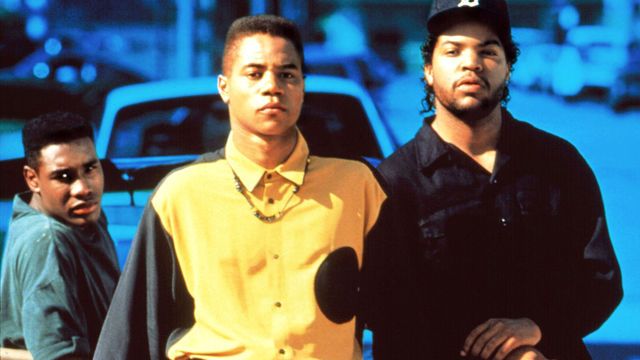
Almost no one in the Boyz n the Hood cast was a movie star yet. The lead trio — Cuba Gooding Jr., Ice Cube, and Morris Chestnut — were all stepping in front of a feature camera for the first or second time. Ice Cube had never acted in a film before Singleton wrote Doughboy specifically for him. The two had met while Singleton was a USC intern at The Arsenio Hall Show. Morris Chestnut was a UCLA student who walked into the audition cold. Singleton later said he cast Gooding and Chestnut partly because they arrived first to the audition and locked the roles before the casting director could change his mind.
Laurence Fishburne came in as Furious Styles after Singleton met him as a production assistant on Pee-wee’s Playhouse. Angela Bassett played Tre’s mother Reva, a small but defining role that helped launch her. Regina King made her film debut as Shalika. Nia Long played Brandi. Tyra Ferrell came in as Mrs. Baker, Ricky and Doughboy’s mother. Five of the major castings — Cube, Chestnut, King, and the screen debuts of Gooding and Long in major roles — became foundational careers in 90s Black Hollywood. The film didn’t just tell a story. It opened a door.
Doughboy, Ricky, and Tre: Three Paths Through South Central
The genius of the screenplay is that it gives you three answers to the same question. Boyz n the Hood doesn’t argue that Black boys in South Central are doomed, and it doesn’t pretend they all get out clean. It says three kids who grew up on the same block can walk three completely different paths, and the difference between life and death isn’t talent — it’s circumstance, family, and luck.
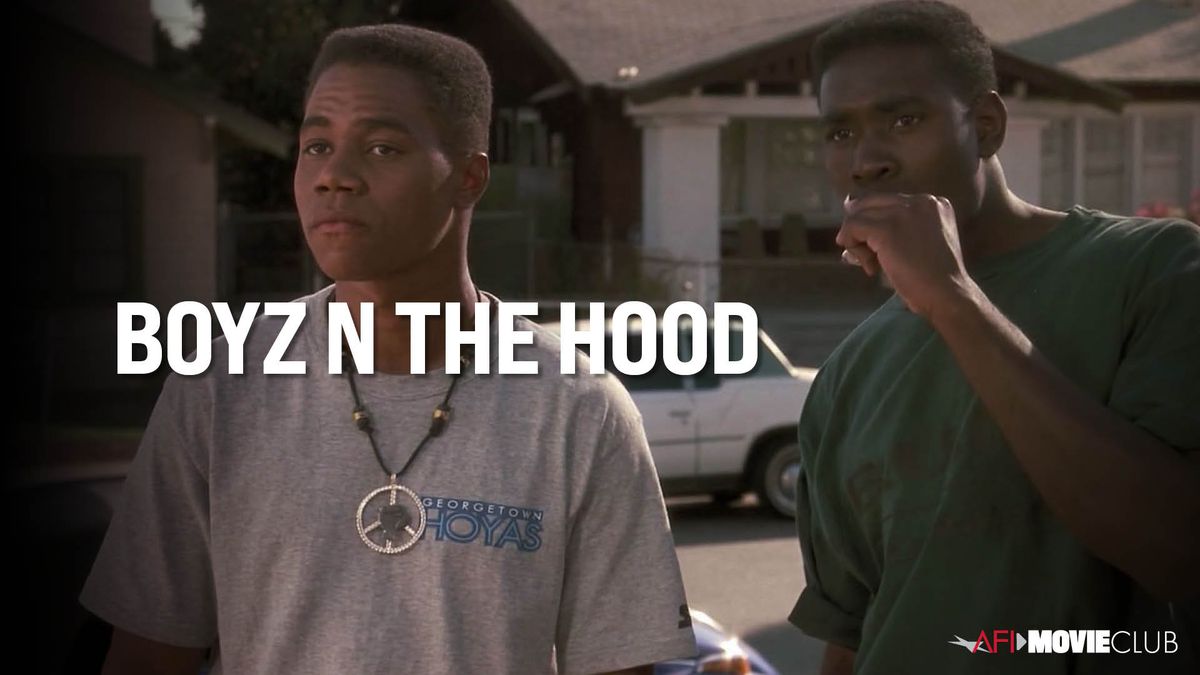
Tre Styles (Cuba Gooding Jr.) gets sent to live with his father Furious because his mother knows she can’t raise him alone. He gets discipline, lectures about gentrification, a curfew, and a father who shows up. He’s the one who makes it to Morehouse.
Ricky Baker (Morris Chestnut) is the gifted athlete chasing a USC football scholarship. He has a kid, a girlfriend, and an SAT score he’s grinding toward. The recruiter tells him he needs a 700. He gets a 710. His mother opens the envelope after he’s already dead.
Doughboy (Ice Cube) — Ricky’s half-brother — has a mother who openly favors Ricky, no father in the picture, and a juvenile record that closes most doors before they open. He delivers the film’s gut-punch closing monologue: “Either they don’t know, don’t show, or don’t care about what’s going on in the hood.” A title card tells us he was murdered two weeks later. The three paths don’t converge. That’s the point.
The Opening Scene That Set the Tone
The film opens with kids in 1984. They cut through a yellow-tape crime scene on their way to school. One of them asks, “Y’all wanna see a dead body?” It’s the only line a 10-year-old kid in that neighborhood needs to say to establish the entire emotional reality of the story. Singleton doesn’t lecture. He shows you what normal looks like, and lets you sit with how wrong “normal” can be.
That scene was inspired in part by Stand by Me, which Singleton has cited as a structural influence. But where Rob Reiner’s film treats finding a dead body as a coming-of-age rite, Singleton makes it a coming-of-age environment — something the kids are already used to before the story even begins.
The Crenshaw Locations You Can Still Visit
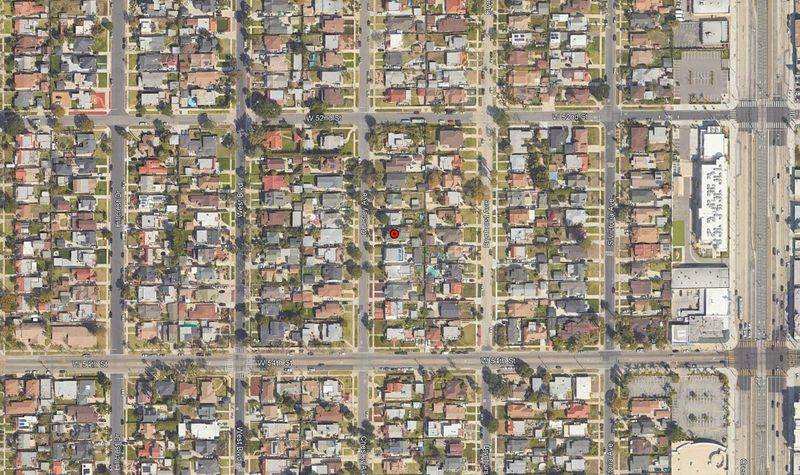
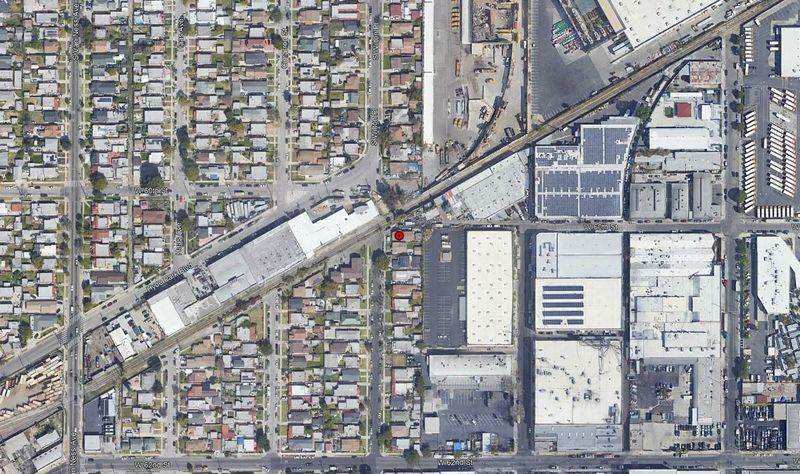
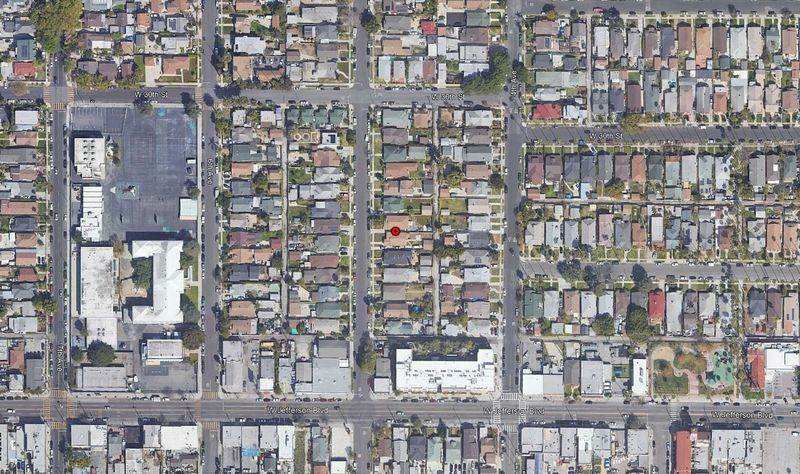
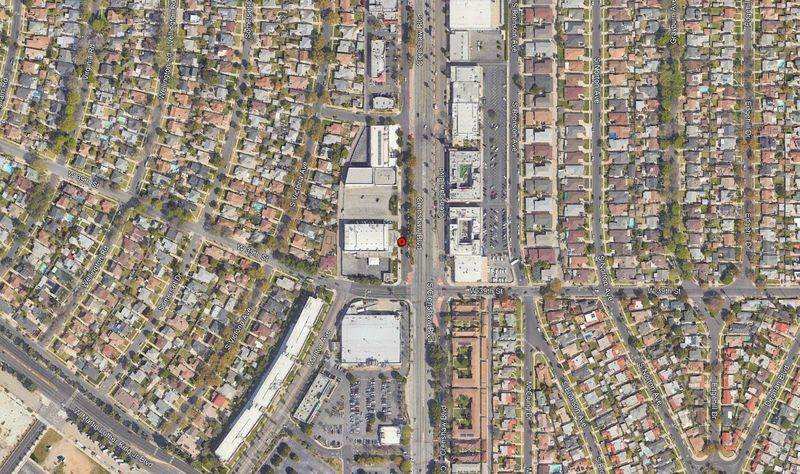
Singleton shot the entire film in South Central Los Angeles. Most of the key locations are still standing, and a small generation of fans has made the pilgrimage to walk past them. Furious Styles’ house — where Tre lives most of the film — is at 5918 Cimarron Street in Park Mesa Heights, between 59th and 60th. The cruising sequence that builds to Ricky’s death was shot along Crenshaw Boulevard. The 3833 Crenshaw stretch handled the nighttime cruise scenes. The police pullover happens at the Angelus Funeral Home at 3875 Crenshaw. Coley’s Kitchen Jamaican Restaurant at 4335 Crenshaw is the “Westside” restaurant where Furious and Reva have their heart-to-heart.
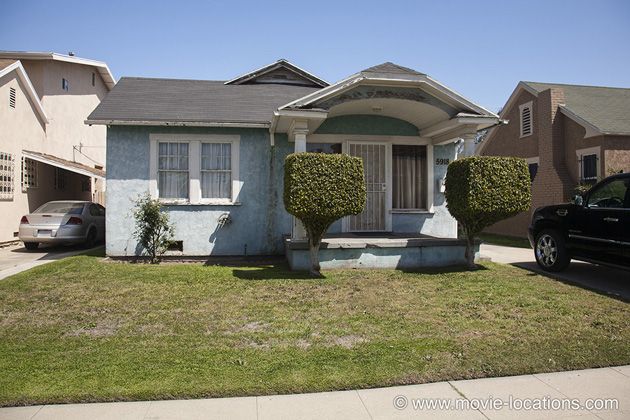
The locations matter because Singleton didn’t fake them. He didn’t use Atlanta or Vancouver to play LA. He shot Crenshaw on Crenshaw, with the same houses, the same skyline, the same palm trees. That decision is why the film reads as a document and not a backdrop.
Boyz n the Hood and the Gangsta Rap Era That Built It
The movie didn’t arrive in a vacuum. By 1991, N.W.A. had released Straight Outta Compton, Ice Cube had left the group and dropped AmeriKKKa’s Most Wanted, and the cultural argument about gang life, the LAPD, and Black masculinity in Los Angeles was already at full volume. Singleton wrote the screenplay with N.W.A. playing in the background. He cast a rapper as the most quoted character in the film. The connection between West Coast hip hop and the hood film genre was sealed in that one casting decision.

The Tipper Gore PMRC hearings had already slapped Parental Advisory stickers onto Ice Cube’s solo records. Two months after Boyz n the Hood hit theaters, the same moral panic would explode again around N.W.A. and 2 Live Crew. If you want the moral-panic backstory, our breakdown of the Parental Advisory sticker and the PMRC war covers the politics that put rap on trial. The cultural collision is exactly why Singleton’s film hit the bullseye — it was the same story Cube was telling on wax, in long form, with a camera instead of a microphone.
The Cannes Standing Ovation and the Oscar Snub
The film premiered at Cannes in May 1991 in the Un Certain Regard section. The audience stood for 20 minutes. The U.S. release on July 12, 1991 opened in 829 theaters and pulled $10 million on its first weekend — a higher per-screen average than Terminator 2, which was the box office monster of that summer. The total domestic gross hit $57.5 million on a $6.5 million budget. Critics gave it a 96% Rotten Tomatoes score that still holds.
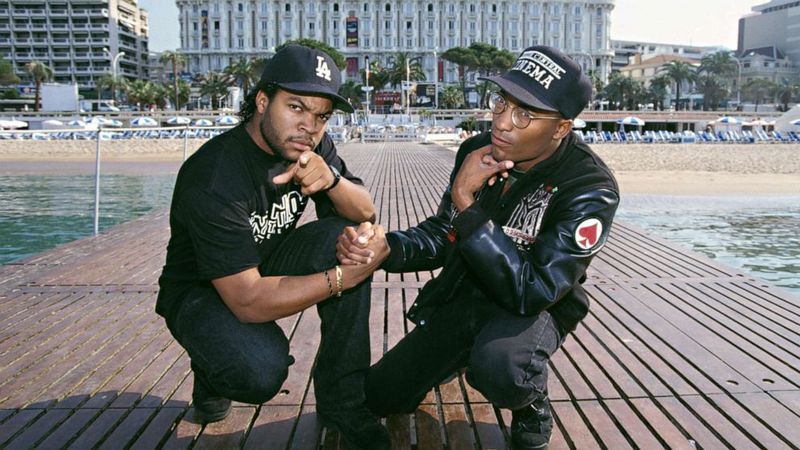
At the 1992 Oscars, Singleton became the first African American ever nominated for Best Director, and the youngest in Academy history at 24. He picked up a Best Original Screenplay nomination too. He lost both. The Best Director Oscar went to Jonathan Demme for The Silence of the Lambs. The film won the NAACP Image Award for Outstanding Motion Picture, the MTV Movie Award for Best New Filmmaker, and prizes from both the New York Film Critics Circle and the LA Film Critics Association.
The Hood Film Genre Boyz n the Hood Built
Before 1991, the closest thing Hollywood had to a hood film was Dennis Hopper’s Colors from 1988 — a film told largely from the cops’ point of view. Boyz n the Hood flipped the camera. The story belonged to the kids on the block, not the officers driving past them. Within two years, the genre exploded: Juice (1992) with Tupac, Menace II Society (1993) from the Hughes Brothers, Friday (1995) reuniting Ice Cube with his roots in a comedic register, and Training Day (2001) channeling the same LA grit a decade later.
For context on what came right before, our piece on Colors (1988) and the LA gang film that preceded it is worth a read — it sets up exactly what Singleton was responding to. And for the rap world that shared the same year and the same Los Angeles air, Digital Underground’s 1991 Humpty Hump moment shows the lighter side of a hip hop scene that was already splintering into political, party, and gangsta lanes.
The Trailer That Still Plays in 2026
Columbia’s marketing campaign leaned hard on the realism. The poster — three young men, one in the foreground with a defiant stare, the South Central backdrop behind them — became one of the most recognizable one-sheets of the early 90s. The official trailer is still on YouTube via Rotten Tomatoes Classic Trailers, and it still moves people.
Why Boyz n the Hood Still Hits in 2026
Thirty-five years after release, Boyz n the Hood 1991 still holds a 96% on Rotten Tomatoes. The Library of Congress added it to the National Film Registry in 2002. The Criterion Collection released a 4K Blu-ray in April 2026 as part of a John Singleton box set with Poetic Justice and Baby Boy. A 30th-anniversary theatrical run filled seats in 2021. The film keeps finding new audiences because the story keeps being true.
What lands hardest now isn’t the violence. It’s Furious Styles standing in front of a vacant lot, explaining gentrification to a circle of kids and adults years before the word entered mainstream conversation. It’s the SAT score arriving after the funeral. It’s the title card revealing that Doughboy was murdered two weeks later, with no fanfare, just a fact. Singleton wasn’t trying to entertain. He was trying to make sure nobody got to look away.
John Singleton died in April 2019 at 51. The shorthand summary calls him the man who made Boyz n the Hood. The longer version is that he changed who got to direct studio films about Black life in America, opened the door for an entire generation of filmmakers behind him, and proved that a 23-year-old USC kid with a Casio keyboard, a notebook, and an N.W.A. CD could outperform the entire mid-1991 Hollywood release slate on a budget that would barely buy Terminator 2‘s opening credits.
That’s the legacy. Increase the peace.
Sources
- Boyz n the Hood — Wikipedia — production history, cast, budget, box office, awards, and legacy.
- How John Singleton Made ‘Boyz n the Hood’ — The Ringer — oral history with Ice Cube and the producers.
- Boyz n the Hood Turns 30 — Good Morning America — 30th-anniversary impact retrospective.
- Boyz n the Hood (1991) — AFI Movie Club — American Film Institute background and significance.
- John Singleton, 1991 on Boyz n the Hood — Golden Globes Archive — original 1991 interview.
- Filming Locations for Boyz N The Hood (1991) — Movie-Locations.com — South Central addresses for every major scene.
- Boyz n the Hood — The Criterion Collection — 2026 4K restoration release notes.
Browse retro and vintage-inspired apparel at the RetroRadical shop →
The Retro Almanac
A monthly roundup of "on this day" highlights from that month, decades back — plus first dibs on new retro merch drops. No spam, just the good stuff.