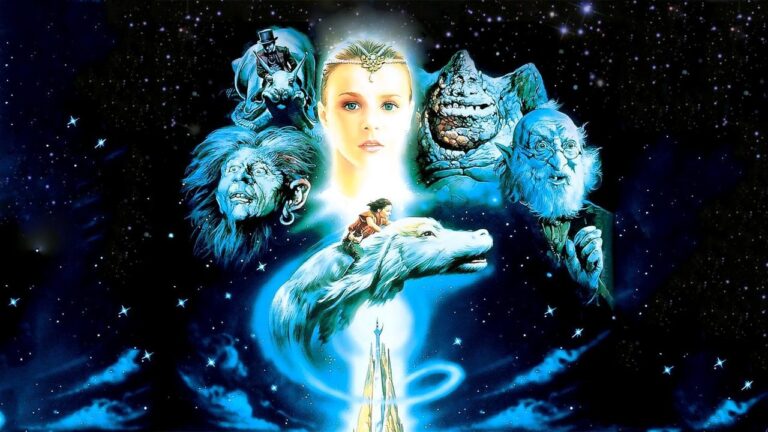
On This Day: June 27, 1986 — Labyrinth Hits Theaters
On the last Friday of June 1986, a film opened in eighth place with $3.5 million and a shrug from most critics. Roger Ebert handed it two stars. Gene Siskel called it “awful.” Forty years on, Labyrinth 1986 is the movie people quote at parties, cosplay at conventions, and rewatch every single Christmas — a flop that refused to stay a flop.
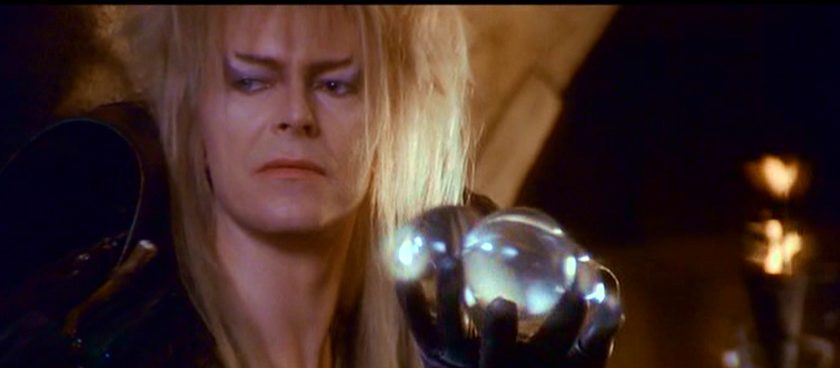
David Bowie as Jareth, the Goblin King — the role that introduced a new generation of kids to glam rock.
The Retro Almanac
A monthly roundup of "on this day" highlights from that month, decades back — plus first dibs on new retro merch drops. No spam, just the good stuff.
What Happened on June 27, 1986
Tri-Star Pictures released Labyrinth 1986 wide across 1,141 theaters. The story is simple enough to summarize on a napkin: 16-year-old Sarah, frustrated with babysitting her infant brother Toby, carelessly wishes him away to the goblins. They take her up on it. To get him back, she has thirteen hours to solve a living, shifting maze ruled by Jareth — a Goblin King in skintight breeches, teased blond hair, and enough eyeliner to outfit a full Bowie tour.
The numbers were brutal. Against a $25 million budget, the film clawed back only $12.7 million in its entire U.S. run — barely half its cost. For Henson, who had poured a year and a half of Creature Shop labor into it, the reception stung. His son Brian later told Life magazine that this was the closest he’d ever seen his father “to turning in on himself.”
How Jim Henson and George Lucas Built the Maze
Labyrinth was a genuine summit meeting of 1980s fantasy power players. Henson directed. George Lucas executive produced through Lucasfilm. Monty Python’s Terry Jones took the sole screenwriting credit, though the script passed through at least 25 treatments and the hands of Lucas, Laura Phillips, Dennis Lee, and Elaine May before cameras rolled. May’s rewrites, Henson said, finally “humanised the characters” enough for him to commit.
Conceptual designer Brian Froud sketched a world that felt hand-built and slightly rotten in the best way, and the Henson Creature Shop made it breathe. Principal photography ran five months at Elstree Studios — April 15 to September 8, 1985 — and it was a logistical nightmare, because almost nothing on screen was a costume an actor could simply wear.
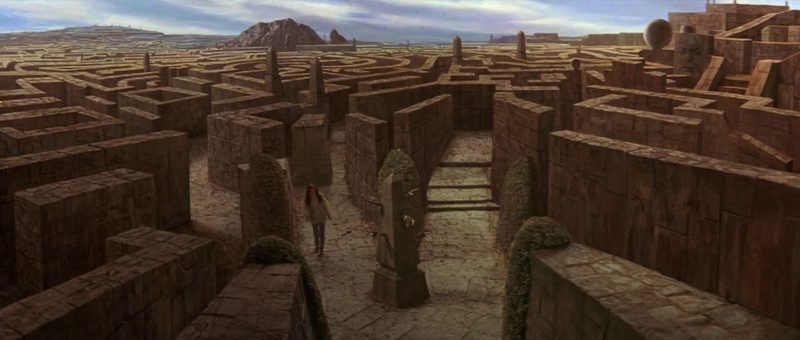
The maze itself was a character — a shifting trap that rearranged its own walls.
The Puppetry Was Insane — and That’s the Point
Here’s the stat that explains why Labyrinth still looks better than half the CGI made today: the film leaned on physical performers for nearly every creature. Hoggle, the grumbling dwarf who becomes Sarah’s reluctant guide, was the most complex build of the production. Shari Weiser stood inside the costume while Brian Henson and three more puppeteers radio-controlled the face from off-camera. One character, four operators, working in perfect sync.
Then there’s the Helping Hands shaft — that nightmare scene where Sarah falls and is caught by walls made of living hands. The set ran 30 feet deep, packed with 150 pairs of foam-latex hands worked by 75 puppeteers crouched behind angled boards so their arms showed but their faces never did. Veteran Muppet performers Dave Goelz, Steve Whitmire, Karen Prell, and Ron Mueck — the same Mueck who’d later become a world-famous sculptor — all hid inside this thing.
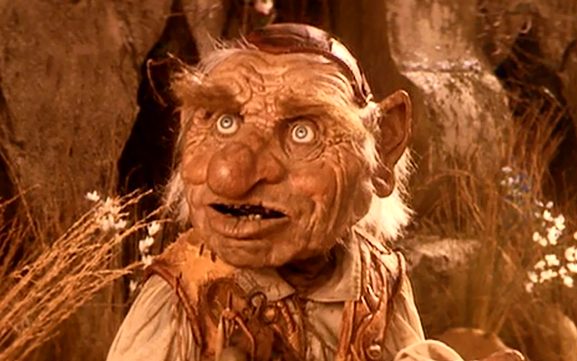
Hoggle required five people to bring to life — and still out-acts most modern motion capture.
The truth is, the practical effects are exactly why the movie aged so well. A 1986 audience saw a goofy puppet show. A 2026 audience sees craftsmanship that no render farm can fake — every wrinkle on Hoggle’s face was sculpted, not coded.
Why Casting David Bowie Changed Everything
Henson chased Bowie for almost two years. They first met in the summer of 1983, and Bowie didn’t formally sign on until February 15, 1985. He was, by the director’s own logic, the only choice — a musician with the otherworldly androgyny the role demanded and the star wattage to anchor a children’s film for grown-ups.
Bowie recorded five original songs for the soundtrack: “Underground,” “Magic Dance,” “Chilly Down,” “As the World Falls Down,” and “Within You.” “Magic Dance” alone — that “you remind me of the babe” call-and-response with a nursery full of goblins — has outlived most of the decade’s actual chart hits. Bowie understood the assignment perfectly. He played Jareth as part Heathcliff, part rock star, part pantomime villain, and never once winked at the camera.
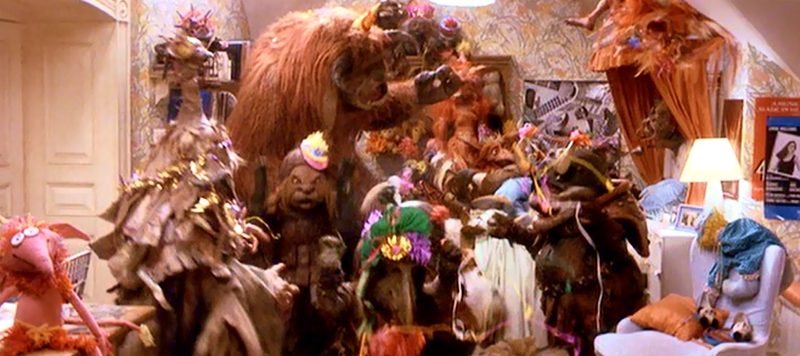
The masquerade ballroom — the dream sequence set to Bowie’s “As the World Falls Down.”
For Jennifer Connelly, Sarah was a launchpad. She was just 14 when cast and 16 by the time the film came out. Henson picked her, he said, because she could play “that kind of dawn-twilight time between childhood and womanhood.” Connelly would go on to win an Oscar for A Beautiful Mind, but to a certain slice of Gen X she will always be the girl in the white dress staring down the Goblin King.
From Box Office Bomb to Cult Phenomenon
Labyrinth did better overseas — $9 million in Japan, $4.5 million in the UK in its first month, more than $34 million worldwide by January 1987 — but nobody mistook it for a hit. What saved it was the rental shelf. Through the late ’80s and ’90s, Labyrinth became a VHS staple, the kind of tape kids wore out and parents reluctantly re-rented for the hundredth time.
Bowie watched it happen in real time. “Every Christmas,” he said in 1992, “a new flock of children comes up to me and says, ‘Oh! You’re the one who’s in Labyrinth!'” Henson knew it too before his sudden death in 1990 — he understood the cult following had taken root. The annual Labyrinth of Jareth Masquerade Ball has run since 1997, and as of 2021, fan-fiction site FanFiction.Net hosted over 10,000 Labyrinth stories. Critics came around as well: Empire later called it “a fabulous fantasy,” a full reversal of the 1986 consensus.
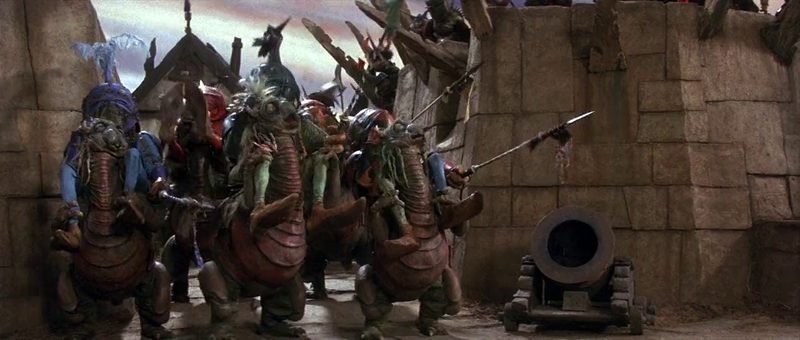
The goblin army — every creature a hand-built puppet, not a pixel in sight.
The Scenes That Stuck
Some images from Labyrinth 1986 are burned permanently into pop-culture memory. The opening, with Sarah reciting lines from a little red book in a park as a storm rolls in. The Bog of Eternal Stench. The “ambiguous puzzle” of the two guards. And the finale in the M.C. Escher staircase room, where gravity quits and Sarah chases Toby across stairs that run in every direction at once — a set built as a practical illusion, decades before anyone typed the word “Inception.”
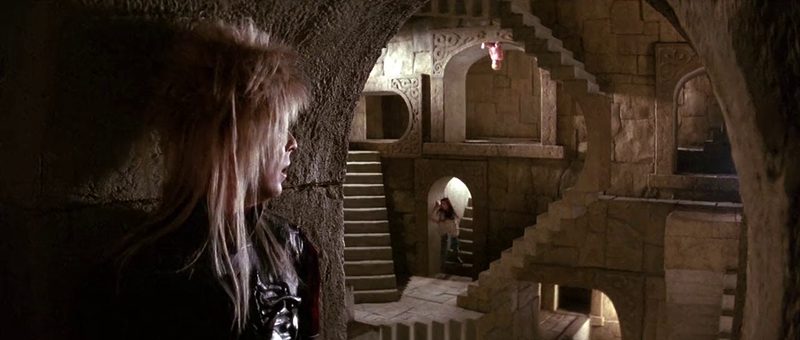
The Escher staircase finale — practical set design that still bends brains today.
What’s striking is how completely the conversation has flipped. In 1986, the knock on Labyrinth was that it was neither fish nor fowl — too dark and strange for small kids, too silly for teenagers, too long at 101 minutes. Today those same “flaws” read as the whole appeal. The film commits to its own bizarre logic without apologizing, and that sincerity is exactly what kids raised on focus-grouped, algorithm-tested entertainment now find irresistible. It doesn’t talk down to anyone, and it never explains a joke.
It’s no accident that 1986 was a banner year for the kind of fantasy that trusted its audience. Three weeks earlier, The Karate Kid Part II had premiered, and the decade was stacking up the films Gen X would never shut up about — from Blade Runner and The Thing to Tim Burton’s Batman a few years later. Labyrinth fits right in that lineage of movies that flopped or divided critics on arrival and got reclaimed as classics.
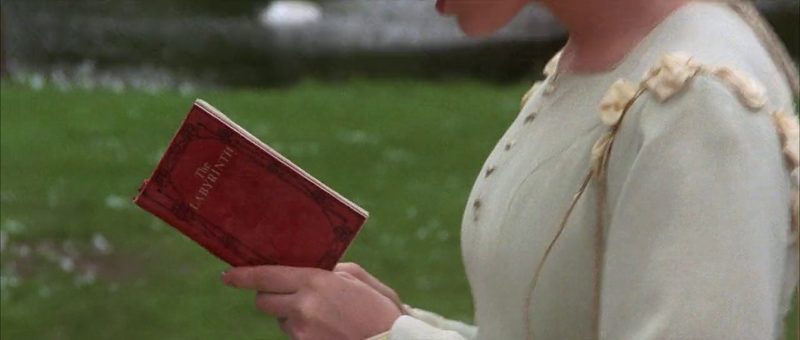
The little red book Sarah reads in the opening — the spell that starts it all.
Watch the Original 1986 Trailer
The trailer sells exactly the strange brew the film delivered — Bowie’s hair, Henson’s creatures, and a maze that promised more weirdness than any kids’ movie of its era.
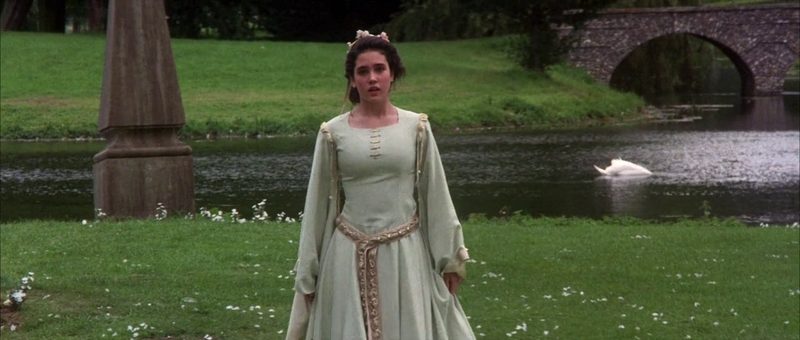
Jennifer Connelly as Sarah — 16 when the film opened, an Oscar winner two decades later.
The Legacy of a Beautiful Flop
Labyrinth was Jim Henson’s last feature film as director. He died in May 1990 at just 53, and it’s hard not to read the film’s slow vindication as a quiet apology from the culture that initially dismissed it. The lesson sitting underneath the June 27, 1986 release date is one every retro fan already knows in their bones: opening-weekend box office is a terrible predictor of what a movie will mean. Some films are built to be discovered, not debuted. Dig out the VHS — or the 4K, if you must — and watch it again. The babe still has the power.
Sources
- Labyrinth (1986 film) — Wikipedia — Production history, budget, box office figures, cast and reception.
- Labyrinth — The Jim Henson Company — Official production and creature-shop background.
- Labyrinth — The Numbers — Domestic and worldwide box office data.
The Retro Almanac
A monthly roundup of "on this day" highlights from that month, decades back — plus first dibs on new retro merch drops. No spam, just the good stuff.