
Queen Latifah, Salt-N-Pepa, and the Women Who Owned the Mic
Somewhere around 1989, if you asked the average radio programmer who ruled rap, they’d rattle off a list of men. But anyone actually paying attention to the block, the boombox, and the mixtape knew the truth: the women were already coming, and they weren’t asking permission. The Golden Age of hip-hop — that roughly 1990-to-1999 stretch when the genre exploded from block-party novelty into the dominant sound of American youth culture — is usually told as a story of crews, producers, and coastal rivalries. But pull the camera back and you’ll see something the highlight reels tend to skip: a run of women who grabbed the microphone, planted a flag, and dared anyone to take it back.
This is the part of the era that doesn’t get its Behind the Music special often enough. So let’s give it one.
Before the Crown: Roxanne Shanté and the Answer Record
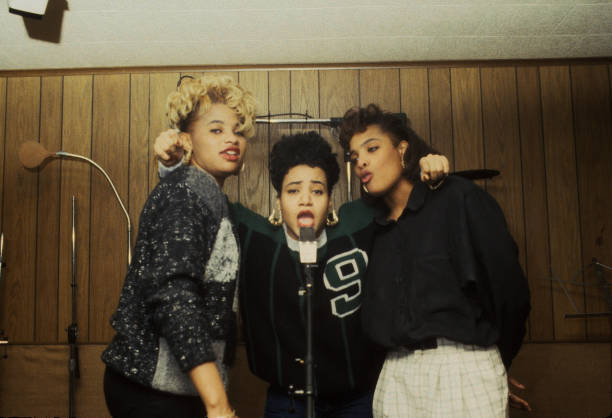
You can’t understand the women of the 90s without rewinding to a teenager from the Queensbridge projects. In 1984, a 14-year-old named Roxanne Shanté recorded “Roxanne’s Revenge” — a freestyle response to UTFO’s “Roxanne, Roxanne” — reportedly in a single take. It kicked off the “Roxanne Wars,” a blizzard of more than a hundred answer records, and it proved a point that would echo for the next fifteen years: a girl with a sharp tongue and a good beat could out-rap almost anyone who stepped to her.
The Retro Almanac
A monthly roundup of "on this day" highlights from that month, decades back — plus first dibs on new retro merch drops. No spam, just the good stuff.
By the time the calendar flipped to the 90s, that blueprint had matured. The women arriving on the scene weren’t novelties or gimmicks — they were battle-tested lyricists who’d grown up watching Shanté go bar-for-bar with grown men and win.
Queen Latifah Put On the Crown — and Meant It
When Dana Owens started calling herself Queen Latifah, it wasn’t marketing. Her 1989 debut All Hail the Queen arrived draped in African medallions and Afrocentric pride, and by 1993 she’d delivered the song that made her a household name: “U.N.I.T.Y.” The hook — “U-N-I-T-Y, that’s a unity” — landed like a public service announcement wrapped in a groove, calling out street harassment and domestic violence at a moment when few mainstream records dared. It won a Grammy in 1995 for Best Rap Solo Performance.
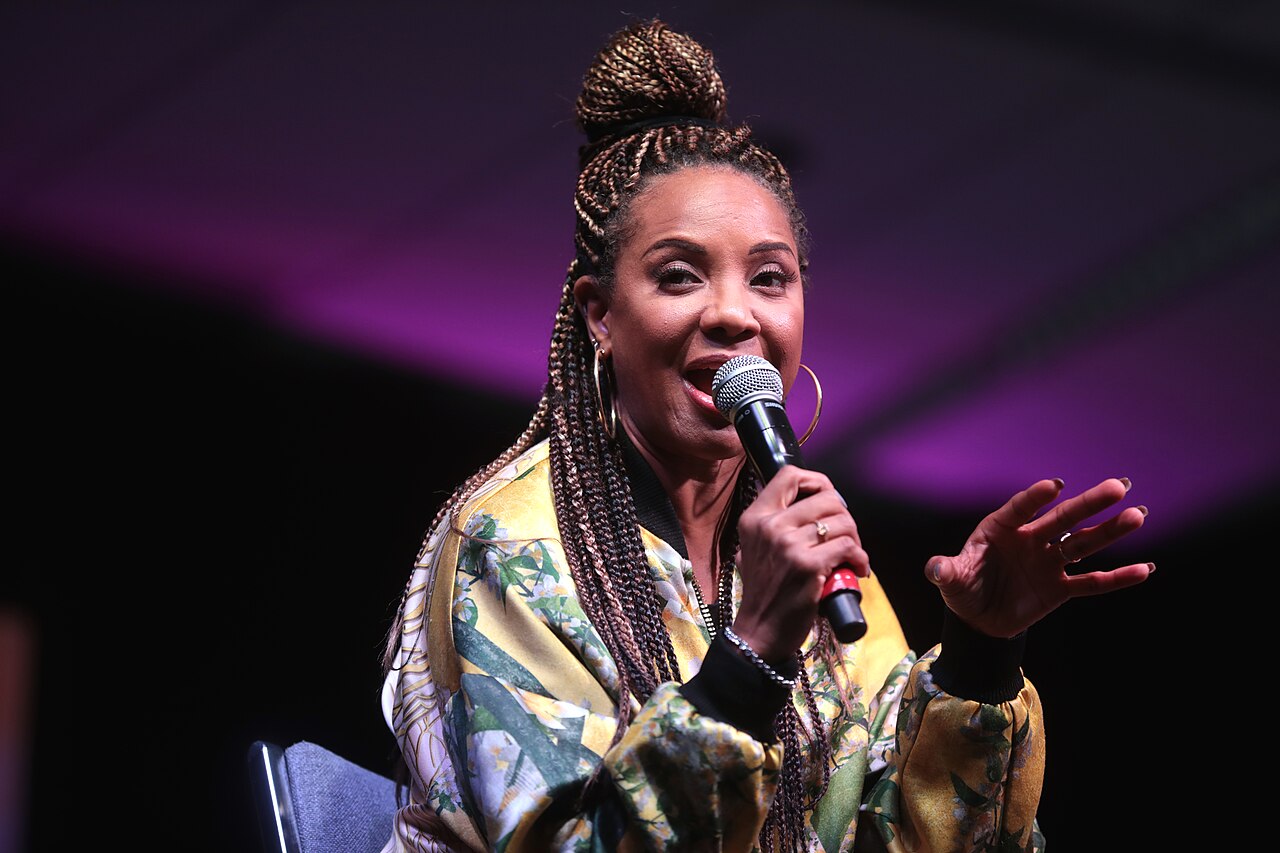
What made Latifah so pivotal wasn’t just the records. She founded Flavor Unit Management, mentored other acts, and then walked straight off the rap stage and onto the sitcom set of Living Single in 1993, proving a rapper — a woman rapper — could anchor a prime-time show. The template she built (artist, executive, actor, mogul) is the one nearly every hip-hop crossover star has followed since.
MC Lyte and the Art of the Cold Stare
If Latifah brought regal warmth, MC Lyte brought ice. Born Lana Moorer in Brooklyn, Lyte dropped Lyte as a Rock in 1988 as a teenager and spent the early 90s cementing her reputation as one of the most technically fearless MCs of either gender. In 1993, “Ruffneck” became the first single by a solo female rapper to go gold and earned a Grammy nomination — a commercial milestone that quietly moved the goalposts for everyone who came after.
Lyte’s whole appeal was that she never sounded like she was trying to prove she belonged. She just sounded like the best rapper in the room, and the room could take it or leave it.
Salt-N-Pepa Made the Party — and the Statement
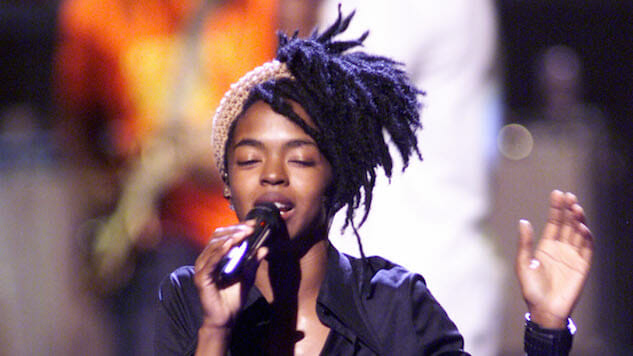
By the early 90s, Salt-N-Pepa — Cheryl “Salt” James, Sandra “Pepa” Denton, and DJ Spinderella — were already the most commercially successful women in rap, and they used that platform to say things pop radio wasn’t used to hearing from women. “Let’s Talk About Sex” (1991) turned a taboo into a Top 40 hit and later became an AIDS-awareness anthem. Then came “Shoop” and “Whatta Man” (the latter a 1994 collaboration with En Vogue), records that flipped the male gaze on its head and made it playful, confident, and unmistakably theirs.
In 1995 they won the first-ever Grammy for Best Rap Performance by a Duo or Group for “None of Your Business” — a title that doubled as a mission statement. Their Very Necessary album moved more than five million copies, numbers that made the industry finally treat women in rap as a market, not a mascot.
The Native Tongues Wing: Monie Love and Yo-Yo
The Golden Age had its bohemian, jazz-sampling, consciousness-first collective in the Native Tongues, and women were woven right into it. British-born Monie Love traded verses with Queen Latifah on the classic 1989 duet “Ladies First,” a song that plays even better today as a thesis statement for the whole decade. Out in Los Angeles, Yo-Yo — mentored by Ice Cube — launched the Intelligent Black Woman’s Coalition and answered West Coast machismo bar for bar on records like “You Can’t Play with My Yo-Yo.”
These weren’t side characters. They were building an entire lane of hip-hop where a woman’s perspective was the point, not a novelty verse dropped in to check a box.

Lil’ Kim, Foxy Brown, and the Reclaimed Spotlight
By the mid-90s the mood shifted, and two young New Yorkers shifted with it. Lil’ Kim, running with The Notorious B.I.G. and Junior M.A.F.I.A., released Hard Core in 1996; Foxy Brown, tied to the Firm and Jay-Z’s circle, dropped Ill Na Na the same year. Both albums were unapologetically explicit, luxurious, and confrontational — women writing about sex, money, and power from behind the wheel instead of the passenger seat.
They were polarizing then and they’re still argued about now, which is exactly why they matter to the story. Kim and Foxy forced a conversation the genre hadn’t fully had: about ownership, image, and who got to decide how a woman presented herself on record. Whatever side of that debate you land on, you can trace a straight line from Hard Core to a huge share of what came after.
Missy Elliott Rebuilt the Blueprint
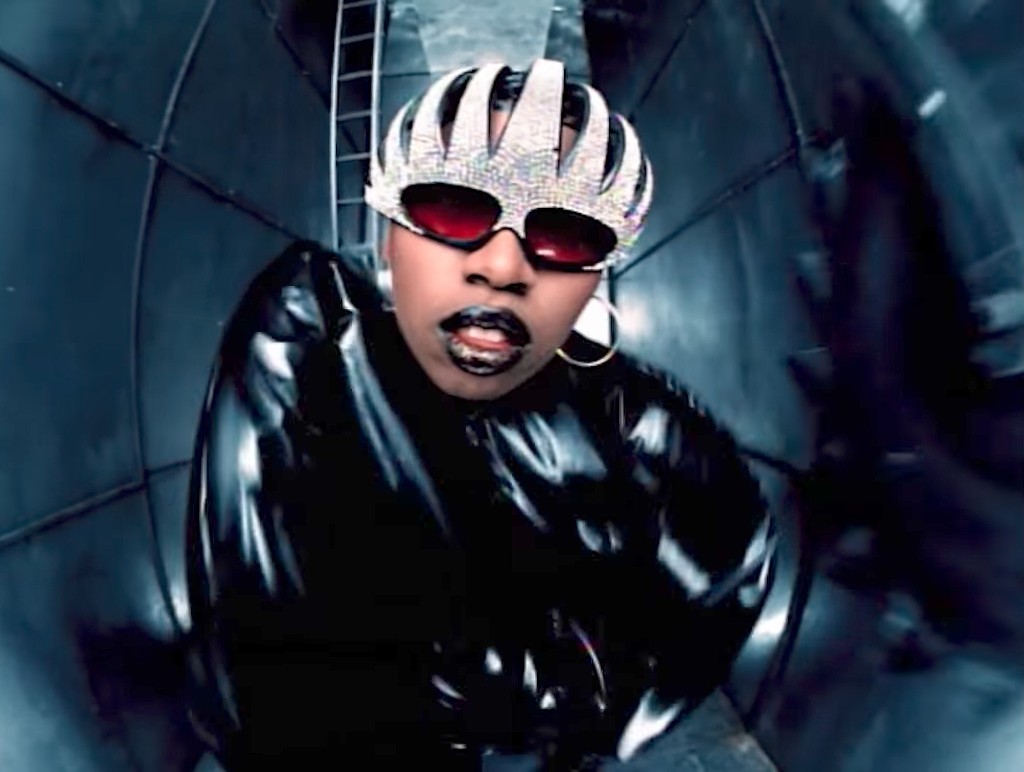
Then there was Missy “Misdemeanor” Elliott, who ended the decade by refusing to fit any of the boxes built before her. Her 1997 debut Supa Dupa Fly, produced almost entirely with Timbaland, sounded like it beamed in from a decade that hadn’t happened yet — stuttering rhythms, backwards samples, and that instantly iconic inflated-suit video for “The Rain (Supa Dupa Fly).” Missy wasn’t just a rapper; she was a writer, producer, and visual director shaping the sound and look of everything around her.
She’d already ghost-written and produced for other artists, so when she stepped out front, she did it as a full-fledged auteur. In doing so she quietly answered the era’s biggest open question — whether a woman could control the entire creative machine, not just the vocal booth. She could, and she did.
Lauryn Hill and the Mic Drop That Ended the Decade
If you wanted a single moment to bookend the Golden Age, it’s the night in February 1999 when Lauryn Hill walked away with five Grammy Awards for The Miseducation of Lauryn Hill, including Album of the Year — the first hip-hop album ever to win that category. She’d already conquered the charts as one-third of the Fugees, but Miseducation was hers: sung, rapped, written, and largely produced by a woman who’d grown up inside the exact culture this article has been tracing.
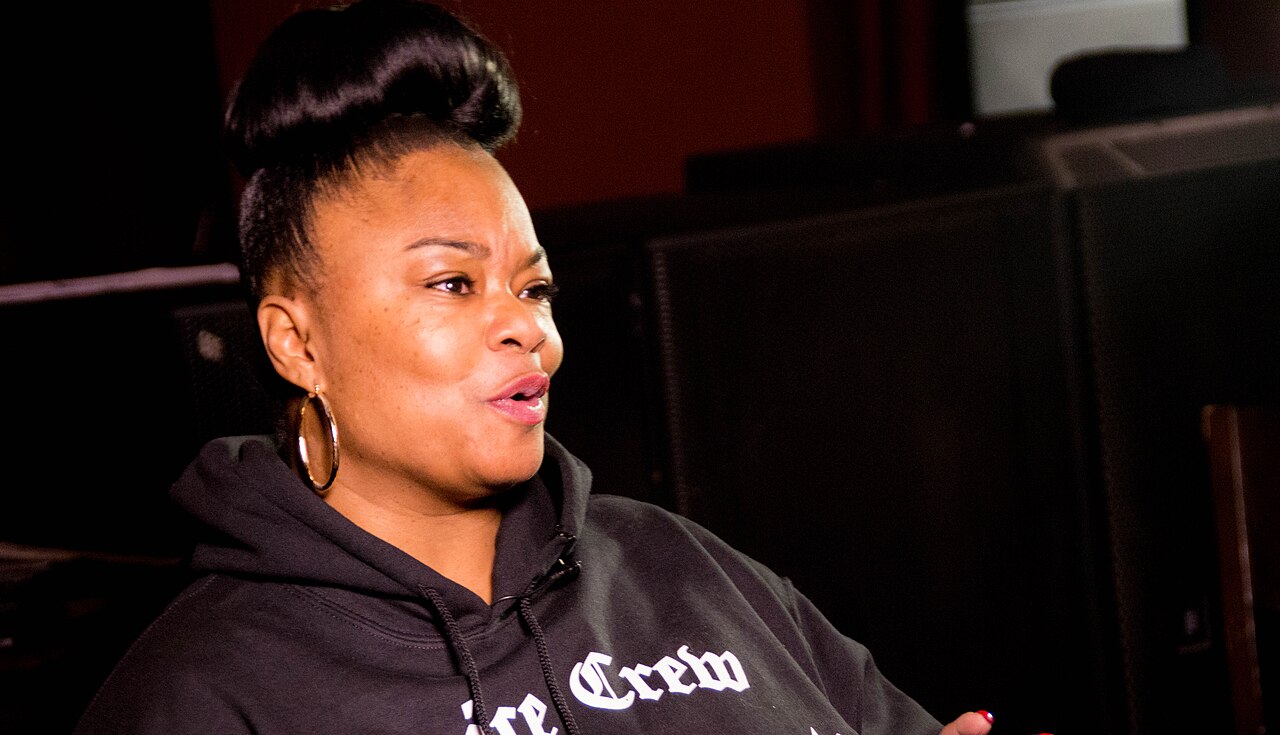
It was, in a sense, the whole decade’s argument settled in one trophy sweep. Everything Shanté started in a Queensbridge stairwell, everything Latifah and Lyte and Salt-N-Pepa fought to prove commercially, everything Missy expanded creatively — it all pointed toward a stage where the highest honor in the industry got handed to a woman holding a hip-hop record.
Why This Half of the Story Still Matters
Here’s the thing Gen X remembers that the tidy documentaries sometimes flatten: these records were everywhere. “U.N.I.T.Y.” and “Whatta Man” and “Ruffneck” weren’t niche cuts — they were the songs blasting out of car windows, taped off the radio onto cassette, and blaring at every cookout from 1991 to 1999. The women of Golden Age hip-hop weren’t a footnote to the era. They were the main text, sharing chart space and mixtape rotation with everybody else and, more often than the record books admit, outshining them.

So the next time someone tells you the story of 90s rap using only a lineup of men, feel free to correct the record. The Golden Age had queens, and they didn’t borrow the crown. They forged it themselves.
Want to hear the era the way it actually sounded? Dig the classics back out — the vinyl and CD reissues are easy to find. Grab a Queen Latifah reissue or find The Miseducation of Lauryn Hill on vinyl and hear why this half of the Golden Age never really faded.
Sources
- Queen Latifah — Wikipedia
- Salt-N-Pepa — Wikipedia
- MC Lyte — Wikipedia
- The Miseducation of Lauryn Hill — Wikipedia
- Missy Elliott — Wikipedia
- Recording Academy / GRAMMY Awards
Browse retro and vintage-inspired apparel at the RetroRadical shop →
The Retro Almanac
A monthly roundup of "on this day" highlights from that month, decades back — plus first dibs on new retro merch drops. No spam, just the good stuff.