Etch A Sketch: 9 Wild Facts About the Classic Toy
The Etch A Sketch is one of a tiny handful of toys that never needed batteries, never got a software update, and never really changed. Ohio Art has sold north of 100 million of them since 1960, and the version on shelves today is mechanically identical to the one your parents shook clean in the back of a station wagon. That kind of staying power is rare. Most toys get one good decade. This little red screen has strung together six.
What Is an Etch A Sketch, Exactly?
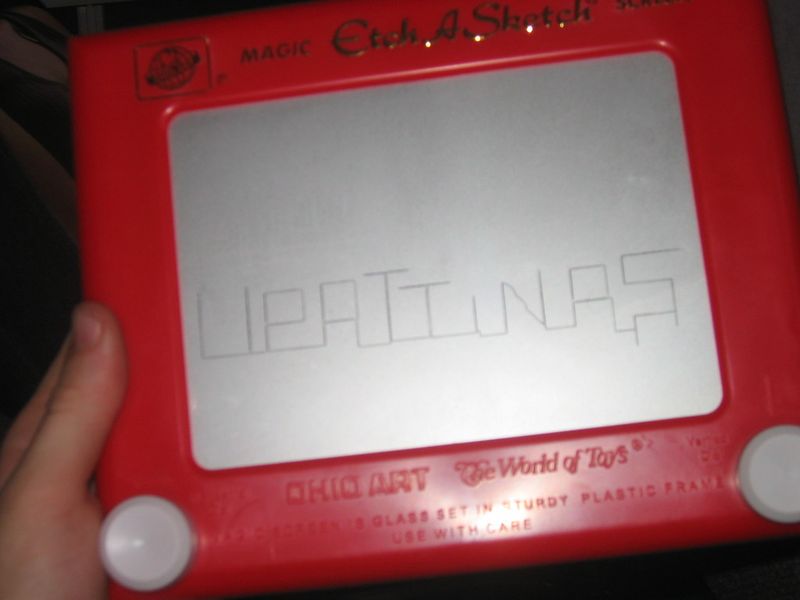
An Etch A Sketch is a flat drawing toy in a bright red plastic frame with two white knobs at the bottom corners. Turn the left knob and a line moves side to side; turn the right knob and it moves up and down. Turn both at once and you get a diagonal, which is where the real difficulty begins. When you want a blank canvas, you flip it over and shake — the whole screen goes silver-gray again.
What makes it strange, and a little magical, is that there is no ink, no pencil, and no screen technology in the modern sense. The “drawing” is really the absence of powder. Everything you sketch is a groove carved into a coating you can never quite see. That constraint is the whole point. You cannot lift the pen off the page, so every drawing is one continuous, unbroken line.
The Retro Almanac
A monthly roundup of "on this day" highlights from that month, decades back — plus first dibs on new retro merch drops. No spam, just the good stuff.
How Does an Etch A Sketch Actually Work?
The inside of the glass screen is coated with a mix of fine aluminum powder and tiny plastic beads. Behind the glass sits a stylus parked at the crossing point of two thin rods — one horizontal, one vertical. The knobs are connected to those rods by pulleys and taut nylon strings. As you turn a knob, the stylus drags across the underside of the glass and scrapes the aluminum powder away, and you see the dark cavity behind it as a line.
Shaking the toy tumbles the beads and powder around, re-coating the glass evenly and erasing your work. That is it. No electricity, no ink cartridge, no magnets — which brings us to the most persistent myth about this toy.
9 Wild Facts About the Etch A Sketch
1. A French electrician invented it by accident
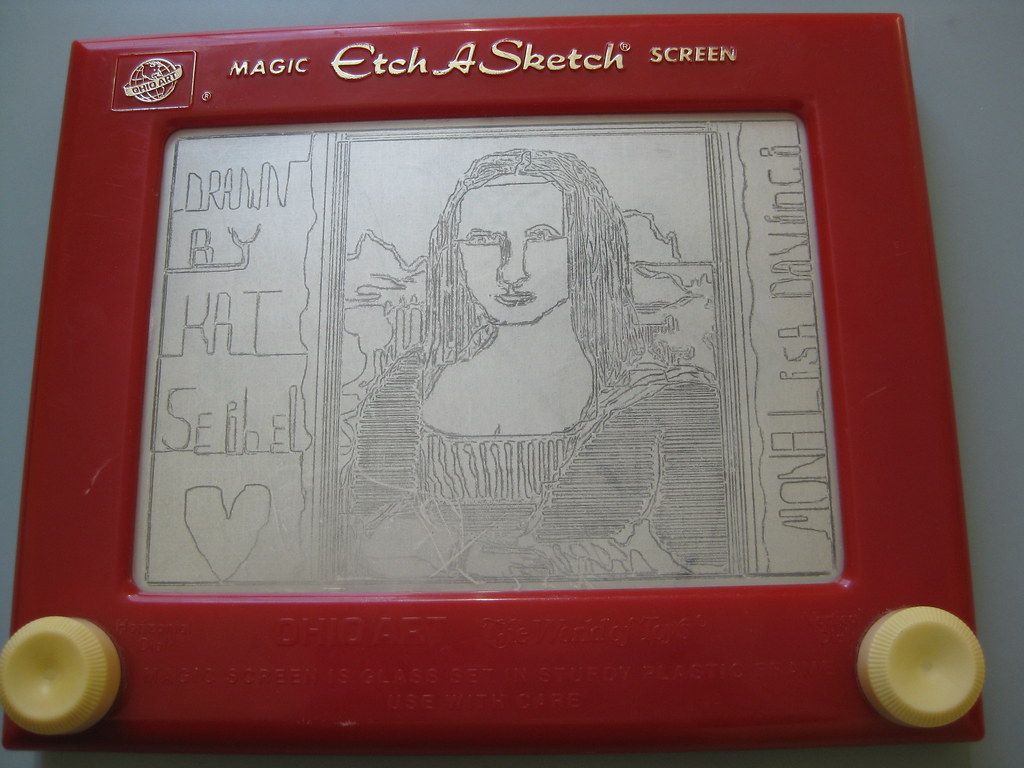
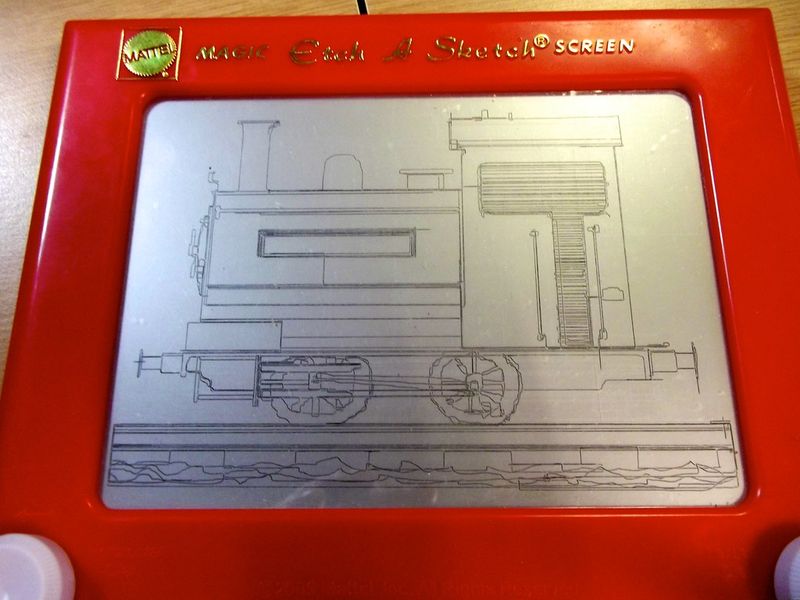
André Cassagnes wasn’t a toymaker. He was an electrical technician who, the story goes, noticed that pencil marks transferred through aluminum powder onto a translucent decal while he was working with light-switch plates. He turned that quirk into a prototype he first called “L’Écran Magique” — The Magic Screen. If you look closely at a vintage unit, that “Magic Screen” branding is still printed right there across the top.
2. Ohio Art almost passed on it
Cassagnes brought the Magic Screen to the 1959 Nuremberg Toy Fair, where an Ohio Art executive saw it and said no. The company reconsidered, bought the rights, renamed it Etch A Sketch, and put it on American shelves on July 12, 1960, for $2.99. It became the best-selling toy of that holiday season. Sometimes the second look is the one that matters.
3. There are absolutely no magnets inside
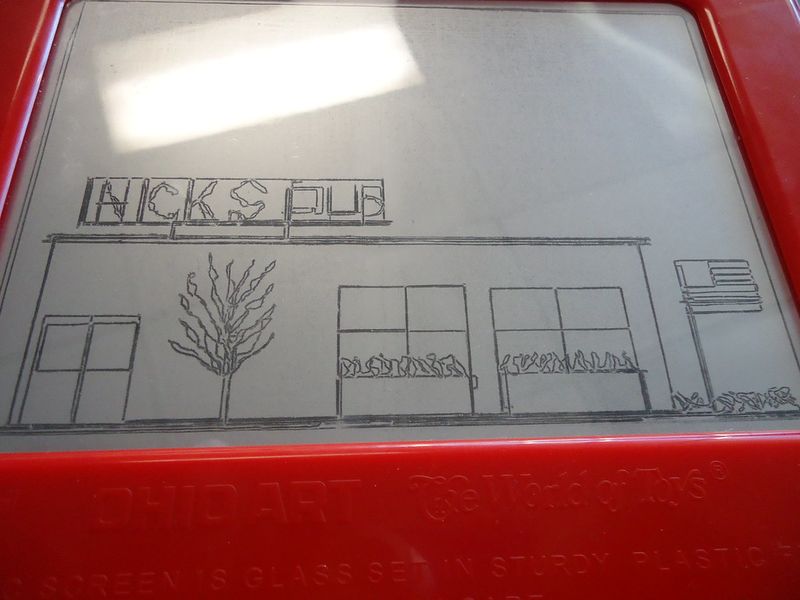
Ask a room full of adults how an Etch A Sketch works and most will say magnets. It’s the tidiest explanation, and it’s wrong. The gray substance is non-magnetic aluminum powder, and the stylus is a mechanical pointer riding on wires, not a magnetic tip. Anyone who has ever cracked one open in frustration can confirm: it’s powder everywhere, and it gets on everything.
4. It’s genuinely hard to use — on purpose
Straight horizontal and vertical lines are easy. Curves and diagonals require turning both knobs at slightly different speeds at the same time, which is closer to rubbing your stomach and patting your head than to drawing. That difficulty is why finishing a decent circle feels like an actual accomplishment. A toy that made drawing effortless would have been forgotten decades ago.
5. Serious artists make museum-grade work on it
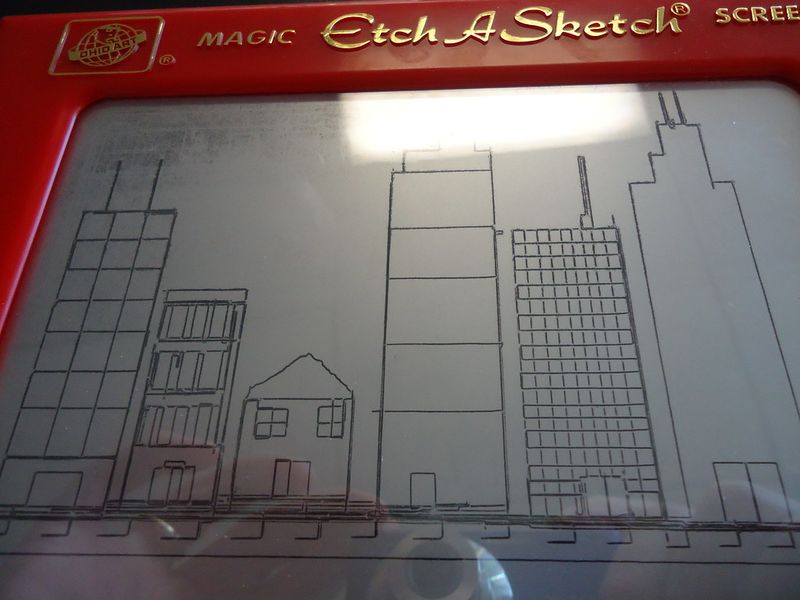
Cleveland artist George Vlosich III built a career drawing detailed portraits and cityscapes on the Etch A Sketch, then carefully draining the aluminum powder out through a hole in the back so the image is preserved forever. His pieces have sold for thousands and been signed by the athletes and presidents they depict. The same tool that frustrates a seven-year-old becomes a fine-art medium in the right hands.
6. It has starred in Hollywood blockbusters
Pixar gave the toy a speaking role: “Etch” is a supporting character across the Toy Story films, quick-drawing on command and even facing off with Woody in a mock duel. That cameo introduced the Etch A Sketch to a generation of kids born long after 1960, which is a big part of why the brand never faded into nostalgia-only territory.
7. A political gaffe once sent sales soaring
In March 2012, a Mitt Romney campaign adviser told CNN that a general election is like an Etch A Sketch — “you can kind of shake it up and restart all over again.” The comment went viral as a symbol of flip-flopping. Ohio Art leaned in, ran with the free publicity, and reportedly saw a sales bump while its stock jumped. Not bad for a toy that had nothing to do with the campaign.
8. It’s enshrined in the National Toy Hall of Fame
When the National Toy Hall of Fame opened its doors with an inaugural class in 1998, the Etch A Sketch was on the list alongside Barbie, Crayola, and the yo-yo. TIME later named it one of the most influential toys of all time. For something that started as a light-switch accident, that’s a serious trophy case.
9. It went luxury — for $699 and up
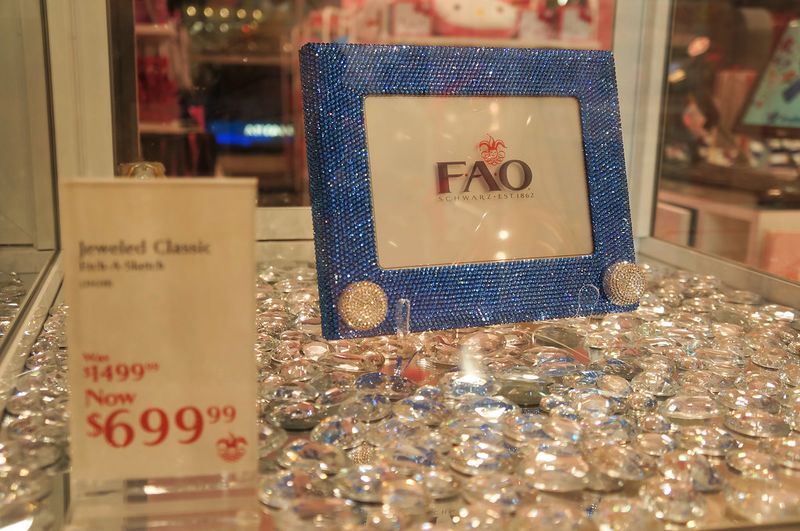
Over the years the toy has appeared as a crystal-covered, jewel-encrusted collector’s piece sold at high-end retailers like FAO Schwarz for hundreds of dollars. The mechanism inside is the same $20 powder-and-pulley system — you’re paying for the sparkle. It’s a funny reminder of how a simple, cheap idea can be dressed up in a tuxedo.
How Has the Etch A Sketch Changed Since the 60s?
The honest answer is barely at all, and that’s the secret. The core toy is a museum piece that still ships new. What has changed is everything around it: production moved from Bryan, Ohio, to overseas factories around 2000, and Ohio Art eventually sold the brand to Canadian toymaker Spin Master in 2016. There have been smaller versions, travel keychains, glow editions, and color variants that stack multiple powders, but the flagship red model is untouched.
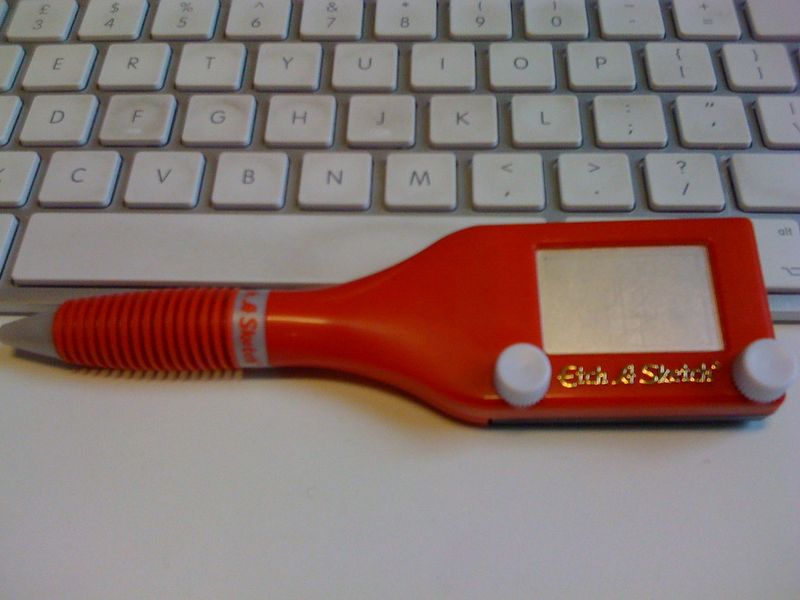
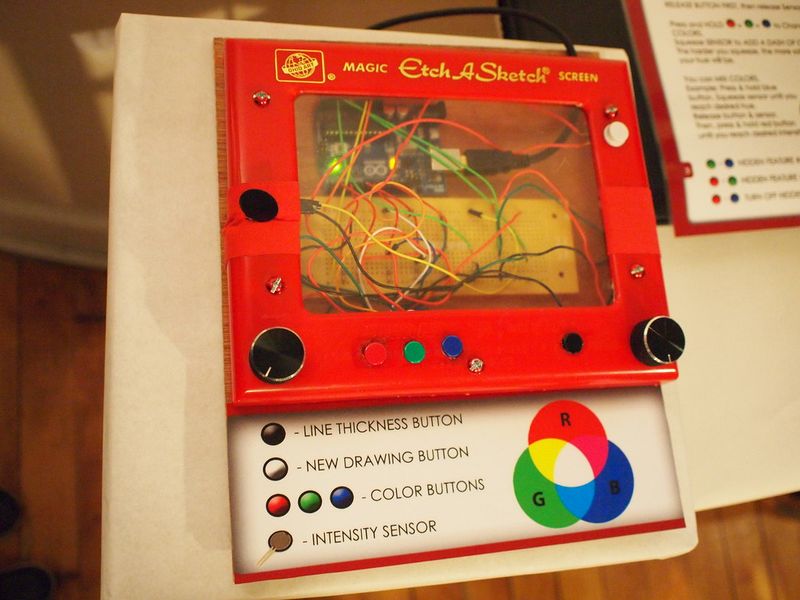
Tinkerers have taken it further than the factory ever would. Makers regularly gut the shell and wire in microcontrollers, motors, and even automatic plotting rigs so the toy can draw a portrait on its own. It’s a strange sight — a 1960 toy stuffed with a circuit board — but it speaks to how much affection people still have for the object itself.
Frequently Asked Questions
Who invented the Etch A Sketch?
French electrician André Cassagnes invented it in the late 1950s and called it L’Écran Magique. The Ohio Art Company bought the rights and released it in the United States in 1960. Cassagnes died in 2013.
What’s the gray powder inside an Etch A Sketch?
It’s aluminum powder mixed with tiny plastic beads that coats the inside of the glass screen. The stylus scrapes it away to reveal dark lines, and shaking the toy re-coats the glass to erase.
Why can’t you save an Etch A Sketch drawing?
Any bump or shake shifts the loose powder and smudges the image, so it isn’t built to last. Dedicated artists preserve their work by draining the powder out through the back, which permanently fixes the drawing in place.
Is the Etch A Sketch still made today?
Yes. Spin Master owns the brand and still sells the classic red model along with pocket and color variants. The mechanism is essentially unchanged from 1960.
The Toy That Refused to Grow Up
Plenty of Etch A Sketch contemporaries — the ones that beeped, lit up, or needed a manual — are landfill now. This one survived by doing less. If you’ve still got a red frame rattling around in a closet, give the knobs a turn and try to draw a circle. You’ll fail, you’ll laugh, and you’ll understand exactly why a light-switch accident from 1959 is still on toy-store shelves today. Reach for one of our other retro rabbit holes next: the Simon memory game, the View-Master 3D reel toy, or the glowing Lite-Brite peg board.
Sources
- Wikipedia — Etch A Sketch — invention, mechanism, and history overview.
- The Strong National Toy Hall of Fame — Etch A Sketch — 1998 inductee profile.
- Smithsonian Magazine — how the aluminum-powder mechanism works.
- GV Art — George Vlosich III — preserved Etch A Sketch fine art.
The Retro Almanac
A monthly roundup of "on this day" highlights from that month, decades back — plus first dibs on new retro merch drops. No spam, just the good stuff.