On This Day: July 15, 1983 — Nintendo’s Famicom Launches in Japan
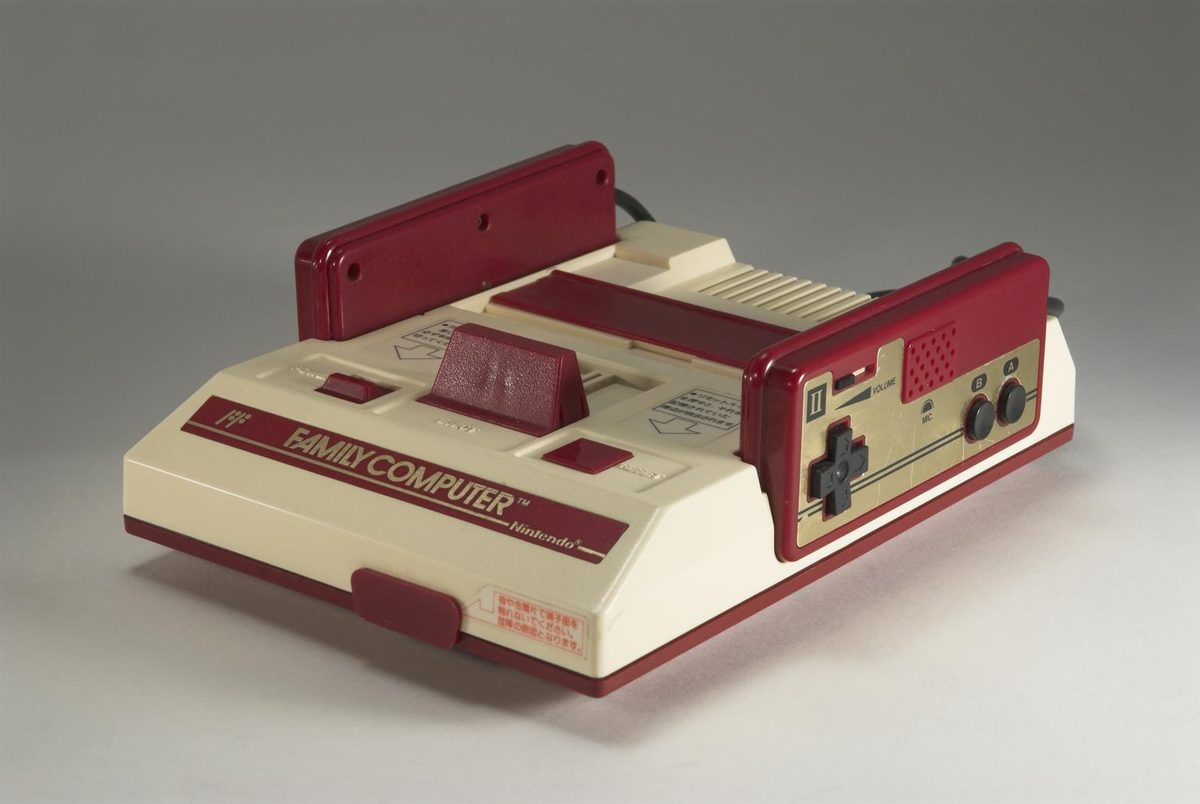
On July 15, 1983, a red-and-white plastic box with two hardwired controllers went on sale in Japan for 14,800 yen. Nintendo called it the Family Computer, or Famicom for short. Within eighteen months it had sold 2.5 million units and rewritten the rules of a business that, in the United States, was in the middle of collapsing. Nobody at a struggling playing-card company in Kyoto could have promised that. But the console that shipped that Friday is the reason a kid in Ohio would be blowing into a Super Mario Bros. cartridge three years later.

The Day the Nintendo Famicom Launched in Japan
The Nintendo Famicom launch on July 15, 1983 was not treated as a landmark at the time. Japanese newspapers gave it a fraction of the ink that arcade openings got. The machine looked like a toy on purpose — bright red and cream, rounded corners, two gamepads clipped to the sides where a child could reach them. That toy-store styling was a deliberate call, and it separated the Famicom from the wood-grain, VCR-imitating consoles that Atari and its imitators were selling half a world away.
The Retro Almanac
A monthly roundup of "on this day" highlights from that month, decades back — plus first dibs on new retro merch drops. No spam, just the good stuff.
What sat inside the case mattered more than the case. The Famicom ran an 8-bit Ricoh processor and a custom picture chip that could push 52 colors and move sprites around the screen faster than anything else in a Japanese living room. Nintendo priced it to undercut every rival, and it worked: roughly 500,000 units moved in the first two months, and the machine outsold Sega’s SG-1000 — released the very same day — by a wide margin.
Why Hiroshi Yamauchi Wanted a Cheap Console
Nintendo’s president Hiroshi Yamauchi handed his engineers a blunt brief: build a home machine that could play arcade games, undercut the competition on price, and stay reliable for a full year without a redesign. He wanted it cheap enough that a family would buy it on impulse, and good enough that no rival could match it for at least twelve months. The man tasked with delivering that was Masayuki Uemura, who ran Nintendo’s R&D2 group.
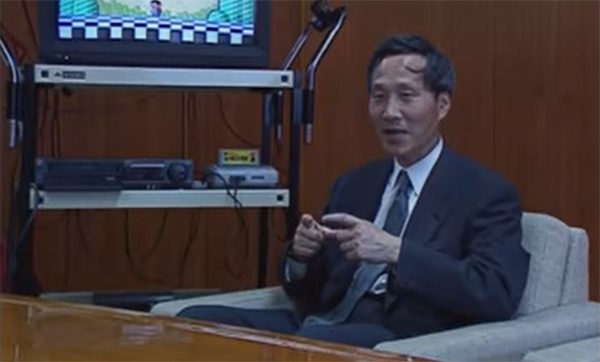
Uemura, a former Sharp engineer who joined Nintendo in 1971, later said the idea crystallized during a phone call from Yamauchi one evening — an offhand order to make a cartridge-based console. He built the hardware around a single goal: play Donkey Kong at home, faithfully, on a machine ordinary families could afford. He got the arcade smash running on a console that cost a fraction of the cabinet. Uemura stayed at Nintendo until 2004 and went on to architect the Super Famicom before his death in 2021. The console he shipped in the summer of 1983 remains his defining work.
Three Launch Games That Set the Tone
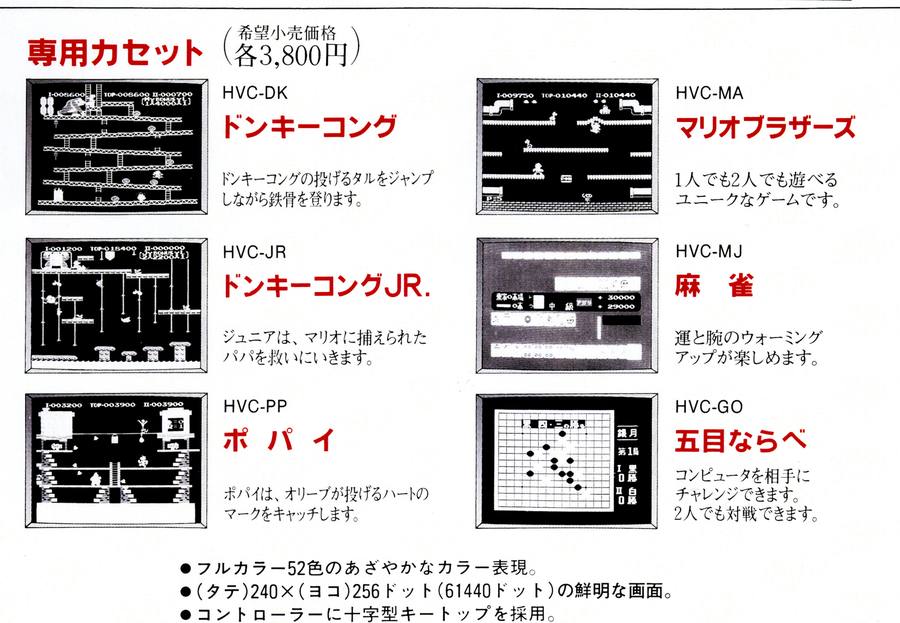
The Famicom arrived with three cartridges, all ports of Nintendo’s own arcade hits: Donkey Kong, Donkey Kong Jr., and Popeye. Each sold for 3,800 yen. There was no pack-in game — you bought the console and picked your cartridge, a model that would define home gaming for decades.
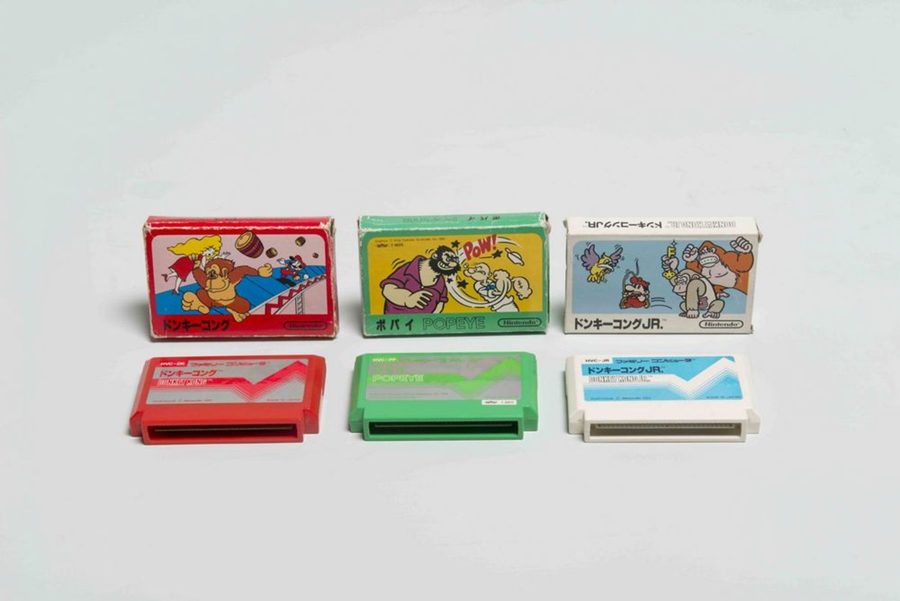
Donkey Kong was the anchor. The 1981 arcade game had already saved Nintendo’s American arm from disaster and introduced a jumping carpenter named Jumpman, soon renamed Mario. Getting it running convincingly on cheap home hardware was the whole point of the project, and the Famicom port held up. Popeye and Donkey Kong Jr. rounded out a lineup that leaned entirely on characters players already recognized from the arcade — a smart move when you are asking someone to trust a brand-new machine.
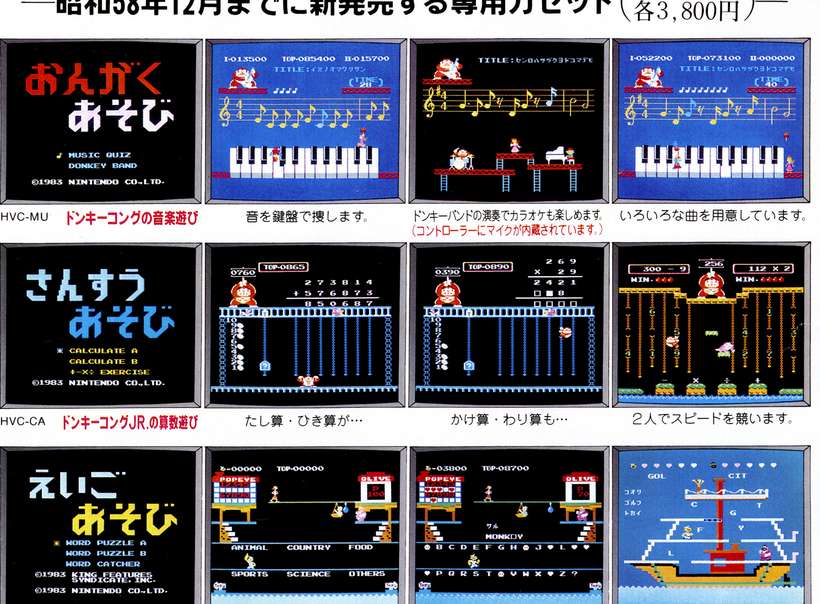
The early cartridge library grew fast. By December 1983 Nintendo had added Mario Bros., a mahjong game, and Gomoku Narabe, plus a run of “asobi” edutainment carts that taught music, arithmetic, and English using Donkey Kong’s cast. That mix — arcade action next to learning software — was Nintendo positioning the Famicom as a machine for the whole family, not just kids.
The real turning point came in 1984, when Nintendo cracked open the platform to outside developers. Hudson Soft and Namco signed on as the first third-party publishers, and Namco’s home port of Xevious sold well over a million copies — proof that companies other than Nintendo could make serious money on the machine. That third-party pipeline is what separated the Famicom from every failed console before it. A great box is worthless without games, and by opening the door to outside studios, Nintendo guaranteed a steady flow of them for years.
The 14,800 Yen Gamble
Price was the weapon. At 14,800 yen — roughly $75 in 1983 dollars — the Famicom cost less than half of some competing Japanese consoles, and Nintendo reportedly sold early units at a slim margin, betting it would make its money on software. That is a strategy every console maker copies now. In 1983 it was a genuine risk for a company still best known for hanafuda cards and Game & Watch handhelds.

The timing was ruthless too. Across the Pacific, the North American video game market was imploding — the crash of 1983 buried Atari under a landslide of shovelware and gutted consumer trust. Nintendo watched that wreckage and drew a lesson it would carry to America: control what gets published on your machine. The lockout chip and strict licensing that later defined the NES were a direct response to the mess that killed Atari.
The Faulty Chip Recall That Almost Killed It
The launch was not clean. Not long after release, reports came in of Famicom units freezing mid-game, traced to a bad circuit in some early production runs. Rather than paper over it, Nintendo pulled every affected console off shelves and suspended production to fix the fault — right before the holiday shopping season, and at a cost of millions of yen.
It was a brutal call for a machine barely months old, and a lesser company might have shipped through it and hoped. Nintendo ate the loss instead. The gamble paid off: the recall protected the Famicom’s reputation at the exact moment word of mouth would make or break it, and sales kept climbing into 1984 rather than stalling on returns and horror stories.
From Famicom to NES: Conquering America
Two years later, Nintendo brought the Famicom west — but not as the Famicom. American retailers, still burned by the 1983 crash, wanted nothing to do with a “video game console.” So Nintendo redesigned the machine into a boxy gray box that loaded cartridges front-first like a VCR, called it the Nintendo Entertainment System, bundled it with a robot and a light gun, and test-launched it in New York in October 1985.
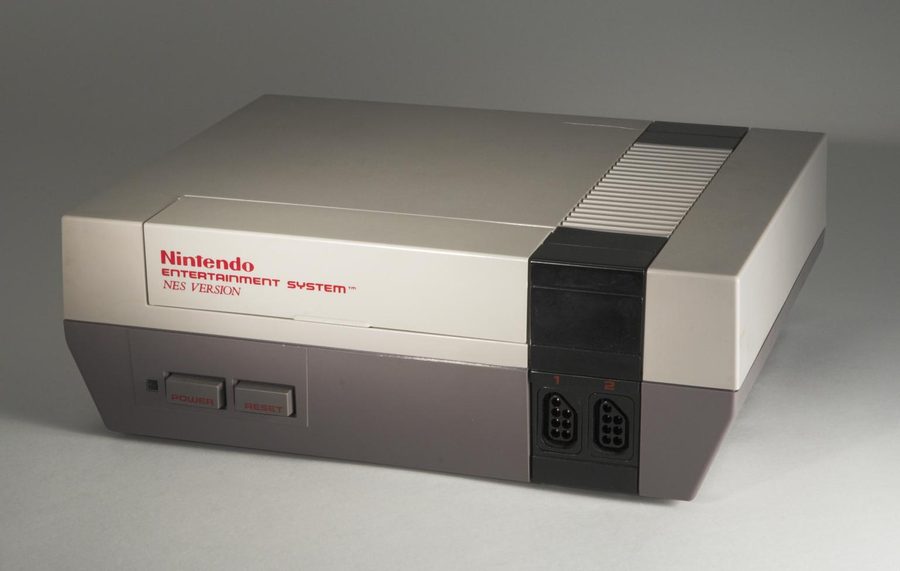
The disguise worked. The NES went on to sell nearly 62 million units worldwide and is widely credited with single-handedly reviving the American console business. If you want the day that revival hit the United States, it is October 18, 1985 — but the machine underneath that gray shell was the same one that had gone on sale in Tokyo two summers earlier.
What sealed the deal in America was a game that did not exist at the 1983 launch. Super Mario Bros. arrived as the NES pack-in and turned the jumping plumber from Donkey Kong’s supporting cast into a household name, eventually selling more than 40 million copies. It gave families a reason to want the console, not just tolerate it — and it was only possible because Uemura’s hardware, designed to run one arcade port faithfully in 1983, turned out to be flexible enough to run a genre-defining platformer two years later.
Why July 15, 1983 Still Matters
Almost every convention modern gaming takes for granted traces back to that Friday. The cross-shaped D-pad that Nintendo debuted on the Famicom controller became the industry standard and never really left. The razor-and-blades model — sell the hardware cheap, profit on the software — is now how every console maker operates. Even the walled-garden approach to licensing, the thing gamers still argue about, started as Nintendo’s answer to the chaos of 1983.
The Famicom’s descendants kept the throne, too. The Game Boy in 1989, the Super Famicom, the N64 — the line runs unbroken from that red-and-white box. Nintendo shipped the Famicom in Japan until 2003, a twenty-year production run that outlasted its own successors. For a console that got a quiet launch and nearly died in a chip recall, that is a run almost nothing in consumer electronics can match.
Pull a Famicom out of a closet today and the red plastic still looks like it belongs on a toy shelf, which was exactly the point. Yamauchi wanted a machine families would buy without thinking twice. Forty-plus years and a billion or so consoles later, the industry he accidentally rebuilt is still playing by the rules Nintendo wrote on July 15, 1983.
Sources
- History of the Nintendo Entertainment System — Wikipedia — Famicom launch date, price, launch titles, and chip recall.
- Masayuki Uemura — Wikipedia — biography of the Famicom’s lead architect.
- Masayuki Uemura, lead architect of the NES and SNES, has died at 78 — Game Developer — Uemura’s role and legacy.
- Nintendo Famicom Games Console — Science Museum Group Collection — console design and specifications.
The Retro Almanac
A monthly roundup of "on this day" highlights from that month, decades back — plus first dibs on new retro merch drops. No spam, just the good stuff.