On This Day: August 4, 1987 — The FCC Killed the Fairness Doctrine and Changed Radio Forever
If you grew up in the ’80s, you remember the radio as a lifeline — the dial you twisted every morning, the DJ who felt like a friend, the station that played your songs. But on August 4, 1987, a four-person panel of government bureaucrats in Washington made a decision that would quietly, irreversibly, rewire American media forever. They didn’t do it with fanfare. There was no prime-time announcement, no presidential ceremony. The Federal Communications Commission simply voted 4-0 to abolish a 38-year-old regulation called the Fairness Doctrine — and in doing so, opened a door that would never close again.
Most people didn’t notice at the time. The summer of ’87 was busy. Mike Tyson had just unified the heavyweight championship on August 1. Guns N’ Roses had just unleashed Appetite for Destruction. The Iran-Contra hearings were gripping television. Nobody was paying attention to a paperwork decision from the FCC.
But that quiet vote changed everything.
The Retro Almanac
A monthly roundup of "on this day" highlights from that month, decades back — plus first dibs on new retro merch drops. No spam, just the good stuff.
What Was the Fairness Doctrine, Anyway?

To understand what was lost — or freed, depending on your point of view — you have to go back to 1949.
In the years after World War II, American radio was dominated by three enormous networks: NBC, ABC, and CBS. A small number of broadcasters controlled what millions of people heard. The federal government had always regulated radio because the broadcast spectrum is publicly owned — there are only so many frequencies, and someone has to decide who gets them. With that public resource came public responsibility.
In June 1949, the FCC formally codified what became known as the Fairness Doctrine. The rule had two basic requirements. First, broadcasters had to cover controversial issues of public importance. Second — and this is the key part — they had to present contrasting viewpoints. You couldn’t just hammer one side of a debate. You had to give the other side a fair hearing.
The Supreme Court upheld the doctrine in 1969, in a case called Red Lion Broadcasting Co. v. FCC. The Court ruled that spectrum scarcity justified content regulation. Because airwaves were a finite public resource, the people who used them owed the public balanced coverage.
For nearly four decades, the Fairness Doctrine quietly shaped the sound of American radio. Controversial political programming was actually less common under the doctrine — not more — because broadcasters were terrified of triggering fairness complaints. If you aired a fiery anti-abortion commentary, you’d be legally obligated to air a pro-choice response. Many stations just avoided the whole mess and stuck to music, sports, and soft news. The doctrine’s supporters said it guaranteed balance; its critics said it guaranteed silence.
The Man Who Called TV “A Toaster With Pictures”

When Ronald Reagan swept into the White House in 1981, deregulation was the gospel. Reagan believed government interference in the marketplace — any marketplace, including the airwaves — was a drag on freedom and efficiency. He needed someone to run the FCC who shared that vision.
He found Mark S. Fowler.
Fowler had been a communications lawyer and a Reagan campaign staffer. He was brilliant, provocative, and deeply committed to the idea that broadcasting should be deregulated like any other business. In a 1981 interview with Reason magazine, Fowler made his philosophy embarrassingly clear with one unforgettable line:
“Television is just another appliance. It’s just a toaster with pictures.”
Washington was appalled. The major networks had always been treated as something more than appliances — as powerful civic institutions with special obligations. Fowler’s “toaster” line made clear that wasn’t how Reagan’s FCC saw it. To them, a television set was just another product, and a broadcast station was just another business. The market would sort out the content. Government had no business mandating balanced perspectives any more than it had business mandating balanced toast.
Fowler spent six years systematically dismantling broadcasting regulations. By 1985, he had the FCC publish a formal report raising “serious constitutional doubts” about the Fairness Doctrine — arguing that rather than promoting debate, the rule was actually chilling it. Broadcasters were so afraid of fairness complaints, the report argued, that they were avoiding controversial content altogether. The cure was worse than the disease.
The 4-0 Vote That Changed the Dial
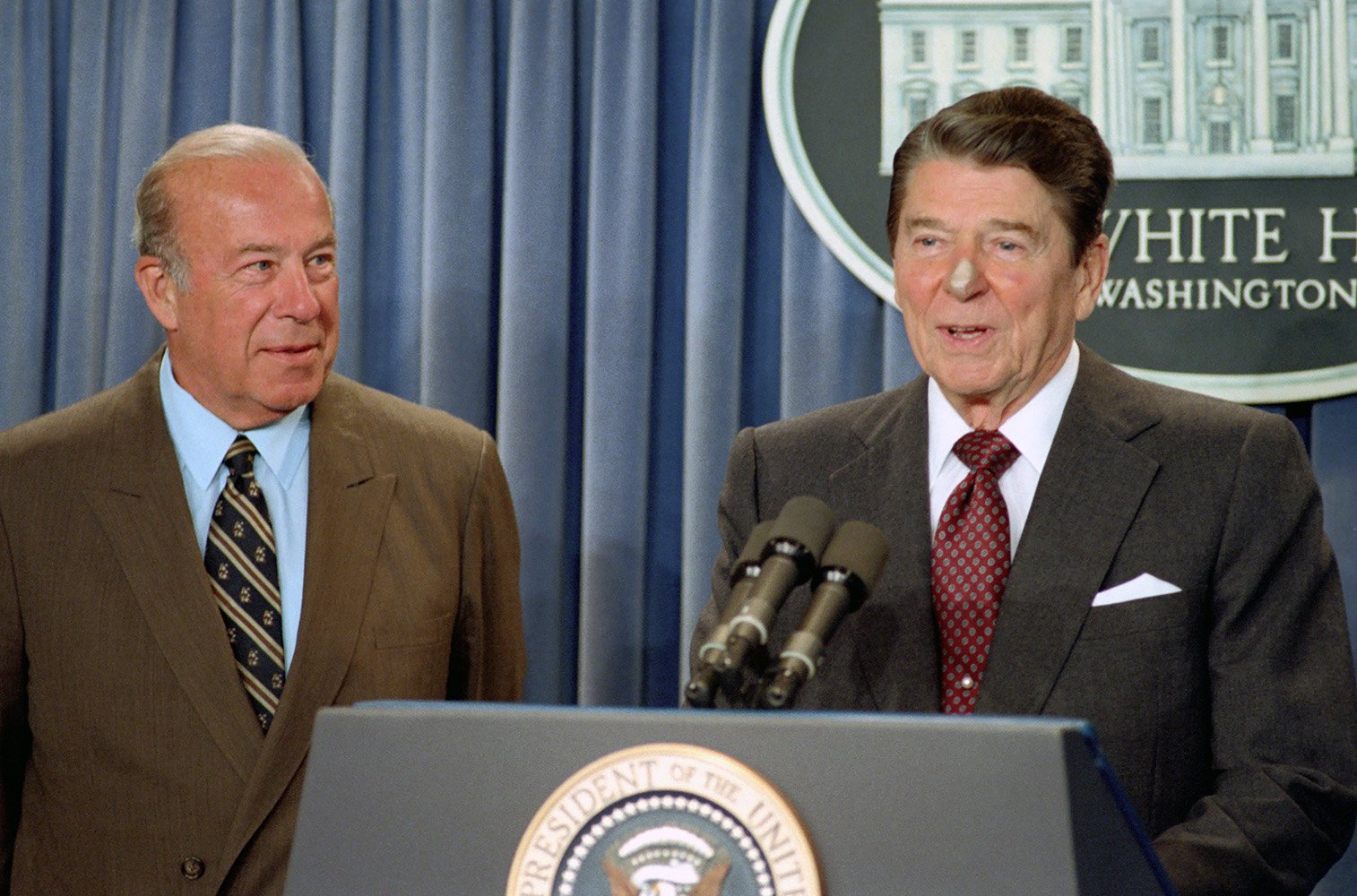
By 1987, Fowler had moved on. His successor, Dennis Patrick — another Reagan appointee — had taken the helm. And Patrick was ready to finish the job.
The vehicle was a specific legal case: Syracuse Peace Council v. FCC. The Syracuse Peace Council had filed a fairness complaint against a Meredith Corporation television station over its coverage of a nuclear power plant. The FCC ruled in Meredith’s favor — and went much further, declaring the Fairness Doctrine unconstitutional under the First Amendment and abolishing it entirely.
The vote was 4-0. Unanimous. Patrick announced: “We seek to extend to the electronic press the same First Amendment guarantees that the print media have enjoyed since our country’s inception.”
Congress was furious. Earlier that same year, they had passed the Fairness in Broadcasting Act of 1987 — a bill that would have written the doctrine into federal law, beyond the FCC’s reach. Reagan vetoed it on June 19, 1987, clearing the runway for the FCC’s August 4 action. When Congress tried to override the veto, they couldn’t muster the two-thirds needed. The doctrine was dead.
Members of Congress called the FCC’s action “wrongheaded, misguided and illogical” and accused the commissioners of trying to “flout the will of Congress.” But without a veto-proof majority, they were powerless.
The Unexpected Consequence: The Rise of Talk Radio

Here’s what almost nobody in Washington predicted in August 1987: the people who would most benefit from killing the Fairness Doctrine were not the big liberal networks Reagan’s aides had feared. They were conservative talk hosts who didn’t yet exist.
One year after the FCC vote — in August 1988 — a Sacramento radio host named Rush Limbaugh signed a national syndication deal. His producer, Ed McLaughlin, had structured it so AM radio stations could carry Limbaugh at minimal upfront cost in exchange for advertising inventory. Under the old Fairness Doctrine, Limbaugh’s aggressively one-sided commentary would have triggered equal-time requirements that made his format financially unworkable. Without it, he was free to be as combative and partisan as his three-hour show demanded.
The numbers tell the story of what followed. In 1960, there were two all-talk radio stations in the United States. By 1995, there were 1,130. By the mid-1990s, conservatives accounted for roughly 70 percent of all talk-radio listeners. The AM dial — which had been dying, losing younger listeners to FM — was resurrected as a roaring engine of conservative politics.
Limbaugh reached 20 million listeners across 650 stations by 1994. His success became the proof of concept that Roger Ailes — a Republican political strategist who had worked for Nixon, Reagan, and George H.W. Bush — used when he pitched Rupert Murdoch on an idea: a cable news channel that didn’t pretend to be neutral. Fox News launched on October 7, 1996.
None of that media landscape would have been legally or commercially possible under the Fairness Doctrine.
The Irony Reagan’s Team Didn’t See Coming

There’s a delicious irony buried in the story of the Fairness Doctrine’s death that most history books miss.
Reagan’s White House staff had initially opposed repealing it. Their worry? That without the doctrine’s balance requirements, the three major networks — ABC, NBC, CBS — would go after Reagan with unrestrained venom. The White House communications team feared that killing the Fairness Doctrine would mean more hostile coverage, not less.
It was only when Reagan’s political advisors realized the strategic upside — that a freer media environment could actually benefit conservative broadcasters who had been silenced by equal-time requirements — that the White House dropped its resistance. They voted with the market, expecting the market to be neutral.
The market was not neutral. But it was not neutral in ways even the conservatives hadn’t fully imagined.
The Fairness Doctrine was formally removed from the Code of Federal Regulations in 2011, twenty-four years after its death. By then, its absence had already reshaped American politics in ways no one on either side of the 1987 vote had fully predicted.
The Summer of ’87, Revisited
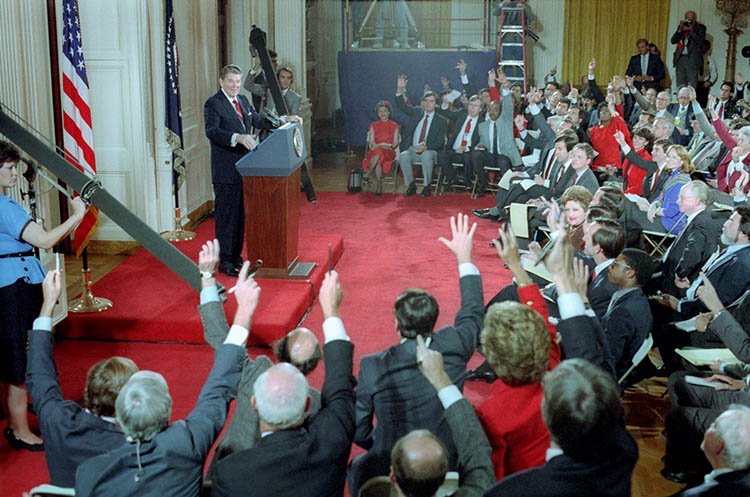
If you were a kid in 1987, you probably spent August with the radio on. You twisted the dial between pop and rock, looking for something that felt alive. You didn’t know that somewhere in Washington, four men had just decided that radio — all of broadcasting — would never sound quite the same again.
The Fairness Doctrine’s abolishment wasn’t headline news on August 4, 1987. It was a technical regulatory ruling buried beneath summer blockbusters and sports scores. But in retrospect, it may have been the single most consequential media decision of the entire decade. It didn’t happen with a bang — not a Tiananmen Square, not an MTV launch, not a Space Shuttle.
It happened with four raised hands and a press release.
And the dial has never come back around.
Love the retro era? Browse our shop for vintage finds, retro clothing, and 80s/90s nostalgia gear.
The Retro Almanac
A monthly roundup of "on this day" highlights from that month, decades back — plus first dibs on new retro merch drops. No spam, just the good stuff.