
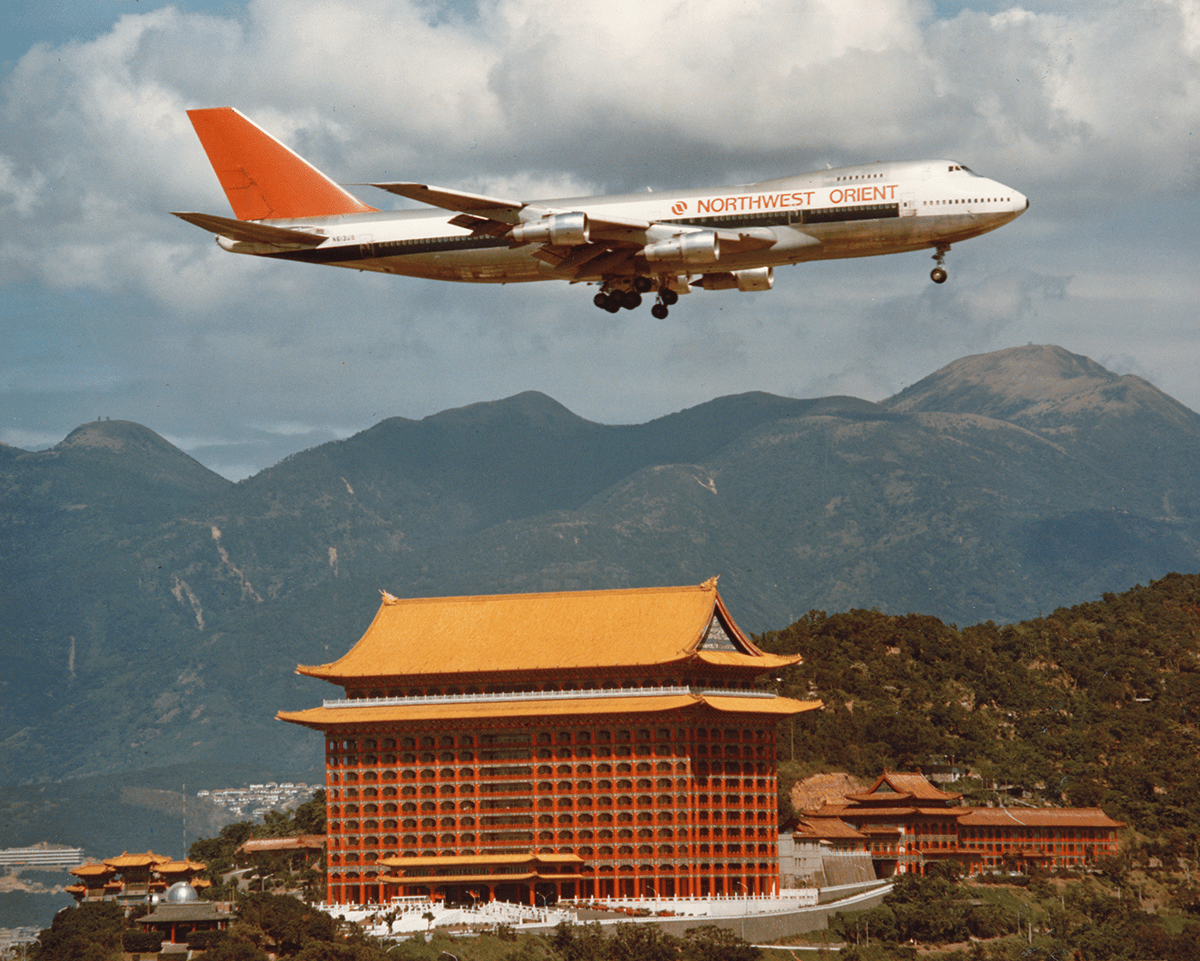
On This Day: August 16, 1987 — Northwest Airlines Flight 255 and the 4-Year-Old Who Survived Alone
Eight forty-six PM, August 16, 1987. A Northwest Airlines MD-82 rolls down Runway 3C at Detroit Metro Airport with 149 passengers and six crew aboard. The destination is Phoenix, then Las Vegas. The plane has been delayed slightly — an onboard sensor alarm needed troubleshooting before departure. By now, the crew is ready. The throttles advance. The wheels leave the ground. And in approximately thirteen seconds, everything ends.
The aircraft clips a light pole. It severs the roof of a Chevrolet Corsica on a freeway overpass, killing the driver. It hits an Avis rental car facility and disintegrates across Middlebelt Road in a fireball visible for miles. Of 155 people on board, 154 do not survive. One does — a four-year-old girl, still strapped in her seat, found alive in the burning grass by a firefighter who almost didn’t look in that direction.
The Flight Nobody Expected to End on a Highway
Northwest Flight 255 was not a glamour route. Detroit to Phoenix to Las Vegas, a standard summer run operated on an MD-82 — the stretched, workhorse descendant of the DC-9 that carried millions of Americans through the 1980s. The aircraft, registration N312RC, was four years old and in good mechanical condition, with one footnote: a faulty microswitch on the wing slat system had triggered a Slat Disagree alert before departure.
The Retro Almanac
A monthly roundup of "on this day" highlights from that month, decades back — plus first dibs on new retro merch drops. No spam, just the good stuff.
The captain was John Maus, 57 years old, with more than 20,000 flight hours. His first officer, David Dodds, had over 10,000. They were not inexperienced. They were not careless in any obvious way. They spent time at the gate troubleshooting that faulty sensor — determined it was a false alarm, which it was — and then taxied to the runway. What they did not do was complete the taxi checklist.
On that checklist, near the top: verify flap and slat position for takeoff. Flaps extend from the wing’s trailing edge and create the extra lift a fully loaded jet needs at lower speeds. Without them, an MD-82 can rotate — the nose can come up — but it cannot really climb. The physics are unforgiving and they do not negotiate.
The Checklist Nobody Finished
The MD-82 had a warning system for exactly this scenario: a horn that should have sounded the moment the throttles advanced with the flaps and slats improperly configured. But that horn relied on the same microswitch the crew had flagged as faulty during the gate delay. They had deactivated the circuit to clear the false Slat Disagree alert. In doing so, they had silenced the one alarm that might have saved 154 lives.
The cockpit voice recorder, recovered from the wreckage, documents no alarm. No one calls out the flap position. The crew runs abbreviated checklists and advances the throttle. The aircraft accelerates normally. The rotation happens on schedule. The stick shaker — a device that physically vibrates the control yoke to warn pilots of an approaching aerodynamic stall — activates almost immediately after liftoff. By then the plane is fifty feet above the runway, banking left, and there is nothing left to do.
This is what made the NTSB’s eventual finding so quietly devastating: two separate failures, each survivable on its own, arrived simultaneously. Human error — an incomplete checklist — met a mechanical failure that disabled the safety net designed to catch that exact error. The result was catastrophic and, in retrospect, almost foreseeable. Aviation safety experts call this a “Swiss cheese” alignment: the holes in every layer of protection line up at once, and nothing stops the outcome.
Thirteen Seconds and 154 Lives
Witnesses on Middlebelt Road and the adjacent freeway described seeing a large aircraft pass low overhead — close enough that the sound arrived after the shape. Then the light pole went down. Then the highway sign. Then the fireball.
The plane had climbed to roughly 50 feet before the aerodynamics took over and the left wing dropped. The wingtip struck an airport approach light standard. The aircraft then hit a road sign on the Davison Freeway overpass at 31 feet, shearing the top of a passing Corsica. The fuselage broke apart on impact with the Avis rental lot on the far side of the road and slid approximately 300 feet before the fuel ignited.
Emergency crews from Romulus, Taylor, and Wayne County were on scene within minutes. Nothing in the training manuals prepared them for what they found — 154 bodies spread across a debris field that stretched from the rental lot to the highway shoulder and into the grass embankment beyond. First responders were looking for survivors. They didn’t expect to find any. Firefighter John Thiede was working the grass section when he spotted a seat, still occupied, its belt fastened, the child inside it breathing.
A 4-Year-Old in Seat 21F
Her name was Cecelia Cichan. She had been in seat 21F — a window seat toward the rear of the aircraft — traveling home to Phoenix with her parents, Michael and Paula Cichan, and her six-year-old brother David. They had been visiting relatives in Alabama. All three of her family members were dead. Cecelia had burns over 30 percent of her body, a fractured skull, a broken collarbone, and a broken left leg.
She was four years old and she was the only living person in the wreckage of a 155-passenger aircraft.
Doctors at Children’s Hospital of Michigan worked through the night. She survived. The hospital and police shielded her identity from the press, which was already organizing the kind of media storm that descends on a story this charged. She was eventually discharged into the care of her maternal aunt and uncle — the Crocker family, from Alabama — who raised her under their name. For nearly 26 years, she was known publicly only as “the sole survivor of Northwest 255.”
How Cecelia Cichan Became Cecelia Crocker
Growing up, Cecelia Crocker knew what had happened to her family. She knew she had been on that flight. She also knew, from early on, that the world was extremely interested in her existence — and that her guardians had worked hard to give her a life outside that story.
In 2013, she was 30 years old when she agreed to tell her story publicly for the first time in a Channel 4 documentary called Sole Survivor. The film also interviewed other people who had lived through crashes where they were the only survivor — a peculiar and heavy fellowship. Cecelia told the filmmakers that she had made peace with what happened, though the question of why she survived was one she had learned to sit with rather than answer. “I don’t know that I’ll ever know why I survived,” she said in interviews at the time. “I’ve just had to accept that.”
The documentary was quiet and careful — nothing like the coverage that had swirled around Flight 255 in 1987. It didn’t try to explain the miracle. It just showed a woman who had been a small child in a burning field in August and had, somehow, become someone who could talk about it decades later with something approaching equanimity.
What the NTSB Found — and What Changed
The National Transportation Safety Board released its final report on the crash in 1988. The probable cause: the flight crew’s failure to use the taxi checklist and their failure to ensure the flaps and slats were set for takeoff. Contributing factors included the deactivation of the takeoff configuration warning system — a consequence of troubleshooting the faulty microswitch — that left the crew without the alarm that should have caught their error.
The crash accelerated several improvements that were already in motion. August 1987 was already a month of consequential institutional decisions — and aviation safety was about to become one of them. Crew Resource Management training became more rigorous across U.S. carriers, specifically to address the dynamic where a senior crew allowed complacency to short-circuit standard procedure. The FAA mandated improvements to takeoff configuration warning systems to eliminate single-point failures — meaning no one faulty component should be able to silence an entire warning chain.
The number of fatal accidents per passenger mile in U.S. commercial aviation declined sharply through the late 1980s and 1990s. The specific improvements that followed Flight 255 are now embedded in the operating procedures of every commercial airline in the world. They are invisible — no one on a modern flight sees them — but they are there, and they work.
The Other August 16, 1987
While the fuselage of Flight 255 was still smoldering on Middlebelt Road, thousands of people across the United States and Europe were gathering on mountaintops, in ancient stone circles, and in deserts to pray. New Age author José Argüelles had designated August 16 and 17, 1987 as the Harmonic Convergence — a moment he claimed was marked by a rare planetary alignment and corresponded, in his reading of the Mayan calendar, to the beginning of a new era of world peace. Crowds gathered at Mount Shasta in California, at Chaco Canyon in New Mexico, at Stonehenge, at Glastonbury. The Washington Post ran a story questioning whether the planets were actually aligning as claimed. Shirley MacLaine was among the believers.
The contrast doesn’t need elaboration. On the same August evening, two versions of 1987 collided: the New Age faith that collective human intention could bend reality toward peace, and a burned stretch of suburban Michigan reminding everyone that reality has its own operating procedures. The Harmonic Convergence is remembered today mostly as a cultural footnote — the moment the 1980s New Age movement reached its most visible peak. Flight 255 rewrote the safety rules of commercial aviation.
One thing held approximately 10,000 people in meditation. The other changed how every pilot in America is trained to take off.
Mayday: Air Disaster — “A Fateful Takeoff” — the full investigation of Northwest Airlines Flight 255
What August 16 Leaves Behind
Northwest Airlines was acquired by Delta in 2008. The MD-82 type was phased out of U.S. commercial service within a decade of the crash. The Avis facility on Middlebelt Road was rebuilt. A black granite memorial was installed in Romulus, Michigan, bearing all 154 names. Cecelia Crocker lives in Alabama and largely stays out of the public eye.
The memorial stands on a patch of ground that most people driving past cannot identify. But what the crash left inside the aviation system is permanent. The takeoff configuration warning improvements are in every checklist, every simulator session, every airline’s standard operating procedure. The summer of 1988 arrived with safer skies partly because of what had happened the summer before. That’s not a satisfying ending — 154 people still died — but it is an accurate one. Aviation learns from its worst days. It learned from August 16, 1987.
Love the retro era? Browse our shop for vintage finds, retro clothing, and 80s/90s nostalgia gear.
Sources
- Northwest Airlines Flight 255 — Wikipedia — Comprehensive accident history, crew details, and NTSB findings summary
- NTSB Accident Report AAR-88/05 (PDF) — Official probable cause determination and safety recommendations, 1988
- WXYZ Detroit: 33 Years Since Northwest Flight 255 — Local retrospective with eyewitness accounts and historical footage
- ABC News: Cecelia Crocker Breaks Silence — 2013 interview with the sole survivor ahead of the Channel 4 documentary
- Smithsonian Magazine: The Harmonic Convergence, 30 Years On — Context on the August 16–17, 1987 New Age gathering and its cultural legacy
Image credit: deltamuseum.org
The Retro Almanac
A monthly roundup of "on this day" highlights from that month, decades back — plus first dibs on new retro merch drops. No spam, just the good stuff.