Zubaz Pants: The $160 Million 80s Wrestling Craze
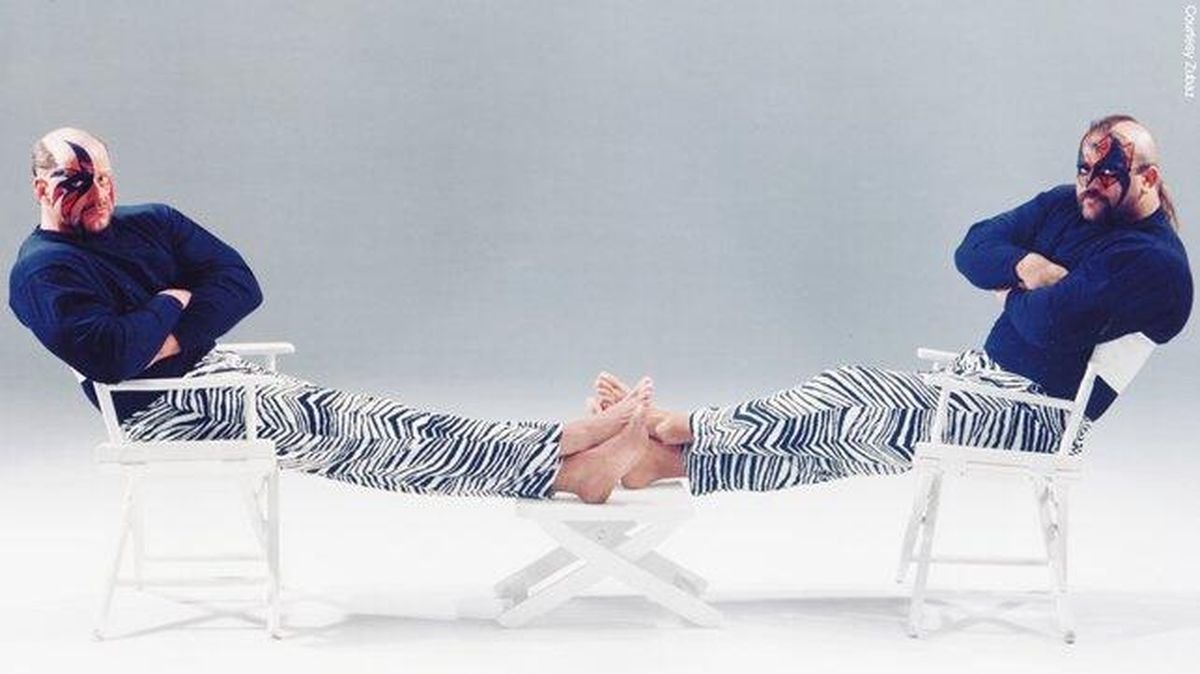
Bob Truax and Dan Stock ran a gym in Roseville, Minnesota, and their hardcore lifting clients kept hitting the same wall: no pants on the market stretched over a 28-inch thigh without looking like a tent. In 1988 the two gym owners sat down with two of their members, professional wrestlers Michael Hegstrand and Joseph Laurinaitis, and sketched out a baggy, elastic-waisted pant with a loud zebra print. Hegstrand and Laurinaitis wrestled as the Road Warriors, and they didn’t just invest in the idea. They wore it to work.
How the Road Warriors Built Zubaz From Their Own Gym
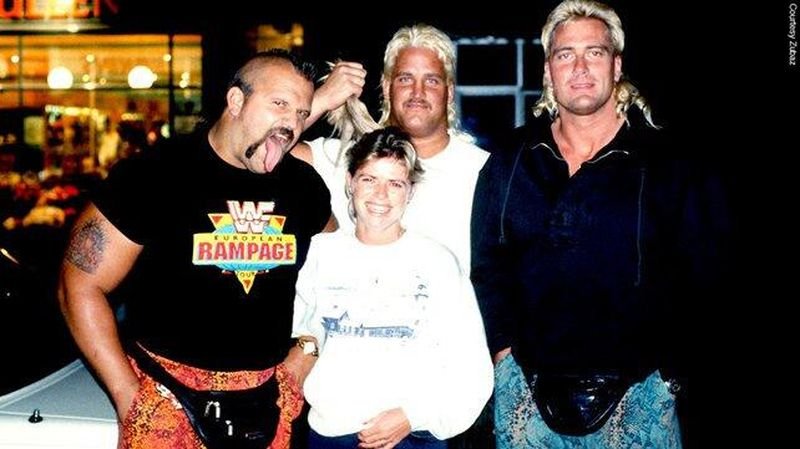
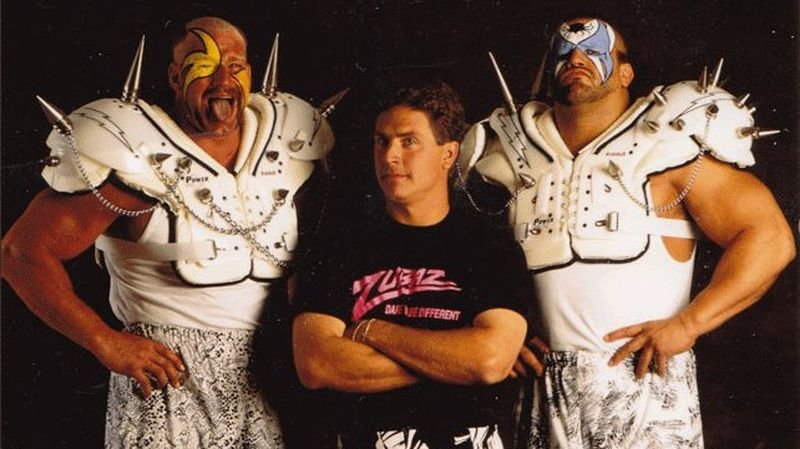
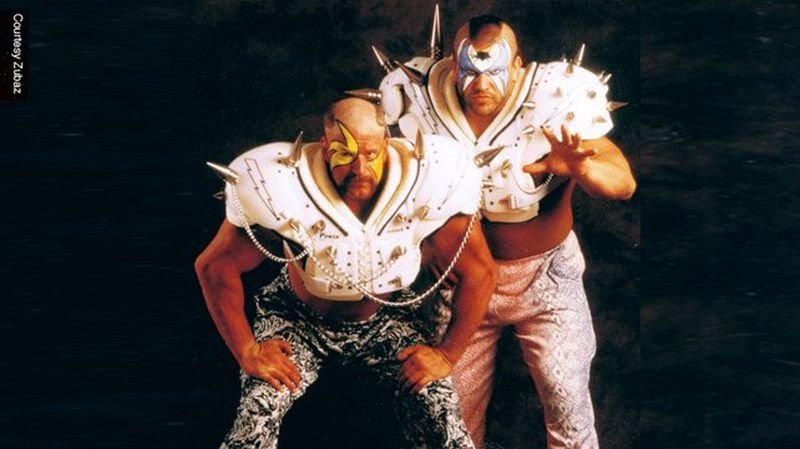
The Road Warriors weren’t hired spokesmen. Hegstrand (Hawk) and Laurinaitis (Animal) owned half the company, and they treated every territory they wrestled in as a sales floor. Before heading out on the road, the pair would grab a box of Zubaz and toss free pairs around the locker room. The spiked shoulder pads and face paint already made the Road Warriors the most dangerous-looking act in wrestling, and the zebra stripes fit that aesthetic better than anything a licensed apparel company could have designed on purpose.
That locker-room distribution model did something no ad campaign could buy: it made Zubaz look like wrestling’s house brand rather than an outside sponsor. Other wrestlers didn’t wear Zubaz because a check cleared. They wore it because the guys who invented it handed them a free pair and dared them not to.
The Retro Almanac
A monthly roundup of "on this day" highlights from that month, decades back — plus first dibs on new retro merch drops. No spam, just the good stuff.
The JCPenney Deal and the Poster That Broke Zubaz Wide Open
Zubaz stayed a wrestling-and-gym curiosity until a JCPenney buyer spotted the pants at a hockey game and put in a nationwide order. That single retail deal is what pushed Zubaz past novelty status. Truax and Stock then shot a promotional poster pairing Hawk with Miami Dolphins quarterback Dan Marino, both in full zebra print, and according to the Road Warriors, the pants started selling the moment that photo hit stores. Marino’s name attached to a wrestling gimmick sold department store buyers on something they’d normally never stock.
The numbers tell the rest of the story. Zubaz pulled in roughly $14 million in year one, then jumped to $28 million, then kept climbing until the company was clearing $100 million in sales during 1991 alone. At peak production the factories were shipping 50,000 pairs a week — and some of that manufacturing ran through Minnesota prison workshops using female inmate labor, a detail that rarely makes it into the nostalgia pieces but shows how fast the operation had to scale to keep up with demand.
Why Every Wrestler’s Locker Had a Pair
By the early 90s, Zubaz wasn’t a Road Warriors gimmick anymore — it was close to a dress code. Hulk Hogan wore them to interviews. Macho Man Randy Savage paired them with his own neon sunglasses collection, which somehow made the zebra print look understated by comparison. If a wrestler needed comfortable travel clothes that could survive a long flight and still look like they belonged on television, zebra-striped sweatpants with an elastic waist solved a real problem, not just a fashion one. The pants also worked as a built-in costume upgrade: throw on a pair of Zubaz and even a mid-card wrestler looked like he’d stepped out of a bigger production.
Outside the ring, the pants rode the same wave. NFL players including Dan Marino kept wearing them past the original ad deal, supermodel Claudia Schiffer showed up in Zubaz print during the brand’s early-90s marketing push, and college kids who had zero connection to wrestling or bodybuilding bought them because MTV and sports television had normalized the look. A 1993 Inside Sports reader survey ranked Zubaz third on its list of the worst things to happen in sports that year — proof the pants had become ubiquitous enough to be a punchline, which in hindsight was the beginning of the end. The visual appetite driving all of it wasn’t unique to wrestling, either — it’s the same maximalist instinct that had glam metal acts like Mötley Crüe in the 80s piling on spandex and hairspray until subtlety stopped being an option.
What Zubaz Pants Were Actually Made Of
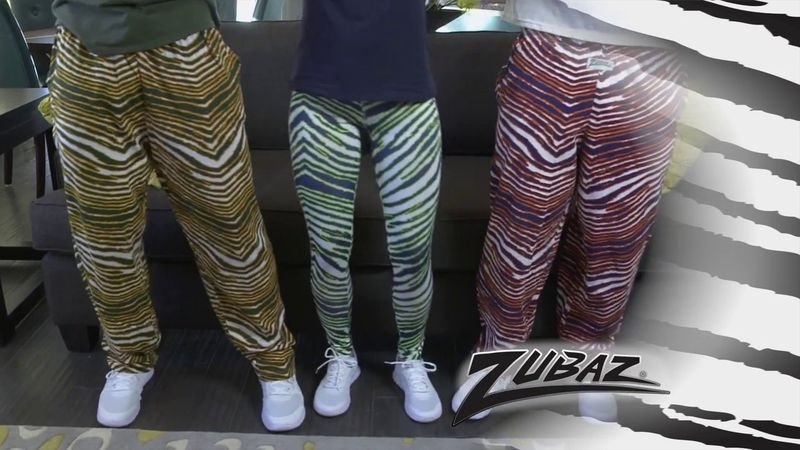
The original Zubaz pant was a soft, breathable cotton-poly blend with a fully elastic waistband, tapered at the ankle so the fit stayed baggy through the thigh without turning into parachute pants. That taper mattered more than people give it credit for — it’s why Zubaz read as athletic wear instead of costume fabric, even in neon colors. Zebra print became the signature, but the catalog ran deep: Day-Glo solids, lightning bolts, camo-style splatter patterns, and team-colored stripes once licensing deals started. The brand stretched the concept past pants fast, adding shorts, caps, t-shirts, and — in one of the stranger footnotes in apparel history — Zubaz-branded baby diapers for parents who wanted their nursery to match the living room.
That breadth is part of why the brand scaled so quickly and why it collapsed just as fast. A company built on novelty prints has to keep inventing new ones, and by the mid-90s Zubaz had saturated every pattern variation it could reasonably sell before the market got tired of all of them at once.
The Crash Nobody Saw Coming
Truax and Stock sold their shares in the early 90s, right as the brand hit its ceiling. Without the founders steering it and with every mall in America suddenly carrying a knockoff zebra print, Zubaz lost the one thing that made it work: scarcity. The original company filed for bankruptcy in 1996, just five years after that $100 million peak. A pattern that felt rebellious when the Road Warriors wore it to the ring felt dated the moment it became a clearance rack staple, and nothing kills a loud trend faster than overexposure. Zubaz wasn’t alone in that boom-bust arc — plenty of early-90s crazes burned out just as quickly once the novelty wore off, including the collectible milk cap fad that got Pogs banned from playgrounds within a few short years of its peak.
How Zubaz Clawed Its Way Back
Truax and Stock eventually bought back their own trademark. Limited reissues started in 2007, and the brand fully relaunched online in 2014, pulling in $160,000 in sales in its first six weeks back. That was a rounding error compared to the original run, but it proved the demand was still there among adults who’d worn the pants as kids. The real turning point came in 2022, when Zubaz re-entered official NFL apparel licensing after a 25-year gap, finally able to print team logos on the zebra stripes instead of selling generic colorways.
Before the NFL deal closed, Zubaz had already tested the comeback in physical retail. The brand opened its first standalone store in November 2016 at the Fashion Outlets of Niagara Falls, a location chosen specifically for its proximity to Buffalo Bills fans — a bet that paid off long before the official NFL license came through. The Bills became the brand’s biggest market almost overnight once the licensing deal landed; their pro shop alone moves more than a thousand pairs of Zubaz pants a season, and the team’s tailgate culture practically adopted the zebra print as a second uniform. By 2022, Zubaz was approaching $20 million in wholesale sales again, helped by an Adidas footwear partnership and a cameo in Madden 23.
The strangest twist in the comeback has nothing to do with sports. Starting around 2023, Zubaz prints started showing up on runways and red carpets, embraced by a high-fashion crowd that treats the exact same zebra stripe the 1993 Inside Sports readers mocked as a bold vintage statement piece. None of that happens without wrestling fans turned 40-something dads who remembered exactly where the pants came from, and without a new generation discovering them with zero memory of the brand’s first collapse.
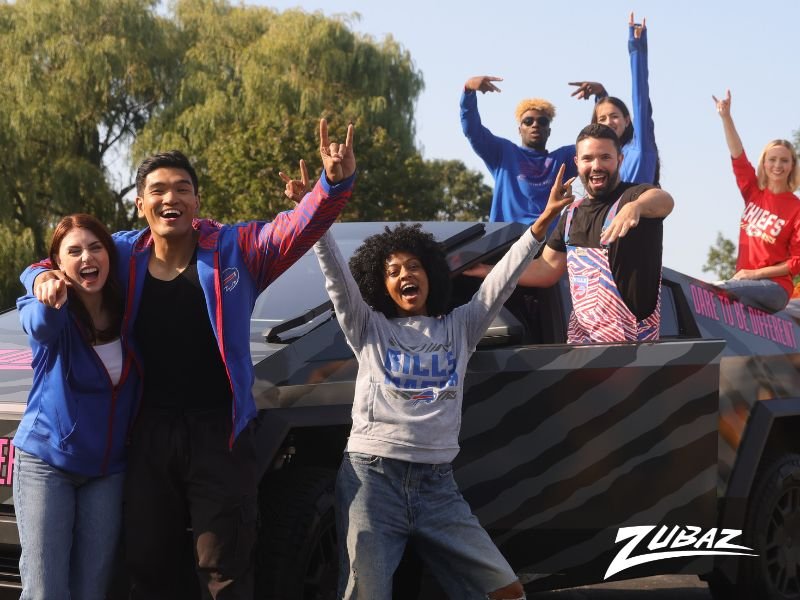
Zubaz never needed a redesign to come back. The zebra stripes that looked ridiculous on a mall clearance rack in 1996 read as authentic 90s nostalgia in 2026, and that’s the trick: a trend that gets mocked on its way down usually gets celebrated on its way back up, as long as the people who wore it the first time are still around to buy it again. If retro wrestling gear from this era caught your eye, our breakdown of American Gladiators’ equally loud spandex era covers the other side of 90s athletic excess.
Sources
- Zubaz — Wikipedia — founding timeline, sales figures, bankruptcy and relaunch dates.
- Blurred Lines: Zubaz, The Road Warriors and the Greatest Pants in the History of the World — WWE.com — Road Warriors ownership stake and the Dan Marino poster story.
- A Brief History of Zubaz — Mental Floss — origin story, JCPenney distribution, and 1996 bankruptcy.
- Zubaz Is Back In The NFL — Forbes — 2022 NFL licensing deal and Buffalo Bills sales figures.
The Retro Almanac
A monthly roundup of "on this day" highlights from that month, decades back — plus first dibs on new retro merch drops. No spam, just the good stuff.