Pogs: 10 Billion Milk Caps, One Banned Fad
A Haleakala Dairy consultant named Mary Soon blended passion fruit, orange, and guava juice into a drink called POG in 1971, and the trademark was filed on January 22, 1974. Nobody involved in that juice recipe could have guessed that two decades later, the bottle caps from that same dairy would spark a disc-flipping craze that moved 10 billion units and got banned from classrooms on four continents. That’s the real story of pogs, and most of it starts in Hawaii, not in a toy company boardroom.
From Japanese Menko to Hawaiian Milk Caps
The game underneath pogs is older than the toy itself. It traces back to menko, a Japanese card-flipping game played since the Edo period, where players tried to flip an opponent’s card by slapping their own against it. Japanese immigrants carried menko to Hawaii in the early 20th century, and island kids adapted the game using what they actually had lying around: cardboard milk bottle caps. For decades it stayed a regional curiosity, a backyard game passed between generations on Oahu and Maui with no national profile at all.
The Retro Almanac
A monthly roundup of "on this day" highlights from that month, decades back — plus first dibs on new retro merch drops. No spam, just the good stuff.
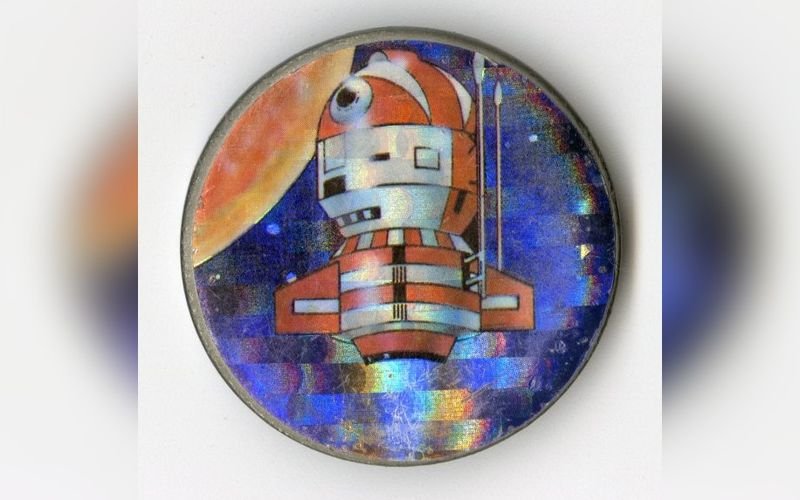
A holographic pog from the mid-90s boom — foil-printed caps like this one sold for a premium over plain cardboard.
The POG Juice That Gave the Game Its Name
POG is an acronym for Passion fruit, Orange, and Guava, the three juices blended into Haleakala Dairy’s drink. The name stuck to the game because the dairy’s own bottle caps were the preferred flipping discs on Maui — kids asked for “pogs” the way people ask for a Kleenex instead of a tissue. The connection between the juice and the game isn’t a marketing coincidence or a retrofitted brand story; it’s literally where the word came from, which is part of why the 1994 copyright fight over the name got so contentious once the game went national.
How One Teacher’s Classroom Trick Became a National Craze
The modern pogs revival has a specific start date. In April 1991, Blossom Galbiso, a teacher and guidance counselor at Waialua Elementary School on Oahu, had her daughter buy a stack of POG juice caps from Haleakala Dairy on Maui. Galbiso used them as a hands-on counting tool in math lessons — nothing more ambitious than that. Her students took the game home, and it spread through Hawaii’s public schools on its own momentum, no marketing budget involved.
The growth curve from there is the part people forget. By May 1992, Haleakala Dairy was selling 25,000 caps a month just to customers on Oahu’s North Shore. A year later, manufacturer Stanpac was shipping 4 million POG juice caps a week to keep up with Hawaii alone. The mainland U.S. didn’t catch on until 1993, which means the craze had already been building in Hawaii classrooms, quietly, for two full years before the rest of the country noticed.
The World POG Federation and the Business of Slammers
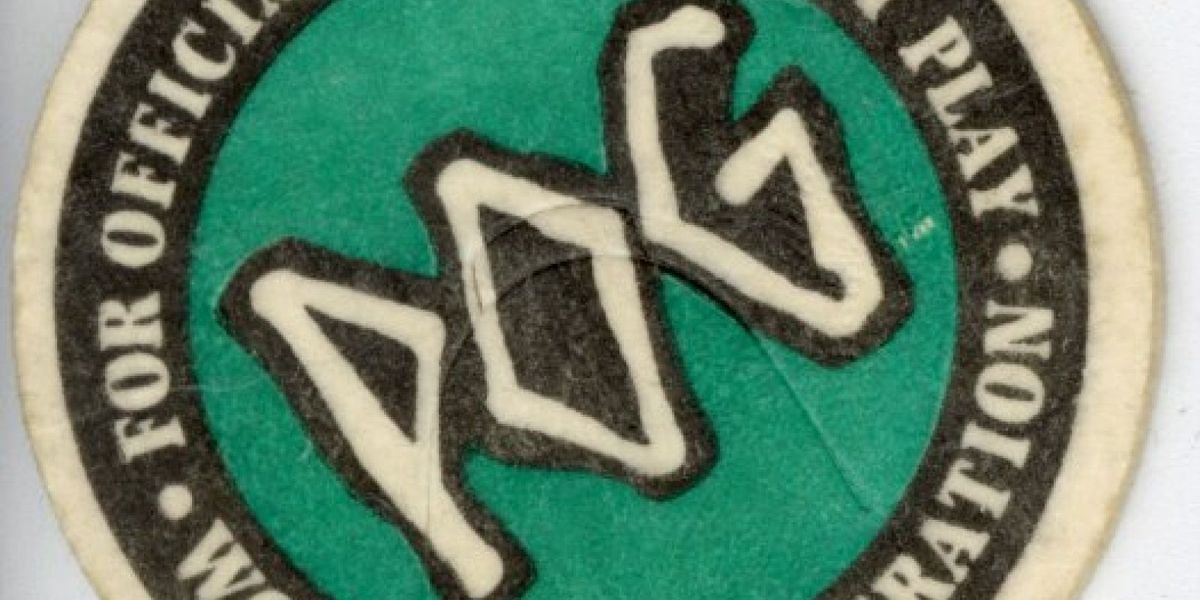
Once pogs hit the mainland in 1993, the business moved fast. Businessman Alan Rypinski bought the POG trademark and copyright that September and founded the World POG Federation, a licensing and tournament operation with its own mascot, a wild-haired, slammer-obsessed cartoon character named Pogman. The WPF ran official tournaments, sold tournament packs and playing mats, and by April 17, 1995, had produced an official pog set for the White House Easter Egg Roll — a genuinely strange marker of how mainstream a bottle-cap game had become in four years.
Licensing deals followed the same curve. McDonald’s, Taco Bell, and Burger King all distributed branded pogs sets with kids’ meals. Disney, Nintendo, and Kool-Aid put their characters on cardboard discs. A Star Wars Episode I tournament set — featuring characters like Mace Windu — shipped years after the original peak, riding the brand’s residual name recognition into the late 90s.
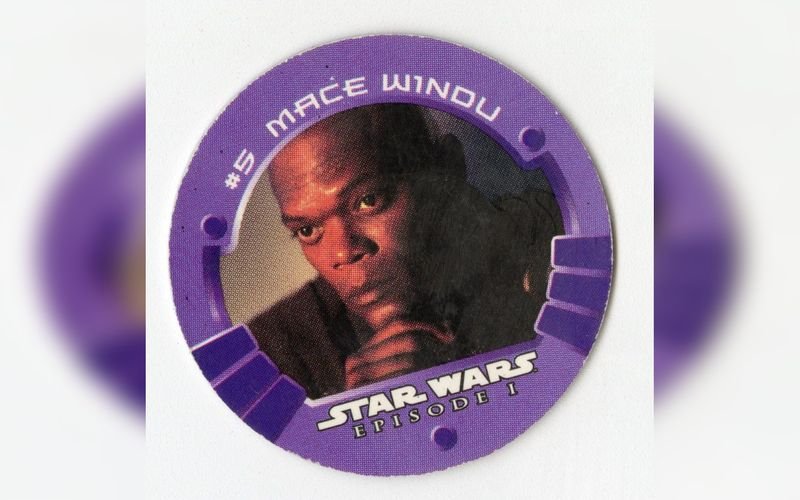
Even late-90s movie tie-ins, like this Star Wars Episode I set, used the pog format long after the original craze peaked.
Why Schools Banned Pogs by 1995
The game itself is simple. Players stack a pile of pogs face-up, then each takes a turn slamming a heavier plastic or metal disc — the slammer — down onto the stack. Whatever caps flip face-down, the slammer owner keeps; the rest get restacked for the next player. That “keepsies” variant is where the trouble started. Kids were effectively gambling their collections one slam at a time, and the resemblance to wagering didn’t sit well with administrators once pog trading started eating into class time and triggering playground disputes over who owed what to whom.
There was also a less obvious problem: weighted slammers. Some kids filled their slammers with lead or steel to hit harder, which turned a cardboard game into something that could actually leave a mark on a knuckle if a flip went wrong. A few playground injury reports, combined with the gambling optics, gave administrators two separate justifications to pull the game instead of just one, which is part of why the bans spread as fast as they did once the first few schools acted.
Schools across the United States, Canada, Sweden, Iceland, Germany, the UK, and Australia banned pogs from classrooms by 1995, citing both the gambling-adjacent mechanic and straightforward disruption. The bans didn’t kill the toy on their own — the fad was already cooling by then — but they turned pogs into a minor symbol of 90s moral panic, filed somewhere between Magic: The Gathering cards and the Beanie Baby secondary market.
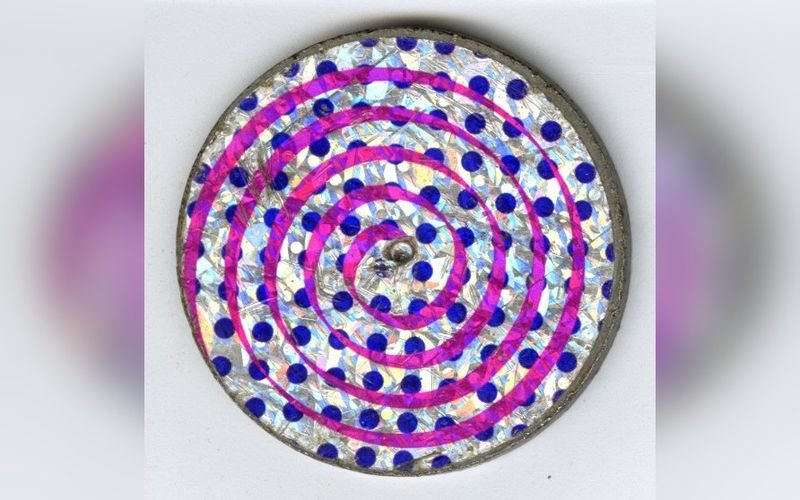
A metal slammer — the heavier disc players used to flip the stack and claim caps in the “keepsies” version of the game that got pogs banned.
My take: the ban always said more about adults overreacting to a 50-cent toy than it did about actual harm to kids. A stack of cardboard discs isn’t a casino, and most playground “keepsies” games settled themselves within a week once the novelty wore off. The bigger problem for schools, if they’d admitted it, was that a bottle-cap game was eating more of their students’ attention than anything in the curriculum.
What Rare Pogs Are Worth Today
Most pogs are worth nothing — millions were printed, and most households still have a shoebox of them somewhere. But a handful of scarce runs carry real collector value. “No Fear” branded pogs are the extreme case: only a couple of boxes were ever distributed to a single Texas store before the rest of the print run was destroyed, and a curated complete set has been listed for $750. EarthBound pogs, tied to the 1995 SNES game, originally retailed for about $5 a set; one complete set resold on eBay in 2009 for $255. Star Trek: The Next Generation “Stardiscs,” a 60-pog 1994 Launch Edition set, hid a gold-rimmed Scotty and McCoy card that collectors say turned up “about once a box” — rare enough to matter, common enough that people actually chased it.
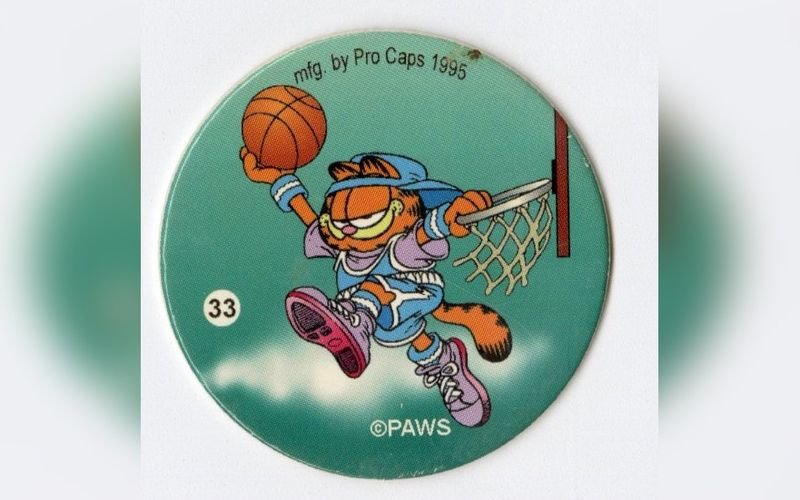
Licensed character pogs — this Garfield basketball cap, manufactured by Pro Caps in 1995 — are some of the most commonly traded survivors today.
Pogs Are Making a Comeback in 2026
The World POG Federation brand didn’t stay dormant. As of 2026, it’s being actively relaunched, with new physical “Hobby Box” product sets aimed squarely at collectors who grew up with the original run, plus a mobile app called POGs: The Mobile Game that lets players battle with virtual slammers and digital caps online. There’s even an NFT and Web3 tie-in riding on three decades of brand nostalgia — a strange full-circle moment for a toy that started as literal dairy packaging.
The revival leans hard on the same mechanics that made the original run work: pack-opening excitement, rare pulls, and a physical object you can trade with a friend standing next to you. None of that needed reinventing. What changed is distribution — Hobby Box sets sell through hobby shops and direct online orders instead of gas-station checkout counters, and the brand now has a mobile app layer that the 1994 version never could have supported. Whether that’s enough to turn a nostalgia product into a second genuine kids’ craze is still an open question, but the fact that anyone’s trying thirty years later says something about how deep the original run went.
It’s a familiar playbook — see Furby’s own banned-toy history for another 90s fad that got pulled from places it wasn’t supposed to be and came back decades later anyway. The question with any revival like this is whether it can find new players or just resells nostalgia to the same people who already owned the originals the first time. Given that pogs never needed batteries, screens, or an app to be fun the first time around, betting on the physical Hobby Box sets over the app feels like the safer read.
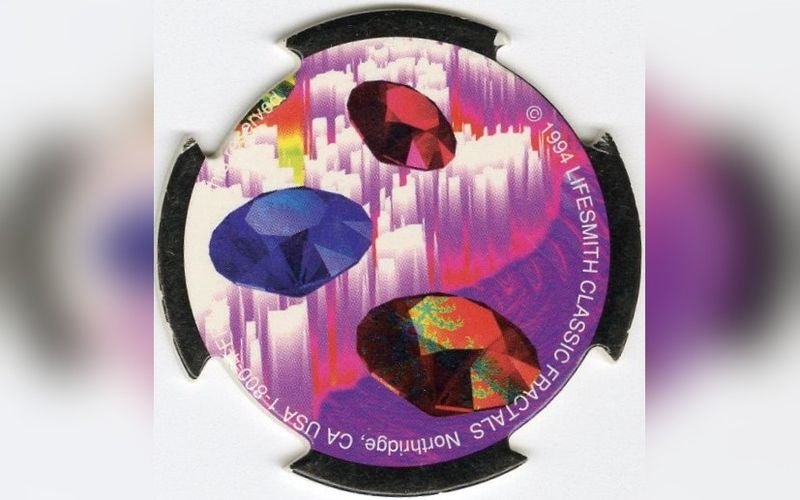
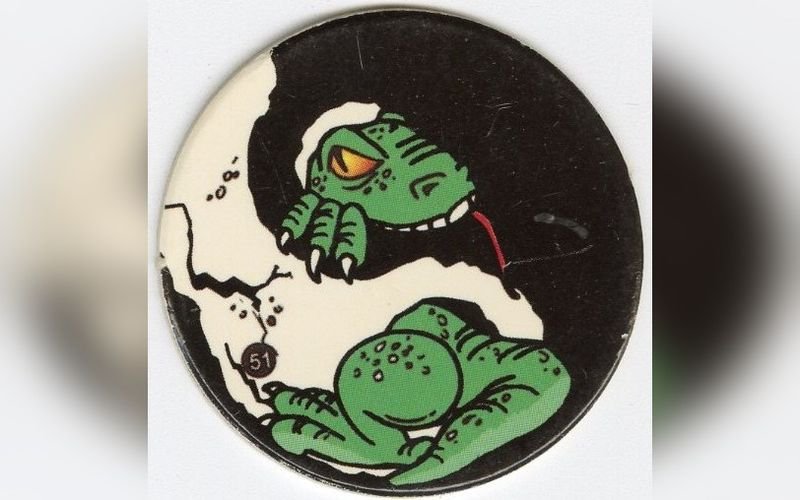
Foil and holographic finishes like this fractal-pattern cap pushed pogs from a free playground game into a collectible market almost overnight.
Pogs and the Rest of the 90s Toy Chest
Pogs arrived in the same stretch of years as the Talkboy, another toy whose popularity outran anyone’s original plans for it, and they overlapped with the earlier Pogo Ball — a completely different 80s playground toy despite the near-identical name, which still trips up anyone searching for either one today. What ties these together isn’t the mechanics; it’s how fast each one went from obscure to everywhere to gone. Pogs did that cycle in under three years, start to finish, which is faster than almost anything else from the decade.
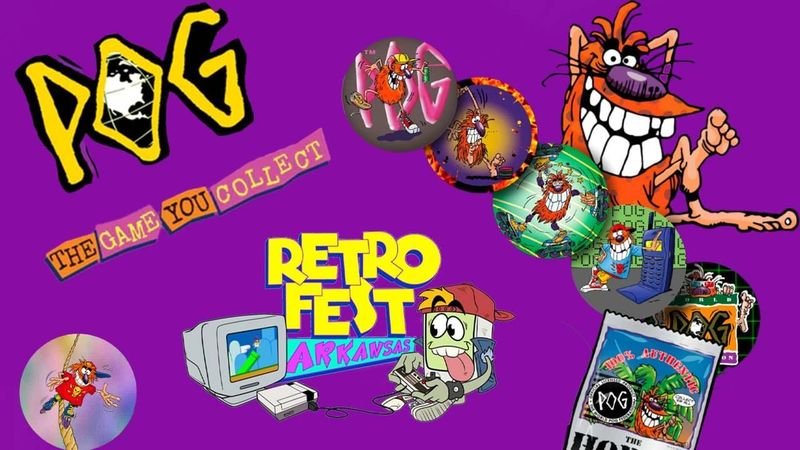
Pogman, the World POG Federation’s slammer-wielding mascot, is back as part of the brand’s active 2026 revival.
Sources
- The Weird History of Pogs — Mental Floss — origin via menko, the Galbiso classroom story, and the World POG Federation.
- Milk Caps / Pogs — Kandor Archives — detailed sales figures, trademark history, and WPF documentation.
- POGs Briefly Took Over the World. Can the Game Make a Comeback? — Fast Company — the 2026 WPF revival, Hobby Box sets, and the mobile app.
- The Rarest Pogs From the 90s — Complex — No Fear, EarthBound, and Star Trek Stardiscs valuations.
- Pogs: The Hawaiian Milk Cap Game — People’s Guide Archive — primary-source background on the game’s Hawaiian roots.
The Retro Almanac
A monthly roundup of "on this day" highlights from that month, decades back — plus first dibs on new retro merch drops. No spam, just the good stuff.