Mötley Crüe in the 80s: Sunset Strip to MTV
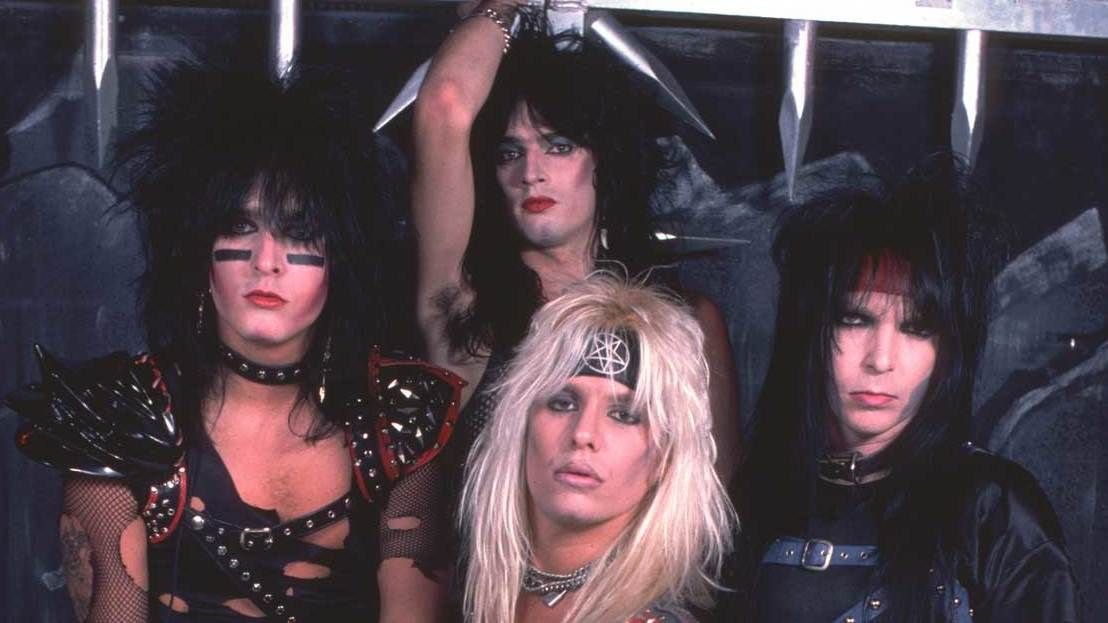
Vince Neil, Mick Mars, Nikki Sixx, and Tommy Lee didn’t climb the Sunset Strip — they took it by force, in combat boots, inside eighteen months of forming the band. By 1989 they’d sold more records than any other act to come out of that stretch of Hollywood clubs, and they’d buried a friend, nearly buried a bassist, and rewritten what an arena rock show was supposed to look like. This is the decade that made them, in the order it actually happened — not the sanitized version.
Four Misfits in an Apartment on Clark Street
Nikki Sixx, Tommy Lee, and Vince Neil moved into apartment 205 at 1124 North Clark Street in West Hollywood in early 1981, and that’s where the songs that became Too Fast for Love got written. Mick Mars had answered a classified ad Sixx placed looking for a guitarist “loud, rude, and aggressive” — Mars showed up, played, and was in the band before he left the room. The lineup played its first show opening at the Starwood on April 24, 1981, and within seven months they’d self-released Too Fast for Love on their own Leathür Records, pressing 900 copies by hand out of Sixx’s apartment.

The Retro Almanac
A monthly roundup of "on this day" highlights from that month, decades back — plus first dibs on new retro merch drops. No spam, just the good stuff.
Too Fast for Love — self-pressed on Leathür Records in 900 copies before Elektra came calling.
Elektra Records bought the rights within a year and reissued it nationally in 1982. The album cover borrowed its stripped-down, leather-glove composition from the Rolling Stones’ Sticky Fingers, which tells you exactly who these four were trying to signal to. It worked. By the time they were headlining the Whisky a Go Go, the band that couldn’t get a club to book them eighteen months earlier was the one other bands on the Strip were trying to open for.
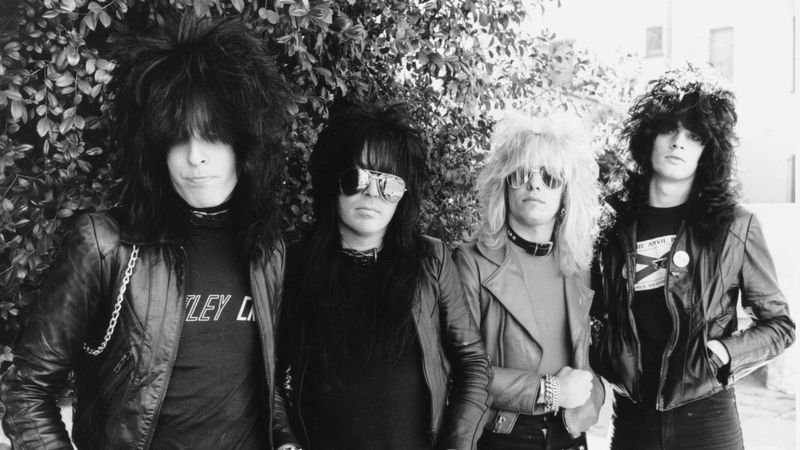
Mick Mars, Nikki Sixx, Vince Neil, and Tommy Lee — the four misfits who sold out the Whisky within a year of forming.
Shout at the Devil Turned Club Rats Into Stars
Shout at the Devil came out September 23, 1983, and it’s the record that actually built the Mötley Crüe most people picture — studded leather, a glossy embossed pentagram on the sleeve, and a title track that sounds like a warning label set to music. Photographer Barry Levine shot the cover and gatefold, and the image of four guys in full battle makeup under crossed swords did more for the band’s identity than any single song on the record. The album went platinum, and the subsequent tour is the one that took them from club act to arena band — they went from headlining the Whisky to selling out stadiums in under two years.
The pentagram wasn’t subtle, and it wasn’t meant to be. Parents’ groups treated it as evidence the band worshipped Satan; Sixx has said for decades it was never literal, just theater built to unsettle. Either way, it worked exactly as designed — the controversy sold records, and two years later Mötley Crüe would be one of the acts dragged in front of Congress when the PMRC held its hearings on explicit lyrics in September 1985. Tipper Gore’s committee put stickers on records that year, and “Shout at the Devil” became one of the titles cited as evidence rock music needed a warning label.
Mick Mars rarely gets mentioned in the same breath as the other three, and that’s by design — he’s eleven years older than Sixx, played under a different name in bar bands for a decade before answering that classified ad, and spent the entire 80s as the one member of the band who wasn’t chasing headlines. He also wrote or co-wrote most of the riffs that made the band sound dangerous instead of just loud, which is the part the tabloid version of this story tends to skip.
The Night Theatre of Pain Became More Than an Album Title
On December 8, 1984, Vince Neil crashed his Ford Pantera head-on into another car in Redondo Beach, killing his passenger, Hanoi Rocks drummer Nicholas “Razzle” Dingley, and leaving the two people in the other car with permanent brain injuries. Neil pleaded guilty to DUI and vehicular manslaughter. He served fifteen days of a thirty-day sentence, paid $2.6 million in restitution, and the band released Theatre of Pain five months later — an album whose title suddenly carried weight nobody had planned for.

The band kept touring through tragedy, controversy, and lineup drama that would have ended most acts.
The band didn’t cancel the tour or soften the image. Theatre of Pain gave them “Home Sweet Home,” their first real power ballad and the song that proved they could get played on MTV outside the metal block. It’s the one record in the catalog where the band’s reputation for chaos and the actual content of the album line up uncomfortably well — nobody writing about Mötley Crüe’s 80s gets to skip this part, and most fan-site retrospectives conveniently do.
Girls, Girls, Girls and the Peak of MTV Excess
Girls, Girls, Girls dropped in 1987, built around a title track co-written after a night at the Seventh Veil strip club in Hollywood, and the tour behind it is where the Crüe mythology fully calcified — motorcycles onstage, pyro, and a reported 118 shows across the year. This is the version of the band most casual fans remember: leather, hairspray, and a wall of Marshall stacks, headlining arenas with Whitesnake in support.
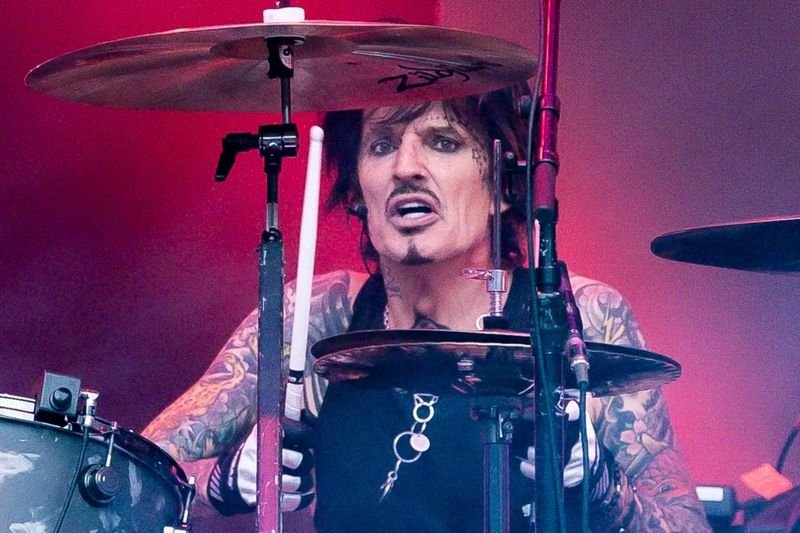
Tommy Lee’s drum kit became a stage show of its own by the late 80s, years before the rollercoaster-cage gimmick.
It also nearly killed two of them. The road crew and the band were deep enough into drugs and alcohol by this point that “functioning” is a generous word for it — and the bill for that came due six months after the tour ended. Tommy Lee married Heather Locklear in May 1986, right in the middle of this stretch, which is its own reminder that the chaos and the fame were running on parallel tracks the entire time — this wasn’t a band falling apart quietly behind closed doors. It was happening in tabloids, on MTV, and in front of sold-out crowds who had no idea how close the whole thing was to ending.
Nikki Sixx Died for Two Minutes, Then Mötley Crüe Got Clean
On December 23, 1987, Nikki Sixx overdosed on heroin at a party and was declared clinically dead for roughly two minutes before paramedics revived him with adrenaline shots directly to the chest. He woke up in the back of an ambulance, got interrogated by police at the hospital, and was released the same night. He wrote “Kickstart My Heart” about the experience two years later — the title isn’t a metaphor.
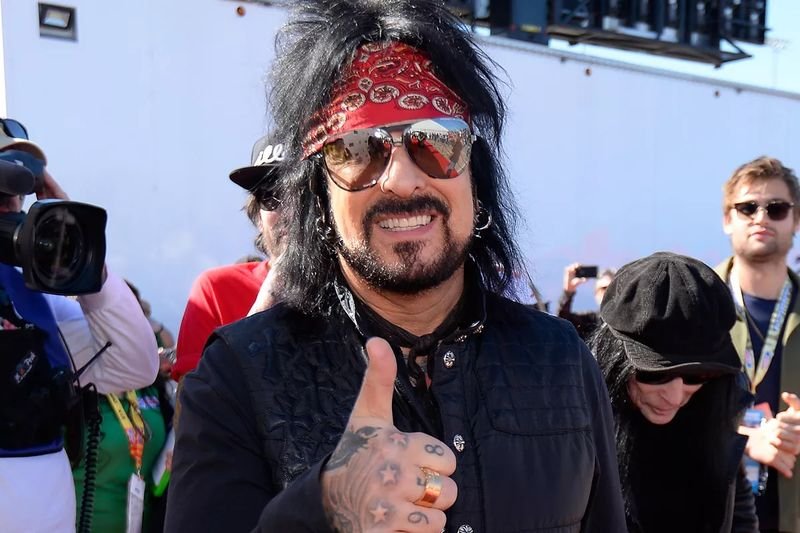
Nikki Sixx wrote “Kickstart My Heart” directly about the overdose that nearly killed him in December 1987.
That overdose is the hinge the whole decade swings on. Most of the band got sober going into Dr. Feelgood, released September 1, 1989, and it shows — the record is tighter and more deliberately produced than anything they’d made before, and it became their only album to hit #1 on the Billboard 200. The title track, inspired by Sixx’s childhood nickname for his grandfather’s doctor friend, is arguably the best song the band ever wrote. Closing out the decade sober and at the commercial peak of their career wasn’t the ending anyone would have predicted for this band in 1984.
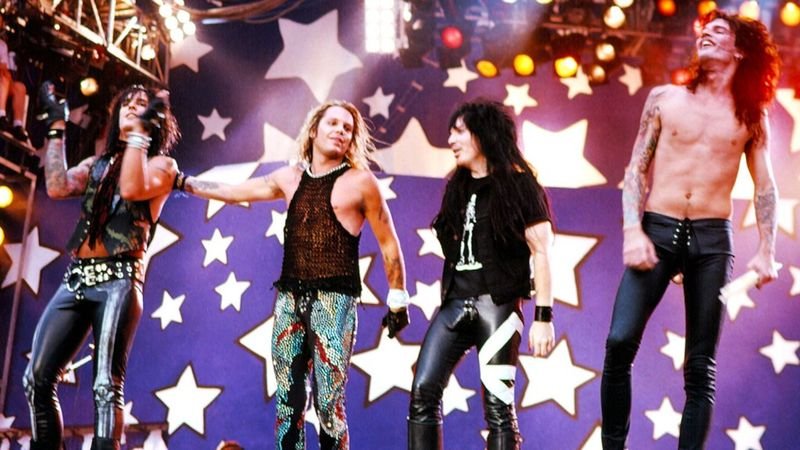
Mötley Crüe on the Dr. Feelgood tour, 1989 — the sober, commercially biggest version of the band.
Why the Strip Still Smells Like Mötley Crüe
Every hair metal band that came after them on the Strip was reacting to Mötley Crüe in some way, whether they admit it or not — the same way every band that came after Guns N’ Roses was reacting to Appetite for Destruction. Netflix’s The Dirt introduced the band’s 80s to a generation that wasn’t alive for any of it, and the 2022 Stadium Tour with Def Leppard and Poison proved there was still a paying audience for the exact version of rock this band perfected forty years earlier. Grunge would eventually push bands like this off the radio — a story worth its own read if you want to see how fast the Strip’s dominance actually collapsed once Seattle showed up — but Mötley Crüe outlasted the backlash better than almost anyone from that scene.
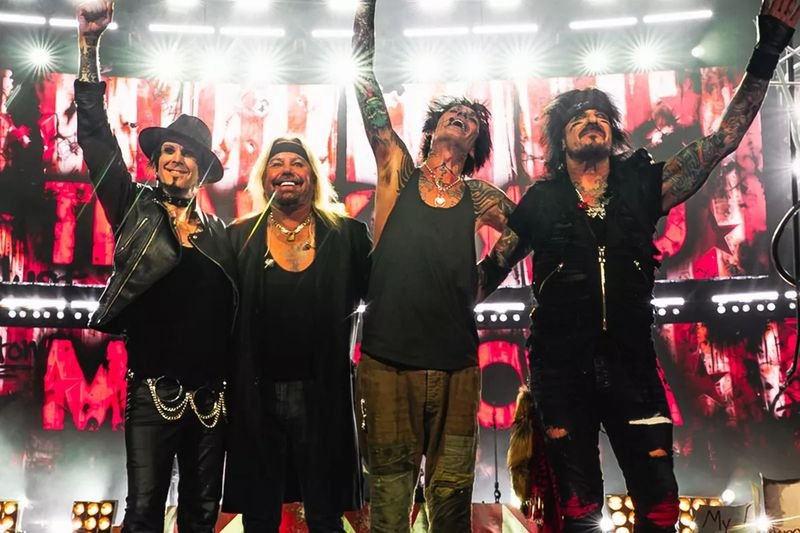
Mötley Crüe still selling out stadiums decades after the Sunset Strip years that made them.
What separates their 80s from the dozens of other Strip bands chasing the same formula is that the chaos was never separate from the music — it was the raw material for it. “Home Sweet Home” doesn’t work without the crash. “Kickstart My Heart” doesn’t exist without the overdose. The genre that eventually killed hair metal wrote the obituary, but Mötley Crüe had already written their own soundtrack for it a decade early.
Sources
- Ultimate Classic Rock — The Aftermath of Vince Neil’s Car Crash — details on the 1984 crash, sentencing, and restitution.
- Newsweek — Mötley Crüe and the Real Story of Nikki Sixx’s Overdose — the December 1987 heroin overdose and revival.
- Billboard — Mötley Crüe Remembers Dr. Feelgood on Its 30th Anniversary — the band’s only #1 album and sobriety during its making.
The Retro Almanac
A monthly roundup of "on this day" highlights from that month, decades back — plus first dibs on new retro merch drops. No spam, just the good stuff.