Beach Party Movies: 9 Wild Classics & the 80s Revival
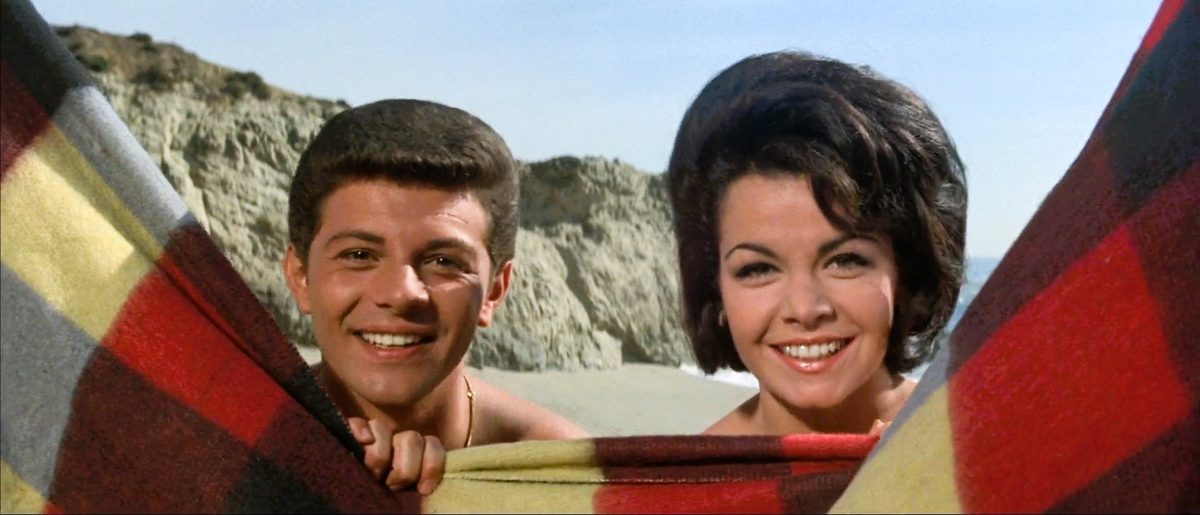
In the summer of 1963, a movie shot in three weeks on a Malibu beach for pocket change outgrossed films that cost ten times as much. Beach Party turned a former Mouseketeer and a Philadelphia teen idol into the most bankable couple in drive-in history, and it spawned an entire genre that ran on sunshine, surfboards, and songs nobody remembers the next morning. For about three years, beach party movies were the closest thing American teenagers had to a shared summer ritual at the movies.
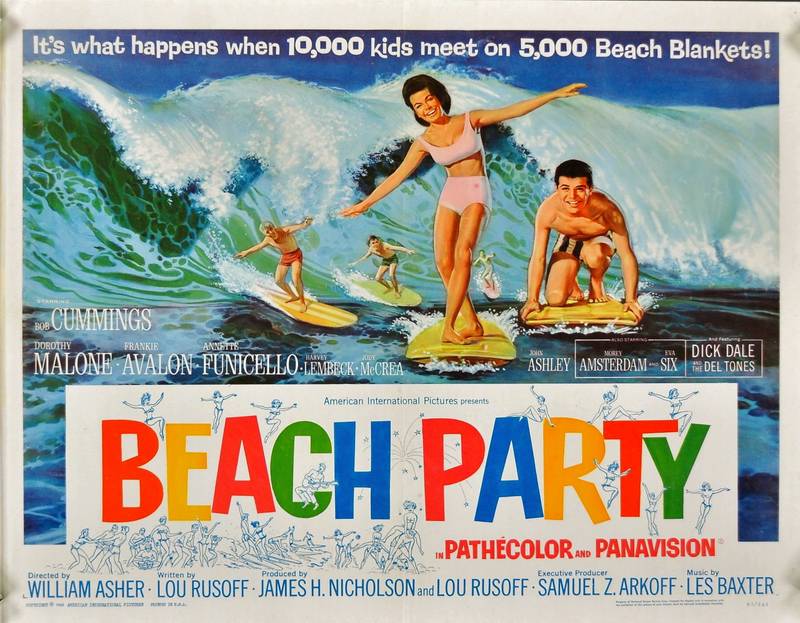
The 1963 poster promised “10,000 kids on 5,000 beach blankets” — AIP’s entire pitch in one line.
The Retro Almanac
A monthly roundup of "on this day" highlights from that month, decades back — plus first dibs on new retro merch drops. No spam, just the good stuff.
What Were the Beach Party Movies?
The beach party movies were a series of low-budget musical comedies from American International Pictures, the scrappy studio run by James H. Nicholson and Samuel Z. Arkoff. The template was set by Beach Party in July 1963: a gang of clean-cut teens spend the whole movie surfing, dancing, and pairing off, while a baffled adult or two wanders through the plot. There is no real conflict, no consequences, and almost no parents. That was the point.
Arkoff figured out something Hollywood’s majors had missed — that teenagers had cars, allowance money, and nowhere to spend a Friday night except the drive-in. AIP built movies for exactly that audience, on budgets so small the films practically couldn’t lose money. The beach was a free set. The cast worked cheap. And the soundtrack doubled as a record you could sell.
How Many Beach Party Movies Are There?
There are seven official AIP beach party films, all released in a tight burst between 1963 and 1966. In order: Beach Party (1963), Muscle Beach Party (1964), Bikini Beach (1964), Pajama Party (1964), Beach Blanket Bingo (1965), How to Stuff a Wild Bikini (1965), and The Ghost in the Invisible Bikini (1966). That is roughly two movies a year — a pace that would burn out any franchise, and eventually did.
Plenty of imitators piled on, too. Columbia, MGM, and even Elvis Presley chased the same crowd with surf-and-sand pictures. But when people say “beach party movies,” they almost always mean the AIP seven, because those are the ones with Frankie, Annette, and Eric Von Zipper.
Frankie Avalon and Annette Funicello: The Beach’s First Couple
Frankie Avalon was already a chart-topping teen idol when AIP cast him, and Annette Funicello was America’s sweetheart from her Mickey Mouse Club days. Together they became the genre’s anchor — the wholesome couple everyone in the audience rooted for, even though Frankie spent half of every movie pretending to flirt with someone else to make Annette jealous.
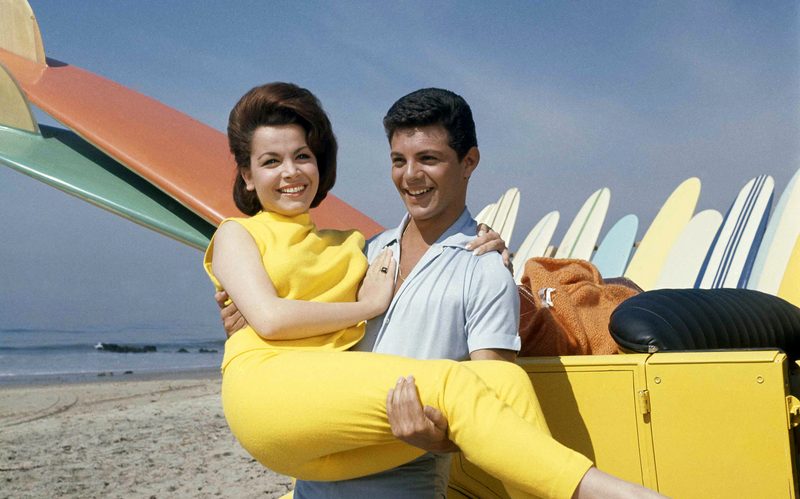
Frankie and Annette were the genre’s gravitational center — clean-cut, charming, and endlessly bickering toward the same happy ending.
Here’s a detail that says everything about the era: Walt Disney still had Annette under contract and reportedly asked her to keep her navel covered on screen. So while her co-stars wore the skimpiest swimwear 1964 would allow, Annette spent the beach party movies in noticeably more modest one-pieces. The most famous bikini star of the decade barely wore one.
The Formula That Printed Money for AIP
The numbers were the real magic. Beach Blanket Bingo wrapped in roughly eighteen days for about $350,000 and returned many times that. When a movie costs less than a single star’s salary on a studio picture and fills drive-ins all summer, you make another one. And another.

American International Pictures built an empire on cheap, fast, teen-targeted films — the beach party series was its crown jewel.
The truth is, these movies weren’t trying to be good in the way critics measure good. They were trying to be cheap, fast, and fun, and they nailed all three. Roger Corman was making horror films for AIP on the same logic down the hall. The beach party movies were the sunny, PG-rated cousin of that whole drive-in machine — and they funded a lot of riskier projects the studio greenlit later.
Eric Von Zipper and the Rats: The Goofiest Gang in Movies
Every beach needs a villain, and the beach party movies handed that job to Eric Von Zipper, played with total commitment by Harvey Lembeck. Von Zipper led a leather-clad motorcycle gang called the Rats (their girlfriends were the Mice), and he was a direct parody of Marlon Brando’s brooding biker from The Wild One — except dumb as a post.

Harvey Lembeck’s Eric Von Zipper, a clueless Brando parody, was the recurring menace across the whole series.
His running gag was “the finger” — a paralyzing martial-arts touch he’d accidentally use on himself, freezing in whatever pose he happened to be in. It was pure vaudeville, and Lembeck stole every scene he was in. He’s the reason the beach party movies hold up as comedy at all; the romance was filler, but Von Zipper was genuinely funny.
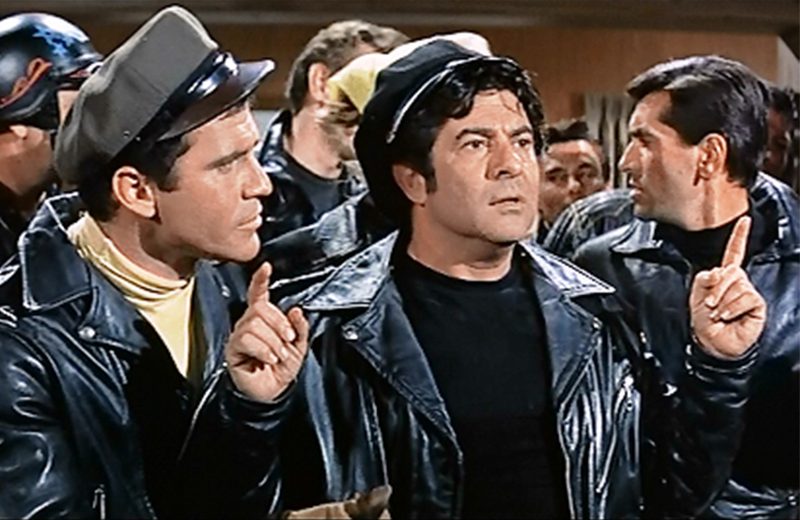
The Rats menaced the surf set in Beach Blanket Bingo — all leather, no actual threat.
The Music Was the Real Star
Strip away the plots and the beach party movies are basically jukebox musicals. Dick Dale, the King of the Surf Guitar, appeared on screen and laid down the reverb-drenched sound that defined the genre. The films became a launchpad and a showcase for an astonishing lineup of acts.
The biggest footnote of them all: Muscle Beach Party (1964) gave a 13-year-old his big-screen debut, billed as “Little Stevie Wonder.” Yes, that Stevie Wonder, performing in a Frankie Avalon beach movie before most of the world knew his name. Donna Loren, The Kingsmen, and a parade of surf and pop acts rounded out soundtracks that AIP happily sold as tie-in records.
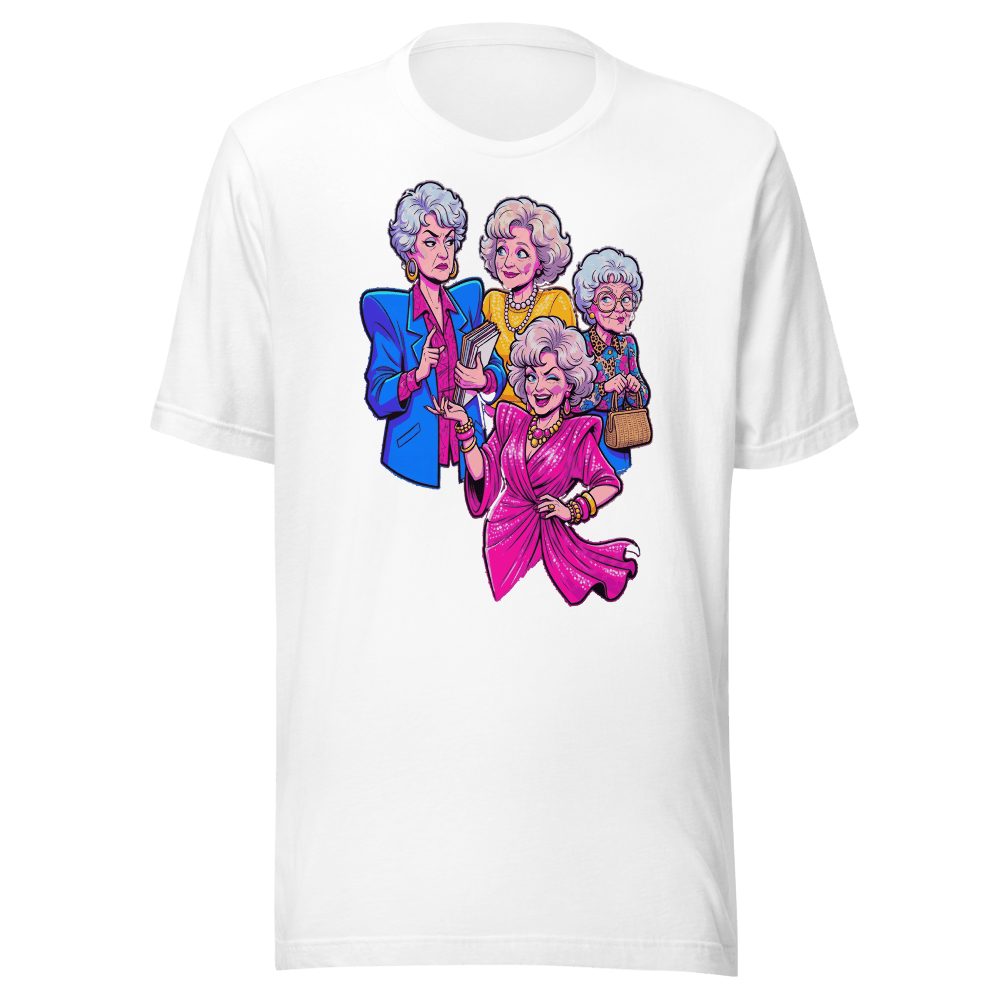
More sunshine-state nostalgia — if Frankie and Annette’s beach is your speed, the Golden Girls‘ Miami is the same vacation a few decades later.
Bikini Beach, Muscle Beach Party, and the Rest of the Series
If you only watch one beach party movie, make it Beach Blanket Bingo — it’s the most polished of the bunch, with skydiving, a mermaid subplot, Buster Keaton, and Paul Lynde chewing scenery as a sleazy publicist. Bikini Beach gave Frankie a dual role as a visiting British pop star called the Potato Bug, an obvious dig at Beatlemania. Muscle Beach Party leaned into bodybuilders and the Stevie Wonder cameo.
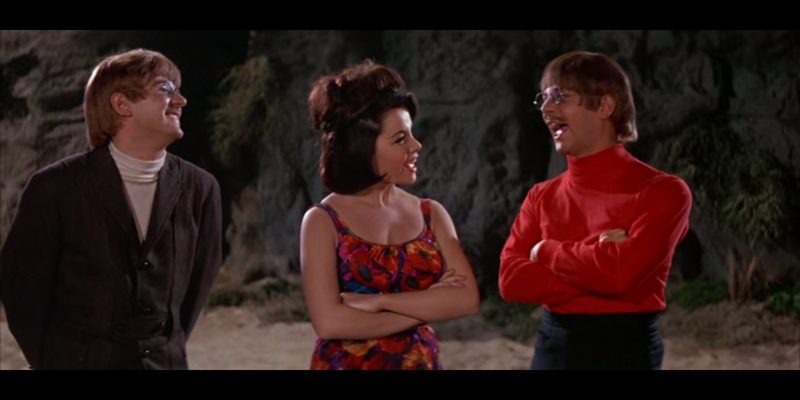
In Bikini Beach, Frankie pulled double duty as a mop-topped British pop star — AIP’s cheeky shot at the British Invasion.
By The Ghost in the Invisible Bikini in 1966, the formula was running on fumes. Frankie barely appeared, the gags got desperate, and the surf-rock wave the films rode had been swallowed by the British Invasion and the psychedelic turn coming right behind it. Audiences had moved on, and AIP, always reading the room, moved on with them. The genre that defined three summers was effectively over by the time the Summer of Love arrived.
Back to the Beach: The 1987 Reunion That Closed the Loop
Two decades later, the beach party movies got a perfect coda. Back to the Beach (1987) reunited Frankie Avalon and Annette Funicello as a now-married, middle-aged couple visiting their grown daughter — and it knew exactly how silly the originals were, leaning into the joke instead of pretending otherwise.
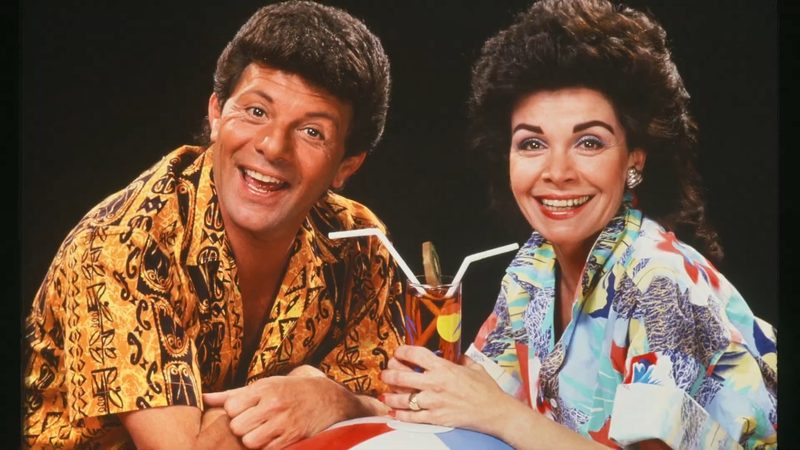
Frankie and Annette returned in 1987’s Back to the Beach — older, in on the joke, and surrounded by 80s guest stars.
The cameos alone make it worth a watch: Pee-wee Herman performing “Surfin’ Bird,” blues guitar god Stevie Ray Vaughan jamming with Dick Dale, and Fishbone bringing a ska-punk energy the 1963 films never imagined. We covered the full story of that reunion in our deep dive on Back to the Beach 1987, and it remains the warmest send-off any of these stars could’ve asked for. If you grew up on these movies, it hits different.
Why Beach Party Movies Still Matter
It’s easy to laugh at the beach party movies now — the painted backdrops, the obvious stunt doubles, the plots you could summarize on a cocktail napkin. But they invented a blueprint that pop culture never stopped reusing. Every teen comedy, every spring-break movie, every “summer with no adults” story owes them something. Even the surf documentary boom of The Endless Summer rode the same cultural wave from the other direction, treating real surfing with the reverence AIP treated romance as a joke.
For Gen X kids who caught these on Saturday afternoon TV reruns, they’re pure comfort food — a postcard from a California that probably never quite existed, soundtracked by twangy guitars and Frankie’s grin. If you’re chasing more of that golden-hour nostalgia, our roundup of the best 80s movies that still hold up and the boardwalk vampire classic The Lost Boys live in the same sun-and-sand corner of the retro shelf.
Cue up a beach party movie this weekend, keep your expectations as light as the plot, and let Dick Dale’s guitar do the rest. Some things age into camp. These aged into something better — a genre so committed to fun that taking it seriously was never the point.
Sources
- Beach party film — Wikipedia — overview of the genre, the AIP series, and its imitators.
- Beach Party (1963) — AFI Catalog — production details for the first film in the series.
- Beach Blanket Bingo — Wikipedia — budget, shooting schedule, and cast for the 1965 entry.
- Party With Frankie & Annette: The 7 Official Beach Party Movies — Mental Floss — rundown of all seven AIP films.
Browse retro and vintage-inspired apparel at the RetroRadical shop →
Shop on eBay
80s Collectibles on eBay →
We may earn a commission when you shop through our eBay links.
The Retro Almanac
A monthly roundup of "on this day" highlights from that month, decades back — plus first dibs on new retro merch drops. No spam, just the good stuff.