On This Day: October 29, 1998 — John Glenn Returns to Space Aboard Discovery
On October 29, 1998, a 77-year-old United States Senator strapped into a seat aboard Space Shuttle Discovery and rode a column of fire off Launch Pad 39B at Kennedy Space Center. It had been 36 years since that same man, John Herschel Glenn Jr., became the first American to orbit the Earth. Now he was going back — older, grayer, and about to become the oldest human being ever to fly in space.
It was one of those stories the 1990s did better than any other decade: a Cold War hero, a political icon, and a genuine piece of unfinished business, all converging on a single afternoon at Cape Canaveral while the whole country stopped to watch.
The Retro Almanac
A monthly roundup of "on this day" highlights from that month, decades back — plus first dibs on new retro merch drops. No spam, just the good stuff.
The First Flight, 1962
To understand why Glenn’s 1998 launch mattered so much, you have to go back to February 20, 1962. At the height of the Space Race, with the Soviet Union having already put two cosmonauts into orbit, Glenn climbed into the cramped Friendship 7 capsule and circled the planet three times in just under five hours. He came home a national hero, got a ticker-tape parade down Broadway, and became one of the most famous men in America almost overnight.
NASA, worried about losing a national treasure to a tragic accident, quietly grounded Glenn from future spaceflights. He left the astronaut corps in 1964, went into business, and in 1974 was elected to the U.S. Senate from Ohio — a seat he would hold for 24 years, including a run for the 1984 Democratic presidential nomination.
Unfinished Business
Through it all, Glenn never stopped lobbying to fly again. In the mid-1990s he found his opening: NASA was looking for ways to study the effects of spaceflight on aging, and Glenn — by then in his mid-70s and still a sitting senator — made the case that he was the perfect test subject. NASA agreed, and in January 1998 the agency announced that Glenn would join the crew of STS-95, a nine-day Discovery mission packed with more than 80 scientific experiments.
The announcement set off a wave of nostalgia and genuine excitement rarely seen for a routine shuttle flight. Reporters descended on Cape Canaveral. Schoolkids who’d never heard of Friendship 7 learned who John Glenn was for the first time. For a country in the middle of the dot-com boom and Monica Lewinsky headlines, it was a welcome throwback to a simpler kind of hero.
Launch Day
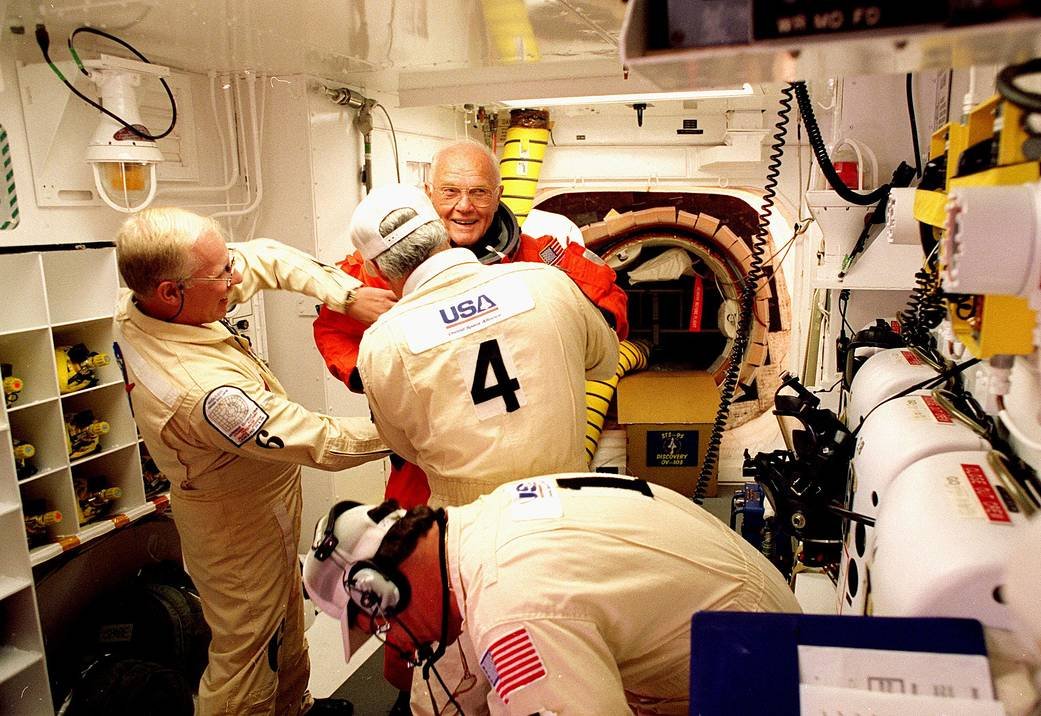
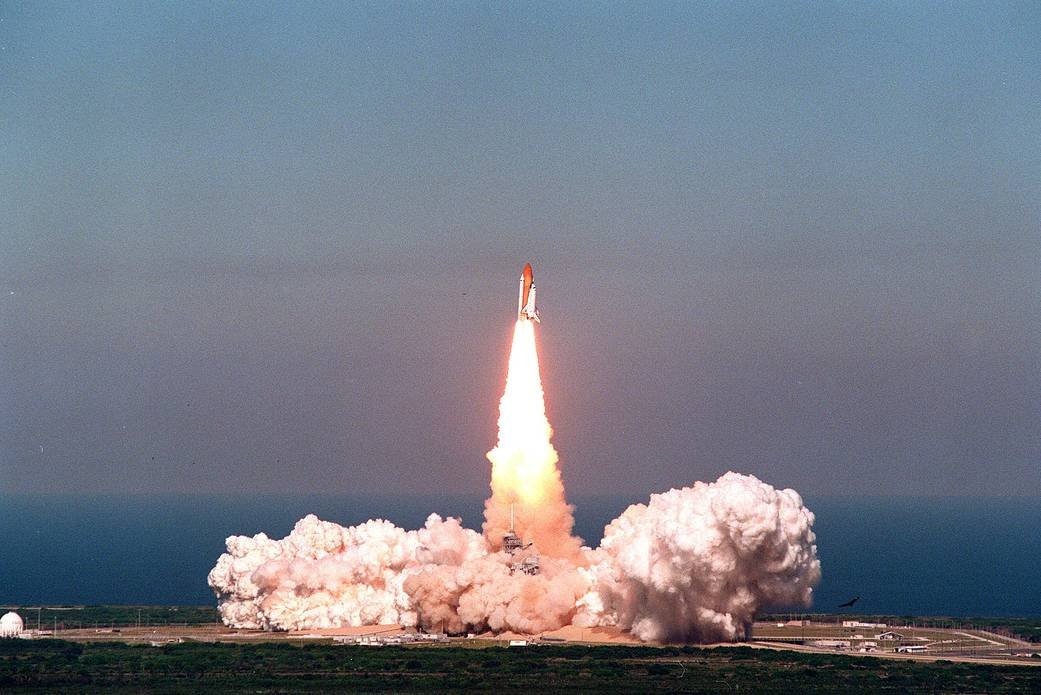
On October 29, 1998, Glenn suited up in the White Room at the top of the launch tower, where closeout crew members checked his orange pressure suit one last time before he climbed through the hatch and into Discovery’s middeck. At 2:19:34 p.m. EST, after two short holds — one for a cabin pressure alarm, another when an aircraft strayed into the restricted airspace — Discovery lit its engines and thundered off Pad 39B.
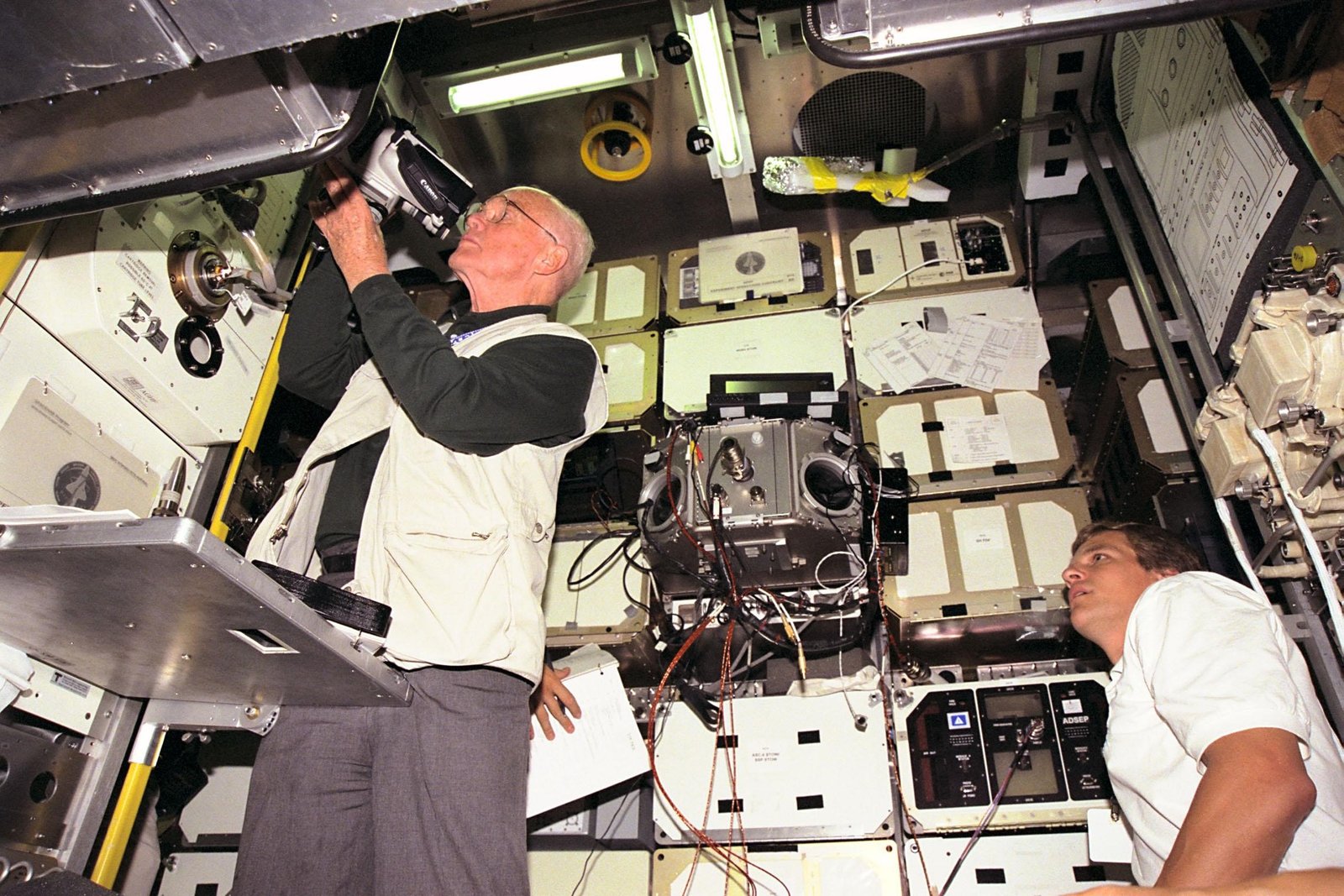
Glenn flew as a Payload Specialist alongside six other astronauts, commanded by Curtis Brown. Over the next eight days, 21 hours, and 44 minutes, the crew ran experiments on everything from sleep patterns to solar observation, with Glenn himself serving as a living data point on how the human body ages in microgravity. Discovery landed safely at Kennedy Space Center on November 7, 1998, closing out a mission that had captivated the country from liftoff to touchdown.
Why It Still Resonates
Glenn’s second flight didn’t just make him the oldest person to reach orbit at age 77, a record that stood for years. It closed a 36-year loop that had started with a Mercury capsule and ended with a Space Shuttle, bridging two completely different eras of American spaceflight in one career. He retired from the Senate in early 1999 and spent his remaining years as one of the most respected elder statesmen in the country until his death in 2016 at age 95.
For anyone who grew up watching shuttle launches on a classroom TV cart, October 29, 1998 is one of those dates that sticks. It was proof that the astronauts of the Mercury era weren’t just history-book names — they were still out there, still willing to strap in and go.
Love the retro era? Browse our shop for vintage finds, retro clothing, and 80s/90s nostalgia gear.
The Retro Almanac
A monthly roundup of "on this day" highlights from that month, decades back — plus first dibs on new retro merch drops. No spam, just the good stuff.