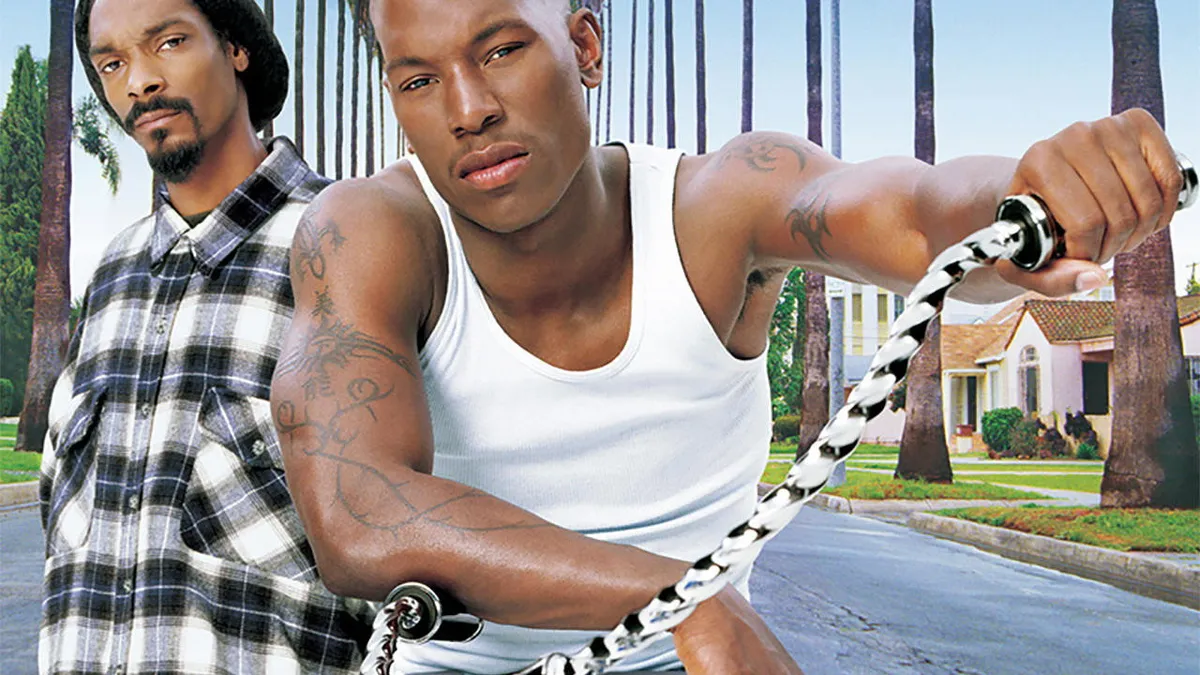
Baby Boy 2001: The Role Tupac Never Played
Tyrese Gibson had never acted in a film before John Singleton put him in front of a camera as Jody Summers in 2001. Two decades earlier, Singleton had built his reputation writing roles for a specific actor in mind — and the actor he wrote Jody for never got the chance to play him. Tupac Shakur died in September 1996, five years before Baby Boy reached theaters, and the part sat unfinished until Singleton found his replacement in a model-turned-R&B singer with zero film credits. That gamble produced one of the more quietly influential hood dramas of the early 2000s, and it’s the reason Criterion put real money into restoring it 25 years later.
Who Is Jody, and What Makes Baby Boy Different From Boyz n the Hood
Baby Boy (2001) follows Jody, a jobless 20-year-old bike mechanic who has fathered two children with two different women, Yvette and Peanut, while still sleeping in his childhood bedroom at his mother’s house. The film’s emotional engine isn’t gang violence — it’s Jody’s refusal to grow up, and the arrival of his mother’s new boyfriend Melvin, an ex-convict played by Ving Rhames, who forces Jody out of the nest by simply existing in the house Jody thought was permanently his.
The Retro Almanac
A monthly roundup of "on this day" highlights from that month, decades back — plus first dibs on new retro merch drops. No spam, just the good stuff.
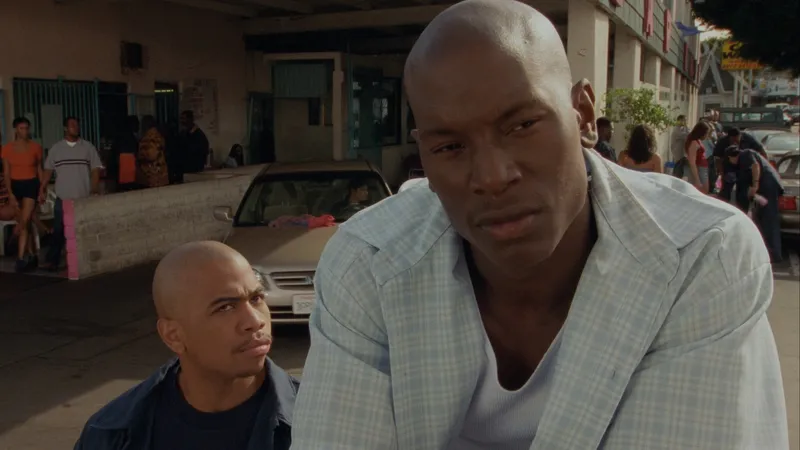
Jody on the block in South Central — the same neighborhood Singleton first put on screen in Boyz n the Hood a decade earlier.
That’s the real split between Baby Boy and the two films that came before it in Singleton’s trilogy. Boyz n the Hood (1991) was about surviving South Central as a teenager. Baby Boy is about what happens after you survive it and still haven’t figured out how to be a man — Singleton’s thesis is explicitly about arrested development, not street violence.
Tupac Shakur Was Supposed to Play Jody
Singleton and Tupac Shakur had already worked together once, on Poetic Justice in 1993, and by the mid-90s Singleton was writing Baby Boy’s lead specifically for him. Shakur’s murder in Las Vegas in September 1996 happened years before Baby Boy went into production, which meant Singleton spent the back half of the decade developing a script with a hole where his star should have been. He eventually rewrote the casting search from scratch rather than force a substitute into Shakur’s exact mold.
The choice he landed on was unconventional for a lead role this demanding: Tyrese Gibson had no acting résumé at all. He’d built a following as a Coca-Cola commercial model and had just released his debut R&B album. Singleton bet an entire film on a first-timer carrying nearly every scene, and critics who reviewed Baby Boy in 2001 largely agreed the bet paid off — Gibson’s performance anchors a film that could have collapsed without a convincing Jody at its center.
Ice Cube Almost Played Rodney — Snoop Dogg Got There Instead
Tupac wasn’t the only piece of Singleton’s regular company that didn’t make it into Baby Boy. Ice Cube, who’d starred for Singleton in both Boyz n the Hood and Higher Learning, was originally attached to play Rodney, Yvette’s manipulative ex-boyfriend fresh out of prison. By the time the film actually shot, the role went to Snoop Dogg instead, in one of his first real dramatic turns after years of music-video cameos and comic bit parts.
Snoop Dogg as Rodney — recast from the role Ice Cube originally held, and one of his first serious dramatic performances.
Snoop Dogg’s Rodney works precisely because he isn’t a cartoon villain. He’s charming in the scenes where charm gets him what he wants and genuinely dangerous the second it stops working, and that range is part of what separates Baby Boy’s antagonist from the one-note “thug” roles hood films had leaned on through the 90s. Ving Rhames, as Melvin, gets the inverse arc — he enters the film as the ex-con outsider the audience is primed to distrust, and spends two hours quietly proving he’s the only adult in the house.
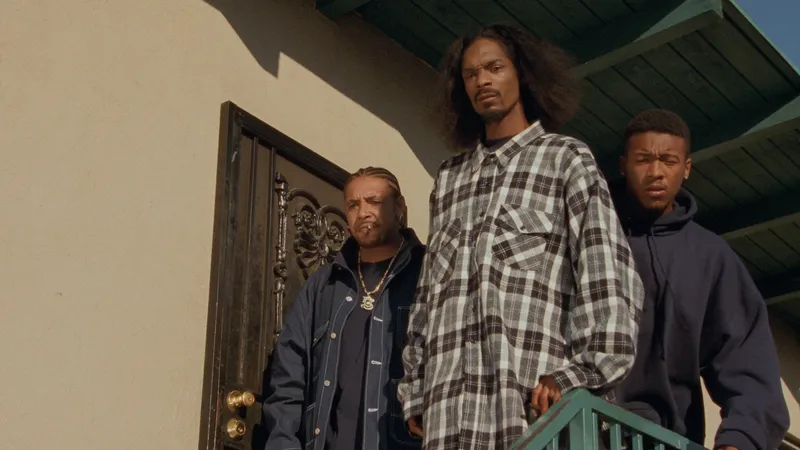
Rodney holding court with his crew — the character originally written for Ice Cube before Snoop Dogg was cast.
The Womb Scene Nobody Forgets
Baby Boy opens with a shot that has outlived most of the film’s plot in cultural memory: a fully grown, nude Tyrese Gibson curled into a fetal position inside a womb, shot in extreme close-up before the frame shudders and he’s born screaming. It’s an unsubtle opener on purpose. Singleton built the entire film around a thesis borrowed from psychiatrist Dr. Frances Cress Welsing, whose work argued that generational racism had pushed Black men in America toward a kind of permanent infancy — calling their girlfriends “Mama,” their friends “my boys,” their apartment “the crib.”
Jody’s arc only makes sense once you see the womb shot as the film’s whole argument in miniature. Every habit the script gives him — eating cereal standing at the counter, watching cartoons, needing his mother’s approval before he’ll do anything — reads as a grown man still trying to live inside the womb Singleton showed in the opening frame. Melvin’s bathtub scene with his own infant son later in the film plays as a direct answer to that opening: a man who actually knows how to be a father, bathing a child who is an actual baby, while Jody — a grown man everyone still calls “baby boy” — watches from the doorway unsure what to do with his hands.
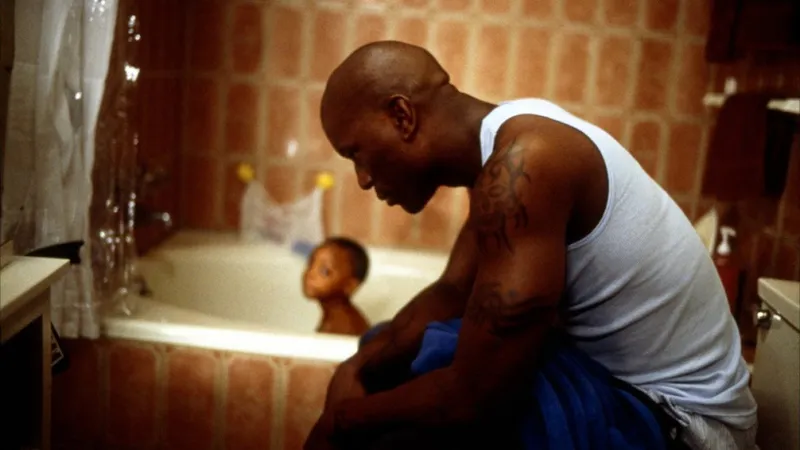
Melvin bathing his infant son — the scene critics point to as the clearest answer to the film’s opening womb imagery.
Two Movie Debuts That Became Careers
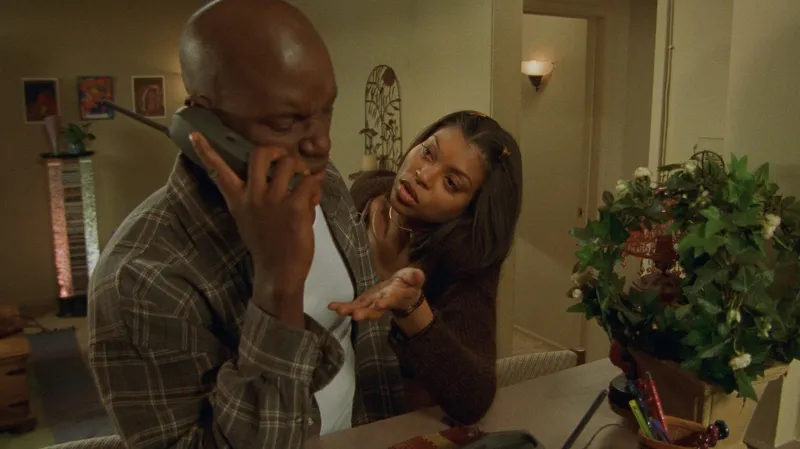
Tyrese Gibson wasn’t the only first-timer Singleton bet on. Taraji P. Henson, cast as Yvette, had a handful of small TV credits before Baby Boy but had never anchored a studio film — this was the role that put her on casting directors’ radars years before Hustle & Flow, Empire, or her Oscar nomination for The Curious Case of Benjamin Button. Her Yvette isn’t written as a victim or a prize; she argues with Jody as an equal, throws him out of her apartment more than once, and gets the film’s sharpest line readings.
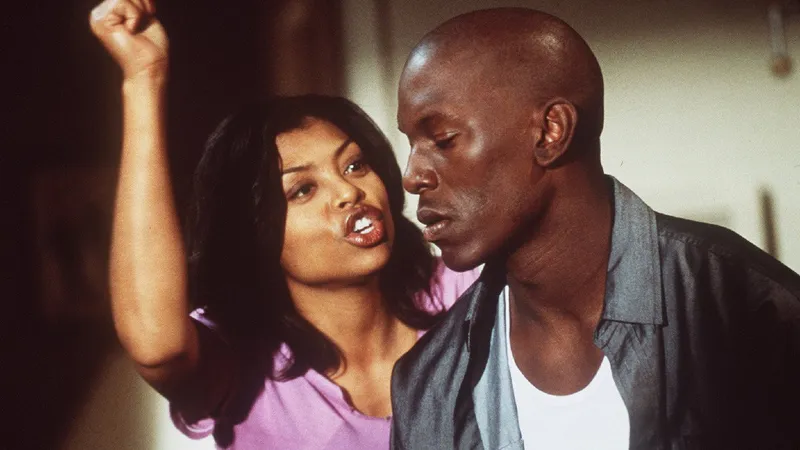
Taraji P. Henson as Yvette — her first major film role, years before Hustle & Flow and Empire.
Gibson, for his part, used Baby Boy as the launch pad into a film career that eventually ran through the Fast & Furious franchise. It’s easy to forget, watching those later blockbuster performances, that his very first time delivering a line on camera was for a director who’d already made Boyz n the Hood an Oscar-nominated debut of his own a decade earlier.
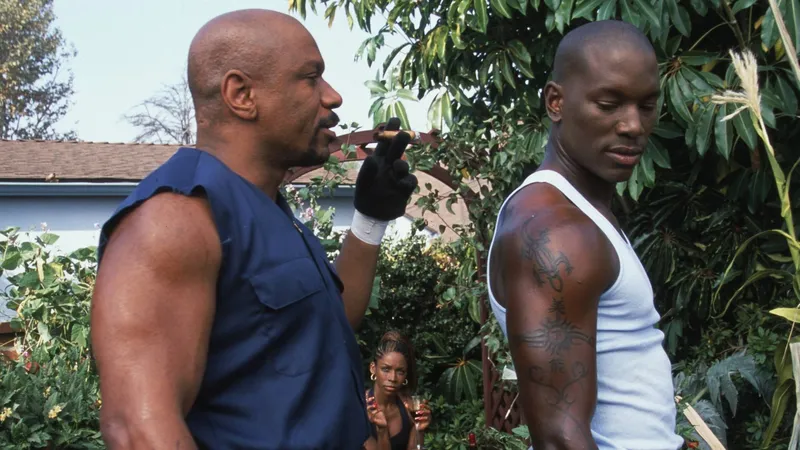
Melvin confronts Jody in the backyard as Yvette watches — the generational standoff at the center of the film.
How Baby Boy Did at the Box Office — and With Critics
Baby Boy opened at number five domestically with $8.6 million from 1,533 theaters in June 2001 and finished its run at roughly $29.3 million worldwide against a $16 million budget — a solid if unspectacular return, well short of the $57 million Boyz n the Hood had pulled in a decade earlier. Critics were more divided than the box office numbers suggest. Roger Ebert gave it three and a half stars and singled out the film’s refusal to let Jody off the hook with “simplistic blaming of others,” while other reviewers at the time found it a step down from the confidence of Singleton’s debut. It picked up ten Black Reel Award nominations and three NAACP Image Award nods, and holds a 72% score on Rotten Tomatoes today.
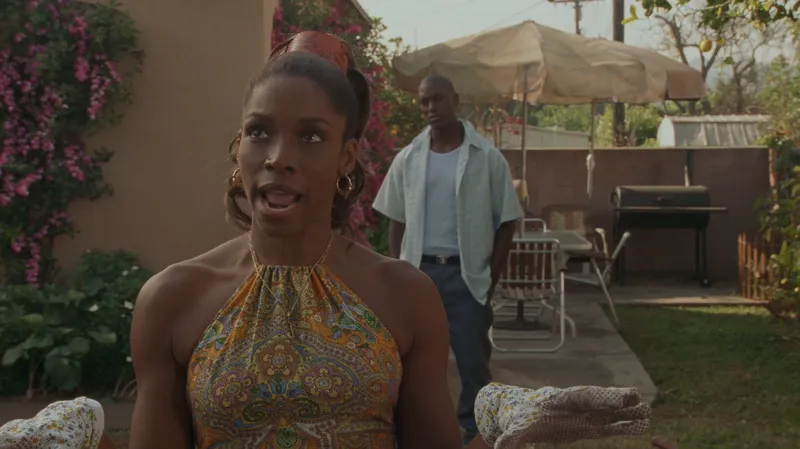
Yvette at a backyard gathering, with Melvin in the background — one of several scenes that blend the film’s comedy and tension.
What’s shifted is how the film reads now. The mixed-to-positive 2001 reception has steadily given way to a reappraisal that treats Baby Boy as the most psychologically ambitious entry in the trilogy rather than the weakest — a film less interested in whether Jody survives South Central than in whether he’ll ever actually leave his mother’s house.
The Hood Trilogy Just Got the Criterion Treatment
Baby Boy was the last film John Singleton personally wrote before his death in April 2019, and in April 2026 — nearly 25 years after it opened — Criterion released Boyz n the Hood, Poetic Justice, and Baby Boy together as “John Singleton’s Hood Trilogy” on 4K Ultra HD with Dolby Vision, sourced from a new restoration scanned off the original 35mm camera negative. The set includes Singleton’s own audio commentaries, a new documentary on his creative process, and a filmed conversation between Ryan Coogler and Regina King about his influence on the directors who came after him.
That release is the reason Baby Boy is worth revisiting in 2026 specifically. It was always the least-seen film of the three — overshadowed first by Boyz n the Hood’s cultural weight and later by Tyrese Gibson and Taraji P. Henson both becoming much bigger stars in other projects — but the restoration makes the case that it’s the one where Singleton pushed hardest on an actual argument instead of a plot.
FAQ: What People Ask About Baby Boy (2001)
Is Baby Boy part of a trilogy? Yes. It’s the third and final film in John Singleton’s “Hood Trilogy,” following Boyz n the Hood (1991) and Poetic Justice (1993). Criterion packaged all three together for the first time in April 2026.
Was this really Tyrese Gibson’s first movie? Yes — Baby Boy was his feature film acting debut. He’d previously worked as a commercial model and R&B singer but had no prior film credits when Singleton cast him as Jody.
Who was originally supposed to star in Baby Boy? Tupac Shakur. Singleton wrote the role of Jody for him after directing Shakur in Poetic Justice, but Shakur was killed in 1996 before Baby Boy went into production.
Sources
- Baby Boy (film) — Wikipedia — production history, casting, box office, and critical reception.
- Roger Ebert’s original 2001 review of Baby Boy — contemporary critical reaction.
- Variety — Where to Buy John Singleton’s Hood Trilogy Criterion Collection — details on the 2026 4K restoration and box set.
- Criterion Forum — Baby Boy 4K UHD Review — technical details on the restoration.
The Retro Almanac
A monthly roundup of "on this day" highlights from that month, decades back — plus first dibs on new retro merch drops. No spam, just the good stuff.