Beanie Babies: The 90s Toy Bubble That Burst
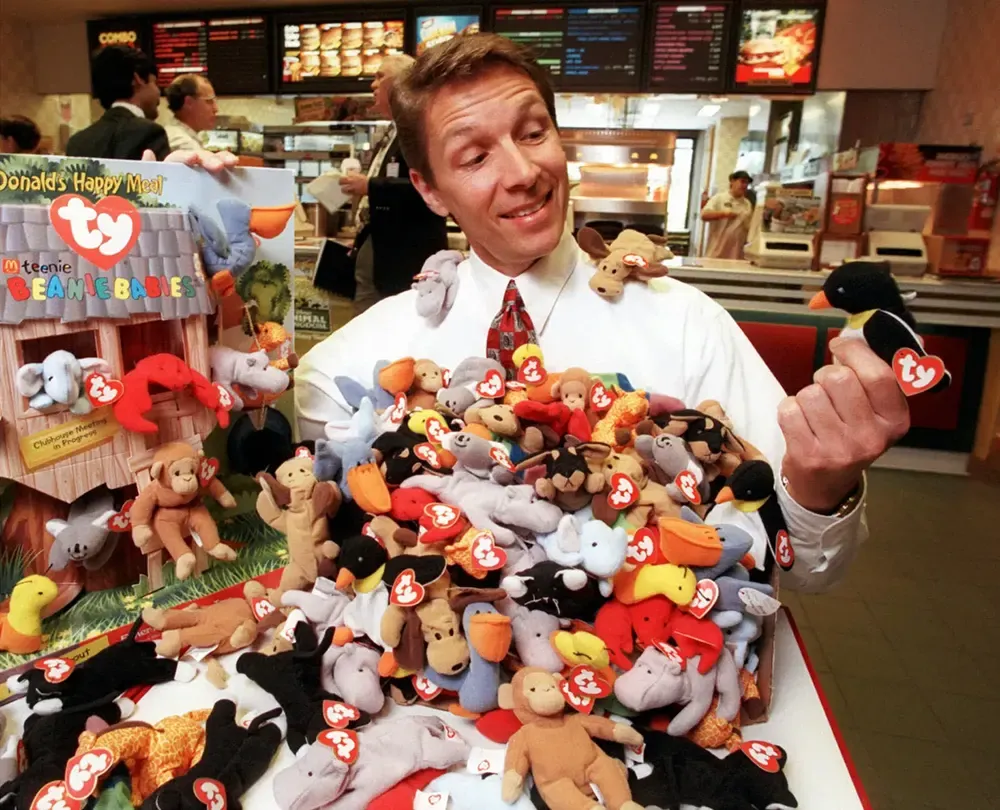
In April 1997, McDonald’s planned a five-week Happy Meal promotion around miniature Beanie Babies. It sold out 100 million units in ten days, triggered drive-thru pileups and lobby scuffles across the country, and forced the company to run full-page newspaper ads apologizing for running out of toys. That wasn’t an outlier. For about six years, a line of $5 stuffed animals filled with plastic pellets became one of the strangest financial stories of the decade, and most of the people buying them never saw it coming.
From a $5 Toy to a Pocket-Sized Obsession
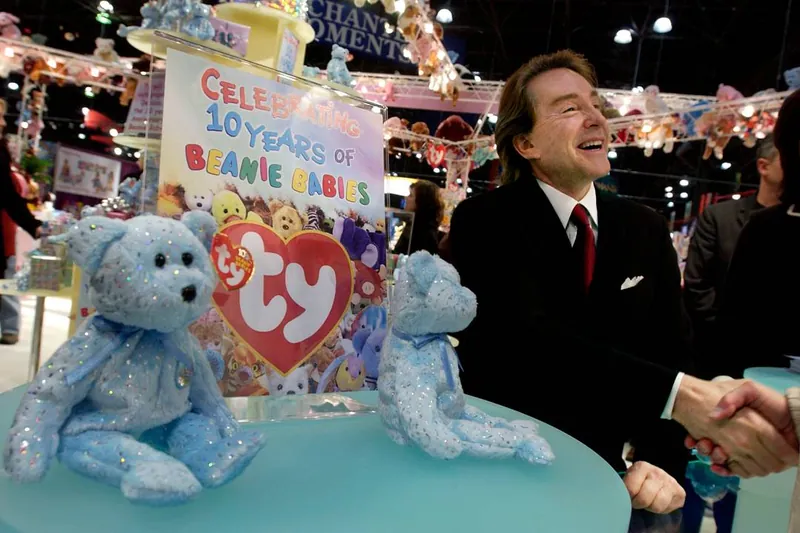
Ty Inc., a small Illinois toy company run by a former Dakin salesman named Ty Warner, introduced the first line of Beanie Babies at the 1993 World Toy Fair in New York. They were odd by design: underfilled with PVC plastic pellets instead of the stiff polyester stuffing every other plush toy used, which let them flop, bend, and sit in a way kids’ hands actually liked. At $5 apiece, they were also cheap enough that a child could buy one with allowance money. Big retail chains mostly passed. Warner sold them instead through small gift shops and independent toy stores, keeping tight personal control over where his toys landed.
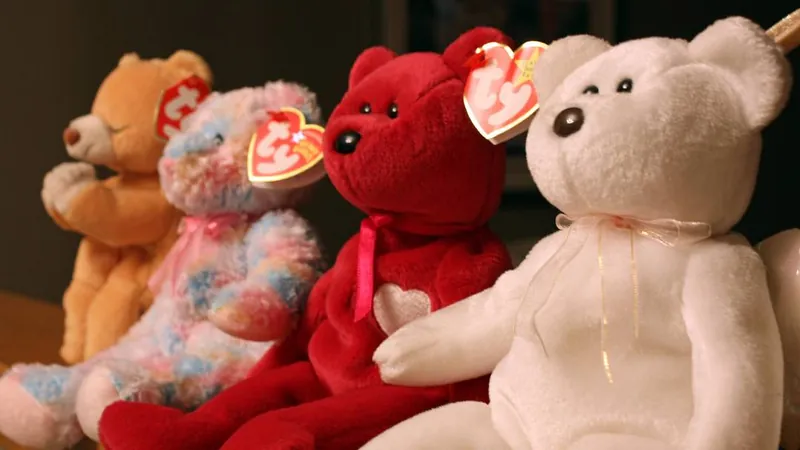
The real shift came around 1995, when someone on Warner’s small team suggested giving each animal a name, a birthday, and a four-line poem printed on a heart-shaped hang tag. It sounds minor. It wasn’t. The tags reframed a stuffed animal as a tiny biography — something with an origin story, a personality, a reason to want the whole set instead of just one. Parents who’d bought a single bear for their kid came back for the matching lobster, the matching lion, the matching pig. The hobby stopped being about owning a toy and started being about completing a collection.
The Retro Almanac
A monthly roundup of "on this day" highlights from that month, decades back — plus first dibs on new retro merch drops. No spam, just the good stuff.
The Scarcity Playbook That Built a Billion-Dollar Company
Ty Warner ran his company like a man who understood exactly what made people want things they couldn’t have. He refused to disclose production numbers, refused to tell retailers when new shipments were coming, and instituted strict order limits so no single store could stock a full set. Then, starting in 1995, he began “retiring” individual designs with no warning — announcing a bear was done being made, sometimes within weeks of its release, while quietly keeping overseas factories running at full capacity behind the scenes.
The effect was a kind of manufactured mysticism. Stores sold out constantly, not necessarily because demand was infinite but because supply was intentionally choked. Retired Beanies started reselling for multiples of their original price — some eventually fetched as much as $13,000, roughly 3,000 times the $5 sticker price. Warner never advertised on television. He didn’t need to. Word of mouth and a genuine fear of missing out did the marketing for him, and by the mid-1990s Ty Inc. was pulling in more than $1 billion a year from toys that cost pennies to make.
eBay Turned Stuffed Animals Into a Trading Floor
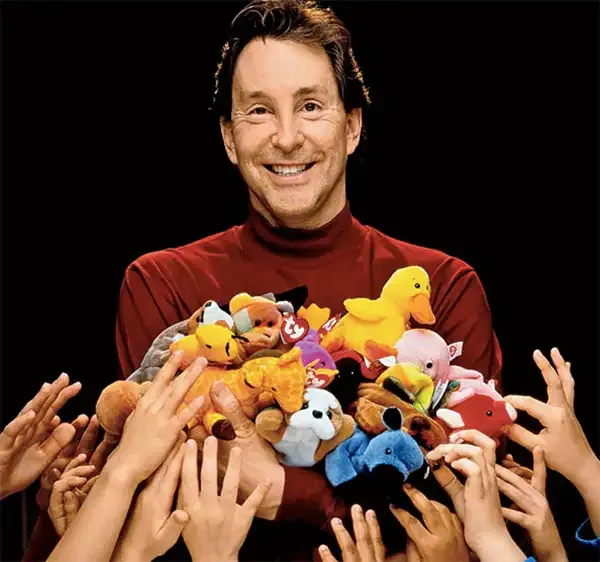
Ty Inc. actually tried to manage the secondary market itself first, building an online trading post on its own website where collectors could list and swap Beanies. It collapsed almost immediately under the volume — there was no good way to search or sort thousands of unlabeled listings. eBay, which had only just rebranded from AuctionWeb in September 1997, stepped into that vacuum with a simple, searchable auction format built for exactly this kind of chaos.
The timing could not have been better for either company. By 1997, Beanie Babies accounted for roughly 10% of all listings on eBay, with Beanie auctions alone totaling close to $500 million — more than 6% of the entire platform’s business in its early years. For a site that would later become synonymous with vintage electronics and rare collectibles, its first real proof of concept was a bean-filled plush toy shaped like a lobster.

The Collection Took Over Living Rooms Before It Took Over eBay
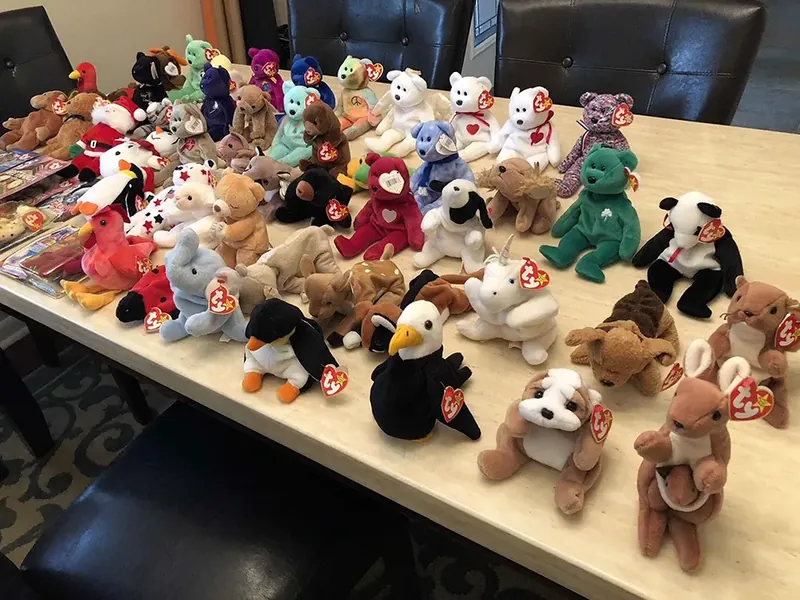
Long before resale prices made headlines, Beanie Babies were already reshaping how ordinary families spent their weekends. Collectors kept spreadsheets of retirement dates. Grandparents drove across state lines chasing a specific bear for a birthday. Some households ended up with collections numbering in the hundreds, carefully arranged on tables and shelves like a private museum nobody else was allowed to touch. The appeal wasn’t just the toy — it was the hunt, the tracking, the social currency of having the one your neighbor didn’t.
The McDonald’s Promotion That Broke the Drive-Thru
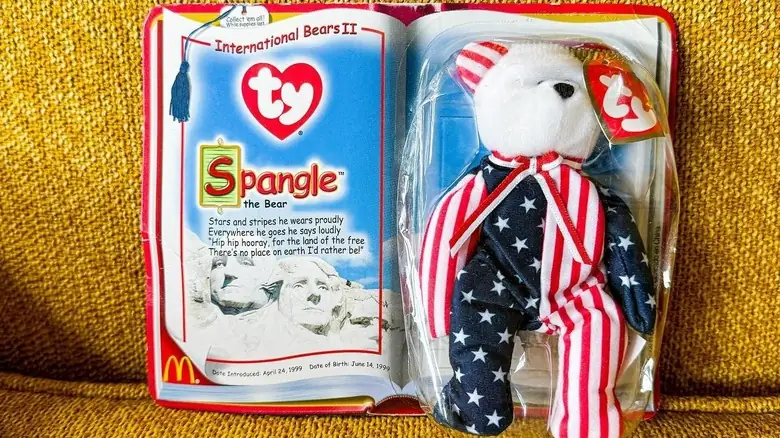
McDonald’s launched its Teenie Beanie Baby Happy Meal promotion on April 11, 1997, with ten miniature versions of the most popular designs. The company planned it to run four to five weeks. It didn’t survive two. Most styles sold out on their first day in circulation, and the entire national allotment of 100 million toys was gone in ten days — three and a half weeks ahead of schedule. Adults bought dozens of Happy Meals at a time just to get the toy, discarding the food in the parking lot. Drive-thru lines backed up into traffic. Fights broke out in some lobbies. On April 20, McDonald’s issued a public apology and ran full-page newspaper ads explaining the shortage, something almost unheard of for a fast-food toy giveaway.
The Purple Bear That Raised $21.88 Million for Charity
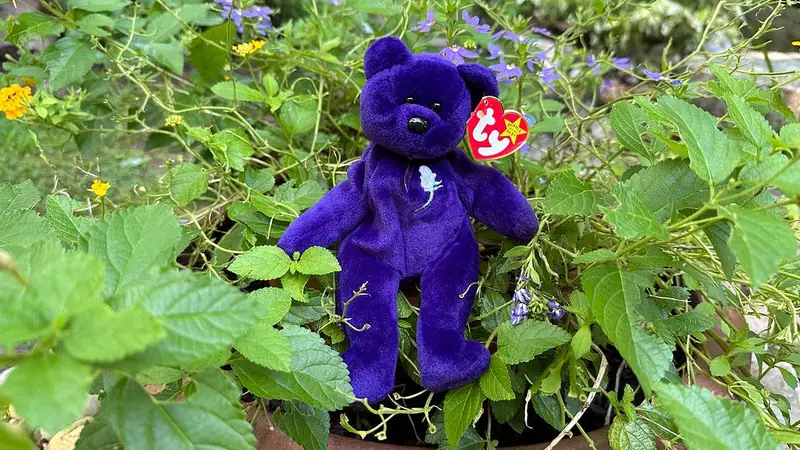
Not every chapter of the Beanie Babies story was about speculation. In December 1997, weeks after Princess Diana’s death, Ty released a purple bear named Princess, with a white rose stitched on its chest, and pledged the profits to the Diana, Princess of Wales Memorial Fund. Retailers were initially limited to orders of just twelve bears each going into Christmas, and the artificial scarcity sent prices soaring immediately — a Washington Post report from that December found kiosks in Arlington, Virginia selling it for $350 to $400, against a suggested retail price of $5 to $7.
What makes Princess unusual in the Beanie Babies story is that it wasn’t actually rare. Ty kept producing the bear until April 1999, and it went on to generate a documented $21.88 million for the memorial fund — making it one of the most lucrative charity plush toys ever made, even as its collector mythology outpaced the facts.
The Crash Nobody Saw Coming
Bubbles don’t usually announce themselves, and this one didn’t either. By the late 1990s, Ty had flooded the market with new designs faster than any genuine collector base could keep up with, while “retirements” kept happening often enough that the scarcity stopped feeling special. Speculators who’d been buying Beanies purely as investments noticed prices stall, then slip, then stop climbing altogether. Once resale values flattened, the entire incentive to keep buying collapsed with them. New fads — Pogs and Tamagotchi chief among them — pulled kids’ attention elsewhere. By 2000, eBay listings for once-valuable retired Beanies were closing for a few dollars, sometimes less than the cost of shipping a box.
Ty Warner himself wasn’t badly hurt by any of this. He’d already banked the bulk of his fortune during the boom years, and unlike the collectors who’d treated their closets like a retirement account, he had no outstanding inventory sitting unsold.
Where Ty Warner Is Now
Warner’s net worth today is estimated at well over $7 billion, built in large part on the hotel empire he assembled with Beanie Babies money, including the Four Seasons New York. In 2014, he pleaded guilty to federal tax evasion after hiding more than $93 million in a secret Swiss bank account with UBS. A judge sentenced him to probation and 500 hours of community service rather than prison time, a decision prosecutors publicly objected to, and he paid roughly $80 million combined in back taxes and civil penalties.
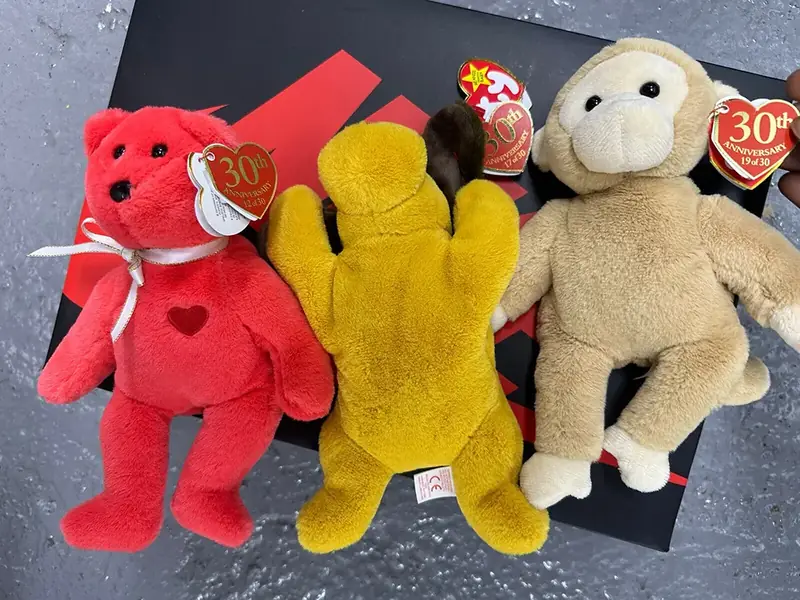
Ty Inc. never actually stopped making Beanie Babies. The company has leaned into nostalgia marketing in recent years, releasing 30th-anniversary reissues of early designs complete with gold commemorative tags — proof that a toy built on artificial scarcity in the 1990s still knows how to sell a limited edition three decades later, the same trick Furby and plenty of other 90s toy crazes leaned on.
FAQ: Are Beanie Babies Worth Anything Today?
Most common Beanie Babies from the 1990s are worth a few dollars at most, regardless of what individual eBay listings claim — asking price and actual sale price are very different numbers in this market. A small handful of genuinely scarce pieces, like the royal blue version of Peanut the Elephant made for only four months in 1995 before Ty switched its color, can still sell for thousands of dollars with proper authentication. For everything else, the lesson of the Beanie Baby bubble still applies: scarcity that’s been engineered on purpose rarely stays scarce forever.
Sources
- Mental Floss — How Playground Rumors and Artificial Scarcity Created Beanie Baby Mania — the scarcity marketing strategy and eBay’s role
- The Hustle — The Great Beanie Baby Bubble of ’99 — the rise, peak, and collapse of the resale market
- Mental Floss — The History and Value of the Princess Diana Beanie Baby — the charity bear’s pricing and production history
- Wikipedia — Teenie Beanies — the 1997 McDonald’s Happy Meal promotion timeline
- CNN — Beanie Babies Creator Ty Warner Won’t Serve Prison Time for Tax Evasion — the 2014 federal tax evasion case
- Chicago Magazine — Behind the Beanie Babies: The Secret Life of Ty Warner — Warner’s business background and company history
The Retro Almanac
A monthly roundup of "on this day" highlights from that month, decades back — plus first dibs on new retro merch drops. No spam, just the good stuff.