On This Day: June 16, 1995 — Batman Forever Premieres
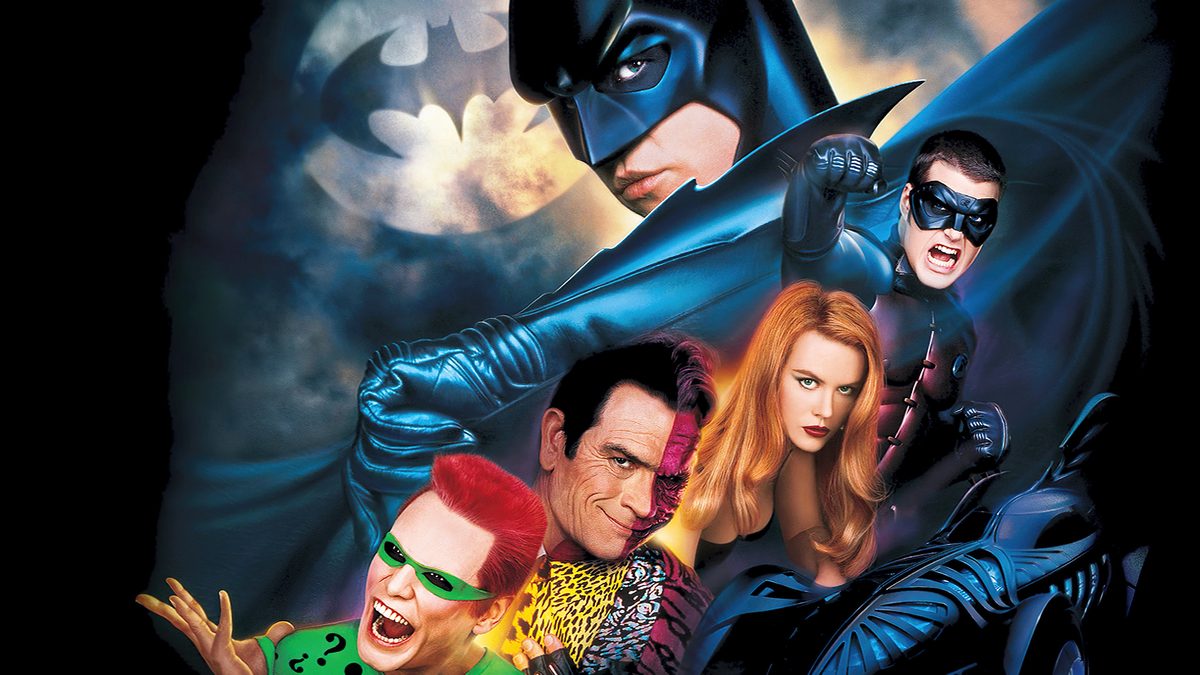
On June 16, 1995, Warner Bros. opened Batman Forever on 2,842 American screens and pulled $52.8 million out of audiences in three days — the biggest opening weekend in history at that point. Tim Burton was out as director. Michael Keaton was out of the cowl. Joel Schumacher was in, neon was in, and a guy named Val Kilmer was about to become one of the most successful and least happy Batmen in screen history.
The Day Batman Got Its Color Back
Tim Burton’s two Batman films had been dark in every sense — black on black, gargoyles dripping rain, Danny Elfman’s funeral-march orchestra. Warner Bros. loved the money. Parents complained about the violence. McDonald’s, which had partnered on the 1992 Batman Returns Happy Meal, was furious about a movie filled with bitten-off noses and a sexed-up Catwoman. The mandate for the next one was simple: lighten up, sell more toys, and get back to a PG-13 that families would actually take their kids to.
The Retro Almanac
A monthly roundup of "on this day" highlights from that month, decades back — plus first dibs on new retro merch drops. No spam, just the good stuff.
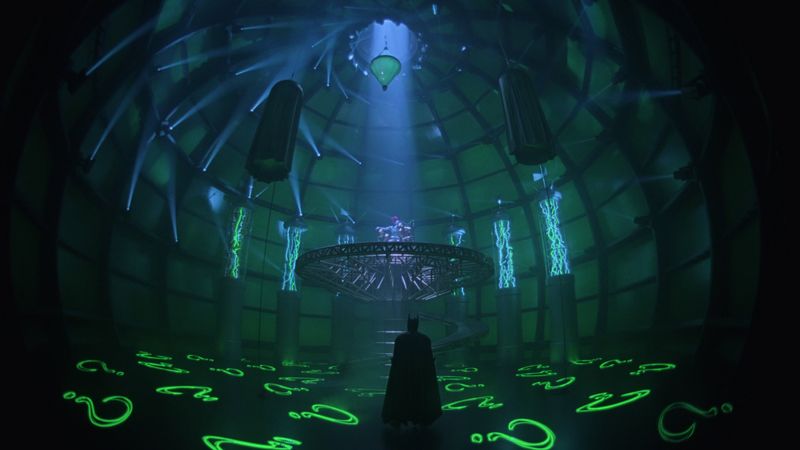
Schumacher took the assignment seriously. The Gotham of Batman Forever 1995 is a neon fever dream of giant Art Deco statues, purple smoke, and ultraviolet floodlights. The streets look like a 1995 dance club exploded inside a Frank Lloyd Wright building. Production designer Barbara Ling later said the brief was “more comic book, less Gothic.” She delivered exactly that, and audiences who had spent two films squinting through Burton’s shadows ate it up.

Val Kilmer Took the Cowl and Hated Every Minute
Kilmer signed the contract without reading the script. He was filming Tombstone in the Arizona desert, got a call from his agent, and said yes the same week he toured a real bat cave. He took the job for the symbolism. He stayed because it was Batman. Then the suit arrived.
The Batsuits on Batman Forever were built from a thinner foam-rubber composite to let the actor actually move — Burton’s suits had been so rigid that Keaton couldn’t turn his head — and Schumacher’s design team made more than a hundred of them to cover stunts, water work, fire gags, and the famous nipple-armor close-ups. Kilmer found the cowl miserable. He couldn’t hear. He couldn’t see peripherally. He spent his on-set downtime in a director’s chair, alone, while Jim Carrey and Tommy Lee Jones got to chew scenery in costumes that allowed for actual facial expressions.
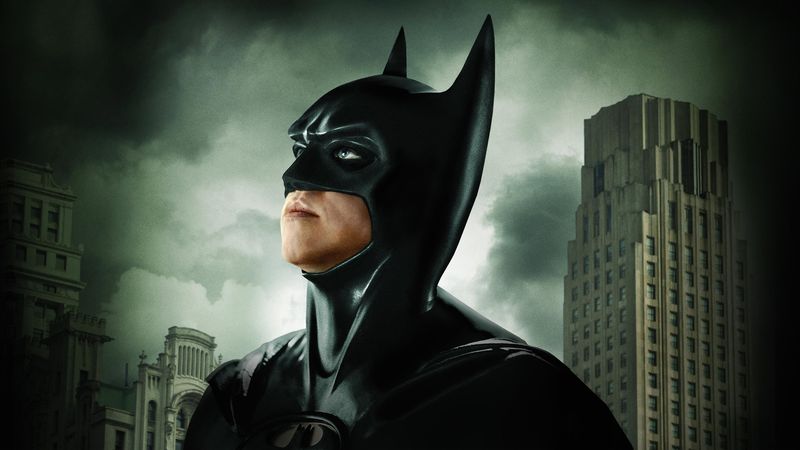
Kilmer’s Bruce Wayne is the most underrated piece of the film. He plays the millionaire as a haunted, distracted man — closer to comic-book Bruce than Keaton’s nervy oddball or Christian Bale’s gravelly billionaire. The truth is, if Kilmer had gotten a director who wanted to explore that interior life, he might have become the definitive screen Batman. Schumacher wasn’t interested. He wanted spectacle, and Kilmer was a guy in a rubber suit standing next to Jim Carrey.
Jim Carrey vs Tommy Lee Jones: The Feud That Almost Sank the Set
Carrey arrived on Batman Forever as the hottest comedy actor on the planet. Ace Ventura, The Mask, and Dumb and Dumber had all opened inside a thirteen-month window. He was paid $5 million for The Riddler and given full license to improvise.
Tommy Lee Jones had spent the previous year making Cobb, a Ron Shelton biopic he considered the best work of his career. Cobb opened the same week as Dumb and Dumber in December 1994. It made $1 million domestic. Dumb and Dumber made $247 million. Jones blamed Carrey personally.
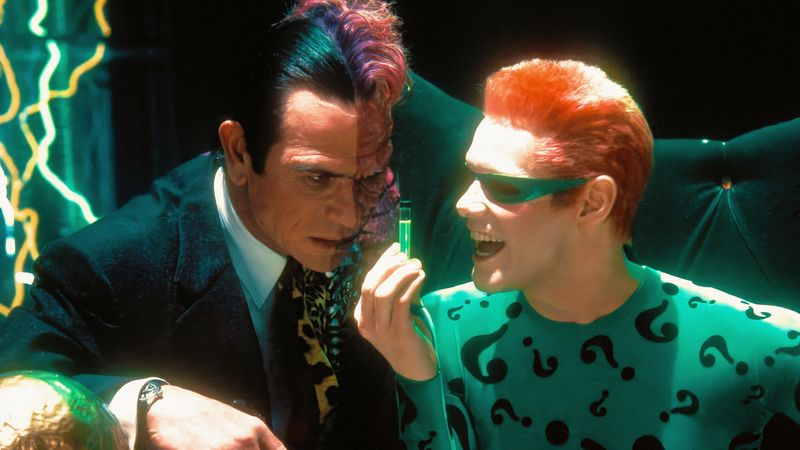
Carrey later told the story on Norm Macdonald Has a Show: he walked up to Jones in a restaurant the night before shooting a scene together, full of nervous energy and respect, and Jones looked up from his soup and said, “I hate you. I really don’t like you. I cannot sanction your buffoonery.” Then he turned back to his food. They shot the scenes anyway. You can see the tension on screen in the casino sequence — Jones plays every reaction line through gritted teeth.
It made the movie better. The Two-Face and Riddler dynamic crackles because one actor is doing every gear of Carrey at maximum, and the other is glaring at him like he’s auditioning for a hostage video. Schumacher refused to mediate. He just kept rolling.
Joel Schumacher’s Lighter Touch (For Better and Worse)
Schumacher was a former costume designer who came up directing R-rated thrillers like The Lost Boys and Flatliners. He took the Batman job because Warner asked nicely and because he had ideas about color. His Gotham would be Los Angeles by way of Tokyo — endless vertical sprawl, sodium-vapor pinks, Asian-influenced neon signage. Bruce Wayne’s mansion was redesigned with swooping Moderne-era curves. Wayne Enterprises got an Art Deco atrium that looked like it belonged in a Diego Rivera mural.
Two things got Schumacher in trouble. First, the rubber bat-nipples. Costume designer Bob Ringwood added sculpted nipples to the Batsuit and Robin’s suit, partly as a callback to classical Greek statuary, partly because Schumacher liked the way it caught the light. Critics noticed. The internet — still in its infancy in 1995 — turned them into a meme that has refused to die for thirty-one years. Second, his next film. Batman & Robin in 1997 went so badly wrong that it retroactively poisoned how people remember Batman Forever. The first Schumacher Batman is a legitimately fun summer movie. The second is a punchline. The two get lumped together unfairly.
The Soundtrack That Made Seal a Household Name
The Batman Forever soundtrack went triple platinum and won three Grammys in 1996 — Record of the Year, Song of the Year, and Best Male Pop Vocal Performance. All three went to Seal for “Kiss from a Rose,” a song he had originally written years earlier and tossed on a shelf because he thought it was too weird. Producer Trevor Horn made him record it. The first release in July 1994 charted modestly. The Batman re-release in May 1995 — with a new music video shot by Joel Schumacher himself, Batman silhouettes and all — turned it into a global number one.
U2 contributed “Hold Me, Thrill Me, Kiss Me, Kill Me,” which hit number two in the UK and was nominated for a Golden Globe. Method Man, PJ Harvey, Mazzy Star, and Massive Attack rounded out a soundtrack that played less like a movie tie-in and more like a curated mid-90s mixtape. Soundscan numbers from the period put the album above six million copies sold. Few film soundtracks have ever moved that kind of unit.
Nicole Kidman, Chris O’Donnell, and the Bat-Family Expansion
Rene Russo had been cast as Dr. Chase Meridian opposite Keaton. When Keaton walked, Russo got recast too — the studio decided she looked too close in age to the older Batman they had originally planned. Nicole Kidman stepped in. She was 27 and three years out from her breakthrough in Days of Thunder. Her Chase Meridian is half psychiatrist, half pulp-noir femme fatale, and the script gives her exactly one good scene per act. She made it work.
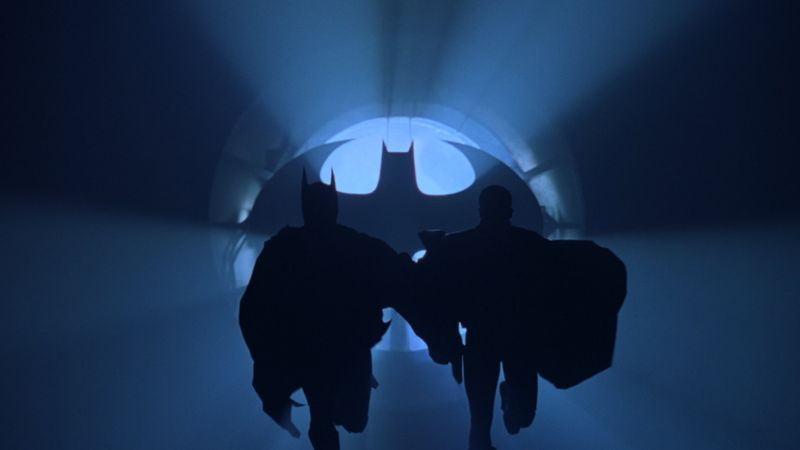
Chris O’Donnell got the bigger gift. Robin had been promised in every Batman pitch since 1989, and audiences had waited through two films wondering when the Boy Wonder would show up. O’Donnell was 25 playing a teenager, which the costume hid pretty well, and the script gave Dick Grayson a real arc — orphaned acrobat, vengeful kid, eventual sidekick who has to earn his place. His Robin is the part of the movie that holds up the cleanest. Watch the circus sequence again. It’s well-staged, well-acted, and emotionally specific in a way the rest of the film rarely is.
$336 Million and the Sixth-Biggest Movie of 1995
By the time it finished its worldwide run, Batman Forever had grossed $336.6 million on a $100 million budget. It was the second-highest-grossing film in the US that year, behind only Toy Story, and the sixth-highest worldwide. Warner Bros. had its franchise back. Merchandise sales topped $125 million in the first two months. McDonald’s was happy. Hasbro was happy. The Schumacher era was greenlit on the spot, and pre-production on Batman & Robin started before the year was out.

That sequel was the disaster. Batman Forever wasn’t. It was a successful, weird, expensive, neon-soaked piece of mid-90s blockbuster filmmaking that delivered on every commercial promise the studio asked of it. The fact that The Dark Knight arrived thirteen years later and rewrote the entire grammar of comic-book movies doesn’t erase what Schumacher pulled off on a summer Friday in 1995.
Why It’s Still Worth Watching in 2026
Pop in the 4K Blu-ray and the first thing you notice is how committed the production design is. Every frame has something painted, lit, or moving. There are no flat backgrounds. Schumacher and his crew built an entire visual universe that nobody had seen in a superhero film before — and that almost nobody has tried to copy since, because the MCU went the other direction with naturalistic lighting and grey backdrops.
It’s also worth remembering as the last Batman movie before the internet decided what every superhero film was supposed to be. There are no fan-service callbacks. No post-credits scene. No setup for a cinematic universe. Just a 121-minute movie that begins, escalates, climaxes, and ends. Batman Forever 1995 is a relic of an older studio system, one where the producers didn’t think they had to ask permission from message boards before making decisions. That alone makes it worth a rewatch tonight.
If you grew up in the summer of ’95, you remember the cereal boxes, the Burger King glasses, the Riddler question marks on every Slurpee cup at 7-Eleven. The movie was the season. You can still feel it on screen. For more June time capsules from the same era, see the day Raiders of the Lost Ark premiered, the night E.T. landed in American theaters, and the morning Dead Poets Society opened in Toronto.
Sources
- Box Office Mojo — Batman Forever (1995) lifetime gross and opening weekend
- IMDb — Batman Forever cast, crew, and production details
- Collider — Behind the scenes of Batman Forever’s messy production
- The Recording Academy — 38th Annual Grammy Awards results, “Kiss from a Rose”
- Michael Uslan (Batman producer) — 30-year retrospective on Batman Forever’s release date
The Retro Almanac
A monthly roundup of "on this day" highlights from that month, decades back — plus first dibs on new retro merch drops. No spam, just the good stuff.