How the Bomb Squad Made Public Enemy Sound Like War
Drop the needle on a Public Enemy record from the turn of the decade and the first thing that hits you is not a beat. It’s an ambush. Sirens. A saxophone squeal chopped into a weapon. James Brown’s drummer looping under a scream, three or four samples stacked so thick they blur into a single roar. Then a voice like a preacher who’s had enough kicks the door in. For a few years at the start of the 1990s, this was the loudest, densest, most confrontational sound in all of Golden Age hip-hop, and the men who built it called themselves the Bomb Squad.
If your memory of early-90s rap is candy-colored, all Fresh Prince reruns and Hammer pants, Public Enemy is the group that reminds you the era had teeth. They didn’t want to be background music. They wanted to make you sit up, argue, and pay attention. And for a stretch of records between 1988 and 1991, nobody on the planet did it harder.
Long Island’s Angriest Export
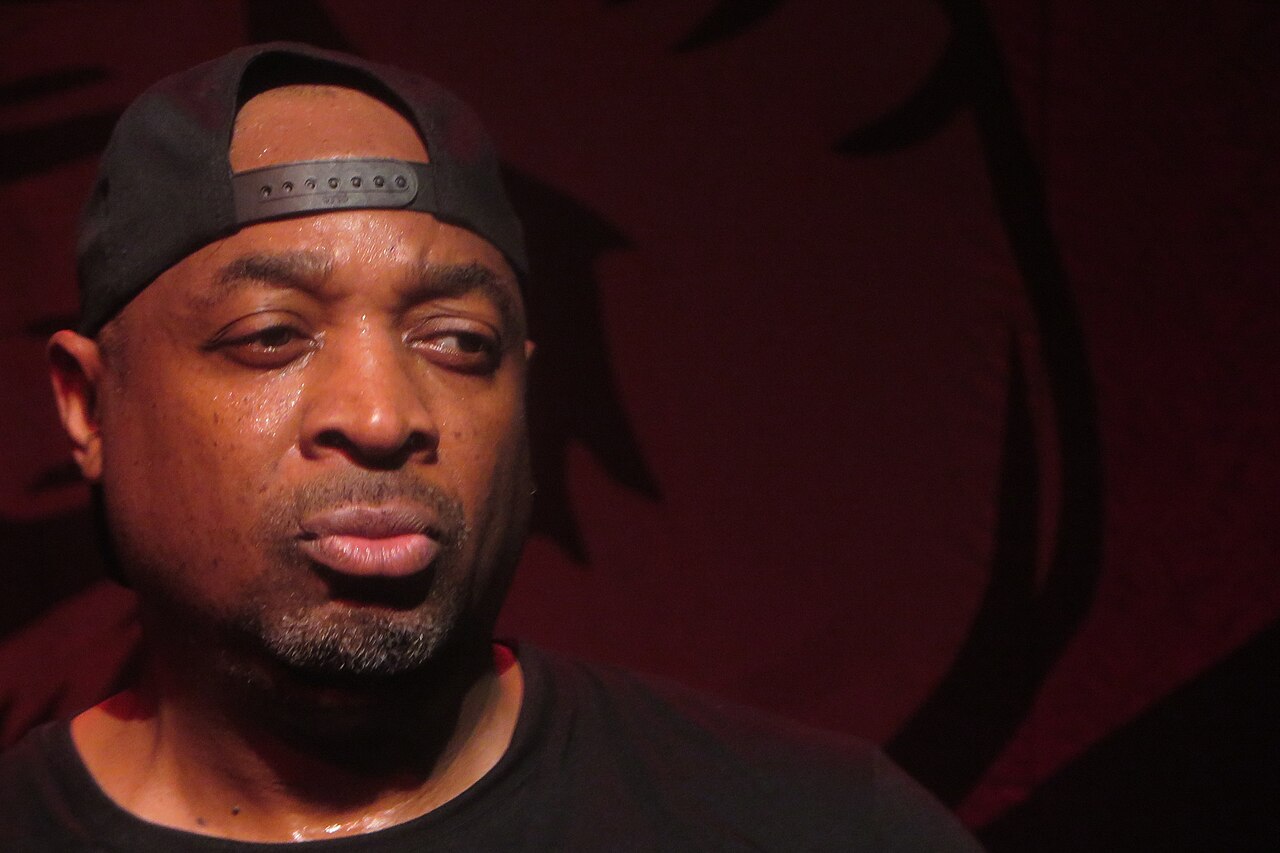
Public Enemy didn’t come out of the South Bronx blocks where hip-hop was born. They came out of the suburbs, Long Island’s Roosevelt and Hempstead, which somehow made them stranger and sharper. Carlton Ridenhour, better known as Chuck D, was a graphic-design student with a booming radio voice and a head full of Black political history. He wasn’t a kid chasing a party record. He was building a message and looking for the loudest possible way to deliver it.
The Retro Almanac
A monthly roundup of "on this day" highlights from that month, decades back — plus first dibs on new retro merch drops. No spam, just the good stuff.
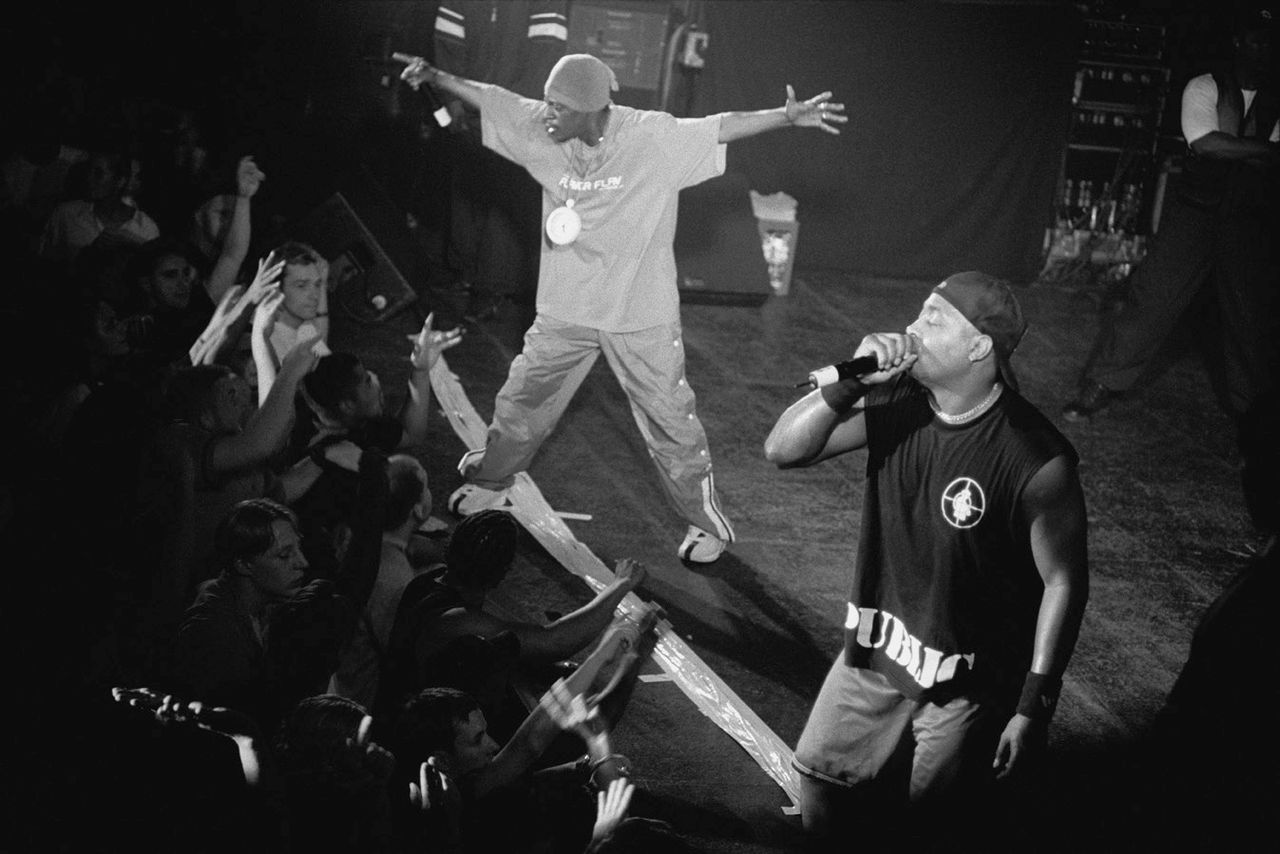
Rick Rubin, the wild-haired co-founder of Def Jam, heard Chuck on a college-radio demo and chased him for months to sign. Chuck kept saying no. He was almost too old for rap, he figured, and too serious. When he finally agreed, he brought a whole apparatus with him: a hype man named William Drayton, who became Flavor Flav; a DJ, Norman Rogers, rechristened Terminator X; a “Minister of Information,” Professor Griff; and a crew of dancers in fatigues called the S1W, Security of the First World, who marched onstage with mock Uzis. It looked less like a rap group than a movement with a rhythm section.
Meet the Bomb Squad
The secret weapon was behind the boards. The Bomb Squad was a production team, Hank Shocklee, his brother Keith Shocklee, Eric “Vietnam” Sadler, and Chuck D himself, and they approached a sampler the way a painter approaches a canvas that’s already on fire. Most producers of the day would loop one clean break and let an MC ride it. The Bomb Squad piled sound on sound: a horn stab here, a guitar shard there, a snatch of a speech, a squeal pitched until it hurt. Some tracks carried dozens of individual samples fighting for the same space.
The result should have been a mess. Instead it was hypnotic. Hank Shocklee talked about wanting music that felt like the chaos of a city street, and that’s exactly what came out of the speakers, dissonant, urgent, impossible to ignore. They famously loved sounds other producers threw away: feedback, off-key blares, the ugly frequencies. To the Bomb Squad, noise wasn’t a flaw. It was the point.
Nation of Millions Rewrites the Rules
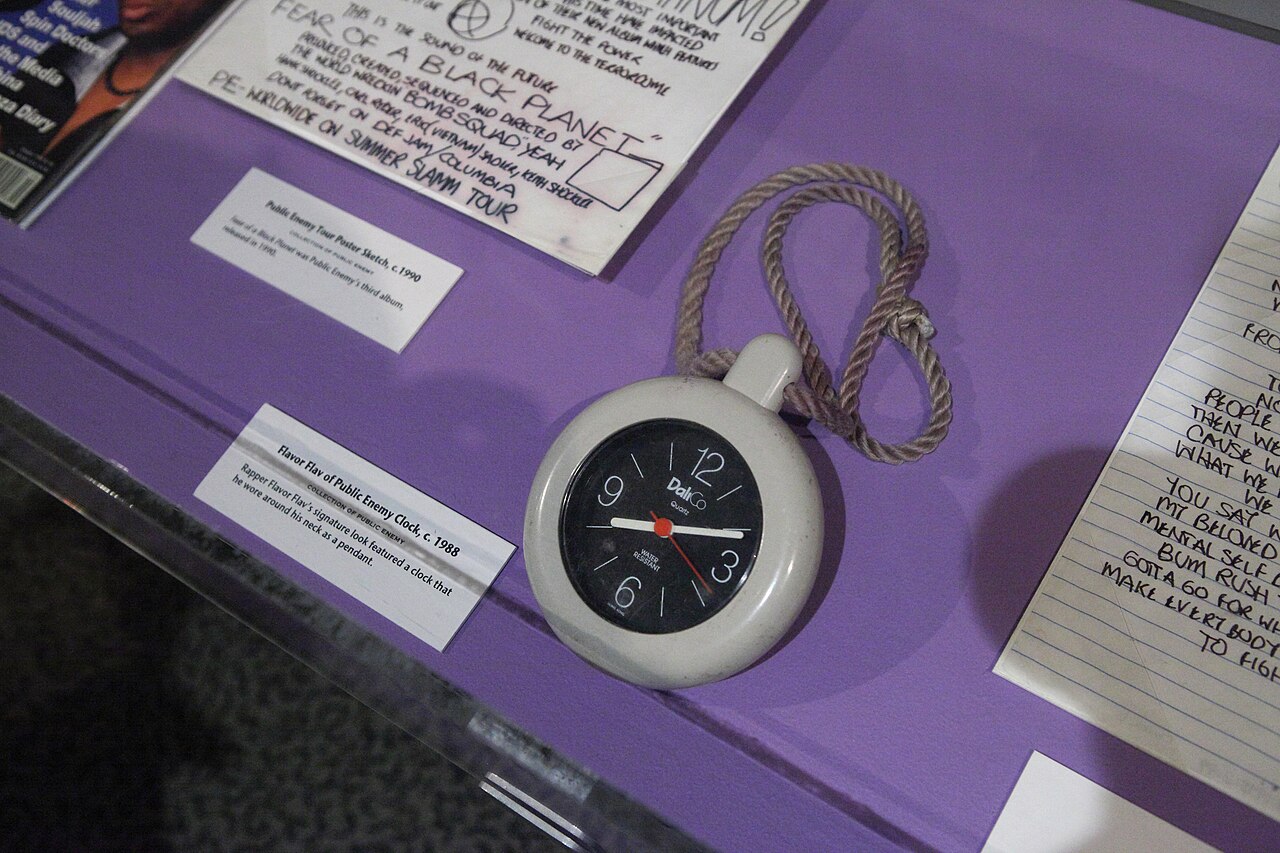
The blueprint arrived in 1988 with It Takes a Nation of Millions to Hold Us Back, an album that still shows up near the top of every “greatest of all time” list ever printed. “Rebel Without a Pause” rode that shrieking sax loop like an air-raid warning. “Bring the Noise” was a manifesto disguised as a single. “Don’t Believe the Hype” turned Chuck’s suspicion of the media into a chant. Flavor Flav, clock the size of a dinner plate swinging from his neck, played the jester to Chuck’s prophet, cutting the tension just before it snapped.
It was rap you had to lean into. The lyrics referenced Black leaders, prison systems, and radio politics faster than a casual listener could catch them, and the production never let you relax. For a generation of Gen X kids taping songs off the radio, hearing Public Enemy for the first time felt like tuning into a pirate broadcast from a war you didn’t know was happening.
Fight the Power and a Very Loud 1990
If 1988 was the warning shot, 1989 and 1990 were the explosion. Spike Lee asked the group for an anthem for his film Do the Right Thing, and they delivered “Fight the Power,” a song that spent the entire movie blasting out of Radio Raheem’s boombox until it became the film’s beating heart. It’s hard to overstate how central that one track became, played at protests, sampled endlessly, still instantly recognizable from its opening seconds.
Then came 1990 and Fear of a Black Planet, the record that plants Public Enemy squarely at the front of Golden Age hip-hop. “911 Is a Joke,” a Flavor Flav showcase about slow ambulance response in Black neighborhoods, somehow turned a grim subject into one of the catchiest things on the radio. “Welcome to the Terrordome” was seven minutes of controlled fury. “Brothers Gonna Work It Out” and “Burn Hollywood Burn” kept the pressure on. The Bomb Squad’s collage style was at its absolute peak, and the album went platinum despite sounding like nothing a label executive would call “friendly.”
The Trouble That Came With the Volume
Being the loudest voice in the room draws fire. In 1989, Professor Griff gave an interview containing antisemitic remarks that set off a firestorm and forced a painful, public shakeup within the group. Chuck D pulled the group offstage, apologized, restructured, and eventually addressed the whole ordeal head-on in “Welcome to the Terrordome.” It was a reminder that Public Enemy’s confrontational stance cut in every direction, and that a group built on provocation would always be one headline from a crisis.
They pressed on. Apocalypse 91… The Enemy Strikes Black arrived in 1991 with “Can’t Truss It” and a thunderous remix of “Bring the Noise” cut with thrash-metal band Anthrax, a rap-rock collision years ahead of the fad. That crossover pointed straight at the future: without Public Enemy’s aggression, there’s no clean line to Rage Against the Machine or the rap-metal that flooded the late 90s.
The Sound That Couldn’t Be Made Again
Here’s the twist that seals the Bomb Squad’s legend: their masterpieces are, in a legal sense, uncopyable. In 1991 a landmark court ruling over an unrelated case established that samples had to be cleared and paid for, every single one. For a group stacking dozens of uncredited snippets into a single track, that math became instantly impossible. Chuck D has said flatly that Nation of Millions could never be made today, the clearance costs alone would sink it.
So those dense, chaotic, wall-of-noise records aren’t just great. They’re a sealed-off moment, a sound that existed for a few short years before the lawyers changed the rules. That’s part of why they still hit so hard. You’re not just hearing a classic. You’re hearing something the industry made sure could never happen again.
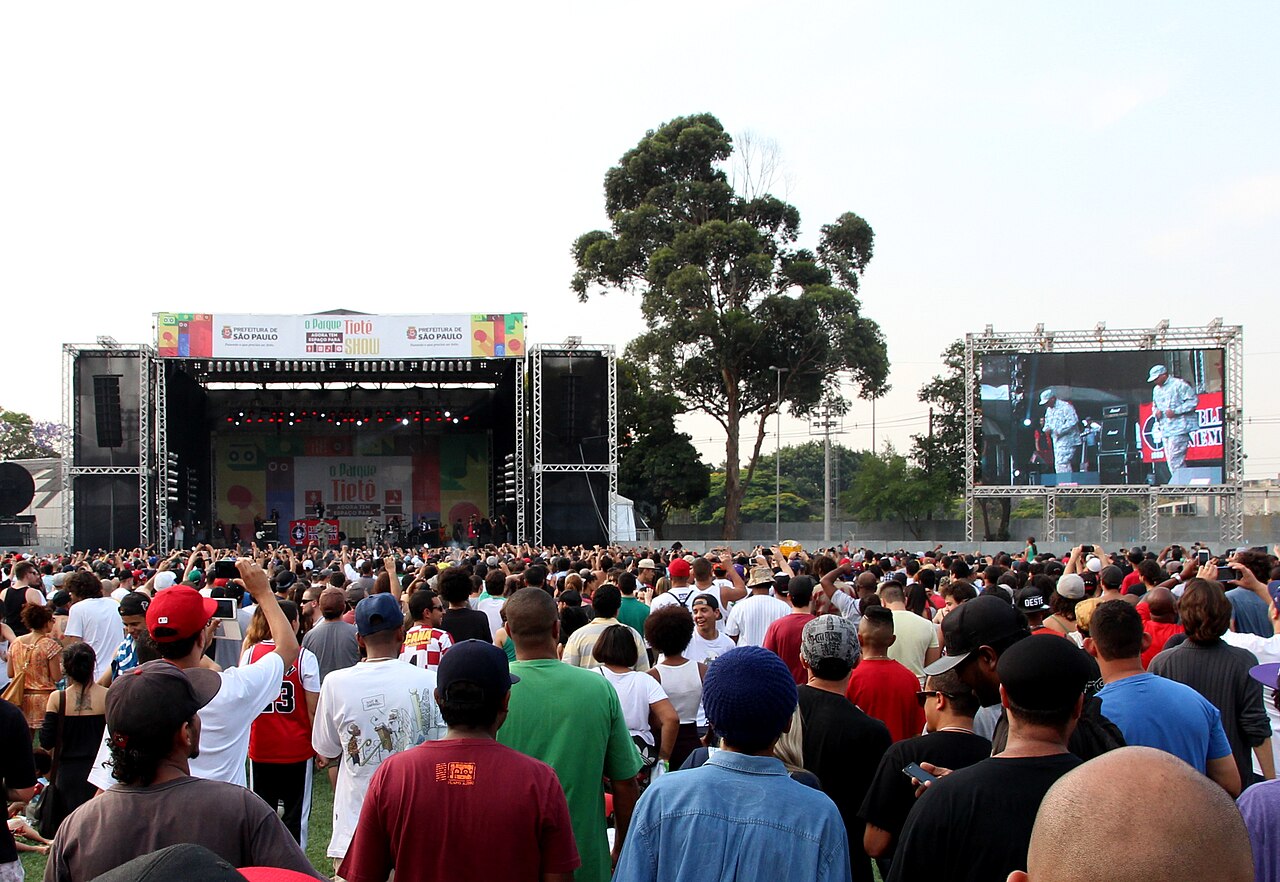
Public Enemy went into the Rock and Roll Hall of Fame in 2013, and Chuck D and Flavor Flav are still out there, still touring, still loud. But if you want to understand why a suburban crew from Long Island and a production team named after an explosion mattered so much, just cue up “Rebel Without a Pause” and turn it up past comfortable. That siren-scream loop is the sound of Golden Age hip-hop deciding it would rather wake you up than lull you to sleep. Dust off the vinyl if you’ve still got it, some records were built to be played loud, and this is the loudest of them all.
Sources
- Wikipedia — Public Enemy (band)
- Wikipedia — It Takes a Nation of Millions to Hold Us Back
- Wikipedia — Fear of a Black Planet
- Rock & Roll Hall of Fame
- Public Enemy records on Amazon
Browse retro and vintage-inspired apparel at the RetroRadical shop →
Shop the Public Enemy design
Public Enemy Hip Hop Logo Tee →
The Retro Almanac
A monthly roundup of "on this day" highlights from that month, decades back — plus first dibs on new retro merch drops. No spam, just the good stuff.