On This Day: June 22, 1986 — Maradona’s Hand of God
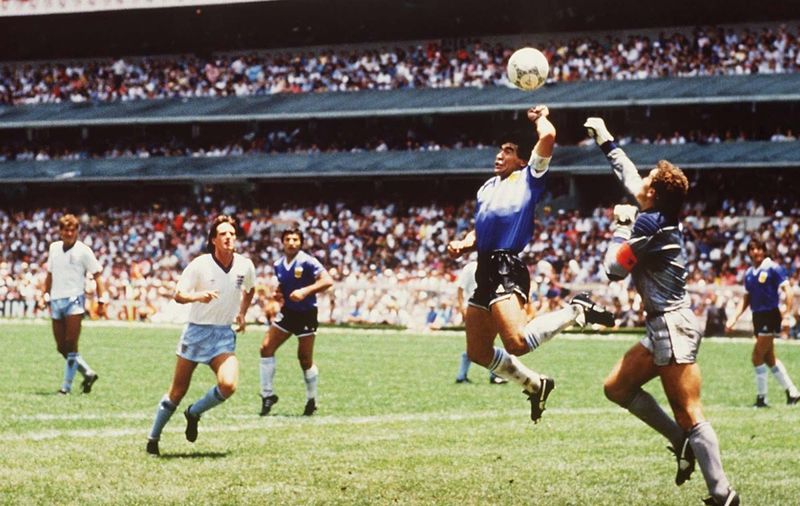
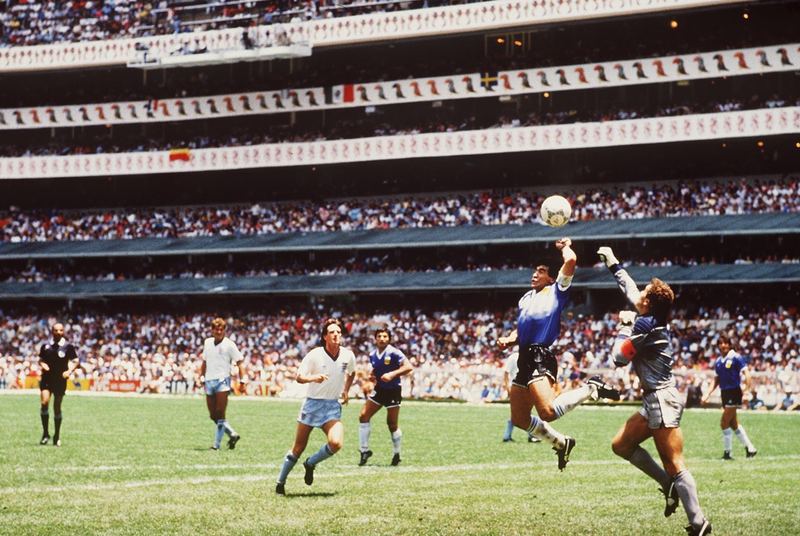
The Hand of God goal happened at 3:51 PM Mexico City time on June 22, 1986 — fifty-one minutes into a sweltering World Cup quarter-final, with 114,580 people inside the Estadio Azteca and one Tunisian referee staring at the wrong angle. Diego Maradona had jumped beside Peter Shilton, raised his left fist next to his head, and punched the ball over the goalkeeper into the English net. Argentina led 1–0. Four minutes later he did something the planet had never seen before, and football historians have never agreed how to grade the day since.
The 51st Minute: How the Hand of God Goal Actually Happened
Steve Hodge mishit a clearance straight back into the Argentine half. The ball looped lazily toward Shilton’s penalty area. Maradona, listed at 5’5″, chased it down with Shilton — who stood 6’1″ — coming off his line to punch clear. Both jumped. Shilton went up with a clenched right glove. Maradona went up with his left arm tucked next to his head, fist disguised against his skull.
The Retro Almanac
A monthly roundup of "on this day" highlights from that month, decades back — plus first dibs on new retro merch drops. No spam, just the good stuff.
His knuckles touched the ball a split-second before Shilton’s glove. The ball looped over the keeper and rolled into the empty net. Maradona wheeled away celebrating, but glanced back as he ran — a tell he later admitted was deliberate. “I told them, ‘Come hug me, or the referee isn’t going to allow it,'” he said years afterwards. His teammates piled on, the linesman’s flag stayed down, and Tunisian referee Ali Bin Nasser pointed to the center circle. Goal stood.
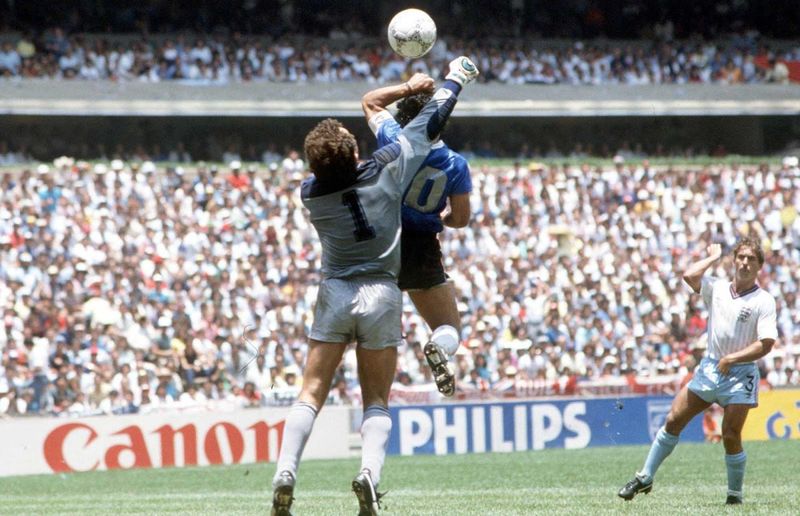
The English players didn’t react fast enough. Shilton turned to argue. Terry Fenwick shouted. Terry Butcher was a step behind the play. By the time the BBC’s match cameras cut to the replay, the Argentine half was already celebrating, and the only person on the field who could’ve changed the call — Bulgarian assistant Bogdan Dotchev — had no view of the handball. Replay technology in 1986 lived on a tape deck in a TV truck. The referees didn’t have it. The goal counted because in 1986 the goal had to count.
Four Minutes Later: The Goal of the Century
Most teams would’ve stopped there. Most players, frankly, couldn’t have managed what came next. At the 55-minute mark, Maradona collected a pass from Héctor Enrique inside his own half, turned 180 degrees in a half-second, and started running. The dribble that followed lasted ten and a half seconds and covered roughly 60 yards.
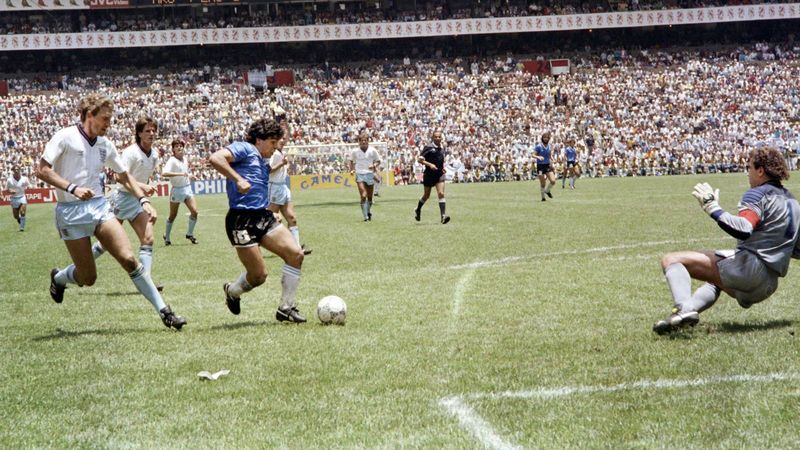
Peter Beardsley couldn’t get a foot on him. Peter Reid chased and gave up. Terry Butcher lunged twice and missed twice. Terry Fenwick threw his body across the path and went down without touching the ball. Shilton came out and Maradona simply slid the ball around him with his left foot at full sprint. The commentary booth went silent. Even Argentina’s bench seemed unsure whether to cheer or just watch.
FIFA polled fans in 2002 and crowned it the greatest goal in World Cup history. Maradona’s own assessment, delivered to reporters in the dressing room: “I made the play to give it to Valdano, but when I got to the area they surrounded me and I had no space. Therefore, I had to continue the play and finish it myself.” Héctor Enrique, who’d made the first pass, ribbed him for weeks: “With the ball I gave you, you had to score.”
Why the Falklands Made This Match Different
Britain and Argentina had fought a real war four years earlier. The Falklands conflict ran for ten weeks in 1982 and killed 255 British servicemen and 649 Argentines. The wounds were still raw on both sides in June 1986. Argentine newspapers ran World Cup previews framed in military language. The English FA tried, publicly, to keep the politics out — but every Argentine player walking into the tunnel that day knew exactly what shirt they were facing.
Maradona didn’t say much about it at the time. The Argentine FA had asked the players to keep their post-match comments clean and stick to football. But thirty-three years later, in the 2019 documentary Diego Maradona, he finally told the truth about what the win meant to him: “It was a nice feeling like some sort of symbolic revenge. It was as if we had beaten a country, not just a football team.” A lot of his country agreed. The streets of Buenos Aires that night looked closer to a victory parade than a quarter-final celebration.
England’s players have been gracious about the loss for forty years. Gary Lineker, who pulled one back in the 81st minute and finished as the tournament’s top scorer, has called it the only time he ever applauded an opponent’s goal on the field — referring to the second one. About the first, he’s been more direct: “It was cheating, and he knew it.”
The Argentine Side Carlos Bilardo Built
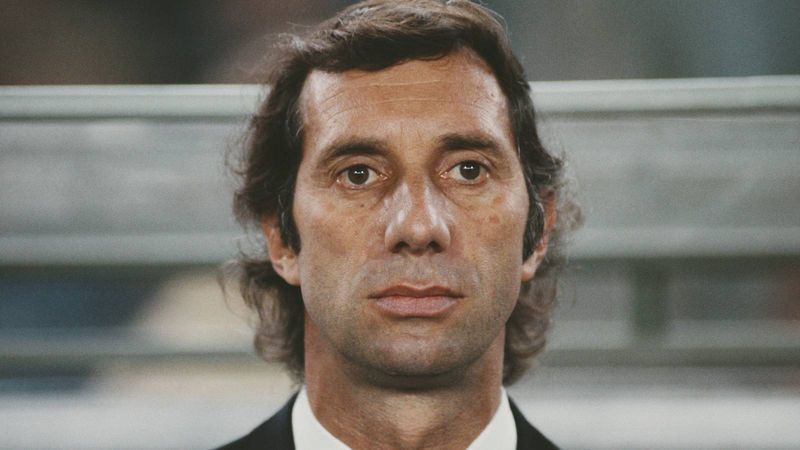
Argentina’s manager Carlos Bilardo had taken over in 1983 to widespread skepticism. He played a stubborn 3-5-2 nobody else in the country wanted to coach, ran double sessions at altitude before the tournament, and made one principle non-negotiable — every move went through Maradona. Sergio Batista shielded the back line, Héctor Enrique linked midfield to attack, Jorge Burruchaga drifted off Maradona’s right shoulder. The other ten players had jobs. Maradona had the ball.
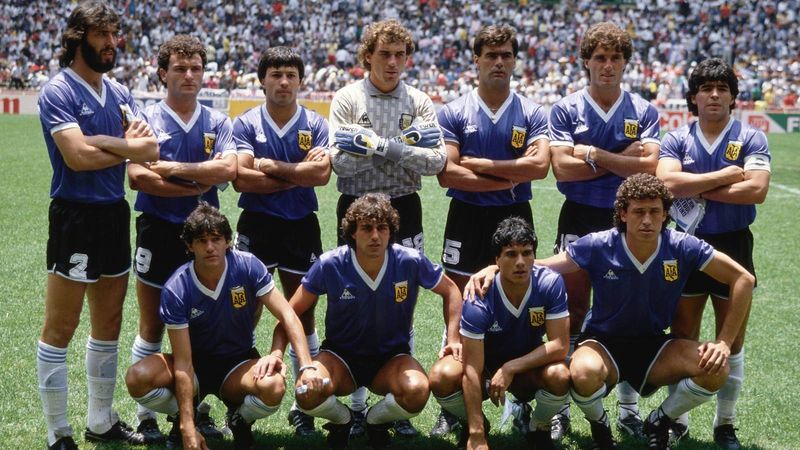
The shirts were a problem of their own. Argentina had brought lightweight first-choice jerseys for the Mexico heat, but no spare blue change strip that breathed properly. With kickoff against England approaching and the original change shirts deemed too hot, kit manager Rubén Moschella was sent into Mexico City’s Tepito market the day before the game. He bought a stack of blue Le Coq Sportif knockoffs, the Argentine FA crest and player numbers were ironed on overnight, and the team ran out in shirts assembled in roughly 18 hours. Maradona’s wound up selling at Sotheby’s in May 2022 for £7.14 million — the highest price ever paid for a piece of sports memorabilia.
Ali Bin Nasser, the Referee Nobody Should Have Blamed
The Tunisian official took heat for decades. He was 42 years old, in his first World Cup, and stationed about 12 yards from the play with two bodies between him and the ball when Maradona’s fist arrived. The handball happened in roughly a tenth of a second. Bin Nasser looked to Bogdan Dotchev, his Bulgarian assistant, for guidance — and Dotchev kept his flag down because Dotchev couldn’t see it either. The rules in 1986 required certainty before disallowing a goal. They had none.
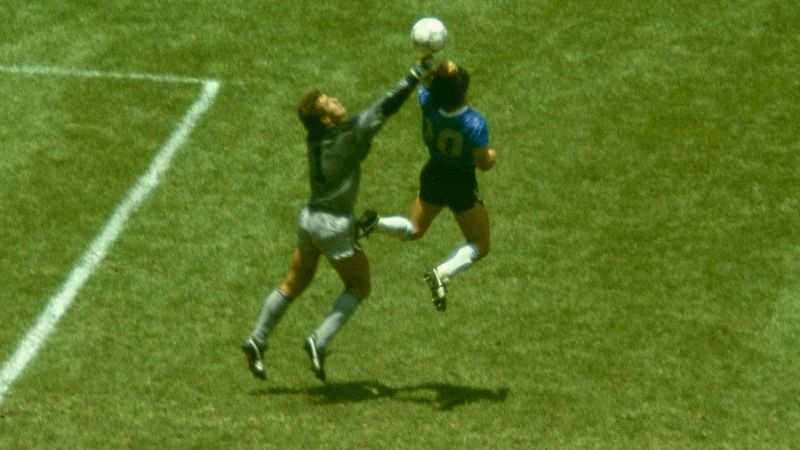
Bin Nasser has never apologized. Interviewed at his home in Sousse on the 30th anniversary, he simply said the officials made the call they were equipped to make and that VAR — which arrived 32 years later — would’ve changed everything. He’s right. A modern handball check on that goal takes 90 seconds and overturns it without controversy. In 1986 the technology to second-guess the moment didn’t exist, and the people best placed to judge had a glove and a torso in their sightline.
What Maradona Said — and Then Confessed
The press conference is the part that made the goal into a legend rather than a footnote. Asked whether he’d handled the ball, Maradona offered the line that defined the next forty years of football folklore: “un poco con la cabeza de Maradona y otro poco con la mano de Dios” — a little with Maradona’s head, and a little with the hand of God. He was 25 years old, sweat still in his hair, and he’d just invented a phrase that would outlive him.
He kept the line going for nearly two decades. It wasn’t until 2005, on his own Argentine television show La Noche del 10, that he admitted what every honest viewer had known since the night of the goal: he’d hit it with his fist on purpose, knew the referee hadn’t seen it, and ran toward his teammates to sell the celebration. The honesty arrived too late to change anything and probably came across as more charming than it should have. Argentina had already won the World Cup. England had already gone home. The trophy was in a glass case in Buenos Aires.
Argentina Won the Whole Thing
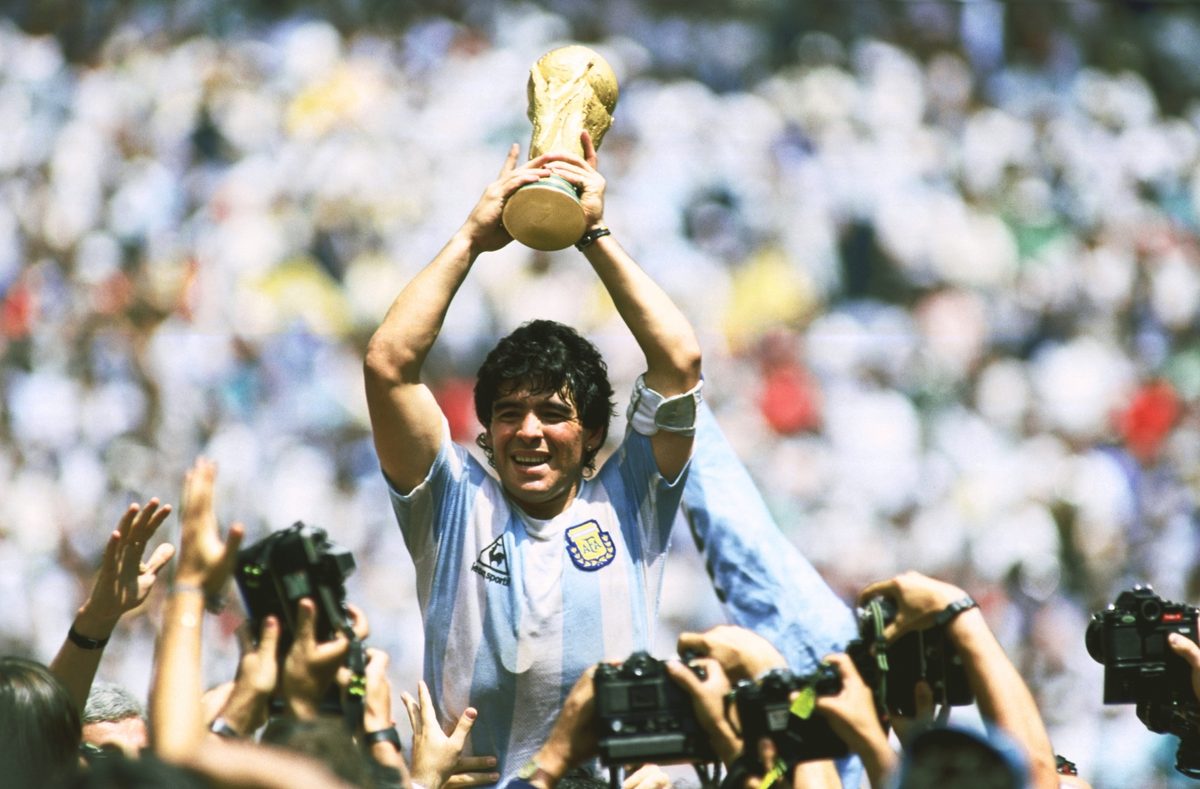
Argentina beat Belgium 2–0 in the semi-final — Maradona scored both — then edged West Germany 3–2 in a frantic final on June 29. He won the Golden Ball as best player of the tournament. Lineker took home the Golden Boot with six goals to Maradona’s five, a small consolation for a country that had watched its quarter-final exit happen in something close to disbelief. The full quarter-final, both goals included, lives on the official FIFA YouTube channel:
Why the Day Still Matters
Eight minutes of football. One goal that shouldn’t have counted, one that probably won’t ever be matched. A 25-year-old kid from the Villa Fiorito slum of Buenos Aires deciding the World Cup quarter-final by himself, on the back of a real war and in front of a stadium that held more people than most cities. Nobody alive who watched it live forgets where they were. Forty years on, FIFA still uses footage from June 22, 1986 in every promotional reel — because the sport has never produced eight minutes more cinematic, and probably never will.
The Argentine FA has campaigned, off and on, for the goal to be removed from the record books. They’ve gotten nowhere. The Hand of God stays on the official scoresheet at 51′, credited to D. Maradona, no asterisk. That’s the part the moralists never quite swallow, and the part Argentina has never wanted changed. The goal counted then, the goal counts now, and the world spent the next four decades arguing about it. Maradona would probably have called that a third win.
If you want more from the same era of sport, the World Cup wasn’t the only 1980s match that shaped how the modern game gets refereed — the Heysel Stadium disaster of May 29, 1985 reshaped stadium safety and crowd policy across Europe in ways that lasted decades. For a wider snapshot of how Cold War politics bled into 1980s sport, our deep dive on the 1984 Olympics boycott covers the Soviet walkout that nearly broke the Games. And if you missed it, the June 18, 1983 piece on Sally Ride in our On This Day series sits four days before this one in the same incredible decade.
Sources
- Argentina v England (1986 FIFA World Cup) — full match record, scorers, lineups, and officials
- The Hand of God — detailed account of the handball and post-match controversy
- FIFA: Diego Maradona, Argentina vs England, Hand of God 1986 — official FIFA retrospective
- Britannica: Famous FIFA World Cup Goals — Hand of God
- The Conversation: 40 Years On, Maradona’s Hand of God Goal Is Still Celebrated
The Retro Almanac
A monthly roundup of "on this day" highlights from that month, decades back — plus first dibs on new retro merch drops. No spam, just the good stuff.