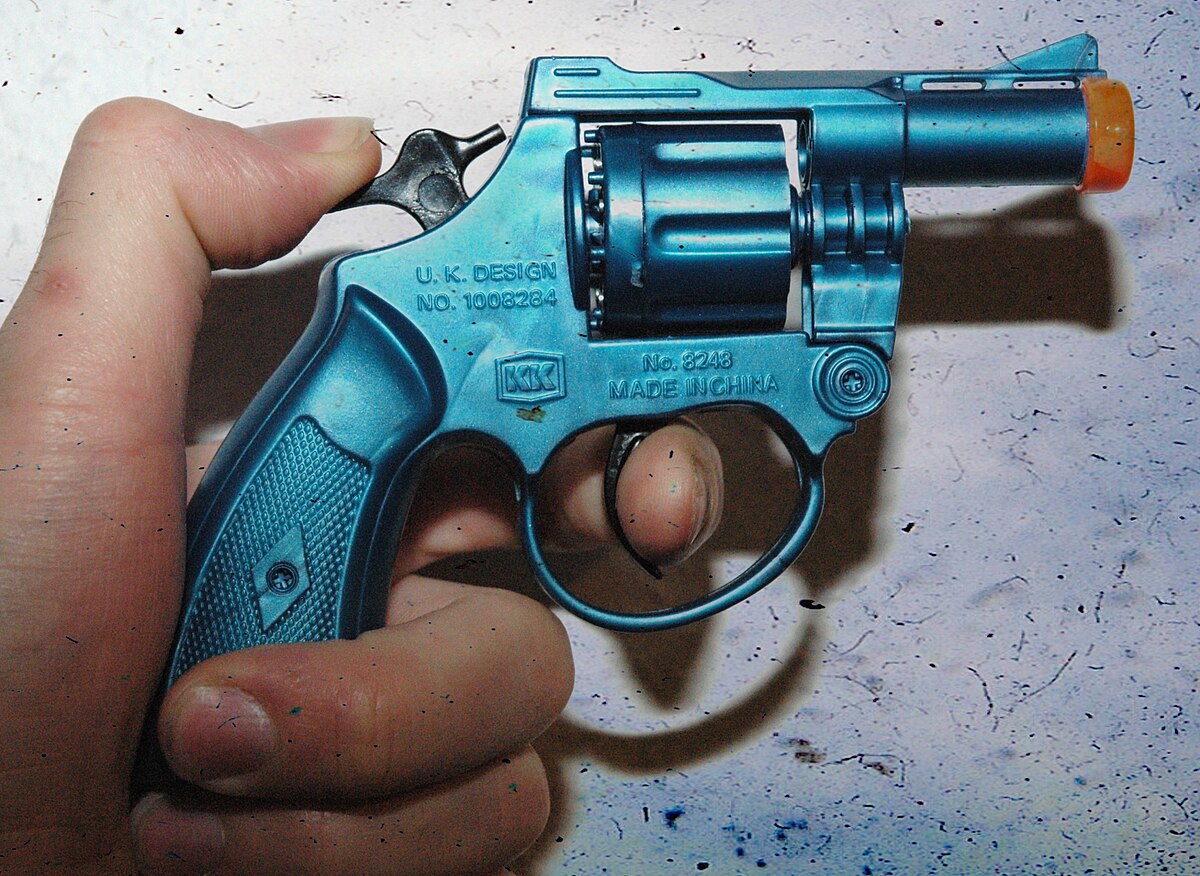
Vintage cap gun toy from the 1980s every kid wanted
|

Cap Guns: The 80s Toy Every Kid Fired in the Backyard

There was a smell that defined childhood in the 1980s. It wasn’t freshly cut grass or mom’s cookies baking in the oven. It was sulfur. That sharp, acrid, absolutely intoxicating smell of spent cap gun rolls wafting through the summer air. If you grew up in the 80s, you didn’t just know that smell — you chased it. You craved it. And you’d burn through an entire roll of caps in about thirty seconds flat just to get another hit of that glorious gunpowder perfume.

Cap guns weren’t just toys. They were passports to another world. They turned your backyard into Dodge City, your cul-de-sac into a war zone, and your best friend into either your trusted deputy or your mortal enemy — depending on the day of the week and who got to be the good guy first.
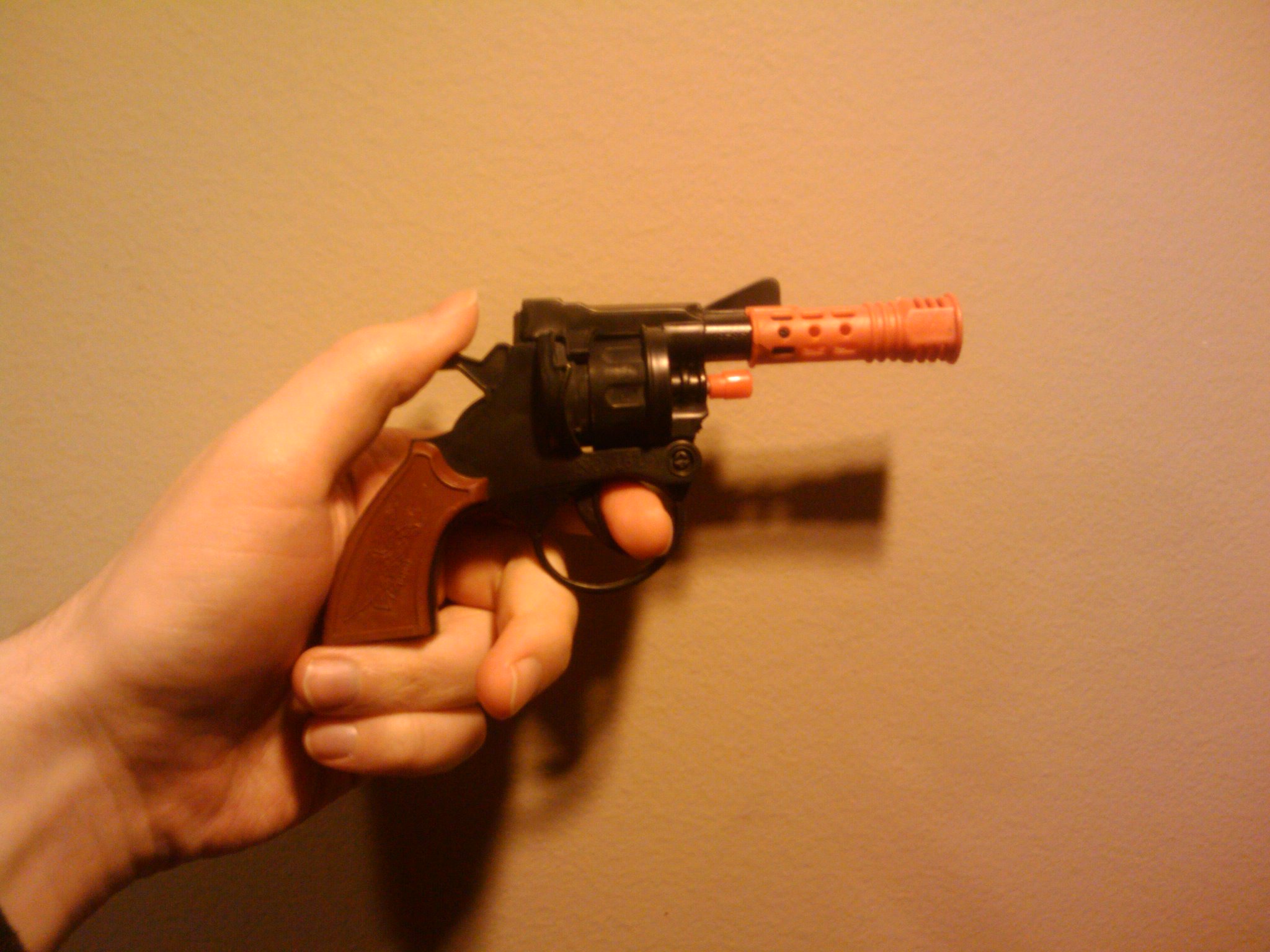
Orange-tipped cap gun toy from the 1980s era

A Brief History of Cap Guns Before the 80s Boom

Cap guns have been around a lot longer than most people realize. The first toy cap pistols appeared in the 1800s, using small amounts of fulminate compounds to create that signature bang. By the early 1900s, companies like Stevens, Kilgore, and Hubley were mass-producing die-cast metal cap guns that looked remarkably like real firearms. Nobody batted an eye. It was a different time.

The 1950s were arguably the first golden age of cap guns, driven by the cowboy craze on television. Every kid wanted to be Hopalong Cassidy or Roy Rogers, and the toy companies were more than happy to oblige. Mattel’s Fanner 50, introduced in 1958, became one of the best-selling toys of the decade. It used a “Greenie Stik-M-Cap” system that let kids fan the hammer just like a real cowboy. The TV commercials were legendary — kids in full cowboy regalia, blasting away at imaginary outlaws while an announcer practically shouted the product features.

Vintage toy cap gun from museum collection resembling Western revolver

But cap guns really hit their stride in the late 1970s and 1980s, when a new generation discovered them not through Westerns but through action movies and TV shows. Suddenly, cap guns weren’t just six-shooters anymore. They were Uzis. They were Magnums. They were whatever Sylvester Stallone or Arnold Schwarzenegger happened to be carrying in their latest blockbuster.

The Anatomy of a Cap Gun: Roll Caps, Ring Caps, and Strip Caps

If you weren’t an 80s kid, you might not know that cap guns had their own ecosystem of ammunition. And choosing the right caps was serious business.

Roll caps ammunition strips used in 80s toy cap guns

Roll caps were the classic. A long red strip of paper with tiny dots of explosive compound spaced evenly along it. You’d thread the roll into your cap gun, and each pull of the trigger would advance the strip and slam the hammer down on the next dot. The sound was a satisfying crack — not deafening, but loud enough to make your little sister jump. The smell was immediate and addictive. And when the roll ran out, you’d rip open the next package and reload faster than Clint Eastwood in The Good, the Bad and the Ugly.

Ring caps came in plastic rings, each holding eight shots in a circle. You’d pop the ring into the gun’s cylinder, and each shot would rotate to the next cap. These were cleaner and more satisfying than roll caps in some ways — the mechanism felt more “real,” like you were actually loading a revolver. The downside? Eight shots went fast. Really fast.

Close up of cap gun ring caps and roll caps for toy revolvers

Strip caps were the economy option — a flat strip you’d feed into the gun. They worked fine, but they lacked the romance of the roll caps and the mechanical satisfaction of the ring caps. Strip cap kids were the generic cereal kids of the cap gun world. You had them because they were cheap, not because you wanted them.

And then there was the forbidden technique every kid discovered independently: hitting caps with a rock. Forget the gun entirely. Take a whole roll of caps, set it on the sidewalk, and smash it with a big rock. The resulting chain-reaction explosion was glorious — a rapid-fire string of bangs, a cloud of smoke, and the overwhelming stench of gunpowder. Your parents hated it. Your neighbors complained. You did it again the next day.

The Cap Gun Arms Race of the 80s

The 1980s turned the cap gun market into a full-blown arms race. Toy companies competed furiously to create the most realistic, the loudest, and the most action-packed cap guns money could buy. And by “money,” we’re talking about the two dollars and fifty cents you scraped together from your allowance and the couch cushions.

Classic vintage metal cap gun revolver toy from the 80s

The major players were brands like Edison Giocattoli from Italy, Lone Star from England, and American companies like Mattel and Nichols. Edison’s guns were particularly impressive — chrome-plated, heavy die-cast metal, with realistic actions and mechanisms. Their “Frontier” and “Supermatic” lines were the Ferraris of cap guns. If your friend had an Edison, he was basically the neighborhood arms dealer.

Meanwhile, the cheaper plastic cap guns flooded dime stores, drug stores, and those wire spinning racks at the checkout counter. They cost about a dollar, broke within a week, and you loved every minute you had with them. The arcade-obsessed kids of the 80s would burn through a cap gun as fast as they’d burn through a pocketful of quarters on Space Invaders.

Neighborhood Wars and the Rules of Engagement

Every neighborhood had its own unwritten rules for cap gun warfare. These were sacred covenants, passed down from older kids and enforced with the kind of brutal justice that only eight-year-olds can deliver.

Antique toy cap gun that resembled a real revolver from the 80s

Rule #1: You had to fall down when you got shot. This was non-negotiable. If someone shot you and you didn’t crumple to the ground in dramatic fashion, you were a cheater and nobody would play with you for at least the rest of the afternoon. The best players could execute Oscar-worthy death scenes — clutching their chest, staggering backward, spinning around, and finally collapsing face-first into the grass. Some kids had signature death moves. You knew them by their falls.

Rule #2: You couldn’t shoot someone who just got back up. There was an unspoken grace period after resurrection. You had to count to ten or wait until the person said “I’m alive again” or performed some ritualistic spinning maneuver. The specifics varied by neighborhood, but everyone respected the principle.

Rule #3: Running out of caps didn’t mean you were out of ammo. When your caps ran dry — and they always ran dry at the worst possible moment — you just made the sound with your mouth. “BANG BANG BANG!” This was perfectly acceptable. The cap gun was merely a sound-delivery system; the real weapon was your imagination.

Rule #4: Someone had to be the bad guy. And nobody wanted to be the bad guy. This led to elaborate negotiations that could last longer than the actual battle. The kid who agreed to be the villain was making a noble sacrifice and everyone knew it.

The Sound, the Smell, and the Sensory Memory

What made cap guns so unforgettable wasn’t the look — though they looked amazing. It was the full sensory experience. That crack of the cap. That instant bloom of sulfur-scented smoke. The tiny wisp of white curling up from the barrel. The warmth of the metal gun after you’d fired off half a roll. These weren’t just sounds and smells. They were the building blocks of an entire childhood mythology.

Classic toy cap gun collection piece showing Western-style revolver

The smell of cap gun smoke is one of those sensory triggers that can transport a grown adult back to 1985 in a heartbeat. It’s right up there with the smell of a new box of Crayola crayons, the taste of Push Pops, or the feel of an Atari joystick in your sweaty palm. Neuroscience calls this a “Proustian memory” — a vivid, involuntary recollection triggered by a sensory experience. The rest of us just call it nostalgia.

There’s a reason cap guns hit harder than other 80s toys in the memory department. They engaged every sense simultaneously. You saw the spark. You heard the bang. You smelled the smoke. You felt the kick. The only sense they missed was taste, and honestly, plenty of kids licked their cap guns too. Don’t pretend you didn’t.

The YouTube Rabbit Hole: Cap Gun Collections and Memories

The internet age has given cap gun nostalgia a second life. Collectors show off pristine vintage pieces, and the comment sections are basically group therapy for Gen X:

When Cap Guns Got Canceled (Sort Of)

The beginning of the end came in the late 1980s and early 1990s. A string of tragic incidents involving police officers mistaking toy guns for real weapons led to new regulations. In 1988, the Federal Toy Gun Law (15 U.S.C. 5001) required that all toy guns sold in the United States have a blaze orange tip on the barrel. Suddenly, every cap gun came with a bright orange plug that screamed “I’M NOT REAL” to anyone within visual range.

For kids who’d grown up with chrome-plated realistic cap guns, the orange tip was a gut punch. It was like putting training wheels back on your bike. The magic wasn’t entirely gone, but it was definitely diminished. You couldn’t quite feel like Dirty Harry when your .44 Magnum had what looked like a traffic cone glued to the end of it.

Toy cowboy figures with holsters representing the cap gun era

Then came the cultural shift. As the 80s action movie era faded and parenting styles evolved, toy guns in general fell out of favor. Schools started implementing zero-tolerance policies. Kids who pointed finger guns got sent to the principal’s office. The cap gun — once as common in American childhood as baseball gloves and bicycles — became increasingly rare.

By the mid-1990s, the internet age was dawning, and kids were discovering a whole new set of toys. Video game consoles, handheld electronics, and eventually smartphones would replace the simple pleasures of running through the neighborhood with a cap gun and a sense of invincibility. The transition wasn’t sudden — it was gradual, like the sun setting on a long summer day. But it happened.

Cap Guns Today: Collectors, Nostalgia, and the Ones Who Remember

Cap guns never completely disappeared. You can still buy them — they’re manufactured by companies like Gonher in Spain and various Chinese toymakers. But they’re a shadow of their former selves. Modern cap guns are lighter, cheaper, and more obviously toy-like. The heavy die-cast metal monsters of the 80s are now collector’s items, fetching serious money on eBay and at vintage toy shows.

A mint-condition Mattel Fanner 50 in its original box can sell for several hundred dollars. A complete Edison Giocattoli set with holster, belt, and matching revolvers? Even more. The market for vintage cap guns is thriving, driven by adults who remember exactly what it felt like to fire those things and want to hold that feeling in their hands one more time.

Some collectors don’t just display them — they fire them. There’s an entire subculture of grown adults who buy vintage caps (yes, they still make them) and spend Saturday afternoons in their backyards reliving the experience. Their spouses think they’re ridiculous. Their kids think they’re weird. They don’t care. They’re eight years old again, and the smell of gunpowder is the sweetest perfume in the world.

Why Cap Guns Mattered More Than You Think

Here’s the thing about cap guns that the hand-wringing adults of the 1990s never quite understood: they weren’t about violence. Not really. They were about imagination. They were about taking the stories you saw on TV — the cowboys, the cops, the soldiers, the secret agents — and making them real in your own backyard. They were about creating worlds where you were the hero, where the stakes were life and death (but not really), and where the only thing that mattered was whether you remembered to bring extra caps.

Cap guns taught kids how to play together. How to negotiate. How to create shared narratives. How to handle conflict (you shot me, no I didn’t, yes you did). How to lose gracefully (or at least dramatically). These were skills that the Saturday morning cartoon generation carried into adulthood, even if they didn’t realize it at the time.

They also gave kids something increasingly rare in today’s world: unstructured outdoor play. No screens. No schedules. No adult supervision. Just a cap gun, a best friend, and an entire neighborhood to conquer. The games lasted hours. The stories evolved organically. And when the caps ran out and the sun went down, you went home tired, dirty, smelling like sulfur, and completely, utterly happy.

That’s the real legacy of cap guns. Not the debates about toy violence or the safety regulations or the orange tips. The real legacy is a generation of kids who learned that the best toys don’t need batteries, Wi-Fi, or a software update. Sometimes all you need is a roll of caps, a good imagination, and the freedom to run.

Similar Posts