E.T. the Extra-Terrestrial: 7 Reasons Spielberg’s 1982 Masterpiece Still Rules
E.T. the Extra-Terrestrial is the 1982 Steven Spielberg masterpiece that redefined what a summer blockbuster could be — equal parts adventure, heartbreak, and pure childhood wonder. It made $359 million domestically in its original run and held the record as the highest-grossing film of all time for eleven years.
If you grew up in the early ’80s, you didn’t just see E.T. — you felt it. You probably cried, you absolutely wanted a Reese’s Pieces trail in your backyard, and there’s a solid chance you spent the next six months trying to make your bike fly. Few movies ever hit that hard, and four decades later, it still does.
How E.T. the Extra-Terrestrial Came to Life
The origin of E.T. is deeply personal. After his parents’ divorce in 1960, a young Steven Spielberg invented an imaginary alien friend — “a friend who could be the brother I never had and a father that I didn’t feel I had anymore,” as he later described it. That lonely kid’s fantasy eventually became one of the most beloved films ever made.
Fast forward to 1980. Spielberg was filming Raiders of the Lost Ark in Tunisia, far from home and feeling isolated. The loneliness brought back memories of his childhood companion. He started talking to screenwriter Melissa Mathison about an idea — an alien stranded on Earth, befriended by a child. Mathison wrote the first draft, titled E.T. and Me, in just eight weeks. Spielberg called it perfect.
Columbia Pictures passed on it. Their marketing chief reportedly called it “a wimpy Walt Disney movie” with limited commercial potential. Spielberg took it to Universal Pictures, who picked up the script for $1 million. Columbia’s president later admitted they made more from their 5% net profits deal than from almost any of their own films that year.
Filming ran from September to December 1981, shot mostly in chronological order — an almost unheard-of approach for a film of this scale. Spielberg did it specifically to draw genuine emotional performances from his young cast. Budget: $10.5 million. Box office result: $792.9 million worldwide. That’s what you call a return on investment.
The Cast That Made It Magic
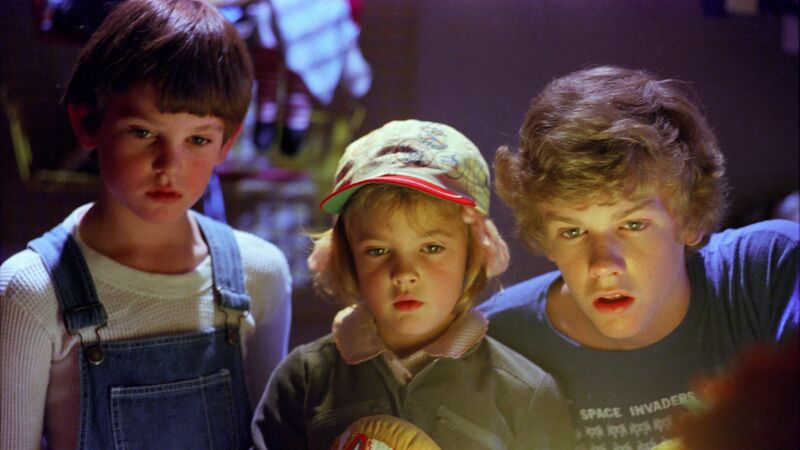
Henry Thomas was ten years old and relatively unknown when he auditioned for the role of Elliott. Spielberg had seen hundreds of boys. Thomas didn’t perform well in the formal tests — but then he improvised a scene, and thinking about his dead dog, he broke down and cried with such conviction that everyone in the room was stunned. He got the part on the spot.
Drew Barrymore, just six years old, convinced Spielberg she was right for Gertie by telling him she led a punk rock band. (She didn’t.) He loved her imagination so much he cast her immediately. The film turned her into a household name. Dee Wallace played the kids’ overwhelmed single mother Mary, Peter Coyote played the government agent pursuing E.T., and Erika Eleniak had her film debut as the girl Elliott impulsively kisses in biology class.
Robert MacNaughton auditioned eight times for the role of older brother Michael. C. Thomas Howell played Tyler — a role originally considered for Ralph Macchio, who would later become Howell’s The Outsiders co-star. And for E.T.’s voice, Spielberg used Pat Welsh, a 65-year-old woman who smoked two packs a day. Her gravelly voice had exactly the quality sound designer Ben Burtt was looking for. Welsh spent nine and a half hours recording the voice and was paid just $380.[1]
Building the Alien: Carlo Rambaldi’s Masterpiece
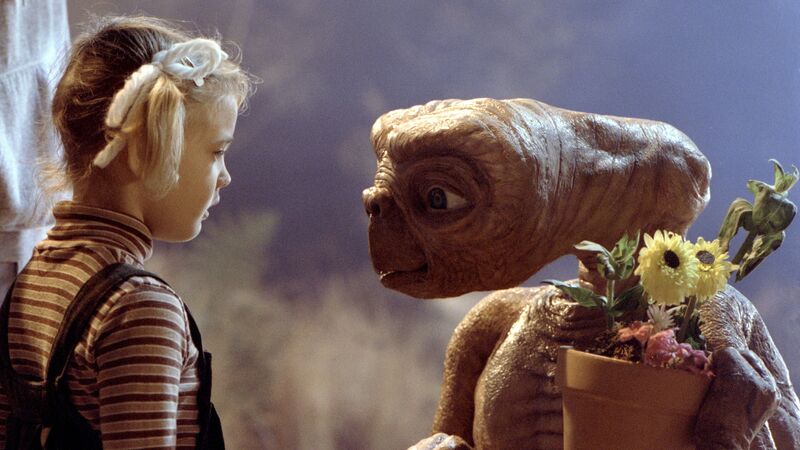
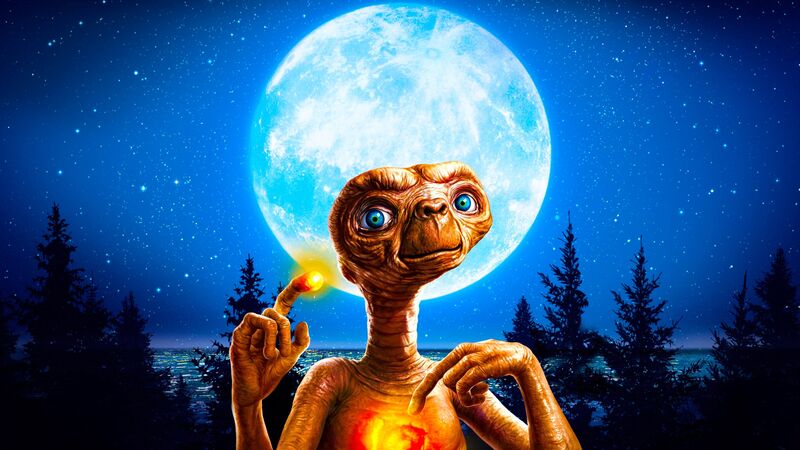
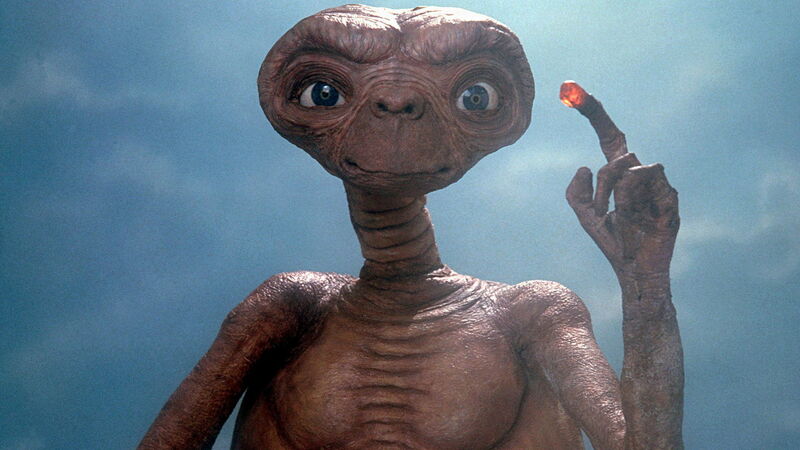
E.T. himself — the creature — was designed by Italian special effects artist Carlo Rambaldi, the same man who created the aliens for Close Encounters of the Third Kind. Rambaldi took his inspiration from an unusual set of faces: Carl Sandburg, Albert Einstein, and Ernest Hemingway. The creature’s distinctive wide eyes came from glass eyes created by staffers at the Jules Stein Eye Institute, which producer Kathleen Kennedy visited specifically to find eyes that could engage the audience emotionally.
Four different heads were created for filming — one main animatronic and three for specific expressions. The body was worn by two little people (Tamara De Treaux and Pat Bilon) and twelve-year-old Matthew DeMeritt, who was born without legs and walked on his hands. DeMeritt handled all the scenes where E.T. walks awkwardly or tumbles. The entire puppet cost $1.5 million to build. Spielberg declared it was “something that only a mother could love.”
A team of puppeteers operated the animatronic face with dozens of mechanical control points, giving E.T. genuine emotional expressiveness — something that was genuinely revolutionary in 1982. There’s a reason audiences believed in this alien. Rambaldi had created something that felt alive.
The Reese’s Pieces Deal That Launched a Candy Brand
Here’s a piece of 80s trivia that still makes people do a double take: Reese’s Pieces were originally supposed to be M&M’s. Spielberg’s team approached Mars, Incorporated first. Mars refused, reportedly worried that E.T. would scare children and hurt the brand. The Hershey Company, owner of Reese’s Pieces, said yes without hesitation.
It’s one of the most consequential product placement decisions in Hollywood history. Reese’s Pieces sales reportedly jumped 65% in the weeks following E.T.’s release.[2] The brand went from niche to mainstream almost overnight. M&M’s parent company reportedly still winces about it to this day.
The placement worked because it was organic — Elliott uses the candy trail to lure E.T. back to his house. It wasn’t a blatant ad. It was storytelling. That’s the lesson brands tried (and largely failed) to learn from E.T. for the next decade.
The Iconic Scenes That Defined a Generation
The film is loaded with unforgettable moments, but a few stand out as genuinely iconic — images so powerful they’ve become part of shared cultural memory.
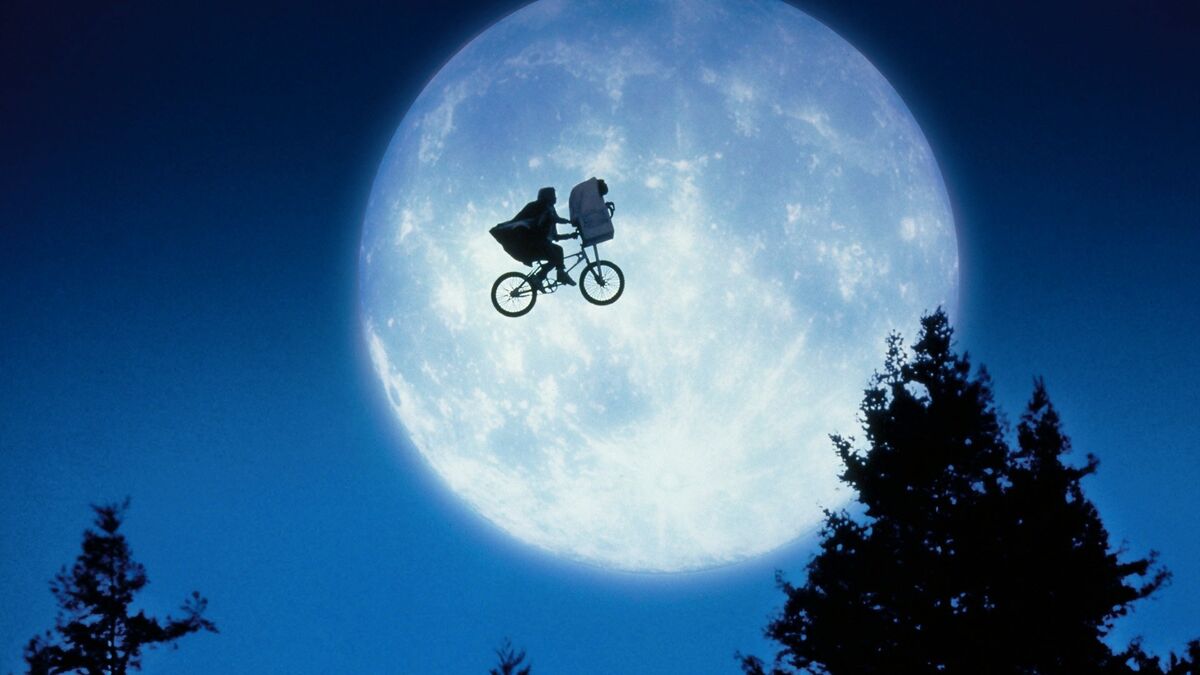
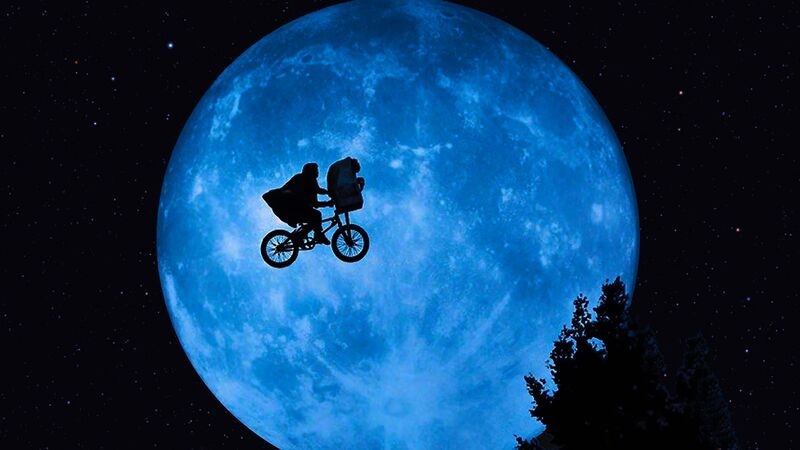
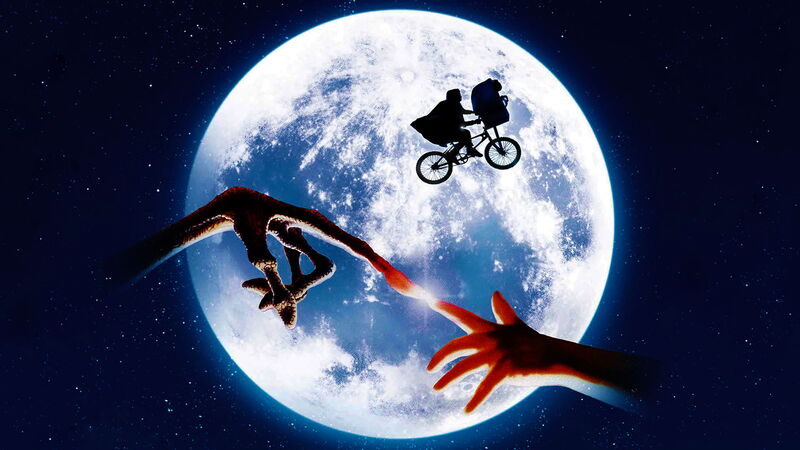
The bicycle silhouette against the moon. Elliott and E.T. rise into the sky on Elliott’s BMX bike, crossing in front of the full moon, John Williams’ score swelling underneath. It’s the image on the poster. It was the image a generation had burned into their brains. Spielberg reportedly improvised the shot on location, realizing the sunset was perfect. The image is now the logo of Amblin Entertainment.
“E.T. phone home.” Pat Welsh’s gravelly voice. That makeshift communicator built from an umbrella, a Speak & Spell (yes, the actual toy from 1978), a record player, and random junk from the garage. The line has been parodied thousands of times and never gets old.
The frog liberation. Elliott, emotionally connected to E.T. who is back home drinking beer, gets drunk in school and starts freeing the biology class frogs from dissection. Then he kisses a girl because E.T. is watching John Wayne kiss Maureen O’Hara on TV. Gen X kids understood — you’ve been there, just without the alien.
The final goodbye. There wasn’t a dry eye in any theater in America in June 1982. And if you rewatched it last week, there wasn’t a dry eye then either. Some things don’t age.
The Merchandise Craze Was Massive — And Slightly Weird
When a film becomes the highest-grossing movie in history, the merchandise follows like a tidal wave. E.T. toys, lunchboxes, action figures, stuffed animals, sleeping bags, Halloween costumes, board games, trading cards, iron-on patches, iron-on iron-ons (yes, that was a thing) — the licensing machine ran at full speed through 1982 and 1983.
Kenner Toys produced the main E.T. line, including a plush figure that sold millions. The 12-inch remote-controlled E.T. became one of the most sought-after gifts of Christmas 1982. The toy market was already wild in that era, but E.T. merchandise hit different because kids didn’t just want the toy — they were recreating an emotional experience.
Some of the merchandise was… ambitious. There was E.T. cereal, E.T. pasta shapes in tomato sauce (yes, shaped like the alien), E.T. vitamins, and at least one E.T. shampoo. The character’s wide, sad eyes apparently sold everything from soap to sleeping bags. Universal and Spielberg’s Amblin Entertainment reportedly generated hundreds of millions in licensing revenue on top of the box office.
The Atari Video Game Disaster — One of Gaming’s Biggest Flops
And then there was the video game. The E.T. Atari 2600 game is widely considered one of the worst video games ever made — and the story behind it is almost as legendary as the film itself.
Atari paid $21–25 million for the E.T. license in 1982, one of the largest licensing fees of the era. They needed the game ready for Christmas 1982, which meant designer Howard Scott Warshaw had just 5 weeks to create it from scratch. For context, most Atari games took 6–9 months. Warshaw had just done Raiders of the Lost Ark in 10 weeks and been celebrated for it. Five weeks for E.T. was brutal.
The resulting game — where you controlled E.T. falling into pits repeatedly while trying to collect phone pieces — was genuinely confusing and frustrating to play. Atari had manufactured approximately 4–5 million cartridges, anticipating massive demand. The game sold poorly. Millions of unsold cartridges were eventually buried in a landfill in Alamogordo, New Mexico in 1983.
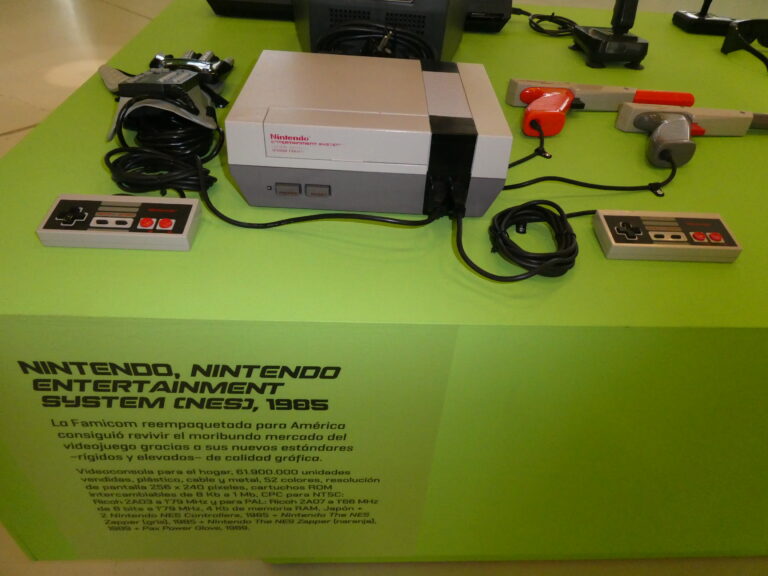
The burial became gaming urban legend for decades. In 2014, an excavation confirmed it — they actually dug up the cartridges, documented the whole thing, and made a documentary about it. The E.T. Atari game wasn’t solely responsible for the video game crash of 1983, but it became the symbol of that crash — and a cautionary tale about rushing licensed products.[3] It’s also the reason Nintendo’s quality controls for the NES were so strict when they launched in 1985.
Today, original boxed copies sell on eBay for collector prices. One of the excavated cartridges sold at auction for $1,535. Gaming history is funny like that.
Awards, Records, and Critical Acclaim
E.T. premiered at the Cannes Film Festival on May 26, 1982, as the closing film. It opened in the United States on June 11, 1982. Within weeks, it had become a phenomenon. By the end of its theatrical run, it had earned $359 million domestically and $792.9 million worldwide — surpassing Star Wars as the highest-grossing film of all time, a record it held for eleven years until Spielberg’s own Jurassic Park beat it in 1993.
At the 55th Academy Awards, E.T. received nine nominations, winning four: Best Original Score, Best Visual Effects, Best Sound, and Best Sound Editing. The film was also nominated for Best Picture and Best Director. It took home five Saturn Awards and two Golden Globe Awards. In 1994, it was added to the National Film Registry by the Library of Congress as “culturally, historically, or aesthetically significant.”
John Williams’ score is considered one of the greatest film soundtracks ever composed. The main theme — particularly the final bicycle chase sequence — is as emotionally recognizable as any piece of music written in the 20th century.

The 2002 Re-Release: What Spielberg Changed (and Regretted)
For the film’s 20th anniversary in 2002, Spielberg released a special edition with restored footage, cleaned-up visual effects, and some controversial CGI additions. Most notably, he digitally replaced the FBI agents’ guns with walkie-talkies in the Halloween chase sequence, believing the guns might seem threatening to kids in a post-9/11 world.
The reaction from fans and critics was not warm. People felt like the magic was being tampered with — that the tension of the chase required the agents to be menacing. George Lucas had taken similar heat for his Star Wars special edition alterations just a few years earlier, and the debate about whether directors should revise classic films was very much alive.
To his credit, Spielberg eventually admitted he regretted the changes. He reversed course and restored the original cut as the definitive version. In interviews, he said he should have left the guns in and acknowledged that the original film “belonged to its time.” The current home releases and streaming versions are the original cut. The walkie-talkie edit is a historical curiosity now — and a lesson about not fixing what isn’t broken.
A 40th anniversary IMAX re-release hit theaters in August 2022. A whole new generation discovered why their parents still get teary at the finale.
The Lasting Legacy of E.T. the Extra-Terrestrial
E.T.’s influence on popular culture is hard to overstate. The film essentially codified the “suburban childhood adventure” genre that Spielberg and his circle would return to repeatedly throughout the ’80s — The Goonies, Gremlins, Stand By Me, and eventually Stranger Things decades later. The blueprint of kids-on-bikes encountering something extraordinary and keeping it secret from adults? That’s the E.T. model.
The film also changed the way Hollywood thought about child actors. Spielberg’s approach of shooting chronologically and treating his young cast as genuine performers (not props) influenced an entire generation of directors. Henry Thomas’s audition, in particular, is studied in film schools as an example of naturalistic performance from a child actor.
Reese’s Pieces still exist because of E.T. The Atari game disaster helped save gaming by showing the industry what happens when quality is sacrificed for speed. The image of a bicycle crossing the moon is the logo of the production company that made it. And “E.T. phone home” — three words — can communicate loneliness, hope, and the desire to return home to anyone who’s ever seen the film.
That’s cultural penetration that only a handful of movies ever achieve. Star Wars has it. Jaws has it. And E.T. the Extra-Terrestrial absolutely has it — because it wasn’t just a movie. It was a feeling.
Watch the Original Trailer
Nothing captures the magic of that summer better than the original theatrical trailer. Watch it and try not to feel like a kid again: