On This Day: August 2, 1990 — Iraq Invaded Kuwait and Changed the Middle East Forever
It happened in the dead of night. At approximately 2:00 a.m. on August 2, 1990, the rumble of tank engines and the thunder of artillery broke the silence over Kuwait’s northern border. More than 120,000 Iraqi soldiers, backed by 700 tanks and a full arsenal of helicopter gunships, poured across the frontier. By sunrise, Kuwait City had fallen. The entire country — a sovereign Arab nation with 2.1 million people — had been swallowed whole in less than twelve hours.
It was the moment the 1990s showed the world exactly what kind of decade it intended to be.
The Grudge That Built for Years
To understand August 2, you have to go back to the Iran-Iraq War, the brutal eight-year conflict that ended in 1988. Iraq fought it, in part, as a bulwark against Iranian revolutionary expansion — a role that Saddam Hussein believed deserved gratitude, and oil money, from his Arab neighbors. Instead, Iraq finished the war $37 billion in debt, much of it owed to Kuwait and Saudi Arabia.
The Retro Almanac
A monthly roundup of "on this day" highlights from that month, decades back — plus first dibs on new retro merch drops. No spam, just the good stuff.
Kuwait wasn’t sympathetic. While Saddam demanded debt forgiveness and called for higher OPEC oil prices to help Iraq’s shattered economy, Kuwait kept pumping oil beyond its OPEC quota, depressing the global price and squeezing Iraqi revenues. From Baghdad, this wasn’t just bad business — it was a deliberate act of economic warfare. Saddam accused Kuwait of “slant drilling” into Iraq’s Rumaila oil field along their shared border, effectively stealing Iraqi crude.
The accusations mounted through early 1990. Arab League mediators tried to cool the rhetoric. Last-ditch talks in Jeddah on July 31 — just two days before the invasion — collapsed without agreement. Within 48 hours, the tanks were rolling.
The Night Kuwait Fell
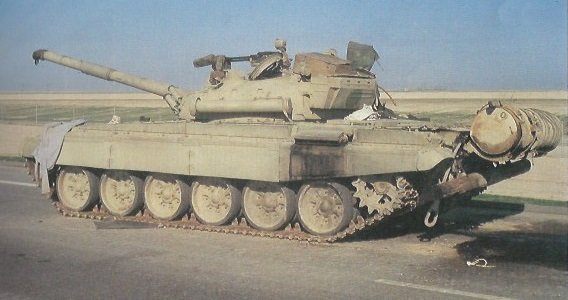
The Iraqi Republican Guard was Saddam’s best — the elite armored divisions he had carefully cultivated into a first-class fighting force during the Iran-Iraq War. Three of those divisions led the assault on Kuwait. They crossed the border along multiple axes, their T-72 tanks bearing down on Kuwaiti military positions that were vastly outgunned and outnumbered.
Kuwait’s army had fewer than 20,000 soldiers. Some units fought back hard, including a Kuwaiti air force that managed to get planes off the ground and inflict losses on the invaders before the runways were captured. At Dasman Palace — the royal compound on the Gulf waterfront in Kuwait City — a fierce battle erupted as Kuwaiti soldiers and palace guards tried to hold back Iraqi commandos. During the fighting, Sheikh Fahad Al-Ahmad Al-Jaber Al-Sabah, a brother of the emir, was killed defending the gates.
The emir himself, Sheikh Jaber Al-Ahmad Al-Sabah, escaped across the border into Saudi Arabia just ahead of the advancing columns. The government-in-exile would operate from Taif, Saudi Arabia for the next seven months.
By mid-morning on August 2, it was over. Iraq declared Kuwait its “19th province.” Saddam Hussein had added 20 percent of the world’s proven oil reserves to his control — and, for the first time, Iraq had a substantial outlet to the Persian Gulf.
The World Reacts
The United Nations Security Council convened within hours of the invasion. In a remarkable display of Cold War-era cooperation — the Soviet Union and the United States sitting on the same side — the Council unanimously passed Resolution 660, condemning the invasion and demanding Iraq’s immediate, unconditional withdrawal. It was the first time in decades that the two superpowers had agreed on a military crisis in real time.
In Washington, President George H.W. Bush cut short a Maine vacation and returned to the White House. The concern wasn’t just Kuwait — Saudi Arabia, sitting next door with the world’s largest oil reserves, suddenly looked vulnerable. If Saddam kept moving south, the global economy could be held hostage.
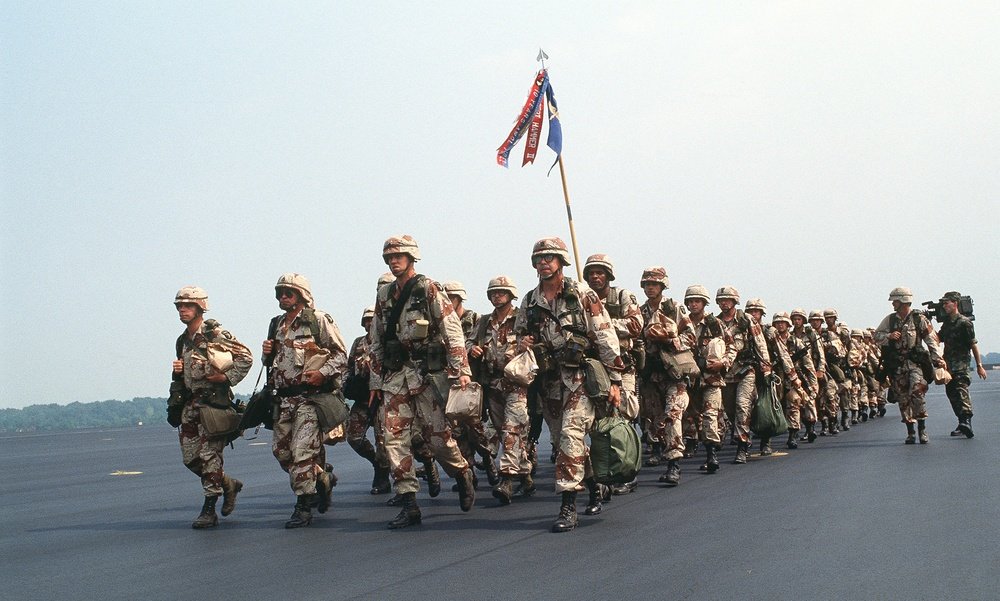
On August 7 — five days after the invasion — Bush announced Operation Desert Shield, the massive deployment of American forces to Saudi Arabia. The airlift that followed was the largest since the Berlin Airlift of 1948-49. Within weeks, hundreds of thousands of US troops were arriving in the Saudi desert, joined by coalition partners from the UK, France, Egypt, Syria, and more than two dozen other nations.
Seven Months of Occupation
For the Kuwaiti people, the months that followed were a nightmare. Iraqi forces looted the country systematically — stripping hospitals of equipment, emptying banks, stealing artwork from museums. Kuwaiti civilians who resisted faced arrest, torture, and execution. Human rights groups documented summary killings and disappearances during the occupation. Thousands of foreign nationals were trapped inside Kuwait and used by Saddam as “human shields” at military installations, a move that drew worldwide condemnation.
Meanwhile, the coalition kept growing and the diplomatic pressure intensified. UN sanctions tightened. The Security Council passed Resolution 678 in November 1990, authorizing “all necessary means” to remove Iraq from Kuwait if it did not withdraw by January 15, 1991. Saddam did not budge.
Desert Storm and the Fires of Kuwait
On January 17, 1991, Operation Desert Storm began with a devastating air campaign. For six weeks, coalition aircraft hammered Iraqi military positions in Kuwait and targets across Iraq. Then, on February 24, the ground assault began. In just 100 hours — four days — coalition forces swept through Kuwait and shattered the Iraqi army. It was one of the most lopsided military victories in modern history.
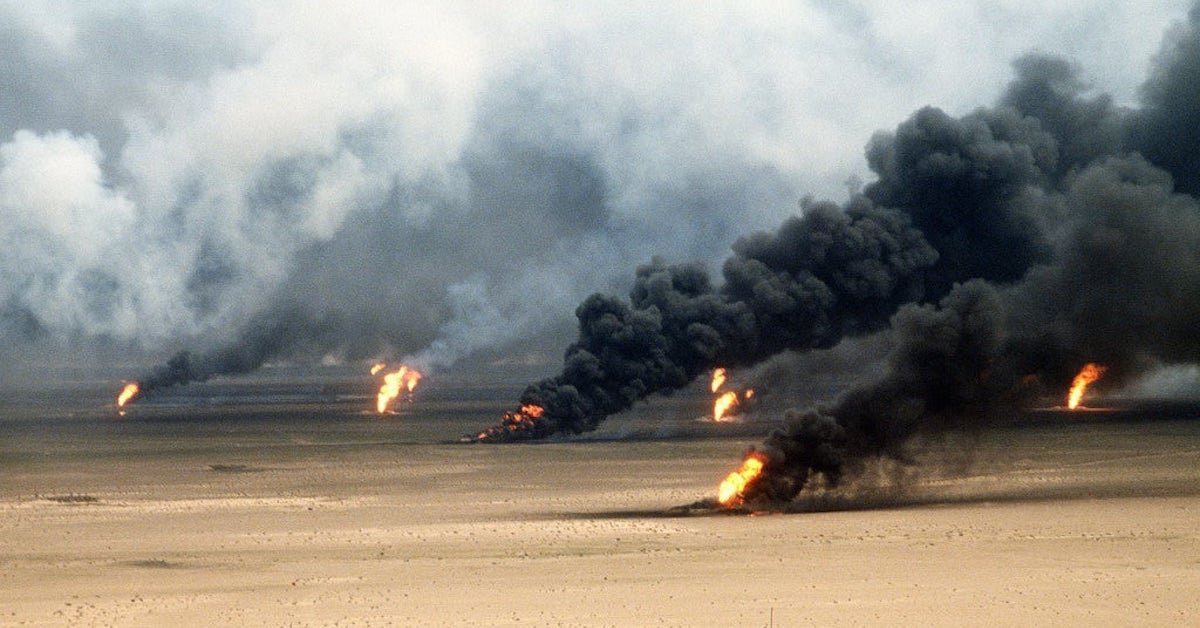
But Saddam ordered one final act of destruction as his forces retreated: the deliberate setting of nearly 700 Kuwaiti oil wells on fire. The sky over Kuwait turned black. Fires visible from space burned for months. It took an international team of oil-well firefighters, working through 1991, to finally extinguish every last flame. The environmental and economic damage was staggering — but Kuwait was free.
Why August 2, 1990 Still Matters
The invasion of Kuwait set in motion a chain of events whose consequences are still being felt today. It established a permanent US military presence in Saudi Arabia — a decision that became one of the stated grievances of Al-Qaeda and colored Middle Eastern politics for decades. It gave the United Nations an unexpected moment of post-Cold War relevance, showing what collective security could look like when the major powers agreed. And it ended the illusion that Saddam Hussein was just a regional strongman who could be managed.
On the morning of August 2, 1990, the world that existed the night before was already gone. The invasion of Kuwait was a hinge point — one of those rare events that genuinely divides the before from the after. For the people of Kuwait who lived through the occupation, and for the soldiers of 34 nations who came to liberate them, that date is burned into memory as surely as any in the modern era.
Love the retro era? Browse our shop for vintage finds, retro clothing, and 80s/90s nostalgia gear.
The Retro Almanac
A monthly roundup of "on this day" highlights from that month, decades back — plus first dibs on new retro merch drops. No spam, just the good stuff.