On This Day: September 16, 1993 — Frasier Landed on NBC and Nobody Saw It Coming
The night Frasier premiered, it aired right after Seinfeld in the 9:30 PM slot on NBC’s Thursday lineup — the most coveted real estate in 1993 American television. That scheduling wasn’t charity. NBC had just lost Cheers after 11 seasons, and the network needed something capable of holding an audience that had spent the summer grieving. What it got instead was a show about a radio psychiatrist arguing with his retired cop father over a plaid recliner. And somehow, that was exactly enough.
The Spin-Off Nobody Wanted to Make
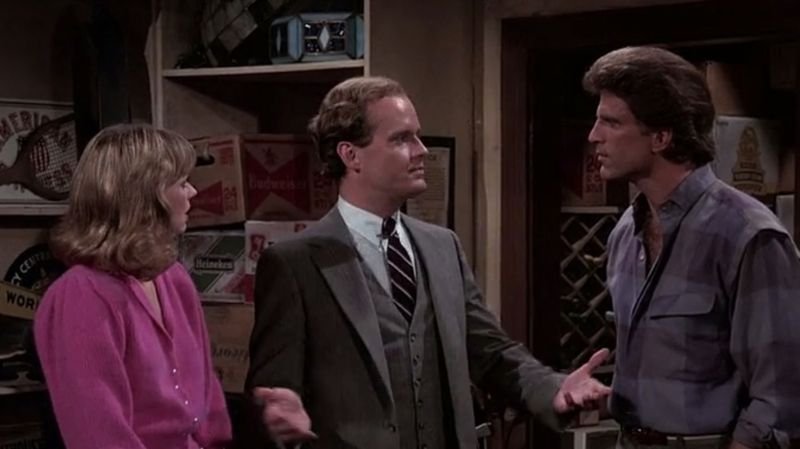
Kelsey Grammer had been playing Dr. Frasier Crane for nearly a decade by the time Cheers ended in May 1993. The character started as a temporary distraction in season 3 — someone for Diane to have an affair with while she was cooling on Sam — and was only supposed to appear for a handful of episodes. By season 5 he was a series regular. By the finale, he was the character viewers were most curious about after the bar closed for good.
The Retro Almanac
A monthly roundup of "on this day" highlights from that month, decades back — plus first dibs on new retro merch drops. No spam, just the good stuff.
Frasier Crane arrived in the Cheers bar in 1984 as a temporary character — and never left.
NBC and Paramount wanted to capitalize on that curiosity. Grammer did not. His preference was to leave Frasier Crane behind entirely and play something new — specifically, he’d pitched an idea about a paralyzed media mogul in Manhattan being cared for by a nurse. Paramount passed. After some negotiation, Grammer agreed to revive Frasier, but under one condition: the new show had to feel nothing like Cheers.
The creators — David Angell, Peter Casey, and David Lee — agreed completely. The plan was to strip away everything familiar: no Boston, no bar, no Sam Malone, no waitresses, no Cliff Clavin monologues. The show would follow Frasier back to his hometown, give him a radio show, and saddle him with a father he’d spent years drifting away from. The central conflict wouldn’t be romantic. It would be about class, comfort, and two men who couldn’t talk to each other.
Why Seattle — and Why It Mattered
The choice of Seattle wasn’t purely aesthetic. Co-creator Peter Casey later confirmed that Seattle was selected partly because of its distance from Boston — putting an extra 1,000 miles between the two shows compared to a city like Denver. The further from Boston, the less pressure there’d be to stage Cheers crossover episodes every other week. The creators wanted a clean break, not a slow fade.
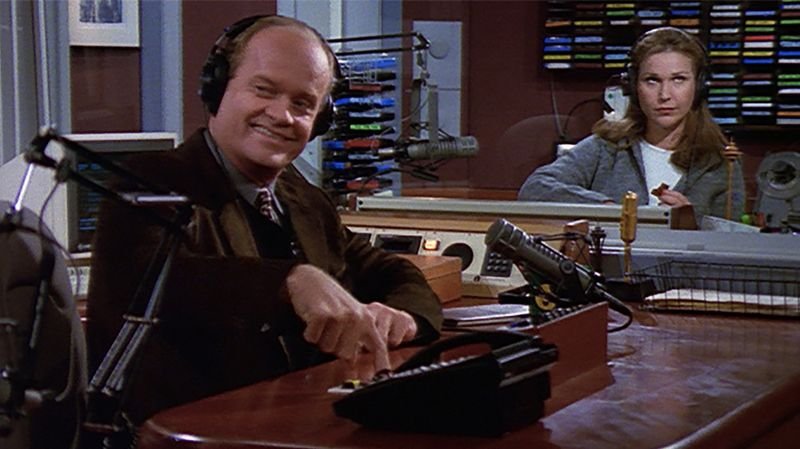
The KACL 780 AM radio booth became the show’s second home — and Roz Doyle its sharpest wit.
Seattle in 1993 also had cultural texture that worked in the show’s favor. Grunge was at its peak. Starbucks was beginning its national expansion from those same Pike Place Market roots. The city had an identity — slightly pretentious, aggressively intellectual, unapologetically Pacific Northwest — that fit Frasier Crane almost too perfectly. The fictional KACL 780 AM radio station became the show’s second home, and Roz Doyle’s sardonic producer energy was exactly the counterweight Frasier’s self-regard needed.
The Pilot That Got a Standing Ovation
The pilot, titled “The Good Son,” was filmed before a live studio audience on May 4, 1993 — just two months after Cheers aired its series finale to 80 million viewers. The pressure was considerable. Everyone in television knew what was riding on this.
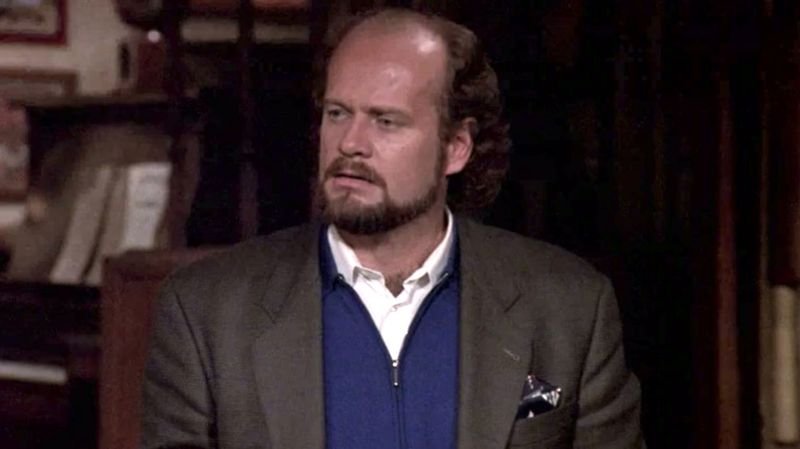
Grammer in the Cheers finale — two months later, he was filming the Frasier pilot in Seattle.
When filming wrapped that night, the audience gave the cast a standing ovation. It wasn’t something that happened often for a first episode. The pilot was directed by James Burrows — the same director who had shot the Cheers pilot in 1982 — and it went on to win an Emmy for the writing and the direction. It remains one of the strongest pilots in sitcom history: five distinct characters, fully established in 22 minutes, without leaning on a single one of its predecessor’s sets or storylines.
The Casting Accidents That Shaped the Show
Two of Frasier‘s best-known characters almost didn’t happen. Roz Doyle, the show’s sharp-tongued radio producer, was originally cast with Lisa Kudrow. She went through rehearsals with Grammer and the creative team before being let go — the producers felt the dynamic with Grammer wasn’t landing the way they needed. Peri Gilpin stepped in and brought a dry, exasperated sarcasm that clicked immediately.
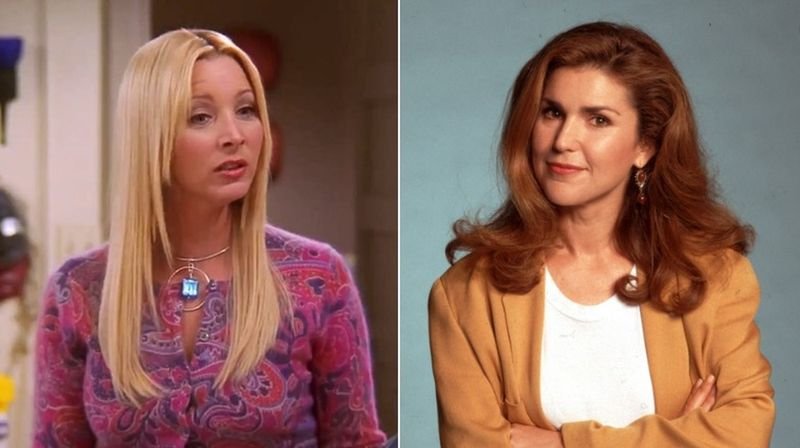
Lisa Kudrow (left) was cast as Roz before Peri Gilpin (right) took the role during rehearsals.
Kudrow landed Friends the following year and spent the next decade as Phoebe Buffay. Both shows then dominated NBC Thursday nights simultaneously — Seinfeld, Frasier, and eventually Friends and ER stacking the same evening into what NBC branded “Must See TV.”
Then there was Niles. David Hyde Pierce was cast partly because an assistant casting director noticed how closely he resembled a young Kelsey Grammer. The writers had conceived of Niles as a secondary character — Frasier’s even-more-pompous psychiatrist brother, good for a few jokes per episode. Pierce turned him into one of television’s great slow-burn romantic protagonists, spending seven seasons quietly in love with Daphne while the audience quietly lost their minds about it. That arc — understated, absurd, and genuinely moving — wasn’t fully planned. It evolved because Pierce made it too good to ignore.
Rosie Perez came close to playing Daphne Moon before Jane Leeves came in for a table read with Grammer. The chemistry was immediate. Leeves brought a Mancunian accent to a character from Manchester — despite growing up near London — and used a dialect coach to hold it consistent across all 11 seasons.
The $500,000 Apartment and the Plaid Chair
Frasier’s Seattle condo was designed to communicate one thing immediately: this is a man who has taste, has money, and has no real awareness of how much either of those things define him. The set cost approximately $500,000 to furnish. A Coco Chanel-style sofa alone ran around $15,000. The Barcelona chairs, the Eames ottoman, the built-in bookshelves — every piece was selected to signal aspiration.
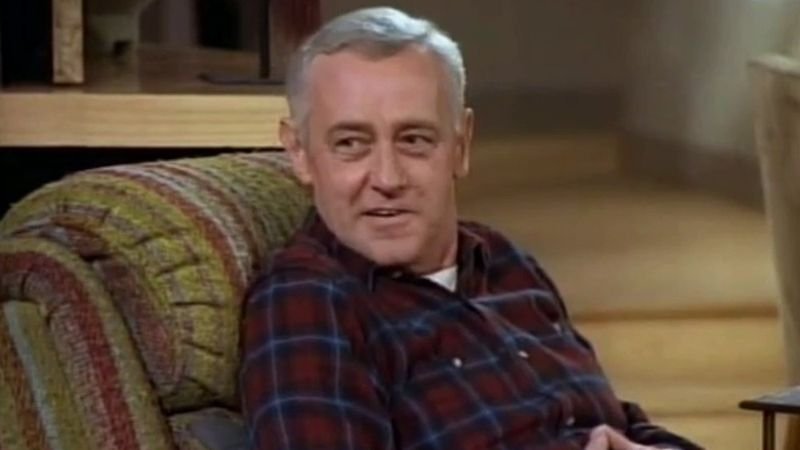
Martin’s beat-up plaid La-Z-Boy sat in the middle of that $500,000 set for 11 seasons.
And then Martin’s chair arrived. Martin Crane had moved into the apartment after a shooting injury left him needing care, and he brought his battered plaid La-Z-Boy with him. Frasier hated it. Martin refused to surrender it. The recliner sat in the middle of that $500,000 set for the entire run of the show and never stopped working as a joke. It was the whole series in a single image: one man’s carefully constructed idea of the good life, disrupted by someone who just wanted to be comfortable.
The father-son conflict that inspired the dynamic came from co-creator David Lee’s own experience with his father’s stroke — the stubbornness, the love underneath it, the way two people who care about each other can make each other miserable through sheer incompatibility. That emotional core is why the show held up. The Frasier Crane jokes are funny. The Frasier-and-Martin scenes are the reason people still watch it.
The Dog Who Got All the Fan Mail
Eddie was a Jack Russell Terrier played by a dog named Moose. He was famously difficult to work with, uncooperative with most of the cast, and would take direction from almost no one except his trainer. Kelsey Grammer has described getting Moose to produce specific reactions during takes as consistently unpredictable. The scenes where Eddie stares unblinkingly at Frasier while Frasier tries to ignore him? Those weren’t scripted behavior. That was just Moose doing Moose things.
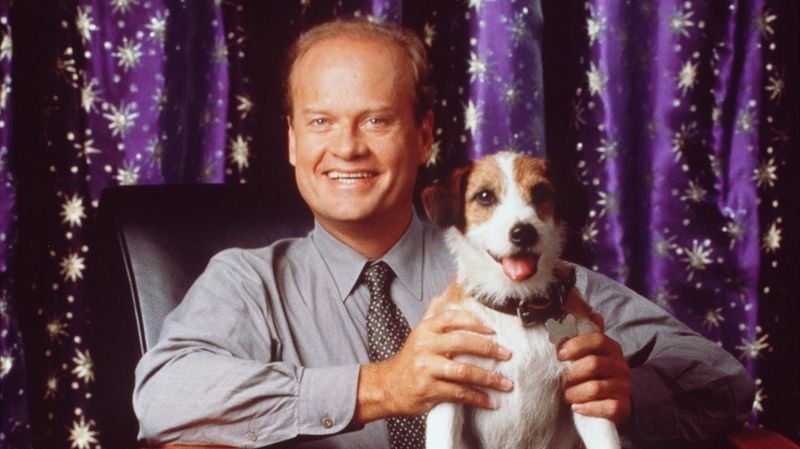
Moose the Jack Russell Terrier played Eddie — and received more fan mail than any human cast member.
When Frasier started topping the Nielsen ratings in its first season, Eddie received more fan mail than any human cast member. When Entertainment Weekly put Frasier on its cover in 1993, the only cast member photographed for that image was the dog. Moose retired after Season 7. His son Enzo stepped in for the remaining episodes. In a fitting coda, retired Moose — nearly 14 years old and mostly deaf — appeared onstage for the series finale’s curtain call. The audience stood up again.
37 Emmys and a Record That Took 12 Years to Break
Between 1994 and 1998, Frasier won the Emmy for Outstanding Comedy Series five consecutive times. No show had ever done that before. The record for total Emmy wins by a scripted series had been held by The Mary Tyler Moore Show at 29. Frasier finished its run with 37.
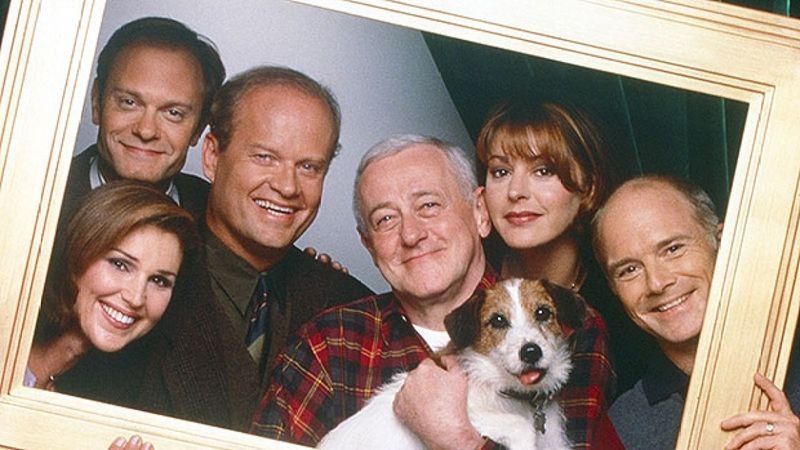
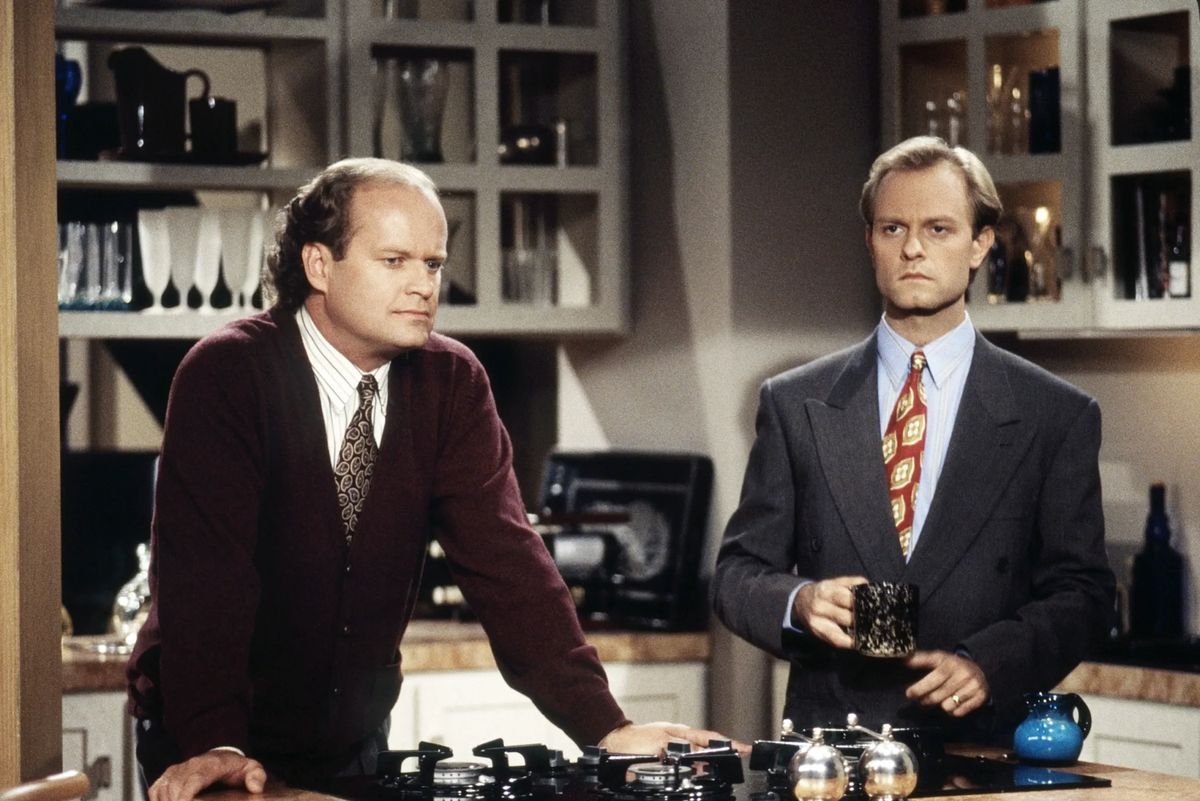
The Frasier cast — a $500,000 set, a plaid recliner, and 37 Emmys between them.
That record stood until 2016, when Game of Thrones reached 38. Kelsey Grammer played Frasier Crane across an era that also produced landmark TV moments — 20 consecutive years across Cheers and Frasier, earning Emmy nominations for the same character on three separate shows. The character who was only supposed to be around for a few episodes in 1984 became one of the longest-running protagonists in American sitcom history.
The show nobody wanted ran 264 episodes. The spin-off that was supposed to fail became the most decorated scripted series of its era. On September 16, 1993, it started with a standing ovation in a studio in Los Angeles — and spent the next 11 years earning another one every time someone sat down to watch. It still does.
For more 80s and 90s pop culture landmarks, see our pieces on the game that built the ESRB and the rise and fall of Blockbuster Video.
Love the retro era? Browse our shop for vintage finds, retro clothing, and 80s/90s nostalgia gear.
Sources
- Frasier — Wikipedia — Series history, Emmy records, and episode data.
- 18 Surprising Facts About Frasier — Mental Floss — Behind-the-scenes casting and production details.
- Most Emmy Awards for Best Comedy Series — Guinness World Records — Official record for Frasier’s Emmy total.
- Frasier Season 1 Review: 1993 — Hollywood Reporter — Original critical reception and premiere context.
The Retro Almanac
A monthly roundup of "on this day" highlights from that month, decades back — plus first dibs on new retro merch drops. No spam, just the good stuff.