On This Day: September 14, 1994 — Baseball Canceled the World Series
Selig didn’t hold a press conference. He sent a letter. Owners voted 26–2 to cancel the remainder of the season, and just like that, 921 games, the entire postseason, and baseball’s most sacred annual tradition were gone. The move cost MLB owners an estimated $580 million in revenue and players $230 million in salaries. It cost the sport something harder to quantify: a generation of fans who never fully came back.
The Strike That Started in August
Players walked off the job on August 12, 1994, after months of failed negotiations over one central issue: a salary cap. Owners wanted a ceiling on payroll. The Major League Baseball Players Association, led by Donald Fehr, refused. The union had been fighting for decades — from the reserve clause battles of the 1970s through Marvin Miller’s era-defining collective bargaining work — and they weren’t about to hand that ground back.
The Retro Almanac
A monthly roundup of "on this day" highlights from that month, decades back — plus first dibs on new retro merch drops. No spam, just the good stuff.
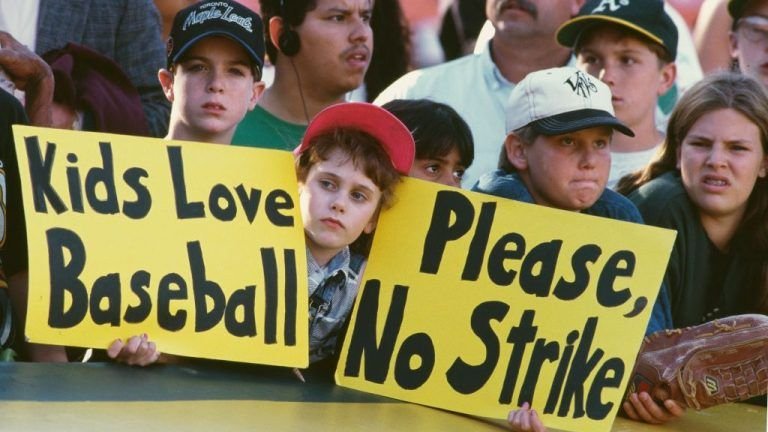
Young fans at Oakland Coliseum making their feelings known in August 1994. They weren’t wrong to be angry.
The sticking point wasn’t just the salary cap itself. Owners also wanted local broadcast revenue sharing, which players viewed as a mechanism to suppress salaries at the top of the market. Smaller-market teams had a legitimate complaint about competitive balance. In 1994, neither side was remotely interested in compromise. President Bill Clinton tried to intervene. Labor Secretary William Usery was brought in as a mediator. Nothing moved. As summer turned to fall, it became clear that no one was blinking, and the sport was going to pay the price.
A Season That Had No Business Ending Early
1994 was one of the most compelling seasons in baseball history. Not compelling the way sportswriters say things are compelling — actually compelling, the kind where you checked the box scores every morning because something historic was happening at five different positions simultaneously.
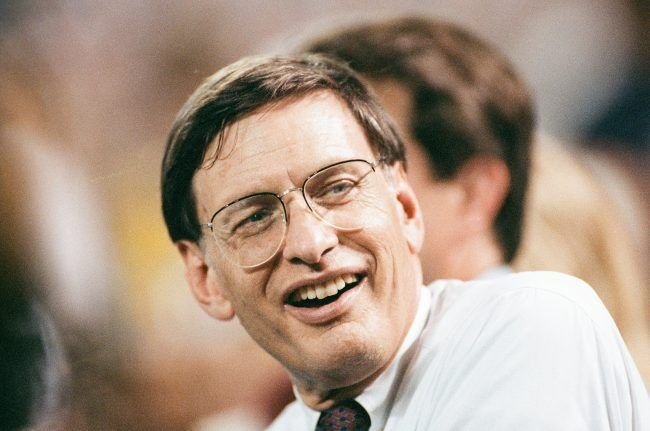
Bud Selig at the 1993 All-Star Game — twelve months before he made the call that would define his early tenure.
Tony Gwynn was batting .394 for the San Diego Padres, the highest mark since Ted Williams hit .406 in 1941. In August alone, Gwynn was hitting .475. He needed roughly 170 more at-bats over the remaining 45 games — and statistically, he was on pace to reach .400 for the first time in more than half a century. Matt Williams of the San Francisco Giants had 43 home runs in 115 games. Roger Maris’ record of 61 — still standing in 1994, four years before McGwire and Sosa — was in genuine danger. Williams was on pace for 61.5.
Behind him: Ken Griffey Jr. had 40 home runs and was tracking for around 58. Jeff Bagwell sat at 39. Frank Thomas at 38. Barry Bonds at 37. Six players were threatening 50 home runs in a single season. None of them got to finish. When Selig canceled the World Series on September 14, he wasn’t just ending a labor dispute. He was reaching into a glass case and smashing six potential historical records at once, along with the story of the sport’s most interesting pennant races in years.
Montreal: The Team That Never Got Its Shot
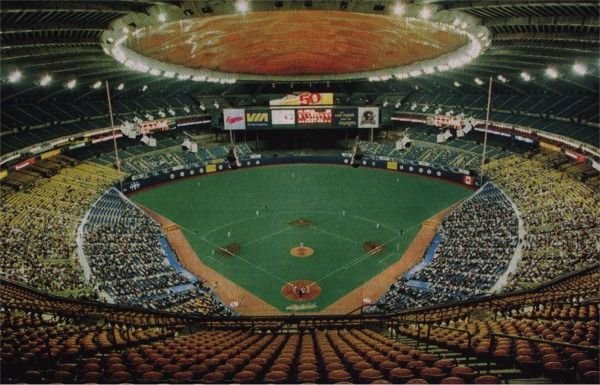
Olympic Stadium in Montreal — home of a 1994 Expos team that most baseball historians consider one of the great what-ifs in the sport.
The Montreal Expos held the best record in baseball when play stopped: 74 wins, 40 losses, 34 games over .500. Their roster looked built for a championship run. Moises Alou was finishing third in MVP voting. Marquis Grissom patrolled center field. Larry Walker had two Gold Gloves. On the mound, Ken Hill went 16–5 with the second-best Cy Young numbers in the National League. Jeff Wetteland closed with 25 saves.
And a 22-year-old Pedro Martinez was 11–5 in his first full season as a starter, averaging a strikeout per inning, previewing what he would become. The New York Yankees (70–43) were the likely World Series matchup. Felipe Alou’s Expos, had they played October baseball that year, almost certainly would have been World Series favorites. Instead, the front office spent the offseason selling off its best players to stay financially solvent. The franchise relocated to Washington as the Nationals in 2005. The 1994 championship window remains the longest footnote in baseball history, a team that peaked when the plug got pulled.
September 14: The Official Kill Shot
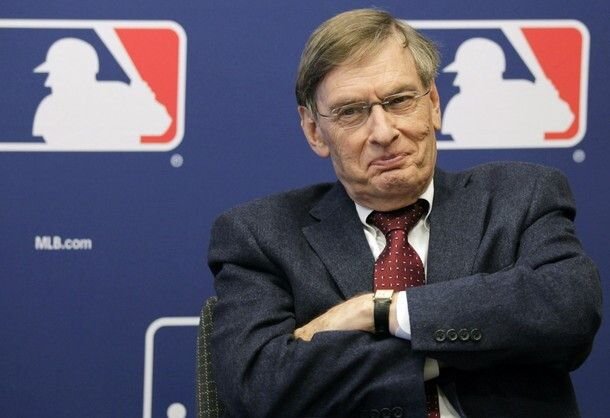
Bud Selig, acting commissioner since Fay Vincent’s resignation in 1992, made a call no commissioner had made since the early 1900s.
The owners’ vote was 26–2. Selig made the announcement on September 14, 1994, and the postseason simply ceased to exist. No wild-card races. No pennant series. No World Series. For the first time in 90 years, baseball didn’t crown a champion.
The last time a World Series wasn’t played was 1904, when the New York Giants’ owner refused to play the Boston Americans out of spite over a territorial dispute. That cancellation was one man’s pettiness. This one was an act of mutually assured destruction — both sides damaged themselves badly, but they damaged the fans most of all. The people who had no seat at the negotiating table were the ones left with an empty October.
The Ball That Never Got Used
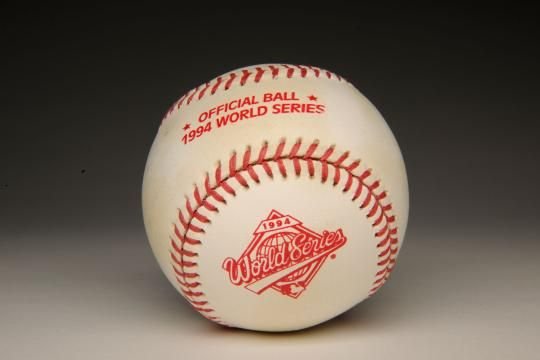
A 1994 World Series baseball, now in the Baseball Hall of Fame. Manufactured. Printed. Never used.
The Baseball Hall of Fame in Cooperstown has an artifact that’s hard to look at if you grew up watching the game in the 1990s: an official 1994 World Series baseball. The leather is pristine. The stitching is perfect. It has never been thrown in anger, never been fouled off into the seats, never smacked a glove in the bottom of the ninth of a game that mattered.
That ball sits alongside the human cost of the decision: $580 million in lost ownership revenue, $230 million in lost player salaries, 921 unplayed games. It also represents something that doesn’t fit in a spreadsheet — the trust between the sport and the people who watched it, which cracked in September 1994 and never fully healed. The Hall of Fame’s own exhibit on the strike frames it as a turning point that reshaped the sport’s economics for decades.
When Baseball Finally Started Coming Back

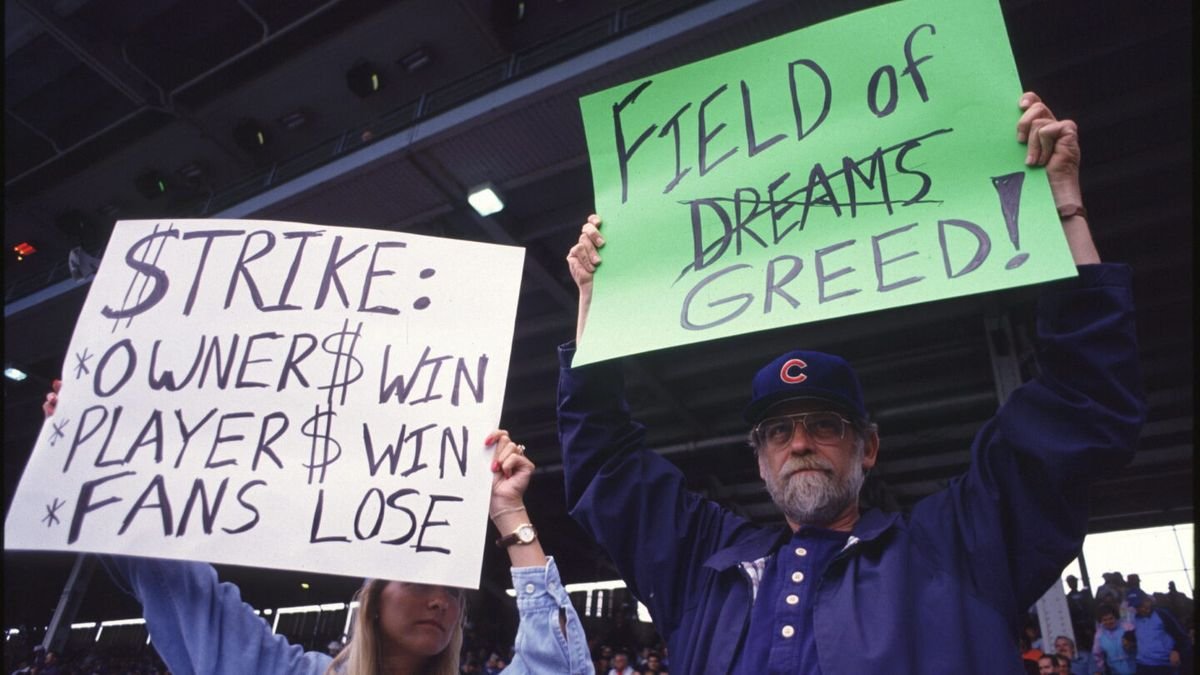
Fan frustration was real and it lasted. Attendance figures confirmed it for years after the strike ended.
The 1995 season started late — April 25 — after then-District Judge Sonia Sotomayor issued a preliminary injunction against the owners’ unfair labor practices and forced the sides back to the table. Even then, fans stayed away. Montreal drew fewer than 750,000 in 1995, roughly half of what they’d pulled in 1994. According to SABR’s research on the work stoppage, attendance league-wide declined sharply in 1995 and took years to recover.
The first real turning point came from an unexpected corner. On September 6, 1995, Cal Ripken Jr. broke Lou Gehrig’s consecutive games record by playing his 2,131st straight game at Camden Yards. For one night, baseball remembered something: a man who showed up every single day, without complaint, while two sides of a labor dispute had spent the previous year calling each other names. It wasn’t enough to fix everything, but it was enough to remind people why they’d cared in the first place.
Three years later, Mark McGwire and Sammy Sosa chased Roger Maris’ home run record — the exact record Matt Williams had been threatening in 1994. The 1998 chase filled stadiums again, though it’s now largely seen through the lens of the era’s complicated relationship with shortcuts. In baseball’s case, the shortcut was performance-enhancing drugs. The sport got its audiences back, but the method left another wound.
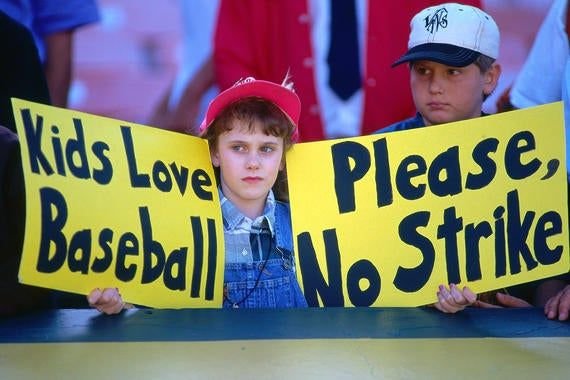
Fans made clear they weren’t just bystanders in this dispute — they were the ones with the most to lose.
Tony Gwynn was asked about .400 in interviews for the rest of his life. He consistently said he thought he would have gotten there. He finished his career with eight batting titles and a .338 lifetime average and was inducted into the Hall of Fame in 2007. He died of cancer in 2014 at 54, never having found out for certain. Matt Williams hit 43 home runs in 1994 and never hit more than 35 in any season after that. The record that Pete Rose had set in baseball a decade earlier — the hits mark — was at least allowed to be broken on the field. Williams, Gwynn, the Expos, and six other potential landmark seasons never got that chance.
Bud Selig was inducted into the Baseball Hall of Fame in 2017. The 1994 World Series ball is still in Cooperstown. The Montreal Expos have been gone for over two decades. September 14, 1994 was the day baseball decided that two sides of a financial argument mattered more than the game itself — and the sport spent a very long time living with the consequences.
Love the retro era? Browse our shop for vintage finds, retro clothing, and 80s/90s nostalgia gear.
Sources
- MLB Cancels Playoffs, World Series — History.com — Confirmed date and details of Selig’s September 14, 1994 announcement.
- Tony Gwynn Ends Strike-Shortened Season at .394 — SABR — Gwynn’s final 1994 statistics and analysis of his .400 chase.
- MLB Strike — Baseball Hall of Fame — Hall of Fame’s account of the 1994–95 strike, including the unused World Series ball artifact.
- An Oral History of the 1994 MLB Strike — ESPN — First-person accounts from players, executives, and fans on the strike’s impact.
- 1994 Montreal Expos Statistics — Baseball Reference — Full 1994 Expos season statistics, confirming their 74–40 record.
- 1994 Winter Meetings and Strike Resolution — SABR — Detailed account of the labor negotiations and eventual resolution.
The Retro Almanac
A monthly roundup of "on this day" highlights from that month, decades back — plus first dibs on new retro merch drops. No spam, just the good stuff.