Before Streaming, There Was Yo! MTV Raps
In 1990, if you wanted to hear hip-hop in the suburbs, you had to know somebody. You had to have a cousin in Brooklyn, a classmate who taped rap shows off the radio, or you had to haunt the record store bins in neighborhoods where the genre was actually alive. Mainstream American media treated hip-hop as a curiosity at best and a threat at worst. MTV, the dominant force in music discovery for the 1980s generation, was essentially a rock and pop channel. Then a Brooklyn graffiti artist talked a cable network into giving him a Saturday slot, and in a very short time, the world sounded different.
Before the Show, There Was Only the Block
Hip-hop had been building since the late 1970s, and by 1987 it had produced records that were unmistakably cultural events. Run-DMC’s collaboration with Aerosmith on “Walk This Way” had cracked the rock world open. Public Enemy’s debut arrived with the energy of something that didn’t care whether mainstream radio was ready. LL Cool J was putting stadiums full of people in a headlock with a boom box and a Kangol hat. The music was impossible to ignore if you were paying attention — and most of mainstream television was deliberately not paying attention.
Hip-hop videos, when they existed, rarely found their way into MTV’s standard rotation. Radio gatekeepers in suburban markets kept the dial clean. For millions of Gen X teenagers outside of New York, Los Angeles, and a handful of cities with strong hip-hop scenes, the Golden Age of hip-hop was happening in a parallel universe — audible in flashes, electric when you caught it, but structurally blocked from reaching you through the channels everyone else used. That was the situation in the summer of 1988.
The Retro Almanac
A monthly roundup of "on this day" highlights from that month, decades back — plus first dibs on new retro merch drops. No spam, just the good stuff.
Fab 5 Freddy and the Show MTV Didn’t Know It Needed
Fred Brathwaite — better known as Fab 5 Freddy — was a Brooklyn-born graffiti artist, filmmaker, and hip-hop ambassador who understood something most television executives in 1988 did not: hip-hop was a complete culture, not just a music genre, and it was ready for its close-up. He lobbied for and secured a weekly Saturday evening slot on MTV, and on August 6, 1988, Yo! MTV Raps debuted. The first episode featured Run-DMC, LL Cool J, and DJ Jazzy Jeff & The Fresh Prince.
The debut ratings were strong enough to turn what might have been a one-off experiment into something the network had to take seriously. The show had a feeling about it — loose, knowledgeable, alive — that was unlike anything else on MTV. Fab 5 Freddy hosted the way someone from the culture would: without the polished television distance that makes hosts feel like they’re visiting a foreign country. He was already home. Viewers could feel the difference immediately.
What made the show unusual was its refusal to explain hip-hop to an audience that didn’t already know it. There was no condescending narration, no context-setting for the uninitiated. Yo! MTV Raps assumed you were already in the room. For kids in the suburbs who knew nothing about the culture, that assumption was an invitation — and they accepted it in large numbers.
Going Daily — Ed Lover, Doctor Dré, and the Ritual
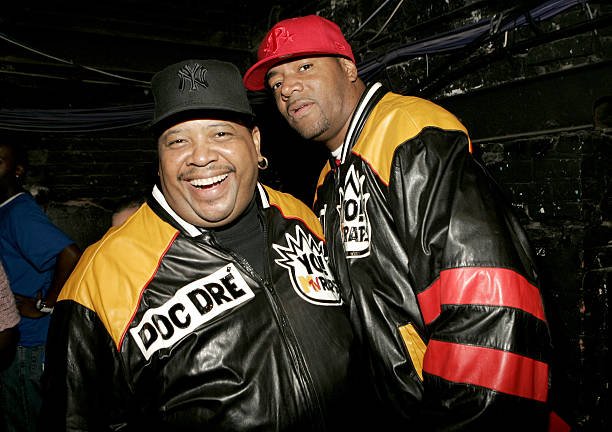
By September 1989, the show expanded to a daily weekday format. The new daily edition brought in two Brooklyn comedians as hosts: Ed Lover and Doctor Dré — emphatically not the same Dr. Dre who would go on to produce The Chronic and launch Snoop Dogg’s career. André Brown, known on air as Doctor Dré, and Edward Archer, known as Ed Lover, became the faces of hip-hop television for the next half-decade. Their chemistry was the show’s engine.
Ed Lover and Doctor Dré were funny in a way that felt earned rather than scripted. They cracked on each other, laughed during interviews, and brought an irrepressible energy that made the whole enterprise feel like a party you’d been invited to. For suburban kids who’d never been to a block party in the South Bronx or Compton, the daily show was the next best thing — a window into a culture that was crackling with creativity and going largely uncovered everywhere else on television.
The format was deceptively simple: videos, interviews, and location shoots. But the execution was everything. Yo! MTV Raps went to the neighborhoods hip-hop came from. It showed audiences Compton, Queensbridge, and East New York not as crime scenes but as places where a specific, extraordinary culture was thriving. Hip-hop had a geography, a history, and a set of internal loyalties — and the show communicated all of that without condescension. The culture came through whole.
The Artists the Show Made Famous

Between 1988 and 1995, Yo! MTV Raps functioned as the primary bridge between hip-hop’s street origins and mainstream American consciousness. The list of artists who got their first significant national television exposure on the show reads like a complete syllabus for the Golden Age of hip-hop: Public Enemy, N.W.A, MC Hammer, De La Soul, A Tribe Called Quest, Ice Cube, Queen Latifah, TLC, Arrested Development, Cypress Hill, Snoop Dogg, Wu-Tang Clan, Nas, The Notorious B.I.G., Jay-Z. Nearly every act that defined the decade passed through that studio.
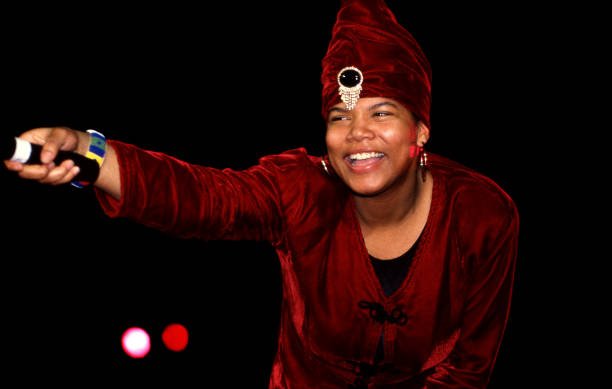
The show was particularly important for female MCs during the Golden Age of hip-hop. Queen Latifah, MC Lyte, Salt-N-Pepa, and later Lil’ Kim and Foxy Brown all received significant airtime at moments when hip-hop’s growing commercial machinery was already beginning to sideline women. The show’s consistent support of female artists wasn’t accidental — it reflected a genuine editorial commitment to representing the full range of what the culture was producing, not just the most commercially obvious version of it.
The show also documented hip-hop’s regional expansion in real time. The Golden Age was never just New York — it was Compton, Atlanta, Houston, New Orleans, and dozens of other cities developing their own distinct sounds. When OutKast arrived from Atlanta with something unlike anything the coasts were producing, the show was there. When UGK started getting broader recognition from the South, the cameras went south. Yo! MTV Raps tracked the music wherever it was happening, which turned out to be everywhere at once.
Watching the Golden Age Happen in Real Time
The period hip-hop historians call the Golden Age — roughly 1990 through 1999 — produced some of the most celebrated and analytically complex records in the genre’s history. The Chronic in 1992. Midnight Marauders in 1993. Illmatic, Ready to Die, and Southernplayalisticadillacmuzik all in 1994. The Score, Reasonable Doubt, All Eyez on Me, and ATLiens in 1996. The music arrived fast and in waves, and for the years it aired, Yo! MTV Raps was where Gen X first got their eyes on the artists making it.
The show’s afternoon weekday timeslot meant that kids coming home from school could catch it before dinner. Parents might walk through the living room and pause — uncertain about what exactly they were hearing, the directness of the lyrics, the energy that felt simultaneously familiar and completely foreign. The kids already knew. This was the most important music happening anywhere, and somebody had finally put it on television.
What Yo! MTV Raps communicated that radio couldn’t was the belonging — the visual language of the culture, the fashion, the specific way people carried themselves in a world where hip-hop wasn’t just entertainment but identity. For millions of Gen X teenagers who encountered it through the show, this wasn’t just music they liked. It was the first time they felt found by something.
Why MTV Pulled the Plug
By 1993, Yo! MTV Raps was one of the highest-rated programs on the network. It had helped keep MTV relevant with younger viewers even as the channel was diversifying away from music videos into game shows and news programming. But by 1994 and 1995, the network’s corporate priorities had shifted decisively toward alternative rock. Nirvana had opened a commercial door that advertisers were eager to walk through. Hip-hop’s core audience — predominantly Black and urban — was not the demographic that the network’s advertising structure was organized around rewarding.
The daily show was cancelled in late 1995. The weekly version ended on August 17, 1995. The timing is worth sitting with: the show disappeared just as the Golden Age of hip-hop was about to produce some of its greatest records. Jay-Z’s debut Reasonable Doubt, the Fugees’ The Score, Nas’s It Was Written, OutKast’s ATLiens — all of these dropped in 1996, after the lights had already gone out on the show that would have covered them best.
After Yo! MTV Raps — BET, Rap City, and What Survived
When the show ended, BET’s Rap City — which had been running since 1989 — absorbed much of the hip-hop television audience through the second half of the decade. It was a solid show, but it didn’t carry the specific cultural leverage of being on MTV, of being the place where suburban America met hip-hop for the first time. The Source magazine remained the print institution of the culture’s critical conversation. The community found other channels, because the music kept coming and the audience kept growing.
But nothing replaced the specific position that Yo! MTV Raps had held. The show had normalized hip-hop for mainstream American audiences at a moment when that normalization was still genuinely contested. It had taken an art form that powerful gatekeepers in media were working to dismiss or ignore and put it on the most visible music channel in the country, on a daily basis, in front of everyone — including the suburban Gen X teenagers who had no other reliable pipeline to it. When the show ended, that pipeline closed, and hip-hop had to find different routes to the mainstream.
The Show That Answered Before Anyone Asked the Question
The Golden Age of hip-hop (1990–1999) produced music that is still sampled, still studied, still cited by artists working in every genre on earth. The records deserve every bit of their legendary status. But the culture that turned those records into generational touchstones was built in part by a platform that first put them in front of a mass audience — a platform that existed because a Brooklyn graffiti artist convinced a cable channel to take a chance on something it didn’t fully understand.
For the Gen X listeners who grew up watching Yo! MTV Raps, the show was an education, an invitation, and in many cases a first contact with a world their immediate geography never would have shown them. The artists who came through that studio — in fresh sneakers, saying things that made network executives uncomfortable — built something that is now the defining musical force of the contemporary world. Yo! MTV Raps made sure a whole generation got to watch it happen, even the kids who had no business knowing about it yet.
Sources
The Retro Almanac
A monthly roundup of "on this day" highlights from that month, decades back — plus first dibs on new retro merch drops. No spam, just the good stuff.