South Central 1992: The Forgotten Hood Film
Warner Bros. gave South Central 37 screens and a single weekend to prove itself. It pulled in $147,629 and was gone from theaters within weeks, buried under a release calendar that already had Boyz n the Hood a year ahead of it and Menace II Society a year behind. Rotten Tomatoes still has it sitting at 78% fresh with critics who called it one of the best independent films of the year — the kind of praise that usually buys a movie decades of cultural staying power. South Central never got that. It became the hood film people forget they’ve seen.
What South Central Is Actually About
Glenn Plummer plays Bobby “Badass” Johnson, a member of the Hoover Street Deuces who kills a rival gang’s leader and spends ten years at Youth Authority and prison for it. While he’s locked up, his girlfriend Carole (LaRita Shelby) raises their son Jimmie alone, and by the time Bobby gets out, Jimmie (Christian Coleman) has already been pulled into the same crew his father never escaped. The back half of the film is Bobby trying to break a cycle he helped build, racing against a world that recruits ten-year-olds faster than any parent can talk them out of it.
The Retro Almanac
A monthly roundup of "on this day" highlights from that month, decades back — plus first dibs on new retro merch drops. No spam, just the good stuff.
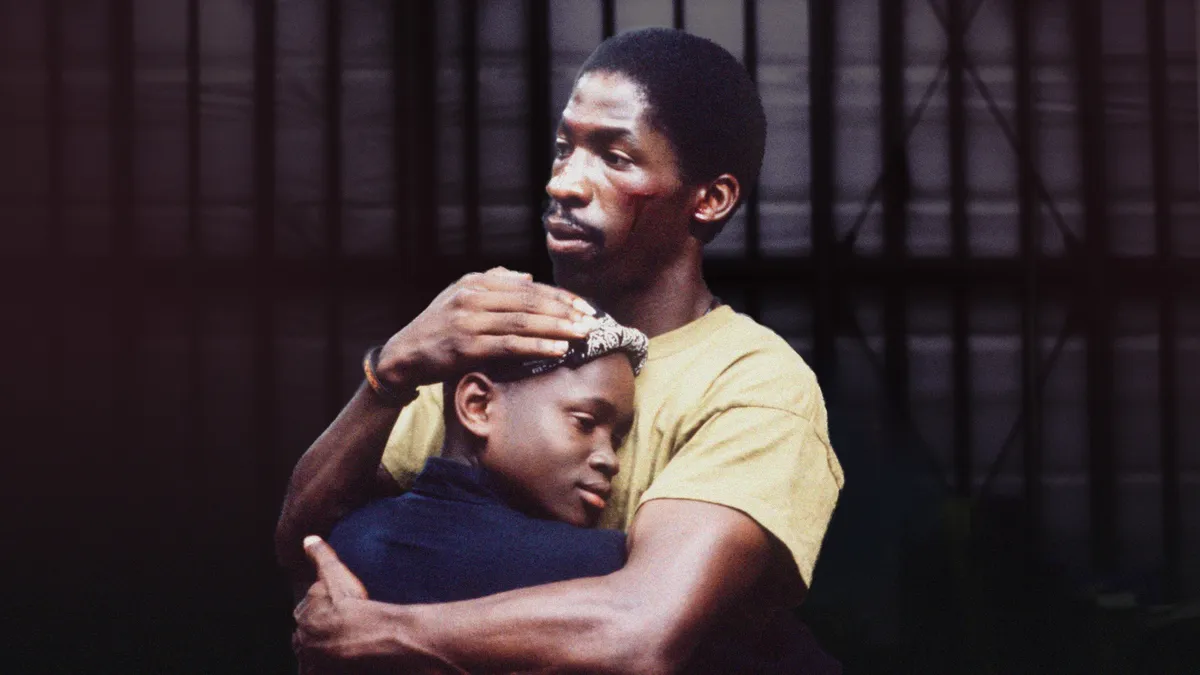
Bobby Johnson (Glenn Plummer) and his son Jimmie (Christian Coleman) — the relationship the entire film is built around.
Inside, Bobby finds a different kind of structure through a fellow inmate named Ali (Carl Lumbly), a Muslim man who talks him toward discipline and self-respect instead of retaliation. It’s a quieter version of the prison-redemption arc than most hood films bother with — no triumphant speech, just a slow rebuild that the movie trusts the audience to sit with.
Why Oliver Stone Put His Name on It
Stephen Milburn Anderson wasn’t a known commodity in 1992. He’d made a short film called Hearts of Stone that played Sundance and landed as an Academy Award runner-up, and that was enough to get Oliver Stone’s attention. Stone produced South Central alongside William B. Steakley and Janet Yang, and the backing meant Anderson got a real budget — $4 million — and Warner Bros. distribution for what was essentially a first-time director’s vision of a neighborhood most studios wouldn’t touch with a real budget at all.
The attention followed. Janet Maslin named Anderson in The New York Times’ “Who’s Who Among Hot New Filmmakers” that year, in the same breath as Quentin Tarantino and Tim Robbins. That’s rarefied company for a director whose only previous credit was a short film — and it’s part of why South Central’s commercial disappearance feels so strange in hindsight.
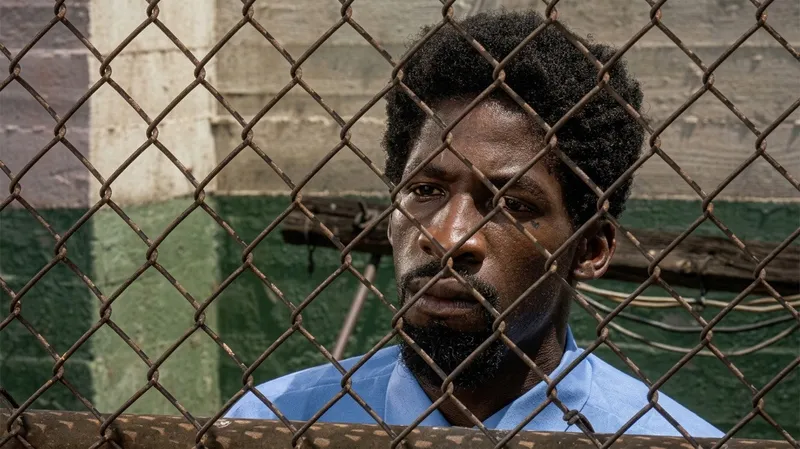
Plummer’s ten-year prison sentence is the hinge the entire plot turns on.
The Real South Central Street Gang Story Behind the Script
South Central isn’t an original screenplay dressed up as realism. It’s adapted from Donald Bakeer’s 1987 novel Crips: The Story of the L.A. Street Gang from 1971-1985, written by a man who taught high school English in South Central and watched the gang system swallow his own students. Bakeer’s characters were composites of Raymond Washington and Stanley “Tookie” Williams, the two men most often credited as the Crips’ founders — which means Bobby Johnson isn’t based on one person so much as he’s built from the actual origin story of the gang itself.
By most accounts Bakeer sold Anderson the film rights for a single dollar, trusting a young director he’d met while Anderson was researching the South Central neighborhood for Hearts of Stone. Bakeer stayed on as a consultant through production, even though Anderson’s finished script departed from his book in plenty of places. It’s a rare case of a street-level source author getting real creative proximity to the Hollywood adaptation of his own life’s work, instead of getting a check and a “based on” credit and nothing else.
They Put Real Crips in the Film as Extras
According to a September 27, 1992 Los Angeles Times report, the production didn’t just set a story in South Central — it filmed there, with permission from the gangs whose blocks they were shooting on, and it hired actual Crips members as background actors. That’s a production decision most studios wouldn’t sign off on for insurance reasons alone, and it’s a big part of why the film reads as lived-in rather than staged, even in its weaker scenes. Boyz n the Hood had the benefit of John Singleton’s own South Central upbringing driving the authenticity. South Central got there by putting the real neighborhood on camera.

A crew confrontation scene from the film — several of the background faces were real Crips members, per the LA Times’ 1992 production report.
Why Boyz n the Hood Ate Its Lunch
Timing killed South Central more than quality ever could. Boyz n the Hood opened in July 1991 to $57.5 million domestic and instant canon status, and by the time South Central reached theaters fourteen months later, the entire “South Central gang drama” lane had already been claimed, reviewed, debated, and partially exhausted by one movie. Critics who loved South Central kept comparing it to Singleton’s film in the same sentence they praised it, and that comparison is exactly the kind of thing that keeps a movie out of the conversation permanently — it becomes “the other one” before audiences even see it.
There’s also a tonal difference that worked against South Central commercially. Boyz n the Hood built toward one explosive, cathartic night. South Central is slower and more procedural about how a decade in prison actually reshapes a person, which makes for a better character study and a tougher sell on a Friday night in 1992. Ebert gave it three stars and praised exactly that restraint — the way it refuses to romanticize the retaliation cycle or offer an easy redemption beat — but restraint doesn’t fill 37 screens on opening weekend.

A Soundtrack Built on West Coast Heavyweights You Don’t Hear About
South Central’s soundtrack never gets name-checked next to Boyz n the Hood’s or Menace II Society’s, which is a little unfair considering who’s actually on it. Scarface opens with “Street Life,” Hi-C and DJ Quik team up on “2 Skanless” alongside AMG and KK, and Boo-Yaa T.R.I.B.E. contributes “Rumors of a Dead Man.” It’s a blend of hip-hop, R&B, and soul recorded at Cherokee Recording Studios in Hollywood — no Ice Cube, no Tupac, nobody whose name alone sells a soundtrack, which is probably another reason this one got lost. The music fits the movie’s mood instead of trying to be its own event, and in 1992 that was a commercially risky choice.

Promotional art for South Central, leaning into the father-son relationship at the center of the story.
What Happened to the Cast
Glenn Plummer’s performance won him the Chicago Film Critics Association’s Most Promising Actor award, and he kept working steadily through the 90s and 2000s in everything from Speed to Showgirls to television guest spots — a solid, durable career that never quite cashed in the leading-man momentum South Central should have bought him. Christian Coleman picked up a Young Artist Award nomination for playing Jimmie and continued acting into adulthood. Carl Lumbly, who plays Ali with the kind of quiet authority that makes the prison scenes work at all, went on to become a genre-TV mainstay — M.A.N.T.I.S. the following year, then a long run as Marcus Dixon on Alias a decade later, and more recently a role in Captain America: Brave New World. Director Stephen Milburn Anderson directed sporadically after this — including 2010’s Cash with Chris Hemsworth and Sean Bean — but never matched the acclaim South Central brought him, and he passed away in Denver in 2015.
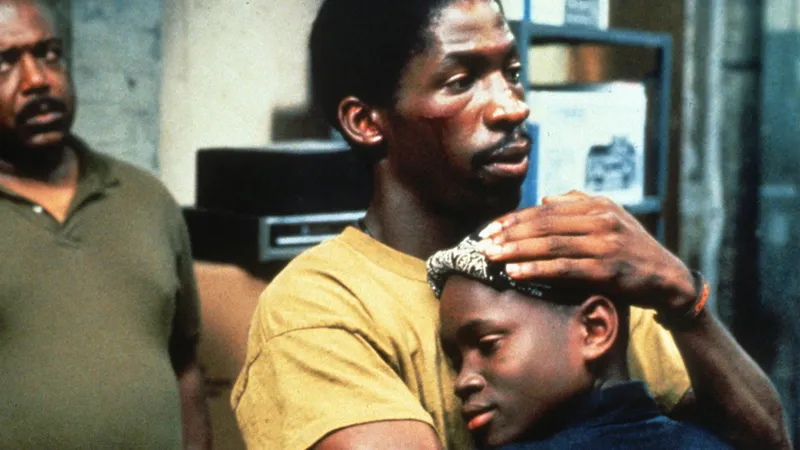
A tighter crop of the film’s central image — Ray-Ray visible in the background, the crew Bobby can’t fully walk away from.

Where to See It Now
South Central spent most of the streaming era in rights limbo, which did as much damage to its reputation as the 1992 box office numbers did. A 2004 VHS reissue was, for years, the easiest way to actually find a copy. It’s since surfaced on digital rental platforms, and it’s worth tracking down specifically because it holds up as a companion piece to Boyz n the Hood and Menace II Society rather than a knockoff of either — three different directors, three different families, the same decade-long failure of a system that kept recruiting kids faster than anyone could pull them out.
Watch it next to Boyz n the Hood and you’ll notice how much more time South Central spends on what happens after the violence — the prison years, the parole, the slow work of trying to undo twelve years of damage in however many months Bobby has left with his son. That’s the movie Hollywood didn’t know how to sell in 1992. It’s worth finding in 2026. For more on the era, see how New Jack City tackled the same streets from a different angle a year earlier.
Sources
- South Central (film) — Wikipedia — production credits, cast, release and box office figures
- South Central — Rotten Tomatoes — critic score, audience score, and pull-quote reviews
- South Central movie review — Roger Ebert — Ebert’s three-star review and critical analysis
- South Central (soundtrack) — Wikipedia — full soundtrack credits and recording details
- Stephen Milburn Anderson — Wikipedia — director biography and filmography
- South Central (film) — Ideas Wiki — Donald Bakeer rights sale and Oliver Stone backstory
The Retro Almanac
A monthly roundup of "on this day" highlights from that month, decades back — plus first dibs on new retro merch drops. No spam, just the good stuff.