Sugar Hill 1994: The Overlooked Third Film
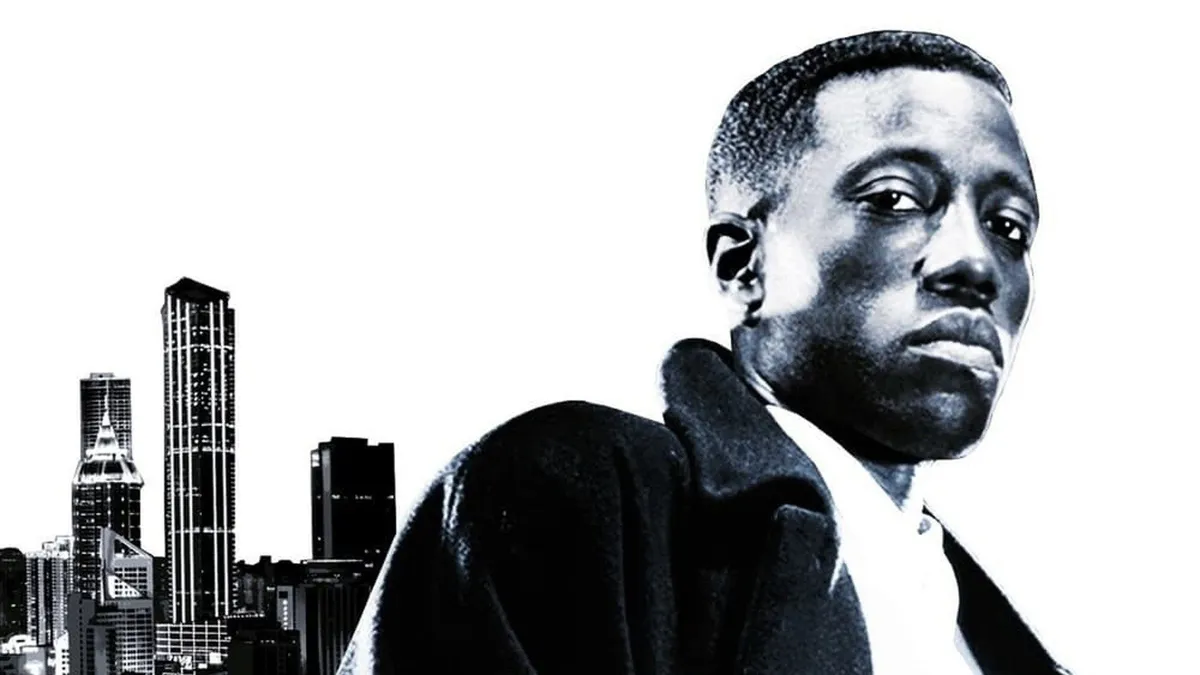
Wesley Snipes made four movies in 1993 and 1994. Three of them — Demolition Man, Rising Sun, Drop Zone — are still talked about. The fourth opened wide on February 25, 1994, in 845 theaters, pulled in $5.7 million its first weekend, finished behind Ace Ventura: Pet Detective and On Deadly Ground, and closed its run at $18.2 million domestic on a $10 million budget. That fourth movie was Sugar Hill, and it’s the one nobody brings up when they talk about Snipes’ best decade.
The strange part is that it came from the same writer as New Jack City, the 1991 film that’s practically shorthand for the entire hood-film genre. Sugar Hill isn’t a bad movie by most accounts — it’s a movie that split critics almost exactly down the middle, got buried by a studio-forced ending rewrite, and never found the audience its pedigree should have guaranteed.
What Sugar Hill Is Actually About
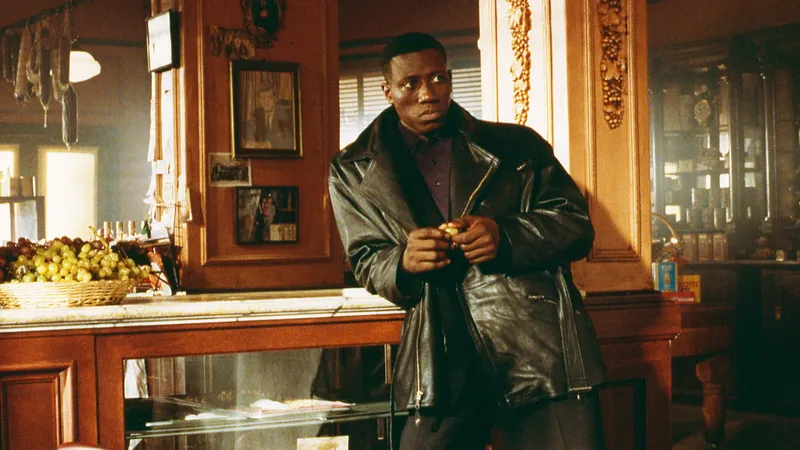
Roemello and Raynathan Skuggs (Snipes and Michael Wright) are brothers running a drug operation out of Harlem’s Sugar Hill neighborhood, the same Depression-era enclave where Duke Ellington and Thurgood Marshall once lived. Their father, Arthur “A.R.” Skuggs (Clarence Williams III), was a working musician until a mob associate shot him — an attack that left him addicted and incapacitated for the rest of the film. As a teenager, Roemello avenged that shooting instead of taking a Georgetown scholarship, and it’s the decision that’s defined the rest of his life.
The Retro Almanac
A monthly roundup of "on this day" highlights from that month, decades back — plus first dibs on new retro merch drops. No spam, just the good stuff.
Now an adult, Roemello wants out. He’s fallen for a woman named Melissa (Theresa Randle) and wants a life that doesn’t involve answering to the Molino crime family that supplies his product. Raynathan isn’t ready to leave — he’s “scared and hesitant,” as the plot is generally described, and that hesitation becomes the engine of the back half of the movie. When a friend is murdered by a rival dealer named Lolly Jonas (Ernie Hudson), it triggers open war with mob boss Gus Molino (Abe Vigoda), who has his own reasons for not wanting Roemello to walk away.
The ending is bleak even by hood-film standards: Raynathan mercy-kills their dying father, guns down the Molino family one by one, and then turns on his own brother. The two fight, a shot goes off by accident, and Raynathan takes his own life rather than live with what happened. An epilogue shows Roemello — implied paralyzed, in a wheelchair — settled in North Carolina with Melissa and their son.
The Journalist Behind Three Harlem Crime Films
Barry Michael Cooper wasn’t a screenwriter first. He was a journalist for Spin and The Village Voice who spent the mid-1980s reporting directly on the crack epidemic — pieces like “Crack: A Tiffany Drug at Woolworth Prices” (Spin, February 1986) and “In Cold Blood: The Baltimore Teen Murders” (Spin, May 1986, which won a 1987 National Association of Black Journalists award). His December 1987 Village Voice piece “Kids Killing Kids: New Jack City Eats Its Young” caught producer Quincy Jones’ attention and got him hired to rewrite the New Jack City screenplay — a film he hadn’t originally been attached to write.
Cooper went on to write New Jack City (1991), Sugar Hill (1994), and Above the Rim (1994) — three films critics now group together as his “Harlem Trilogy,” a term traced to critic Michael A. Gonzalez’s 2007 Stop Smiling Magazine profile “Baltimore Orator: Barry Michael Cooper.” Cooper himself doesn’t appear to have ever used the phrase; it’s retrospective framing that stuck because it’s accurate. All three films work the same territory — young Black men in New York, trapped between ambition and the drug trade that’s the only economy available to them — and Sugar Hill is the one written with the most direct eye on his own reporting.

Why Critics Couldn’t Agree on It
Roger Ebert gave Sugar Hill a full rave, calling it “a dark, bloody family tragedy, told in terms so sad and poetic that it transcends its genre and becomes eloquent drama.” It’s one of the stronger reviews he gave any hood film that year. Almost nobody else agreed with him.
Janet Maslin at The New York Times called it “an ambitious but terminally self-important film.” Variety’s Todd McCarthy was harsher, writing that it “plays like a dreary variation on New Jack City” — a strange line given that Cooper wrote both. Entertainment Weekly’s Owen Gleiberman gave it a C-minus, describing it as “a dawdling inner-city pastiche of Mean Streets and the Godfather films,” and the Los Angeles Times’ Kenneth Turan said it “sinks under the weight of excessive violence.” The aggregate numbers land where you’d expect from that split: a 20% Rotten Tomatoes score against a 50 on Metacritic, with Ebert’s 100 pulling the average up almost single-handedly.
The Ending the Studio Made Ichaso Change
Director Leon Ichaso told the film site SPLICEDwire that Sugar Hill’s original ending “bombed with test audiences,” which forced a studio-mandated rewrite and reshoot of the epilogue before release. Ichaso has also said he set out to make the opposite of New Jack City on purpose — a slower, more psychological film in a year when audiences and critics were primed for the kinetic urgency Cooper’s first script delivered. That choice is defensible as filmmaking. It’s also probably part of why Sugar Hill struggled to find its footing commercially against louder competition.
Michael Wright’s Performance Is Still a Fight
Nobody agrees on Raynathan either. The Deseret News’ 1994 review said “the show is easily stolen by the more flamboyant turns by Wright and Hudson.” A contemporary review from Movie Hell went the other direction entirely, writing that Wright “twitches more than Samuel L. Jackson in Jungle Fever.” Three decades later, the gap hasn’t closed — retrospective site VHS Heaven calls it “a performance for the ages,” while critic Nathan Rabin’s 2024 reappraisal, timed to the film’s 30th anniversary, found it exhausting rather than electric. It’s a genuinely divisive performance, which is rarer than it sounds for a supporting role in a movie this obscure.
A Soundtrack Built on Jazz, Not Just Rap
Sugar Hill’s score came from Terence Blanchard, the jazz trumpeter who was already Spike Lee’s regular composer, and it leans instrumental and mournful rather than loud — cues like “War Council” and “Roemello’s Theme” do a lot of the film’s emotional work in scenes with almost no dialogue. The song soundtrack sits apart from the genre’s usual rap-heavy playlists: After 7’s “Gonna Love You Right” reached #15 on the R&B/Hip-Hop chart, Chaka Khan contributed “Miles Blowin’,” underground rap crew Freestyle Fellowship appears with “Park Bench People,” and Simple E’s debut single “Play My Funk,” produced by Tony! Toni! Toné!’s Dwayne Wiggins, got its first real exposure here. It’s a soundtrack built for a film that wanted to be taken seriously as drama first and a hip-hop cash-in second — which may have cost it some commercial momentum with the audience New Jack City had trained to expect something louder.
Why New Jack City Became a Classic and Sugar Hill Didn’t
Multiple major studios — Warner Bros., Miramax, MGM, Paramount, Universal, and TriStar — reportedly passed on Sugar Hill’s bleak material before 20th Century Fox picked it up for domestic distribution through indie producer Beacon Communications. That’s not the trajectory of a film anyone had confidence in, and it shows in how it was marketed and positioned against flashier competition in February 1994.
Timing didn’t help either. New Jack City arrived in 1991 at the front edge of the hood-film wave, when Nino Brown’s operatic rise and fall felt urgent and new. By 1994, Boyz n the Hood, Juice, and South Central had already staked out the genre’s emotional range, and Sugar Hill’s slower, more deliberate pacing read as a retread rather than a deepening of the formula — even though Cooper and Ichaso were deliberately trying to do something different. A $10 million budget against an $18.2 million final gross isn’t a disaster, but it’s not a number that buys a filmmaker goodwill for the next project either.
What Brought Sugar Hill Back Into the Conversation
Leon Ichaso died on May 21, 2023. Film Forum in New York ran a tribute retrospective of his work from January 5 to 11, 2024, and Sugar Hill was part of the lineup — one of the few theatrical screenings the film has gotten since its original run. Barry Michael Cooper died on January 21, 2025, and the wave of obituaries that followed from The Hollywood Reporter, Okayplayer, NPR, and the Amsterdam News all leaned on the same framing: Sugar Hill as the middle, most overlooked chapter of his three-film run through Harlem’s drug economy. That’s the context that’s kept the film from disappearing entirely — not a rediscovery driven by audiences, but one driven by two deaths that sent critics back to look at what Cooper and Ichaso actually built.
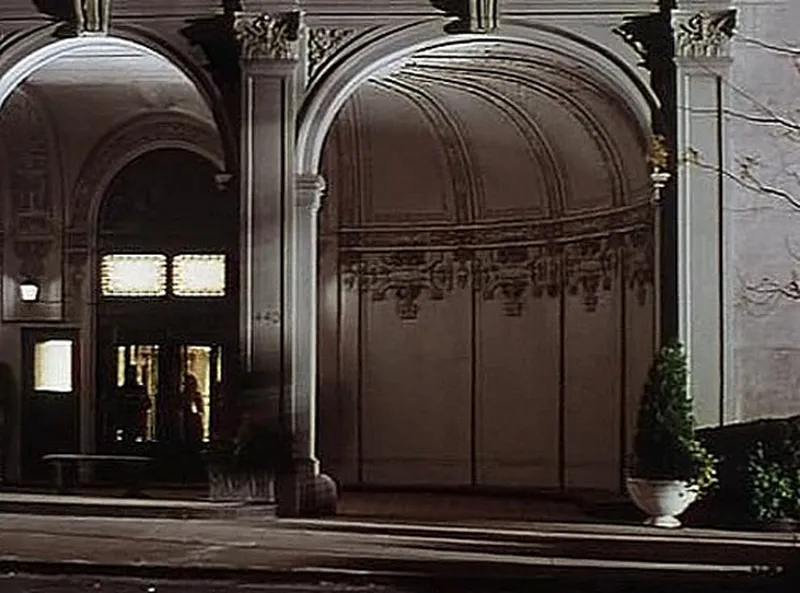
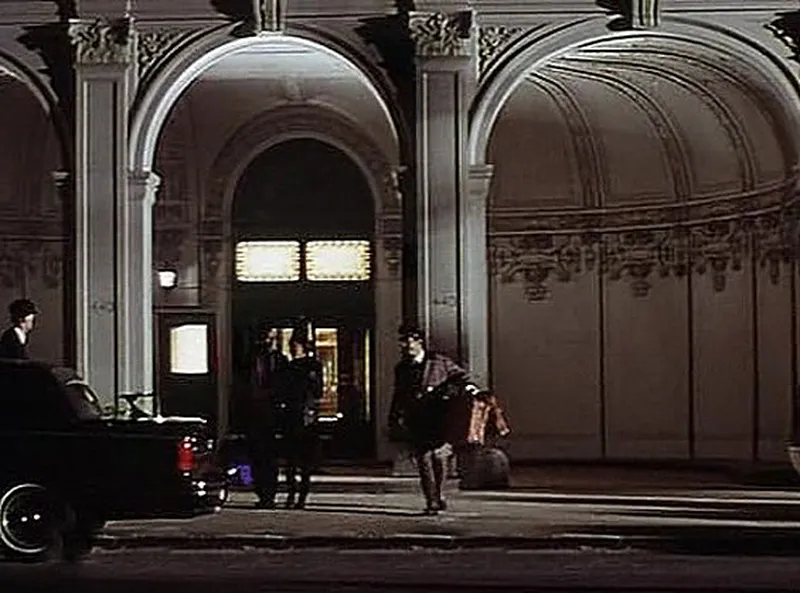
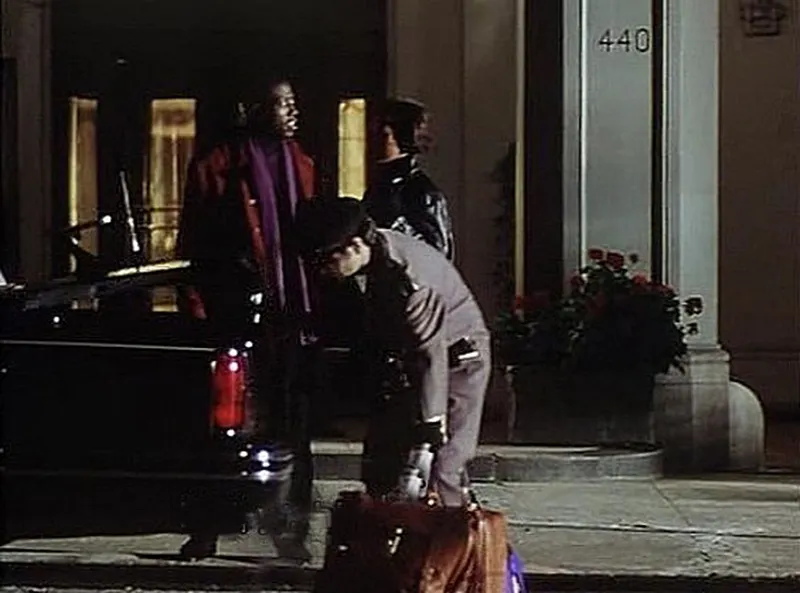
Roemello’s apartment entrance in the film is a real building — 440 Riverside Drive at West 116th Street in Manhattan — and it’s the same block the production used throughout the Nov 1992–Jan 1993 shoot. Fans who’ve traced the location say little about the exterior has changed since. The film’s working title, before anyone settled on Sugar Hill, was simply “Harlem.”
Sugar Hill isn’t going to replace New Jack City in anyone’s ranking of the genre’s essential films, and the pacing that Ichaso was defending in 1994 still reads slow against the films it was competing with. But a movie Roger Ebert called eloquent, written by the same journalist-turned-screenwriter who built the genre’s most famous entry, deserves better than total obscurity. It’s streaming-available and worth the ninety-some minutes, especially paired with New Jack City and Above the Rim back to back — watched that way, Cooper’s three-film run through Harlem’s drug economy plays less like a trilogy and more like one long, unfinished argument he kept returning to.
Sources
- Sugar Hill (1994 film) — Wikipedia — plot, production, and cast details
- Sugar Hill — Box Office Mojo — box office performance and release data
- Sugar Hill — Metacritic critic reviews — aggregated critical reception including Ebert’s review
- Sugar Hill review — Variety (Todd McCarthy) — original 1994 trade review
- Barry Michael Cooper, ‘New Jack City’ and ‘Sugar Hill’ Writer, Dies — The Hollywood Reporter — Cooper’s career and the “Harlem Trilogy” framing
- Leon Ichaso interview — SPLICEDwire — the forced ending rewrite and Ichaso’s intentions for the film
- Sugar Hill — Film Forum retrospective listing — 2024 Leon Ichaso tribute screening
The Retro Almanac
A monthly roundup of "on this day" highlights from that month, decades back — plus first dibs on new retro merch drops. No spam, just the good stuff.