Walk This Way: How Run-DMC and Aerosmith Changed Music Forever
In the summer of 1986, something happened in a recording studio in New York City that nobody — not the label executives, not the musicians themselves, and certainly not radio programmers — fully saw coming. Run-DMC and Aerosmith walked into the same room, made a record together, and blew up every wall separating hip-hop from rock. What came out the other side wasn’t just a hit song. It was a cultural earthquake whose aftershocks are still being felt today.
Before the Bridge: Two Worlds That Never Touched
By 1986, Aerosmith were survivors in the worst sense of the word. The Boston rock band that had lit up arenas through the 1970s with Dream On and Sweet Emotion had spent the early 80s stumbling through a drug-fueled fog. By 1984, guitarist Joe Perry had left and come back, lead singer Steven Tyler was barely functional, and the band’s commercial fortunes were in free fall. Aerosmith were considered washed up — a cautionary tale about excess rather than a relevant act.
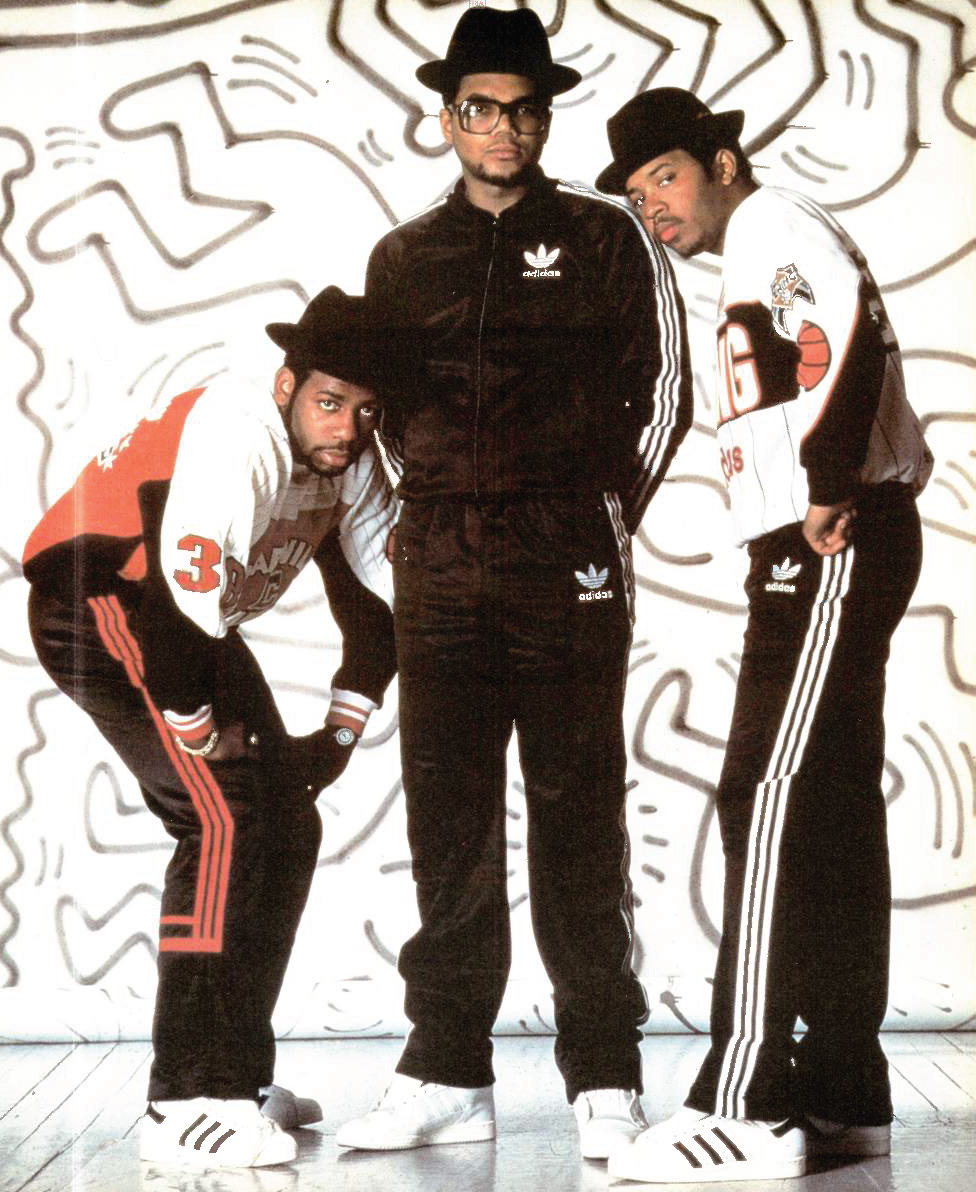
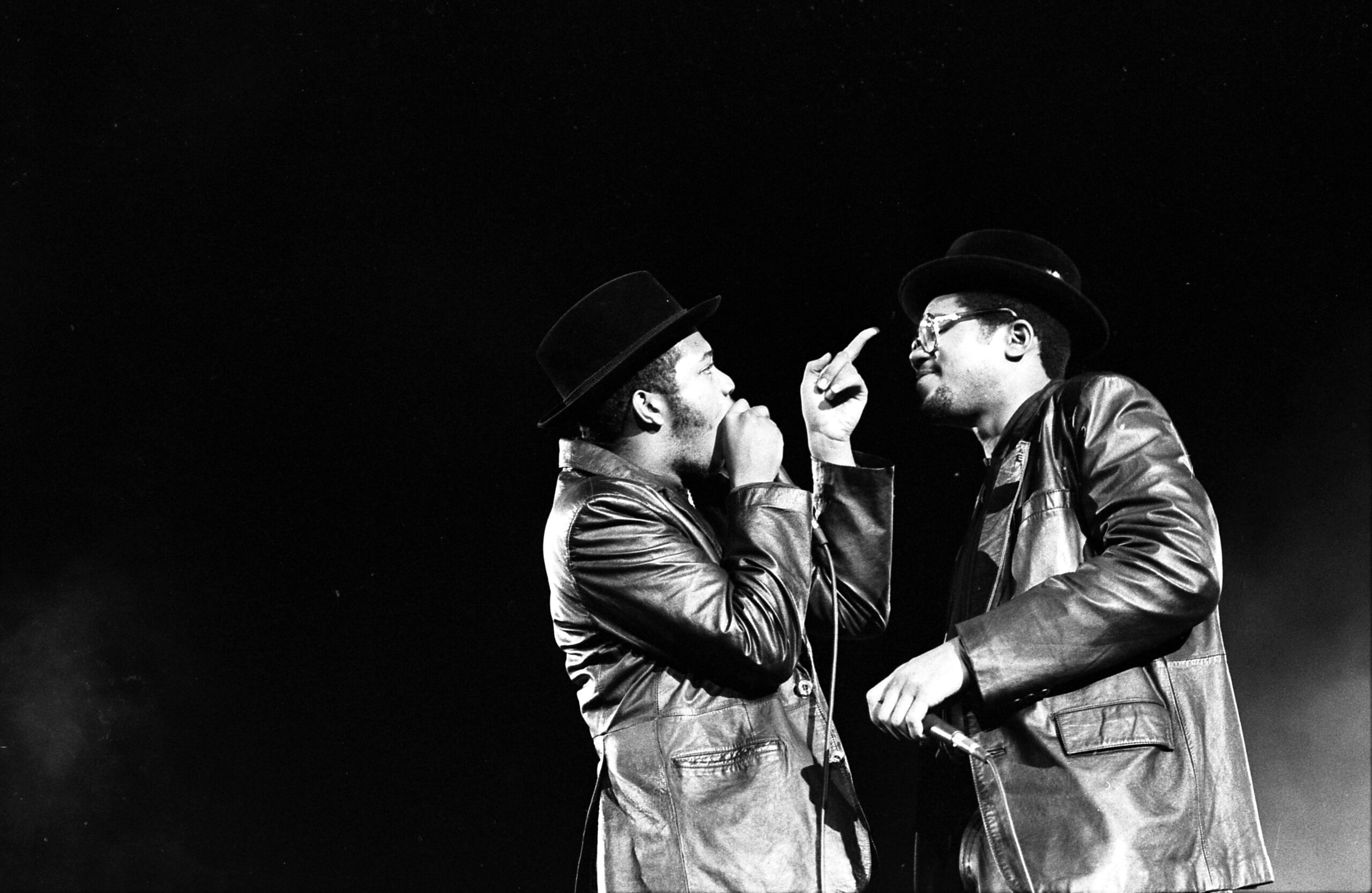
Run-DMC, meanwhile, were kings of a different universe. Joseph Simmons (Run), Darryl McDaniels (DMC), and DJ Jam Master Jay had exploded out of Hollis, Queens, transforming hip-hop from a party scene into a bona fide commercial force. Their 1984 debut went gold. King of Rock (1985) went platinum. They rocked Adidas tracksuits and no-lace shell-toes. They performed in arenas. They were the biggest act in rap — and rap was still largely ignored by rock radio and MTV’s mainstream programming.
These two worlds existed in parallel, overlapping only in the minds of a few visionary people. One of them was a 23-year-old producer named Rick Rubin.
Rick Rubin, Def Jam, and the Idea That Wouldn’t Let Go
Rick Rubin had co-founded Def Jam Records with Russell Simmons — Run’s older brother — in a New York University dorm room in 1984. Rubin grew up a rock kid who fell hard for hip-hop. To him, the two genres shared the same primal energy: raw, loud, stripped down, and built on attitude. While the music industry saw an uncrossable chasm, Rubin saw a bridge that nobody had bothered to build yet.


The original “Walk This Way” was recorded by Aerosmith in 1975, written by Tyler and Perry after Tyler saw the musical Oh! Calcutta! and scribbled down gibberish lyrics as a placeholder. The song became one of Aerosmith’s signature tracks, its guitar riff one of rock’s most recognizable. Rubin heard it differently. He heard a groove, a swagger, and a set of lyrics that would land differently in a rapper’s mouth.
He played the record for Run and DMC. They were skeptical. This was a rock song — their audience wasn’t asking for Aerosmith. But Rubin was insistent. He wanted them to rap over that riff, to learn those Tyler lyrics, to turn a rock classic into something new. “I didn’t even know who Aerosmith was,” DMC later admitted in interviews. Run felt similarly. It took Rubin sitting them down and physically playing through the original before they understood what he was hearing.
The Hesitation on Both Sides
Aerosmith’s reaction was equally ambivalent, if not outright hostile. Steven Tyler and Joe Perry were shown the Run-DMC demo — a track built around their own song — and their immediate response was something close to offense. Here was a rap group from Queens sampling their work, turning it into something that had nothing to do with rock and roll. Joe Perry reportedly needed convincing that this wasn’t an insult to their legacy.

What changed their minds was partly the argument that their song deserved to live again — and partly the pragmatic reality that Aerosmith in 1986 needed a resurrection. Their manager convinced them to get in the studio with Rubin and see what happened. What happened was one of those rare sessions where something clicks immediately.

The Session: One Wall, Two Worlds
The recording took place at Chung King Studios in lower Manhattan, with Rubin producing. The concept was deceptively simple: Run-DMC would rap the verses, Tyler and Perry would handle the chorus and the guitar parts, and the whole track would be built around that indelible riff.
The famous music video — directed by Jon Small and filmed at a recreation of the studio setting — captures the creative friction perfectly. Run-DMC are on one side of a wall, performing their verses; Aerosmith are on the other, playing the guitar riff through the partition. Then the wall literally crumbles. Tyler bursts through it. The symbolism wasn’t subtle, but it didn’t need to be. It was 1986 and subtlety wasn’t going to move the needle.
The video became one of the most played clips on MTV that summer, which was itself a statement. MTV had been slow to embrace hip-hop — the channel’s informal “rock-only” ethos had drawn criticism throughout the early 80s. “Walk This Way” gave MTV something it could play without feeling like it was making a political statement: it was a rock song, technically, and it had rock legends in it. But it was undeniably rap, and a massive audience discovered Run-DMC through it.
The Cultural Breakthrough: Hip-Hop’s Rock Radio Moment
“Walk This Way” hit number four on the Billboard Hot 100. It was Run-DMC’s first top-five pop hit. More importantly, it received substantial airplay on rock radio stations that had never played a hip-hop record in their lives. Program directors who would have reflexively passed on anything from Def Jam found themselves spinning a track that felt familiar — it had Aerosmith’s guitar, it had Tyler’s voice — but that was also unmistakably, unapologetically rap.


For hip-hop, this was the first genuine mainstream crossover moment at scale. The genre had been building commercially for years — “Rapper’s Delight” in 1979, Grandmaster Flash’s “The Message” in 1982, Run-DMC’s own platinum albums — but none of it had broken into rock radio or captured the attention of mainstream America the way “Walk This Way” did in the summer of ’86.
The song answered a question the industry had been quietly asking: could rap artists share space with rock audiences? The answer, it turned out, was yes — and once that door cracked open, it didn’t close again.
What It Did for Aerosmith
For Aerosmith, the collaboration was nothing less than a second life. The exposure introduced them to an entirely new generation of fans. It reminded radio that they existed. And it came at the precise moment when the band was beginning their sobriety journey — clean, energized, and suddenly relevant again. Their next album, Permanent Vacation (1987), was a massive commercial comeback, launching three top-twenty singles and restoring them to arena headliner status. They would go on to become one of the best-selling rock acts of the late 80s and 90s, a run that arguably would not have happened without the Run-DMC moment to reset the narrative.
The Legacy: A Template for Every Collaboration After
“Walk This Way” didn’t just sell records. It established a template. The rap-rock collaboration — hip-hop verses over a rock instrumental, competing but complementary energies — became one of the defining creative strategies of the next two decades. You can draw a direct line from this recording session to Anthrax and Public Enemy’s “Bring the Noise” (1991), to Rage Against the Machine’s entire existence, to Jay-Z and Linkin Park’s Collision Course (2004), to every subsequent artist who decided that genre walls were optional rather than mandatory.

MTV’s willingness to put Run-DMC in heavy rotation also accelerated the channel’s eventual shift toward hip-hop programming. Yo! MTV Raps debuted in 1988, and by the early 90s hip-hop was the channel’s dominant cultural language. None of that happens on the same timeline without the proof of concept that “Walk This Way” provided.
In 1986, the music industry was organized around strict genre categories — categories that served the interests of radio programmers and record store owners more than they served artists or audiences. Rick Rubin, Run-DMC, and Aerosmith refused to respect those categories, even when they weren’t entirely sure why. The result was a three-minute song that reshaped what popular music was allowed to be.

Own a Piece of the Legacy

If “Walk This Way” hits different in your memory — if you remember where you were when you first saw that video — here are a couple of ways to keep that era alive.
[PRODUCT: Run-DMC Greatest Hits vinyl record — the essential collection featuring Walk This Way, It’s Tricky, and King of Rock on heavyweight vinyl for turntable enthusiasts and 80s hip-hop collectors]
[PRODUCT: Classic Adidas Superstar shell-toe sneakers in white/black — the iconic shoe Run-DMC made famous, worn without laces just like Hollis Queens intended, a piece of hip-hop history you can actually wear]
The sneakers. The tracksuits. The records. These weren’t just accessories — they were a statement that hip-hop was its own culture, with its own aesthetics and its own rules. “Walk This Way” took that culture and broadcast it to an audience that had no idea it was waiting to hear it.
The Bottom Line
Thirty-nine years later, “Walk This Way” still sounds like a collision — two freight trains hitting head-on and somehow both coming out intact, faster, and going in the same direction. It’s a song about cheerleaders and teenage lust on the surface. Underneath, it’s about what happens when creative ambition overrides commercial caution, when a young producer hears something nobody else hears yet, and when two groups of artists decide to trust an idea that doesn’t quite make sense on paper.
Rick Rubin heard the bridge before anyone built it. Run-DMC and Aerosmith walked across it together. And hip-hop — and rock, and MTV, and popular music broadly — was never the same.