Calculator Watches & Transformer Watches: The 80s Wrist Game That Started It All
There was a time when the coolest thing you could strap to your wrist wasn’t a smartwatch that tracked your heart rate and sent passive-aggressive reminders to stand up. It was a calculator watch — a tiny, improbable computer on your arm that could do basic math and made you feel like a secret agent from the future. And if you were really lucky? You had a watch that transformed into a tiny robot. Welcome to the wrist game of the ’80s, where your timepiece was also your entertainment center.
The 1980s were obsessed with shrinking technology. Everything had to be smaller, more portable, more personal. We’d already put music in our pockets with the Walkman. Naturally, the next frontier was the wrist. And Casio — beautiful, ambitious, slightly unhinged Casio — led the charge with a lineup of digital watches so feature-packed they made James Bond’s gadgets look lazy.
Casio Calculator Watches — Math Class Just Got Interesting
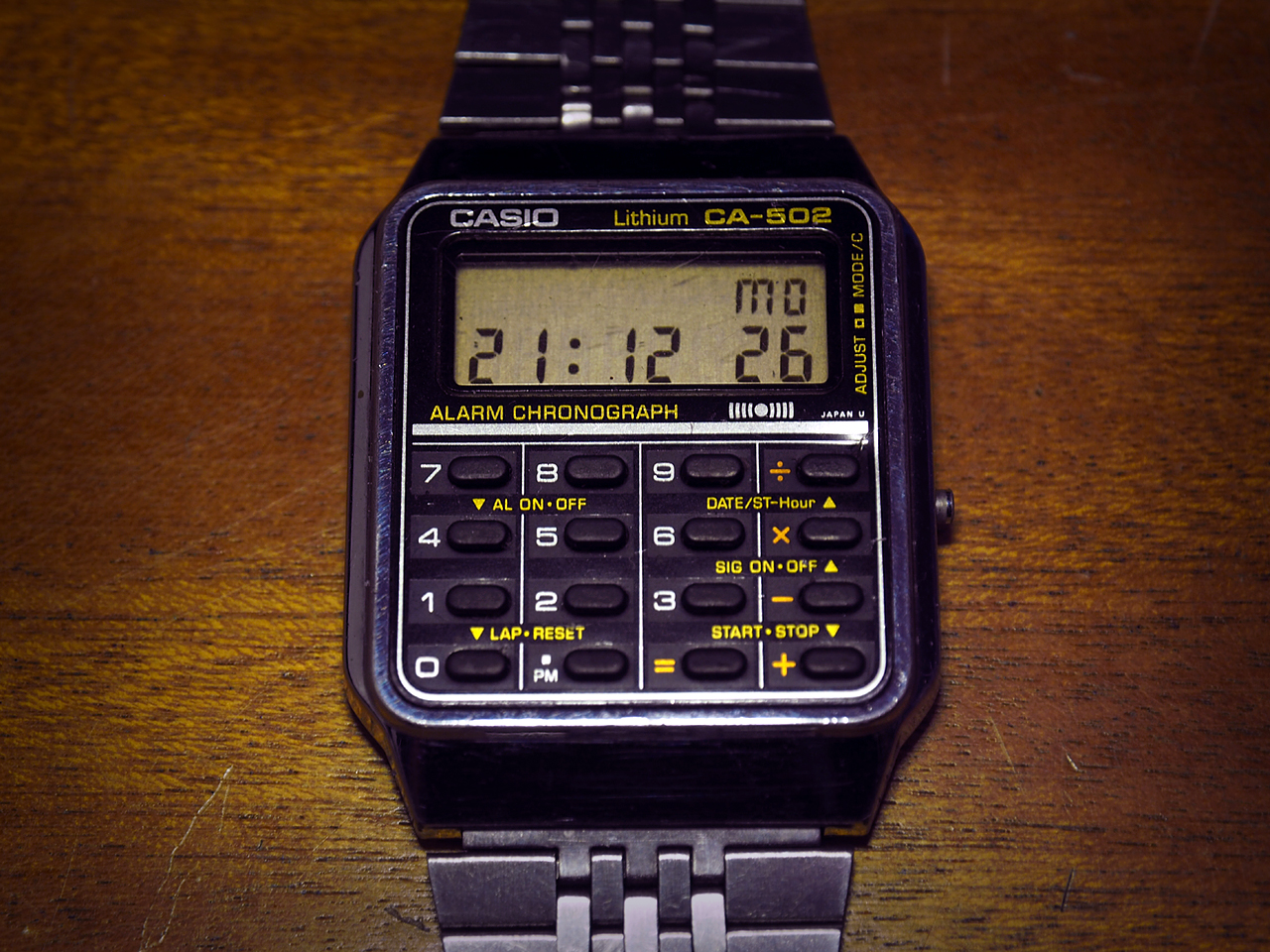
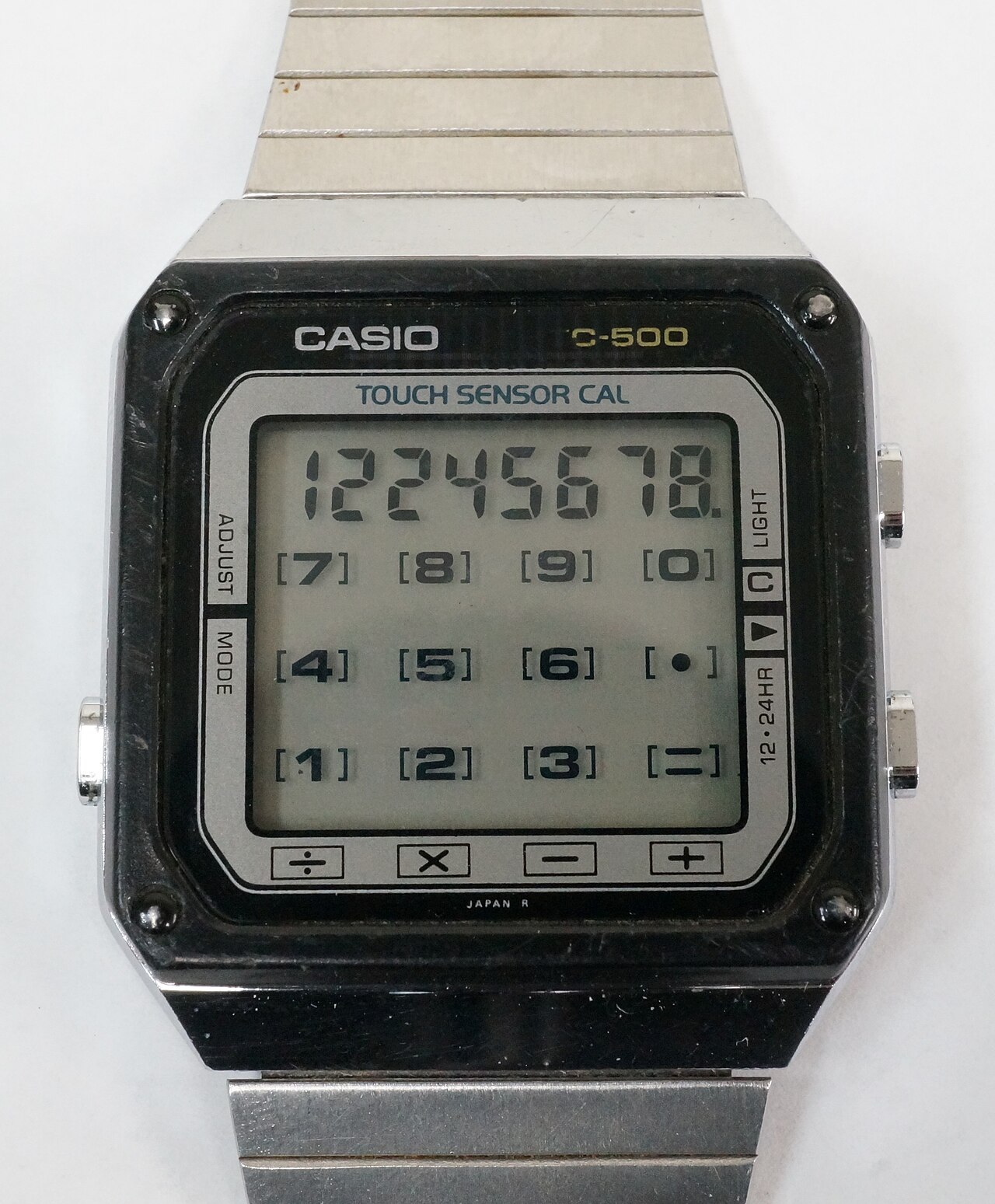
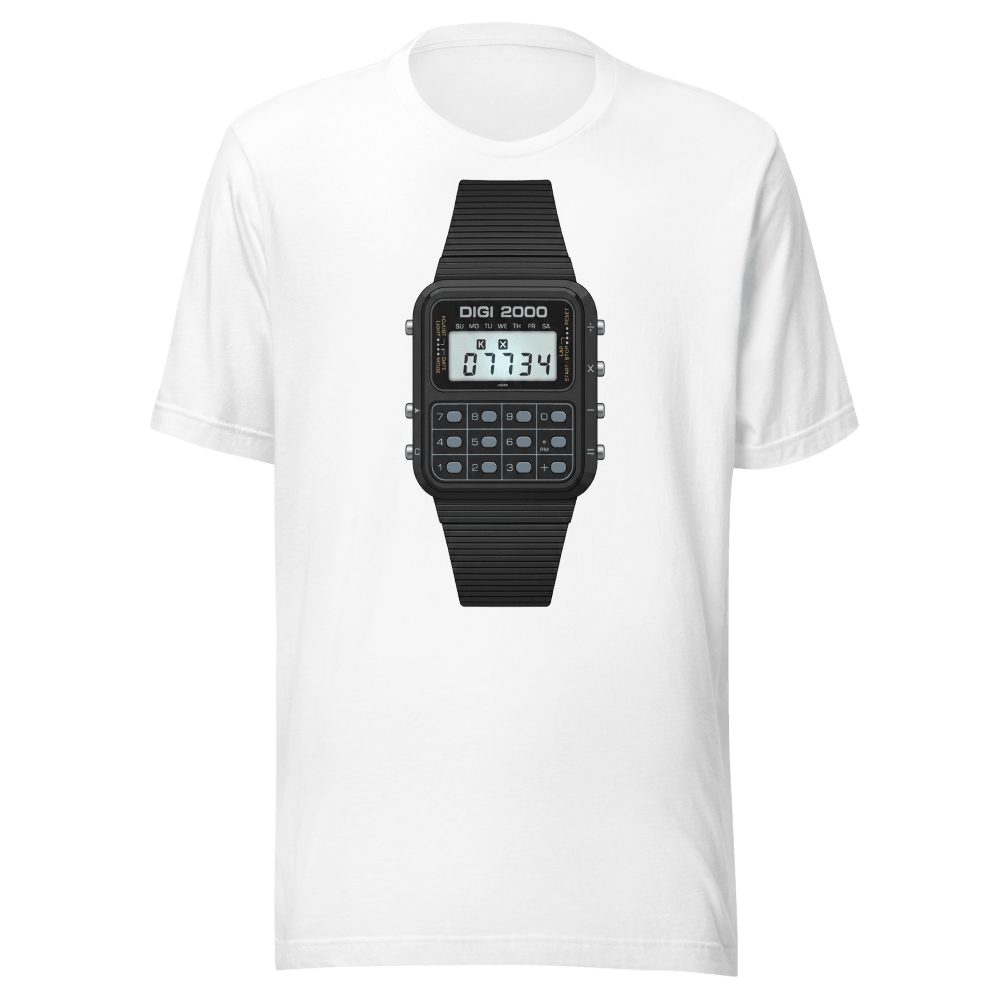
The Casio calculator watch didn’t just tell time — it solved problems. The CA-53W, the CA-502, the C-80 — these watches had tiny rubber buttons arranged in a numeric keypad right there on the face. You could add, subtract, multiply, and divide without pulling anything out of your pocket. In an era before smartphones, this was genuinely useful. Or at least that’s what we told our parents when begging for one.
The reality? Nobody was using their calculator watch for serious arithmetic. But the potential was intoxicating. You could be in math class, casually punch some numbers on your wrist, and feel like you were accessing the mainframe. Teachers had mixed feelings — some saw it as a tool, others saw it as a distraction, and more than a few suspected you were using it to cheat on tests. (Some of us were. The buttons were just too satisfyingly tiny to resist.)
Then Casio went full overachiever and released the CFX-200 — a scientific calculator watch. This thing could handle trigonometry, logarithms, and statistical functions. On your wrist. In 1983. The buttons were microscopically small, requiring either a stylus or the sharpened tip of a pencil to press accurately. It was completely impractical, utterly ridiculous, and absolutely magnificent. Casio’s own 50th anniversary page celebrates this era as one of their most inventive.
But the crown jewel of the calculator watch world was the Casio CA-53W — the one Marty McFly wore in Back to the Future. When Michael J. Fox time-traveled in 1985 wearing that calculator watch, every kid in America wanted one. It was the perfect marriage of Hollywood cool and nerdy functionality. You could pretend you needed to calculate 1.21 gigawatts while actually just seeing what time it was.
The Casio Data Bank — Your Wrist Was a Computer
Not content with mere calculation, Casio escalated to full-on personal computing with the Data Bank series. These watches could store phone numbers, names, and memo data. The DBC-150, the DBC-600, the DBC-810 — they were personal digital assistants decades before PDAs existed. You could scroll through your contacts on your wrist.

The Data Bank watches had tiny QWERTY keyboards — and by tiny, I mean you needed toothpick-sized fingers to type on them. Entering a phone number was an exercise in patience and precision. Each letter required navigating through the alphabet on buttons smaller than sesame seeds. But you did it anyway, because having your friend’s phone number stored on your wrist was the most futuristic thing imaginable.
Here’s what made the Data Bank truly special: it was the first taste of what would eventually become the smartphone. The idea that a device you wore could hold your personal information, your schedule, your contacts? That was revolutionary. We didn’t have a word for it yet, but we were essentially wearing the first wearable computers. Casio was the Apple of the wrist, and the Data Bank was the iPhone prototype nobody recognized at the time.
The gold versions were especially sought after. Nothing said “I have arrived” quite like a gold Casio Data Bank catching the fluorescent light in a middle school cafeteria. It was simultaneously the nerdiest and the most baller accessory you could own. That contradiction was what made ’80s fashion so great — you could be a geek and a style icon at the same time.

Transformer Watches — Robots in Disguise (On Your Wrist)
If calculator watches were the practical choice, Transformer watches were pure joy. These were actual watches that transformed into tiny robots — Autobots and Decepticons you could wear on your arm and then dramatically unfold during recess to wage tiny wrist-sized battles for the fate of Cybertron.
The most famous ones were the Takara Kronoform watches, released in the early ’80s as part of the broader Transformers toy ecosystem. They came in various colors and robot configurations, and the transformation process was genuinely clever — the watch face would flip open, the band would detach and reconfigure, and suddenly you had a miniature robot standing on your desk. Was it a good watch? Not really. Was it a good robot? Also not really. Was it the greatest thing an 80s kid could strap to their wrist? Absolutely.
There were knockoff Transformer watches everywhere in the ’80s. Flea markets, corner stores, the toy aisle at the grocery store — you could find transforming watches in varying degrees of quality and legality. Some were officially licensed. Most were not. The cheap ones would break after three transformations, the plastic snapping at stress points that were never designed for repeated use. But for that brief window when they worked? Magic.
Game Watches — Tetris on Your Arm
As if calculators and robots weren’t enough, the ’80s also gave us game watches. These timepieces had built-in games — crude, LCD-based games with graphics that made the original Game Boy look like a Hollywood production. Nelsonic was the king of this niche, producing watches that let you play versions of Pac-Man, Tetris, Donkey Kong, and Q*bert on a screen the size of a postage stamp.

The gameplay was… limited. You had maybe two buttons to work with, and the LCD segments could only create the roughest approximation of the actual game. Pac-Man on a Nelsonic watch looked less like Pac-Man and more like a blob eating smaller blobs. But context is everything — when you’re sitting in the back of your parents’ station wagon on a four-hour drive to Grandma’s house, a wrist-mounted version of Pac-Man is the greatest invention in human history.
Casio got in on the game watch action too. Their watches included simple games alongside the calculator and alarm functions, because apparently one feature per device was for quitters. The Casio game watches weren’t as sophisticated as the dedicated Nelsonic models, but they had the advantage of also being functional timepieces — a watch that could play games AND tell time AND calculate tips was the Swiss Army knife of the wrist.
Ring Watches — Because Why Not?
Just when you thought wrist technology couldn’t get more ridiculous, the ’80s said “hold my Tab cola” and gave us ring watches. These were exactly what they sound like — tiny digital watches small enough to wear on your finger. Casio made them. Other companies made them. They were gloriously impractical.
The display was so small you practically needed a magnifying glass to read the time. The buttons were operated with your other hand’s fingernails. The battery lasted about as long as a sneeze. But they existed, and they were available at every drugstore counter and Sharper Image catalog, and that was enough to make them collectible.

Ring watches represent the ultimate expression of ’80s wrist culture — the belief that everything could and should be miniaturized and worn on your body. We didn’t need ring watches. Nobody needed ring watches. But the fact that they existed was a testament to the era’s can-do spirit and total disregard for the question “but should we?”
The Digital Watch Revolution — How We Got Here
To understand why calculator and game watches hit so hard, you need to rewind to the ’70s, when digital watch technology was new and mind-blowing. The first LED watches — those ones with the red glowing numbers that only appeared when you pressed a button — were luxury items. The Pulsar, introduced in 1972, cost $2,100. Two thousand dollars. For a watch that showed red numbers when you pushed a button and went dark the rest of the time.
By the early ’80s, LCD technology had driven prices through the floor. Suddenly a digital watch cost five bucks at the corner store. When the basic technology became cheap, manufacturers had to compete on features. That’s how we ended up with calculator watches, game watches, phone book watches, and every other wild variation. The question wasn’t “can we put this on a watch?” It was “why haven’t we already?”
Pop Culture and the Wrist Game
Digital watches were everywhere in ’80s pop culture. Knight Rider had Michael Knight talking to KITT through his watch. Inspector Gadget had a watch that did everything short of making dinner. And real-world celebrities embraced them — musicians, actors, and athletes all flashed their Casios. It was a democratized status symbol: expensive enough to feel special, cheap enough for a kid’s allowance.

The arcade-obsessed 80s generation naturally gravitated toward any device that could play games, no matter how primitive. A game watch wasn’t a replacement for the arcade — it was a taste of the arcade you could carry with you. It scratched the itch during the hours when you couldn’t be pumping quarters into a Galaga machine.
The Legacy — From Calculator Watch to Apple Watch
Here’s the wild thing: the ’80s wrist game wasn’t a dead end. It was a preview. The Casio Data Bank’s phone storage? That’s your contacts app. The game watches? That’s Apple Arcade on your wrist. The Transformer watches? Okay, those were just awesome and have no modern equivalent, which is frankly a failure of contemporary imagination.
The Apple Watch, the Galaxy Watch, every smartwatch on the market today — they’re all descendants of those chunky, beeping, gloriously overwrought Casio calculator watches from 1985. The DNA is identical: take a thing that tells time and cram as much additional functionality into it as physics allows. Casio just did it first, with worse screens and way cooler buttons.
And the Casio originals? They’re back in fashion. The CA-53W (Marty McFly’s watch) is still in production and sells for about fifteen dollars. The F-91W is one of the best-selling watches in history. Vintage Data Banks go for serious money on eBay. The irony is thick — the watches we thought were the nerdy choice in 1986 are now the retro-cool choice in the 2020s.
Every time you glance at your smartwatch to check a notification, solve a quick calculation, or play a quick game, tip your hat to the chunky calculator watches and tiny Transformer robots that started it all. The wrist game of the ’80s was weird, wonderful, and way ahead of its time. And nothing — absolutely nothing — will ever top the feeling of transforming your watch into a tiny robot during math class while the teacher’s back was turned.