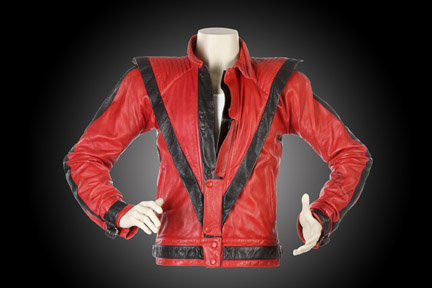
Michael Jackson Thriller jacket on display showing the iconic red leather design
| |

Michael Jackson Thriller Era | The 80s Fame Nobody Has Matched

There was famous. There was mega-famous. There was superstar-level famous. And then there was Michael Jackson in the 1980s — a stratosphere of celebrity that literally no human being has reached before or since. We’re not talking about being the biggest pop star. We’re talking about being the biggest anything.

From 1982 to 1988, Michael Jackson didn’t just dominate music — he was music. He was dance. He was fashion. He was television. He was the conversation at every dinner table, every schoolyard, every office water cooler on planet Earth. And none of what followed should ever erase the staggering, incomprehensible scale of what he achieved.
Thriller 25th anniversary album cover celebrating Michael Jackson best-selling record

Michael Jackson’s Thriller Era: The Album That Changed Everything

When Thriller dropped on November 30, 1982, nobody — not even Michael, not even Quincy Jones — could have predicted what was about to happen. The album didn’t just sell well. It became the best-selling album in human history, moving over 70 million copies worldwide. Seventy. Million.

Seven of its nine tracks were released as singles. Seven! And every single one of them was a hit. “Billie Jean,” “Beat It,” “Wanna Be Startin’ Somethin’,” “Human Nature,” “P.Y.T.,” “Thriller,” “The Girl Is Mine” — each one could have been the biggest song on someone else’s album. Michael put them all on the same record like it was nothing.
Original Thriller vinyl record label from Michael Jackson best-selling album

“Billie Jean” alone would have been enough to cement a career. That bassline is arguably the most recognizable four bars of music ever recorded. The song spent seven weeks at number one and became the first track by a Black artist to get heavy rotation on MTV — a fact that says as much about MTV’s early racism as it does about Michael’s transcendent appeal.

“Beat It” featured Eddie Van Halen shredding a guitar solo that fused rock and pop in a way nobody had attempted before. The music video showed rival gangs coming together through the power of dance, and somehow it didn’t feel cheesy. It felt revolutionary. Because Michael Jackson could make anything feel revolutionary.

Michael Jackson’s Moonwalk: The Night That Stopped Time

March 25, 1983. Motown 25: Yesterday, Today, Forever. The Pasadena Civic Auditorium. Michael Jackson was there to perform with the Jackson 5 in a reunion segment. Nice, right? A sweet nostalgia trip. Nobody expected what happened next.

Michael Jackson performing during the Bad Tour 1988

After the group number, Michael stayed on stage. Alone. The opening notes of “Billie Jean” hit. He grabbed his hat. And for the next four minutes, he delivered a performance that fundamentally altered what a live musical performance could be.

And then came the moonwalk.

One smooth, impossible glide backward across the stage, and 47 million TV viewers collectively lost their minds. The audience in the auditorium literally screamed so loud you can barely hear the music on the broadcast tape. Berry Gordy’s jaw dropped. Fred Astaire called Michael the next day to tell him he was the greatest dancer he’d ever seen. Fred freaking Astaire.

That single television moment — maybe three seconds of dancing — became one of the most replayed, most discussed, most imitated moments in entertainment history. Every kid in America spent the next week trying to moonwalk across their kitchen floor in socks. (Spoiler: none of us could do it. Not even close.) Meanwhile, that same year, another dance revolution was happening on the other side of L.A. — if you haven’t revisited Breakin’ and Breakin’ 2: Electric Boogaloo, the 1984 films that put breakdancing on the map, now’s the time.

The Glove, the Jacket, the Fashion Revolution

Michael didn’t just change music and dance. He changed how we dressed. The single sequined glove became the most iconic fashion accessory of the decade. Kids begged their parents for one. You could buy knockoffs at every mall in America — and 80s malls were the center of the universe.

Michael Jackson Thriller jacket on display showing the iconic red leather design

The red leather jacket from the “Thriller” video became instantly iconic. The military-style jackets with gold braid and epaulettes. The high-water pants and white socks. The aviator sunglasses. Every piece of clothing Michael wore became a fashion statement that millions tried to copy.

He wasn’t following fashion trends — he was creating them. Designers sent him clothes hoping he’d wear them. Whatever Michael put on his body became the coolest thing in the world overnight. In an era of bold fashion choices (and the ’80s were nothing but bold fashion choices), Michael Jackson was the boldest of them all.

The Thriller Music Video: 14 Minutes That Changed Television

If the Motown 25 performance was a seismic event, the “Thriller” music video was a nuclear bomb. Directed by John Landis (fresh off An American Werewolf in London), the 14-minute short film cost $500,000 to produce — an insane number for a music video in 1983.

Original Thriller vinyl record label from Michael Jackson best-selling album

The result was unlike anything anyone had ever seen. Michael transforming into a werewolf. The zombie dance sequence — choreographed by Michael Peters and Michael Jackson himself — with a dozen undead dancers performing synchronized moves in a graveyard. Vincent Price’s legendary rap. The girlfriend’s screaming. That final shot with Michael’s yellow eyes.

MTV played it in heavy rotation, and Thriller album sales, which had been slowing after a year, exploded again. The video single-handedly proved that music videos could be art, could be cinema, could be events unto themselves. Every major music video that followed — from “November Rain” to “Vogue” to “Formation” — owes a debt to what Michael Jackson did with “Thriller.”

The Making of Michael Jackson’s Thriller documentary became the best-selling home video release of all time. People bought a VHS tape just to watch how they made a music video. That’s how big this was.

We Are The World: Michael Jackson Saves the Planet

In January 1985, Michael co-wrote “We Are The World” with Lionel Richie and produced the recording session with Quincy Jones. The charity single brought together 46 of the biggest names in music — Bruce Springsteen, Stevie Wonder, Tina Turner, Bob Dylan, Ray Charles, Diana Ross — to raise money for African famine relief.

The song raised over $63 million and became one of the best-selling singles of all time. But the recording session itself became legendary. The story goes that a sign was posted outside the studio: “Check your egos at the door.” And yet everyone there knew who the real star was. Michael Jackson wasn’t just another voice in the chorus — he was the gravitational center around which everything else orbited.

Michael Jackson’s Bad Tour: Taking Over the World

In 1987, Michael followed up Thriller with Bad — an album that would have been a career-defining masterpiece for literally any other artist but was treated as a slight disappointment because it “only” sold 45 million copies. Only Michael Jackson could sell 45 million albums and have people say “not as good as the last one.”

Michael Jackson performing on the Bad World Tour in 1988

Bad produced five consecutive number-one singles: “I Just Can’t Stop Loving You,” “Bad,” “The Way You Make Me Feel,” “Man in the Mirror,” and “Dirty Diana.” Five! No other album in history had done that. The title track’s video, directed by Martin Scorsese, was an 18-minute film shot in a New York subway station.

The Bad World Tour (1987-1989) was the biggest concert tour in history at that point. Michael performed 123 shows across 15 countries for 4.4 million fans. The staging was groundbreaking — elaborate sets, pyrotechnics, choreographed sequences that turned each concert into a theatrical production.

Michael Jackson on stage during his legendary 1988 Bad Tour concert

He played to sold-out stadiums everywhere. Seven nights at Wembley Stadium in London — 504,000 tickets sold. In Japan, he was treated like a visiting deity. The tour grossed $125 million and proved that Michael’s appeal wasn’t just an American phenomenon. It was planetary.

A Level of Fame Nobody Has Matched

Here’s what separates Michael Jackson’s 1980s fame from anything that exists today: there was no internet, no social media, no streaming. Fame spread through three television networks, radio, and word of mouth. And yet Michael Jackson was recognized in every country on Earth.

Fans waiting outside a Michael Jackson concert in Berlin showing his global fame

When he visited countries in Africa and Asia, crowds that had never seen American television knew who he was. His music crossed every language barrier, every cultural divide, every political boundary. He was famous in communist countries that banned Western media. He was famous in remote villages that barely had electricity. He was, by any objective measure, the most famous human being alive — and possibly the most famous human being who has ever lived.

Think about it. In 2026, with 8 billion people connected by smartphones and social media, no single entertainer dominates the global conversation the way Michael Jackson did with a handful of 80s technologies — vinyl records, cassette tapes, MTV, and network television. That’s not a knock on today’s artists. It’s a testament to how unfathomably massive Michael Jackson’s star burned during that decade.

His influence is everywhere: every boy band choreography, every pop star who dances during their show, every artist who drops a “visual album,” every time someone attempts a moonwalk at a wedding reception. Michael Jackson in the 1980s wasn’t just the King of Pop. He was the king of everything. And we were all lucky enough to be alive to see it.

Similar Posts