1990s pager beeper Motorola communication technology nostalgia
|

Pagers in the 90s: The Rise and Fall of the Beeper

There’s a sound that every Gen Xer and elder Millennial knows in their bones. That sharp, insistent beep cutting through the noise of a crowded hallway, a movie theater, or the back pocket of your Levi’s. It wasn’t a ringtone. It wasn’t a notification. It was your pager going off — and it meant somebody needed you right now.

Before smartphones put the entire internet in our pockets, before texting became second nature, there was a simpler (and arguably cooler) era of communication. The pager era. And if you lived through it, you know exactly what I’m talking about.
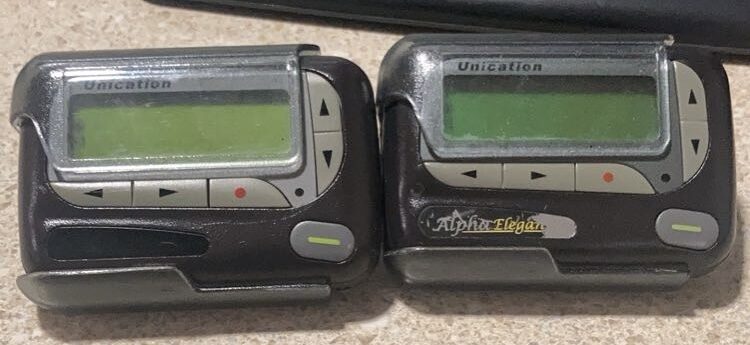
Collection of 90s pagers and beepers that defined wireless communication

Pagers in the 90s: How a Tiny Box Changed Everything

The concept behind pagers wasn’t new by the time the 90s rolled around. The first telephone paging system was actually patented back in 1949, and Motorola started selling pagers to hospitals and emergency services in the 1950s. But those early models were bulky, expensive, and limited to doctors, firefighters, and other essential workers.

The magic happened in the late 1980s and early 1990s when pager technology got smaller, cheaper, and way more accessible. Suddenly, it wasn’t just surgeons carrying beepers — it was teenagers, drug dealers (yeah, we’re going there), businesspeople, and basically anyone who wanted to feel important.
By 1994, there were over 61 million pagers in use worldwide. Sixty-one million. For a device that could only receive numbers, that’s absolutely wild when you think about it.

Vintage Motorola radio pager from the early days of beeper technology

The Motorola Bravo: The iPhone of Pagers

If there was one pager that ruled them all, it was the Motorola Bravo. This thing was the gold standard. Sleek (for the time), reliable, and clipped perfectly to your belt or the waistband of your jeans. The Bravo series — including the Bravo Plus and Bravo Express — became the must-have accessory of the 90s.

Motorola didn’t just dominate the pager market; they practically owned it. The company had been in the wireless game since World War II, manufacturing handheld radios for the military. By the time the pager boom hit, they had decades of expertise backing every product they released.

The Bravo line offered something crucial: reliability. When your pager went off, you knew it was a real page, not some glitch. And the distinctive beep pattern? Burned into the memory of anyone who carried one. You could be in a dead sleep at 2 AM and that beep would launch you out of bed like a spring-loaded mattress.

Motorola Pageboy pager with charger showing 90s beeper technology

Pager Codes: The Original Text Messages

Here’s where it gets beautiful. You’ve got a device that can only display numbers. No letters, no emojis, no GIFs. Just digits on a tiny green screen. So what did an entire generation do? They invented a language.

Pager codes turned numeric sequences into complete emotional conversations. And if you didn’t know the codes, you were basically illiterate in the coolest language of the decade.

The essential pager codes every 90s kid memorized:

  • 143 — “I love you” (1 letter, 4 letters, 3 letters). This was THE code. If someone sent you 143, your heart literally skipped a beat. It was the 90s equivalent of a heart emoji, except it required actual thought.
  • 411 — “I have information for you”
  • 911 — “Emergency! Call me NOW!”
  • 187 — “You’re dead” (California penal code for murder — thanks, gangsta rap)
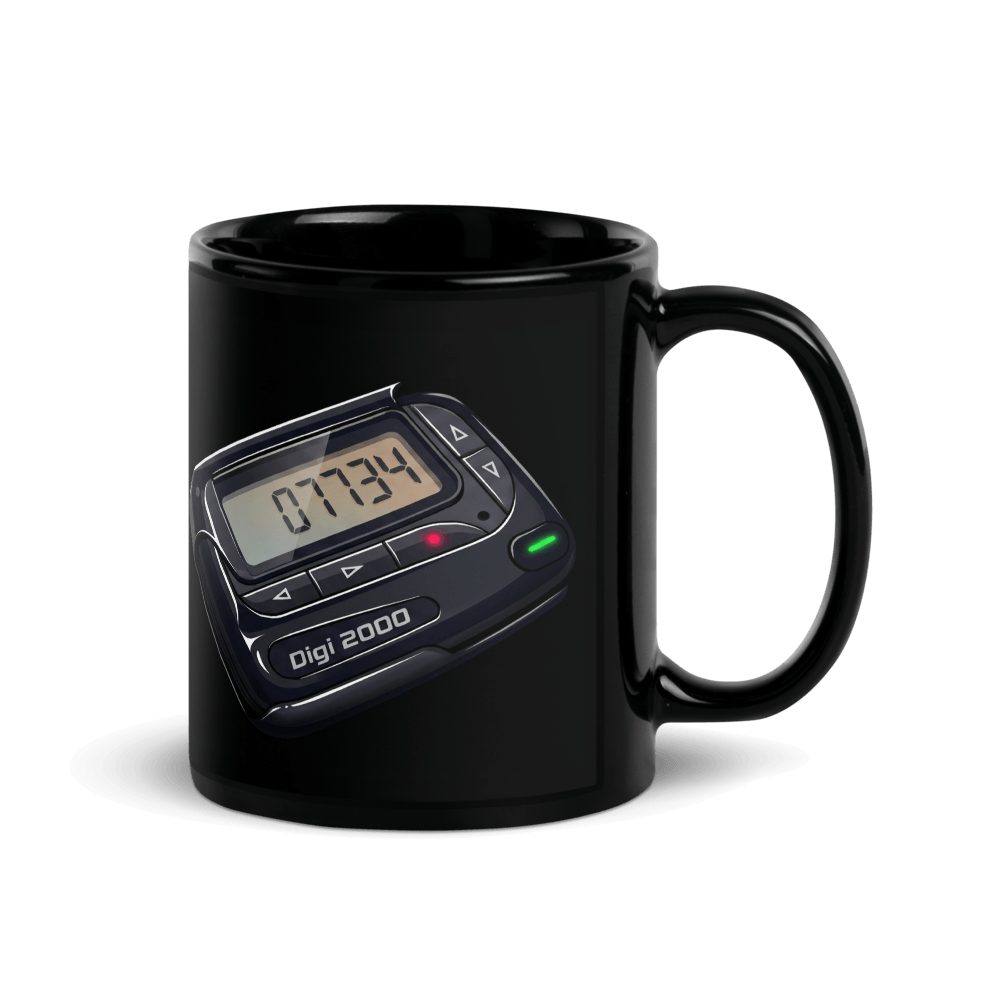
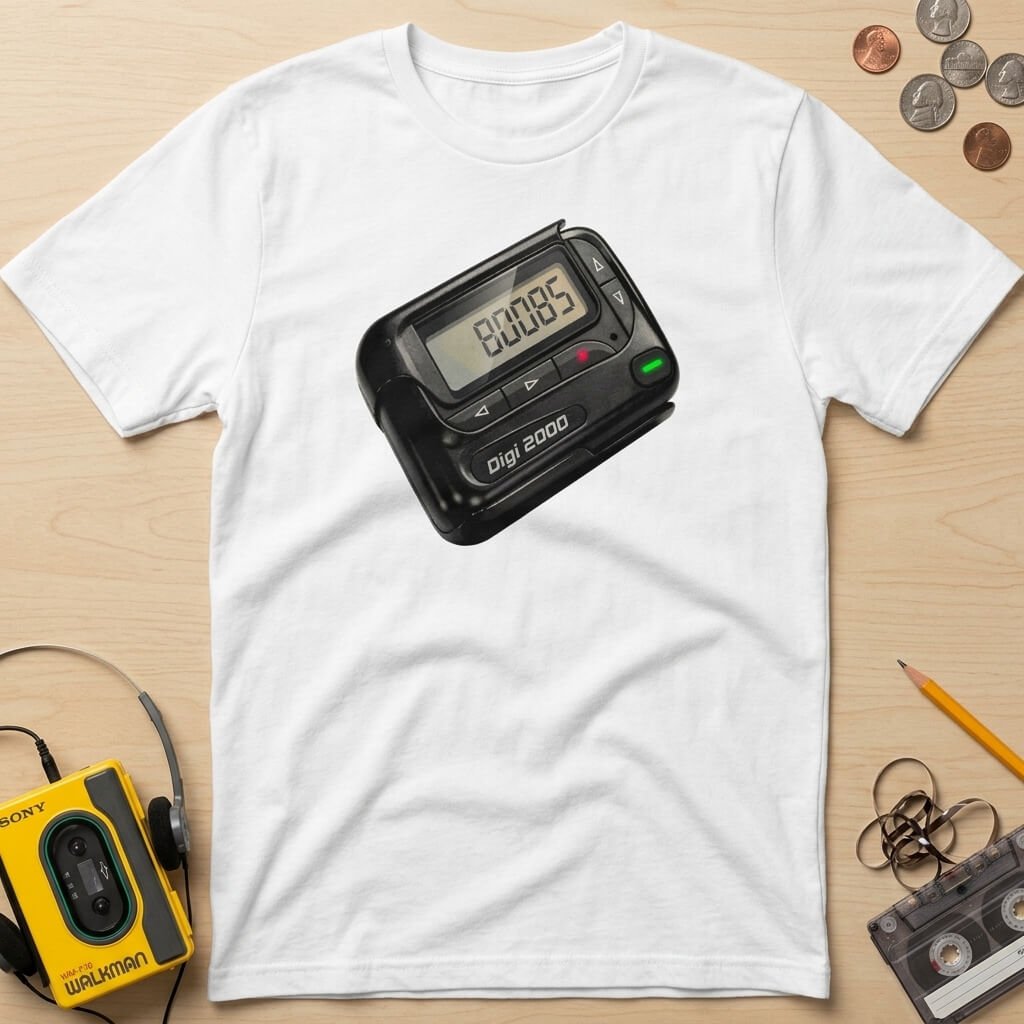
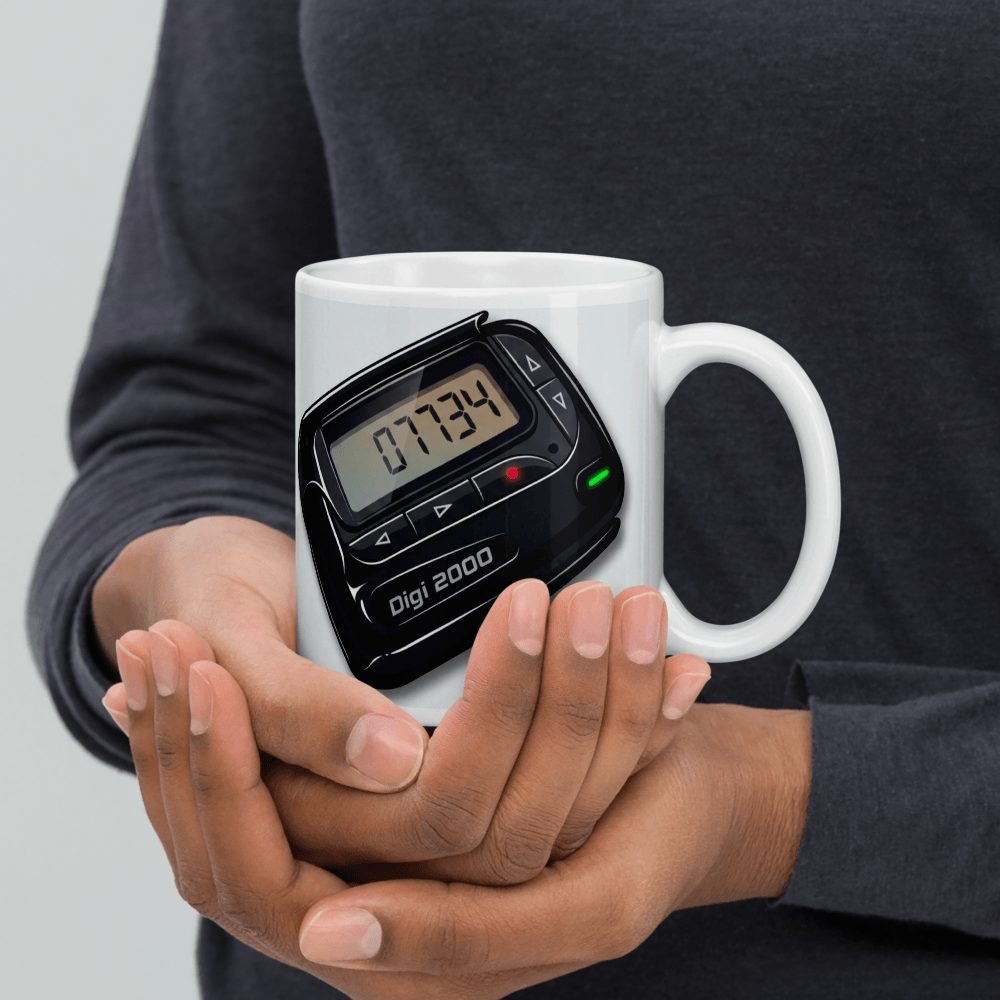
  • 07734 — Flip your pager upside down and it spelled “hELLO”
  • 1134 2 09 — “Go 2 hELL” (upside down)
  • 823 — “Thinking of you”
  • 637 — “Always and forever”
  • *07734* — “Hello” with emphasis (the asterisks were basically exclamation points)

And then there was the callback number. Most pages were simple: someone punched in their phone number followed by the numeric code. So you’d look at your pager and see something like 555-2368*143 and your whole day was made. Someone loved you AND wanted you to call them back. Peak romance.

Motorola LX2 Plus pager with numeric display for sending beeper codes

The Payphone Sprint: Your Pager’s Best Friend

Here’s the part that younger generations simply cannot comprehend. You got a page. Your heart rate jumped. Someone needed you. But you couldn’t call them back from your pager. The pager was receive-only. It was a one-way street of communication.

So what did you do? You found a payphone.

And this, friends, is where the real adventure began. Finding a working payphone in the 90s was its own skill set. You had mental maps of every payphone in your neighborhood, your school, the mall, the gas station three blocks over. You knew which ones ate your quarters and which ones had decent reception. You knew which ones had the handset ripped off by some maniac and which ones smelled like they’d been used as a urinal.

The payphone sprint was a ritual. Pager goes off. Check the number. Pat your pockets for change. Sprint to the nearest working phone. Drop a quarter in. Dial the number. Wait for an answer. And the whole time, you’re thinking: Was it 143? Was it 911? Did something happen? Are they okay? Do they like me?

If you didn’t have quarters, you called collect. Remember “1-800-COLLECT” and “1-800-CALL-ATT”? Those services thrived specifically because of pager culture. You’d call collect and try to squeeze your entire message into the “state your name” prompt: “Hey-it’s-Mike-I’m-at-the-mall-meet-me-at-the-food-court” — then the other person would decline the charges but get the message anyway. Genius-level cheapskate communication.

Motorola Pageboy II pager from the era of payphone callbacks

Pagers in Pop Culture: From ER to Drug Deals

Pagers were everywhere in 90s pop culture. On ER, doctors’ beepers were going off constantly — art imitating life since hospitals were where pagers first gained popularity. On Seinfeld, George Costanza got a pager to seem more important. In Clueless, Cher Horowitz had one because of course she did.

But the most controversial pager association? The drug trade. Hip-hop culture and urban street life were deeply intertwined with the beeper. Notorious B.I.G. rapped about it. The Wire (though that came later) showed how dealers used pagers as essential business tools. In many cities, if you were a teenager with a pager and no obvious reason to have one, cops assumed the worst.

This created a weird social dynamic. Pagers were simultaneously symbols of professionalism (doctors, lawyers, executives) and street hustle. Same device, completely different worlds. Your mom’s OB-GYN and the corner dealer both had the same Motorola clipped to their belt.

The rap group A Tribe Called Quest even had a song called “Skypager” on their 1991 album The Low End Theory. The entire track was about pager culture — the codes, the callbacks, the lifestyle. It remains one of the best time capsules of the era.

Motorola pager collection showing various models from the 90s beeper era

The Evolution: From Numeric to Alphanumeric to Two-Way

Pagers didn’t stay primitive forever. The technology evolved rapidly through the 90s:

Numeric pagers were the originals — display only showed numbers. This is where all those creative codes came from. Pure ingenuity born from limitation.

Alphanumeric pagers came next, and they were a game-changer. Finally, actual words on the screen! Services like SkyTel and later web-based portals let people type out short text messages that would display on your pager’s screen. No more flipping the thing upside down to decode “hELLO.” You could actually read “Hey, meet me at 6” in plain English.

Two-way pagers arrived in the late 90s, and they were basically proto-smartphones. The RIM Inter@ctive Pager 950 — yes, RIM as in BlackBerry — launched in 1996 and let you send AND receive messages. It had a tiny QWERTY keyboard and an email address. The future was knocking.

RIM BlackBerry 950 two-way pager that evolved into the smartphone

Why Pagers Actually Died

The cell phone killed the pager. It’s that simple, and that brutal.

Through the late 90s, cell phone prices plummeted. Plans got cheaper. Coverage expanded. And suddenly, the whole concept of a one-way communication device that made you run to a payphone seemed… kind of absurd. Why carry a pager when your Nokia 5110 could receive calls AND send those newfangled “text messages”?

By 2001, the pager market had cratered. The major carriers started shutting down paging networks. Motorola, the king of pagers, pivoted entirely to cell phones (and later, disastrously, failed to keep up with smartphones, but that’s another story).

The numbers tell the grim tale: from 61 million users in 1994 to barely 6 million by 2008. Most of those remaining users were in healthcare, where pagers persisted due to their reliability in hospitals (cell signals can be iffy in medical buildings, but pager signals cut through like a hot knife through butter).

Fun fact: some hospitals still use pagers today. The NHS in the UK was using 130,000 pagers as recently as 2019. Old tech dies hard when lives depend on it.

The Pager Legacy: What We Actually Miss

Nobody seriously wants to go back to carrying a pager. Let’s be honest. Our smartphones do everything a pager did and approximately ten thousand other things. But there’s something about the pager era that hits different in retrospect.

It was the anticipation. That gap between receiving a page and getting to a phone to call back. Those minutes of wondering, hoping, stressing — they gave communication weight. Every page felt important because reaching someone took actual effort.

It was the creativity. Being forced to communicate through numbers made us inventive. 143 meant more than “I love you” — it meant “I love you so much that I learned a numeric code to tell you from across town using a device with no keyboard.” That’s dedication.

And it was the freedom. When your pager wasn’t going off, you were truly unreachable. No constant pinging, no notification anxiety, no doom-scrolling. Just you and whatever you were doing. The pager beeped, you dealt with it on your own schedule, and then you went back to living.

We traded that for 24/7 connectivity, and most days that feels like a great deal. But on those days when your phone won’t stop buzzing and every app wants your attention and your inbox has 47 unread messages — yeah, on those days, a little part of us misses the simplicity of a black box on our hip that only beeped when it really mattered.

Restaurant pager showing how beeper technology lives on in modern dining

Where Are They Now?

Beyond hospitals, the pager’s DNA lives on in unexpected places. Those buzzing coasters restaurants give you when your table is ready? That’s pager tech. Emergency alert systems? Pager infrastructure. The entire concept of push notifications on your smartphone? Born from the pager’s one-way broadcast model.

And in the world of retro collecting, vintage pagers are becoming hot items. A mint-condition Motorola Bravo from the early 90s can fetch decent money on eBay. The nostalgic appeal is real — people display them like artifacts from a lost civilization. Which, in a way, they are.

The pager era lasted roughly one decade — from the late 80s to the late 90s — but it left a permanent mark on how we communicate. It taught us that being reachable was valuable, that digital shorthand was the future, and that sometimes the best messages are the simplest ones.

143, pager. We love you. We always will.

Motorola PageBoy II vintage pager front view 90s nostalgia

Similar Posts