Exxon Valdez Oil Spill: The 1989 Disaster That Changed Everything
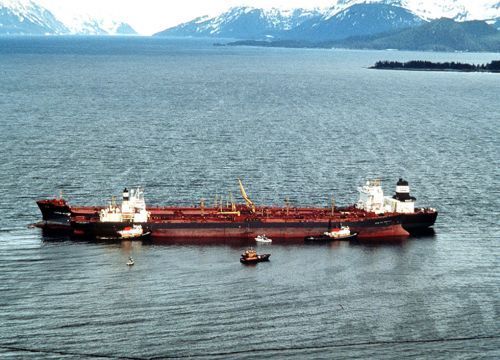
Just after midnight on March 24, 1989, a 987-foot oil tanker with 53 million gallons of Prudhoe Bay crude in its belly tore open its hull on a reef everyone on board had a chart for. Within six hours, more than 10.8 million gallons of oil were on the move through one of the cleanest stretches of water in North America. By the time the sun came up over Bligh Reef, the Exxon Valdez had already done the kind of damage that takes a country thirty years to even start arguing about.
For Gen Xers who grew up watching the nightly news, the Exxon Valdez wasn’t just a news story — it was the moment a generation realized that the natural world could be ripped open in a single act of human carelessness. The oil-soaked otters on the front page of every newspaper that spring rewired how an entire age cohort thought about big oil, big business, and the price of cheap gas. And here’s the part nobody puts on the anniversary specials: nearly forty years later, you can still scoop tar out of the gravel on certain Alaskan beaches with a garden trowel.
The Ship, the Captain, and the Fatal Voyage
The Exxon Valdez was a single-hull tanker delivered to Exxon Shipping Company on December 11, 1986 — one of the largest vessels ever built on the U.S. west coast. On the night of March 23, 1989, it pulled away from the Alyeska Pipeline terminal in Valdez, Alaska, loaded with crude oil bound for Long Beach, California. The route through Prince William Sound was familiar, the weather was clear, and the crew was experienced. None of that mattered.
The Retro Almanac
A monthly roundup of "on this day" highlights from that month, decades back — plus first dibs on new retro merch drops. No spam, just the good stuff.
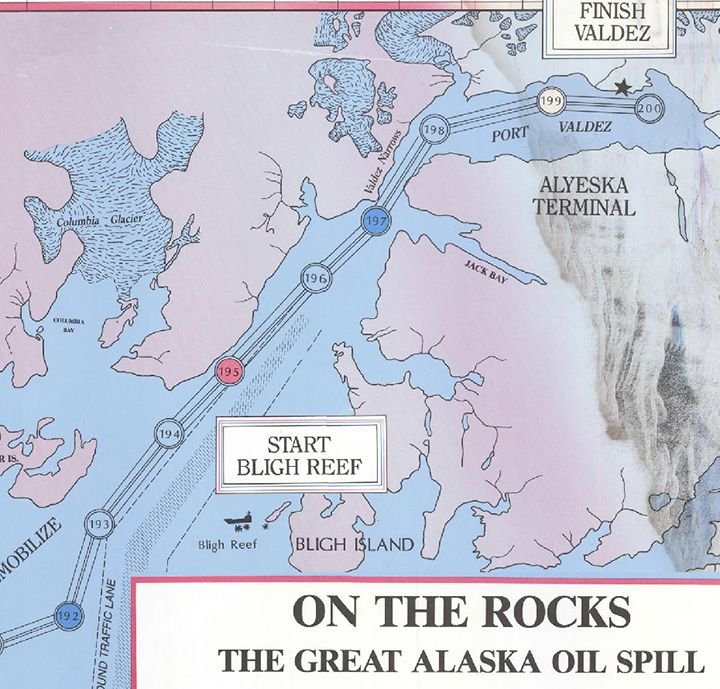
Captain Joseph Hazelwood took the ship out of the shipping lane to dodge floating ice from the Columbia Glacier — a normal call. Then he handed the wheel over to Third Mate Gregory Cousins and went below to his cabin. Cousins, who didn’t hold a license to pilot through that section of the Sound, missed the turn back into the lane. At 12:04 a.m., the Exxon Valdez plowed onto Bligh Reef at roughly 12 knots. The grounding tore open eight of the ship’s eleven cargo tanks. Crude started pouring out at a rate of more than 1,000 gallons per second.
When the Oil Hit the Water
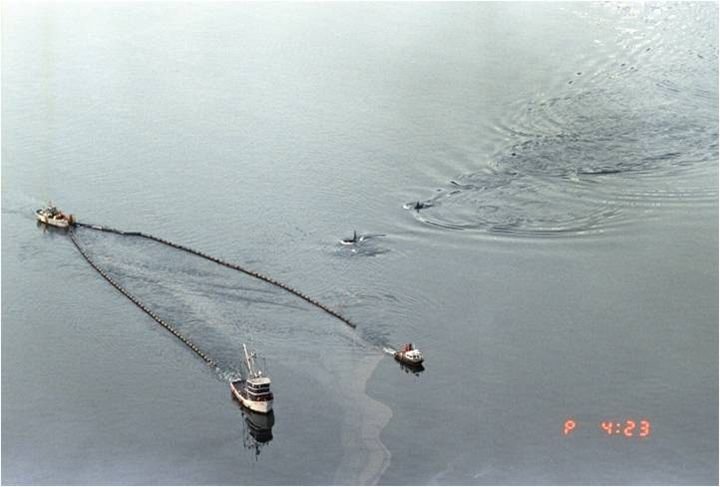
The first responders didn’t arrive for hours. Alyeska’s contingency plan called for a containment barge to be on scene within five hours — that barge was buried under snow, in disrepair, and not actually loaded. By the time anyone got booms in the water, the oil had been spreading for half a day. A storm rolled in three days later and smeared the slick across hundreds of miles of coastline before anything could be done. According to the EPA’s spill profile, the oil eventually reached more than 1,300 miles of Alaskan shoreline.
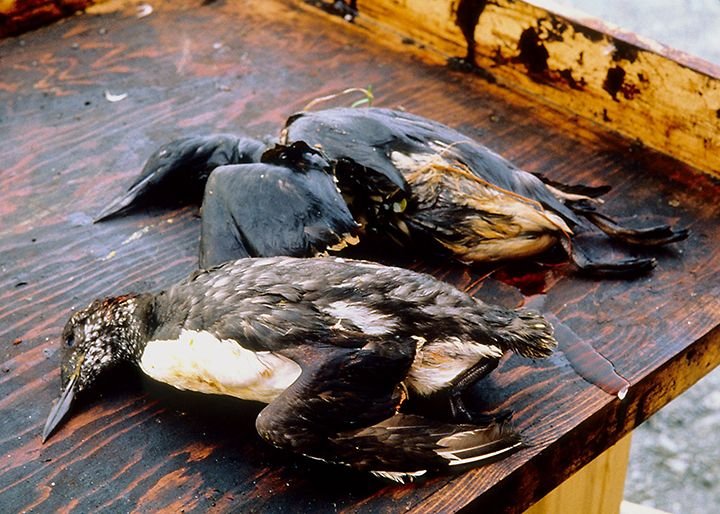
The body count was staggering and impossible to compile fully. Estimates from NOAA’s Office of Response and Restoration peg the immediate die-off at roughly 250,000 seabirds, 2,800 sea otters, 300 harbor seals, 250 bald eagles, and as many as 22 killer whales. Salmon and herring spawning grounds were coated in tar. The herring fishery in Prince William Sound, which generated tens of millions of dollars a year, collapsed by 1993 and has never recovered.
Oiled Otters, Black Beaches, and the Photos That Shocked Gen X
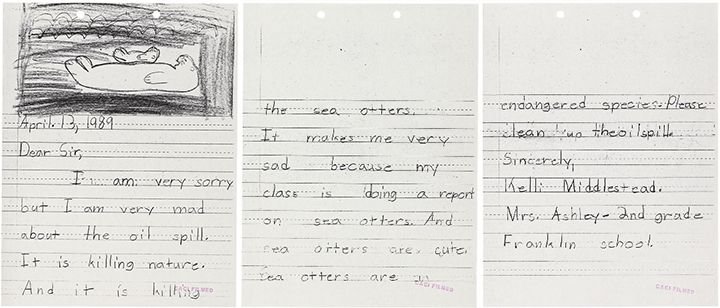
The images came home through the TV antenna and the morning paper. Dead seabirds piled in lab trays. Sea otters slick with crude, shivering on cleaning tables. Volunteers in yellow rain gear hosing rocks one boulder at a time. For kids in middle school in 1989, the Exxon Valdez became the first environmental crisis they remembered as their own — not something their parents had lived through, but theirs. Schoolteachers ran units on it. Second graders wrote letters to the otters. The disaster moved into the same emotional file folder Gen X already kept for Challenger, Chernobyl, and the ozone hole.
It also reset the floor on what corporate accountability was supposed to look like. The Exxon name became a punchline. Bumper stickers showed up reading “Hazelwood for Captain” with a skull and crossbones. The disaster was such a cultural moment that someone published an actual board game about it that same year — players raced to clean up the spill while Exxon’s lawyers argued in court. The 1980s had a habit of producing tragedies on a scale large enough to spawn merchandise. If you remember the Henderson, Nevada explosion the year before, you know the pattern: catastrophic event, nightly news fixation, then a strange afterlife in coloring books and bootleg T-shirts.

Joseph Hazelwood and the Question of Blame
The captain became the story. Hazelwood had a documented history of treatment for alcohol abuse, and a blood test taken roughly ten hours after the grounding showed alcohol in his system. The press declared the case open and shut. The reality was messier. A jury later acquitted him of operating a vessel under the influence and convicted him only on a misdemeanor for negligent discharge of oil, fining him $50,000 and ordering 1,000 hours of community service in Alaska. He served that sentence picking up trash along Anchorage highways.
The harder truth was structural. The Coast Guard’s traffic monitoring station in Valdez had been downgraded a few years earlier — its radar coverage no longer reached Bligh Reef. Exxon’s tanker crews were running understaffed, under-rested, and under pressure to move oil. Industry-wide, the contingency plans on file with the state were fiction nobody had stress-tested. The Exxon Valdez disaster wasn’t one drunk captain. It was a system designed to assume nothing would ever go wrong, until the night something did.
How One Spill Rewrote the Rules
Congress passed the Oil Pollution Act of 1990 the following year. It required all new tankers in U.S. waters to have double hulls, set up a federal liability fund paid for by the oil industry, and gave the Coast Guard real authority over response planning. The International Tanker Owners Pollution Federation’s case study documents how single-hull tankers were phased out of U.S. service by 2015 — and how a similar global mandate followed. That’s the regulatory legacy of the Exxon Valdez: a piece of paper that exists because 11 million gallons of crude killed a quarter-million birds.
The financial reckoning took even longer. A federal jury in 1994 hit Exxon with a $5 billion punitive damages judgment — the biggest of its kind at the time. Exxon appealed. The case ground through the courts for fourteen years. In 2008, the Supreme Court cut the award down to roughly $507 million, ruling that punitive damages couldn’t exceed compensatory damages in maritime cases. Many of the fishermen and Alaska Natives who had sued had already died waiting for their checks. The ones still alive received pennies on the dollar of what the original verdict promised.
What Prince William Sound Looks Like Today
If you fly over Prince William Sound in the summer of 2026, the water looks clean. It mostly is. Salmon runs are back. Bald eagles are back. The pristine, postcard version of southern Alaska has returned for anyone passing through on a cruise ship. Walk a beach with a shovel, though, and the story changes. Researchers monitoring beaches in the Sound have pulled back gravel and found pockets of oil sitting just under the surface — in some bays, the gravel a few inches down is still slick.
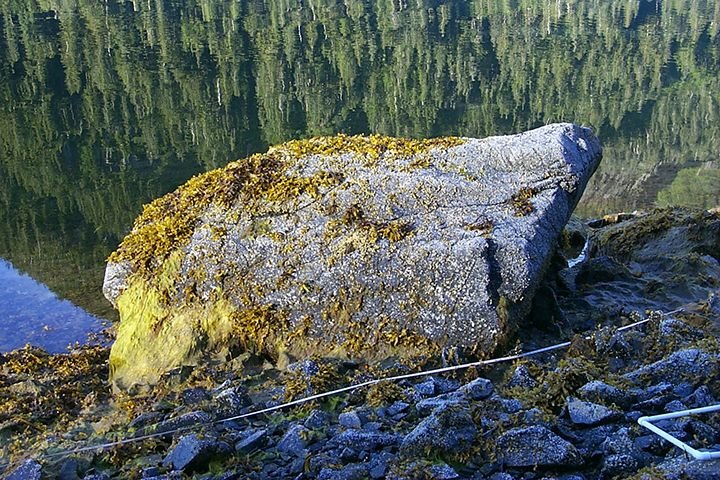
NOAA scientists have been photographing the same boulder in the Sound — they call it Mearns Rock — every summer since 1989. The before-and-after series is one of the eeriest visual records in environmental science: kelp returning, then mussels, then bare rock, then kelp again, in cycles that have nothing to do with people and everything to do with what happens when an ecosystem refuses to die quietly. The herring, though, never came back. Neither did the Pacific herring fishery that anchored the region’s working-class economy.
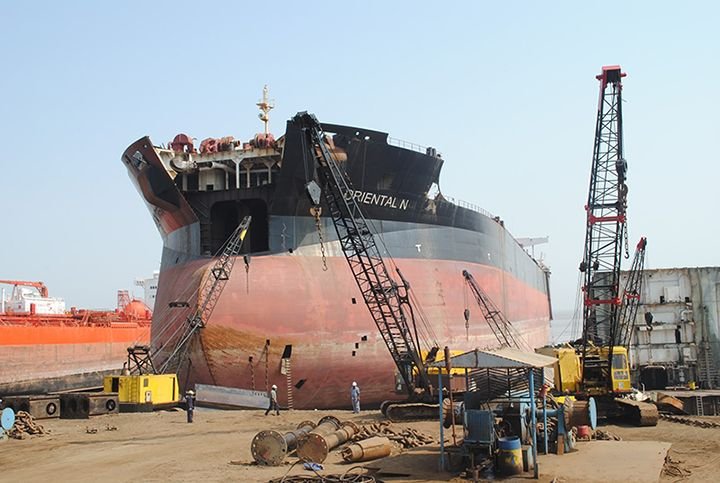
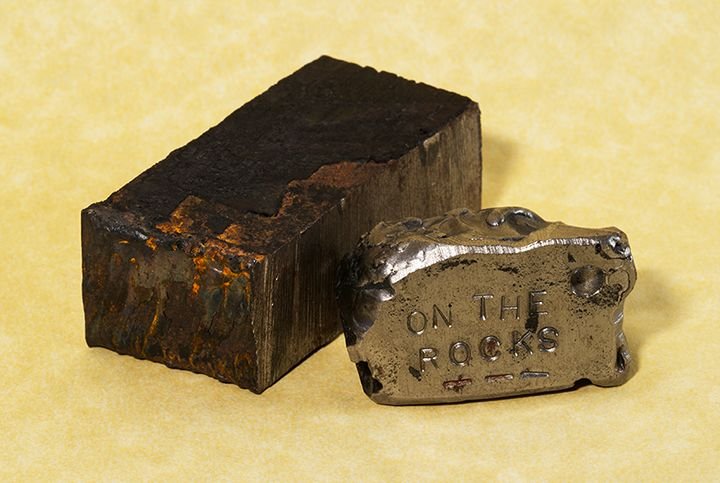
The ship itself had a strange afterlife. After repairs, Exxon renamed her the SeaRiver Mediterranean and banned her from ever sailing into Prince William Sound again. She was eventually sold, renamed twice more, and ended up on a scrap beach in Alang, India in 2012, being cut to pieces by hand under the new name Oriental Nicety. Pieces of her hull steel were repurposed into Indian construction rebar. A few small fragments were preserved by Alaskan museums as artifacts of what was, for nineteen years, the worst tanker spill in American history — a record only broken when Deepwater Horizon blew out in 2010.
Why the Exxon Valdez Still Matters
The spring of 1989 turned out to be one of those years where history piled up on itself. Two months after the Exxon Valdez grounded, students filled Tiananmen Square in Beijing and a lone man stood in front of a column of tanks. The Berlin Wall came down in November. The world Gen X had been raised inside started rearranging itself in real time, and the oil-soaked beaches of Prince William Sound were part of that rearrangement — proof that the industrial backbone of the West had blind spots big enough to swallow a coastline.
The disaster also rewrote what corporate apology was supposed to sound like, and what it was actually worth. Exxon ran full-page newspaper ads, paid out a few billion in cleanup costs, and absorbed the punitive damages bill three decades later without flinching. The company that became ExxonMobil posted record profits the year the final settlements were paid. Whatever lesson the spill was supposed to teach the oil industry, the balance sheet absorbed it.
What stuck — for Gen X especially — was the image of the otter. One animal, covered in crude, pulled out of a cove that had been clean for ten thousand years. That picture did more for the modern environmental movement than any government report ever did. It’s why every spill since the Exxon Valdez has been measured against it, and why the phrase “another Exxon Valdez” still functions as shorthand for an industrial accident no one quite gets over. The cleanup is technically finished. The cultural hangover never quite was.
Sources
- NOAA Office of Response and Restoration — Exxon Valdez Oil Spill — Federal incident overview, response timeline, and long-term monitoring data.
- U.S. EPA — Exxon Valdez Spill Profile — Spill size, shoreline impact, and federal cleanup response.
- International Tanker Owners Pollution Federation — Exxon Valdez Case Study — Industry post-mortem and regulatory aftermath.
- Exxon Valdez Oil Spill Trustee Council — Ongoing restoration data and species recovery status.
- NOAA — 10 Photos That Tell the Story of the Exxon Valdez Oil Spill — Photographic record and historical artifacts.
Browse retro and vintage-inspired apparel at the RetroRadical shop →
The Retro Almanac
A monthly roundup of "on this day" highlights from that month, decades back — plus first dibs on new retro merch drops. No spam, just the good stuff.