| |

The Day After 1983: 7 Reasons Cold War Paranoia Defined a Generation

If you grew up in the 1980s, you already know the feeling. That low-level hum of dread that lived somewhere in the back of your skull, wedged between your math homework and your mixtape plans. The fear that at any moment, the alarm could go off — not your clock radio blasting “Girls Just Want to Have Fun,” but that alarm. The one that meant the missiles were already in the air.

Cold War paranoia wasn’t some abstract geopolitical concept for Gen X. It was the wallpaper of childhood. It was in the movies we watched, the books we read, the drills we practiced at school, and the whispered adult conversations we half-heard over dinner. The 80s gave us leg warmers and hair metal and the Rubik’s Cube — and also the very real, government-sanctioned terror that nuclear annihilation was maybe fifteen minutes away on any given Tuesday.

This is that story.

The World on the Edge: Why the 80s Were Genuinely Terrifying

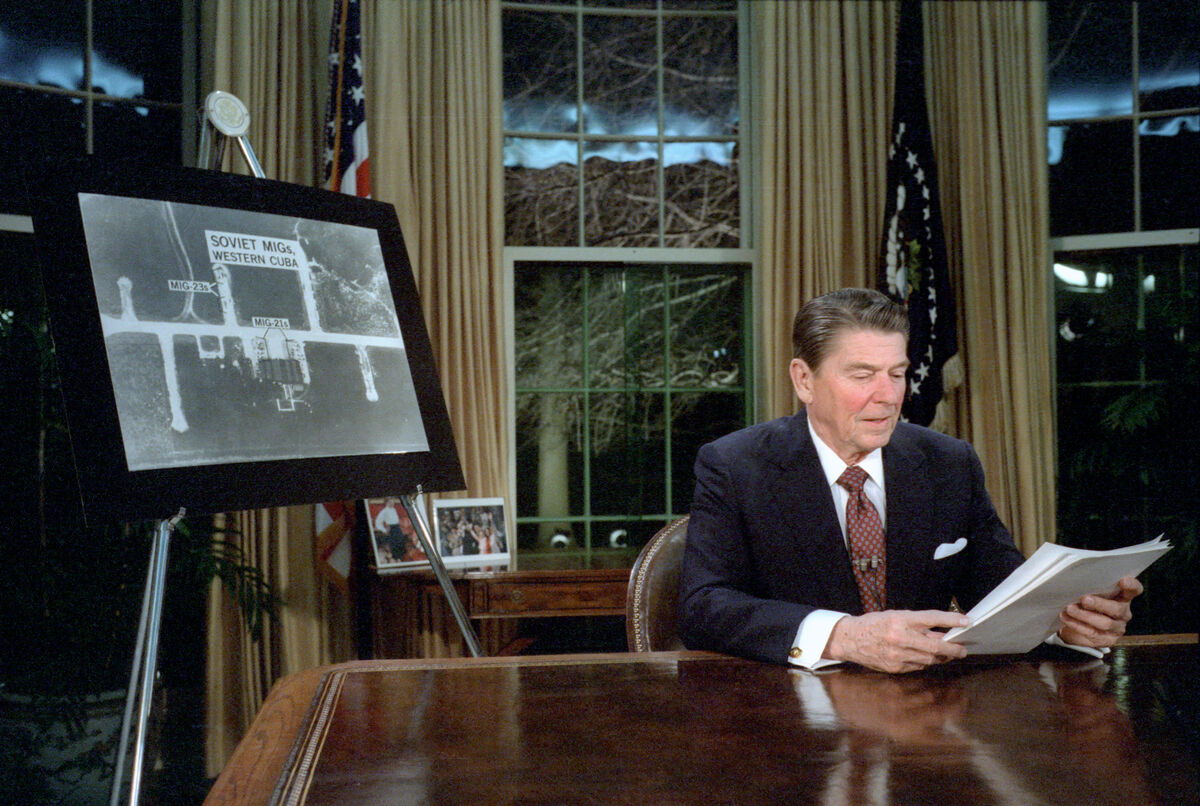
We forget now, decades removed, just how close to the actual brink things got in the early 1980s. Ronald Reagan came into office calling the Soviet Union an “evil empire” and backing it up with the biggest peacetime military buildup in American history. The Soviets, for their part, weren’t exactly sending warm hugs back. By 1983, both sides had enough nuclear warheads pointed at each other to end human civilization roughly thirty times over.


B-52 Stratofortress nuclear bomber Cold War 1980s strategic air command

The nuclear arsenals weren’t just sitting in silos quietly rusting. B-52 bombers flew continuous airborne alert patrols. Submarine-launched ballistic missiles prowled every ocean. NATO and Warsaw Pact armies faced each other across a divided Europe, armed to the teeth and jumpy as hell. The phrase “mutually assured destruction” — which goes by the cheerful acronym MAD — was U.S. official nuclear policy, which meant the entire peace was predicated on both sides being too scared to fire first.

That’s a lot to absorb when you’re twelve years old and just trying to figure out how to ask someone to the school dance.

The Day After 1983: The TV Movie That Broke America

On November 20, 1983, ABC aired The Day After — a two-hour television film about what happens to the residents of Lawrence, Kansas after a nuclear war with the Soviet Union. An estimated 100 million Americans watched it. That’s not a typo. One hundred million people sat in their living rooms and watched their familiar suburban world get vaporized in grainy, unflinching detail.

Nuclear family Cold War duck and cover survival preparation 1980s

The film didn’t pull punches. People caught in the blast radius had their skin stripped off on camera. Survivors stumbled through a radiation-poisoned landscape, their hair falling out, their teeth loosening in their gums. There were no heroes, no clever solutions, no happy endings. Just death, slowly, in a burned-out world.

ABC offered viewer hotlines after the broadcast. Mental health professionals appeared on news programs to help process the anxiety. Secretary of State George Shultz reportedly wept. President Reagan himself wrote in his diary that the film was “very effective and left me greatly depressed.” He later credited it as part of his motivation to pursue nuclear arms reduction treaties with Gorbachev.

If you were a kid in 1983, you watched it — or heard about it from every classmate who had. It became the shared trauma of a generation. The “Day After generation” was a real sociological phenomenon, a cohort of young Americans permanently marked by the casual ease with which the film showed civilization ending on a quiet afternoon in Kansas.

WarGames (1983): When the Computer Almost Started World War III

WarGames 1983 NORAD control room visualization Cold War nuclear threat

Released just five months before The Day After aired, WarGames offered a slightly more Hollywood-friendly version of the same nightmare scenario. Matthew Broderick plays David Lightman, a teenage hacker who accidentally breaks into NORAD’s computer system and nearly triggers a nuclear war by playing what he thinks is a video game called “Global Thermonuclear War.”

The film was thrilling, funny, and completely gripping — and it also terrified people in a specific, technologically sophisticated way. WarGames didn’t ask you to imagine nuclear war happening through political miscalculation or Soviet aggression. It asked you to imagine it happening because of a bug. A glitch. A teenager in Seattle with a phone modem and too much free time.

WarGames 1983 NORAD command center visualization Matthew Broderick

The film’s most famous line — “The only winning move is not to play” — entered the cultural bloodstream immediately, a zen koan dressed up in Cold War anxiety. Reagan was reportedly so struck by WarGames that he asked his military advisors whether such a scenario was actually possible. They came back and told him yes, Mr. President, it was.

This is the same year Reagan gave his famous Star Wars SDI speech, proposing a missile defense system that critics argued would only make nuclear war more, not less, likely. It was a hell of a year to be following the news.

Red Dawn (1984): The Commies Are Already Here

If The Day After was the dread-soaked nightmare and WarGames was the techno-thriller, Red Dawn was the action-movie id of Cold War paranoia given full cinematic release.

Red Dawn 1984 film Cold War Soviet invasion nuclear fear 80s

The premise: Soviet and Cuban paratroopers invade the American heartland. A group of Colorado high school students — calling themselves the Wolverines — take to the mountains and wage guerrilla war against the occupiers. Patrick Swayze, C. Thomas Howell, Charlie Sheen, Jennifer Grey. The film was rated PG-13 (one of the first movies to receive that newly-created rating) despite containing what was, at the time, the highest body count of any film ever made.

Red Dawn tapped into something primal about 80s paranoia: the fear that the enemy was already among us, that the invasion could start tomorrow, that ordinary American teenagers might have to become freedom fighters. It was received by critics with varying degrees of horror and delight, but audiences ate it up. The movie grossed $38 million on a $4 million budget.

Today it reads as a fever dream of Reagan-era Cold War anxiety, a movie that could only have been made in 1984, in the specific political and psychological climate of that very weird, very scared, very confident decade.

The Dead Hand: The Doomsday Machine Nobody Talked About

While Hollywood was dramatizing nuclear fear, the Soviets were quietly building something that made the fictional terrors look tame. The Perimeter system — nicknamed “Dead Hand” by Western analysts — was a semi-automatic nuclear launch system designed to ensure that the USSR could always retaliate even if its entire command structure was destroyed in a first strike.

Minuteman ICBM missile silo Cold War nuclear launch facility 1980s

The system worked like this: if Soviet sensors detected a nuclear explosion and no orders came from military command within a set timeframe — because military command had presumably been vaporized — the system could automatically authorize and launch a retaliatory strike. A doomsday machine. An actual, real-world version of the device from Dr. Strangelove.

The Soviets kept the system secret. Western governments didn’t officially acknowledge it existed until the early 1990s. Had they known, it would have added an entirely new layer of terror to the already-terrifying geopolitical calculus of the 1980s. The doomsday clock wasn’t just metaphorical. There was a literal machine sitting in a bunker somewhere in Russia, waiting patiently for conditions that would end the world.

Stanislav Petrov: The Man Who Chose Not to End the World

On September 26, 1983, a Soviet lieutenant colonel named Stanislav Petrov was the duty officer at the Oko nuclear early-warning system when his monitors lit up with an alert: the United States had launched five intercontinental ballistic missiles at the Soviet Union.

Protocol was clear. He was supposed to report the launch immediately to his superiors, who would then — almost certainly — trigger a Soviet retaliation. That retaliation would have met American counter-retaliation. In roughly thirty minutes, most of the Northern Hemisphere would have been on fire.

Petrov didn’t report it. Instead, he reasoned — correctly, as it turned out — that a genuine American first strike would involve hundreds or thousands of missiles, not five. The early warning system, which was relatively new and not yet fully trusted, must have malfunctioned. (It had — sunlight reflecting off clouds had triggered the sensors.)

Had Petrov followed protocol, there’s a non-trivial chance that you would not be reading this right now. He received no official recognition for his decision; in fact, he was quietly reprimanded for improper record-keeping that night. He died in 2017, relatively obscure outside of arms control circles.

“I had a funny feeling in my gut. I didn’t want to be the one responsible for starting a third world war.” — Stanislav Petrov

Able Archer 83: How Close Did We Actually Get?

In November 1983 — the same month The Day After aired — NATO conducted a military exercise called Able Archer 83, simulating escalating conflict through the use of nuclear weapons. The exercise was so realistic, so detailed in its simulation of actual war protocols, that Soviet intelligence became convinced it might be cover for an actual first strike.

Declassified documents from both sides have since revealed that in late 1983, the Soviet Union was on hair-trigger alert, convinced that Reagan’s aggressive posture and the military buildup represented genuine preparation for a nuclear war against them. KGB agents in Western Europe were tasked with watching for signs of imminent American attack: unusual movement of nuclear warheads, blood banks being filled, sudden cancellation of senior officials’ public appearances.

Able Archer 83 was so alarming to the Soviets that some historians believe it came closer to triggering nuclear war than the Cuban Missile Crisis twenty years earlier. When Reagan was briefed on how seriously the Soviets had taken it, he was reportedly genuinely shaken. The intelligence reports apparently contributed to his growing desire to move toward arms reduction rather than continued escalation.

Nuclear Freeze: When the People Said No

Reagan and Gorbachev Geneva Summit 1985 Cold War nuclear negotiations

The fear wasn’t passive. By the early 1980s, it had organized itself into one of the largest protest movements in American history. The Nuclear Freeze campaign called for a mutual and verifiable freeze on the testing, production, and deployment of nuclear weapons by both the U.S. and USSR.

On June 12, 1982, roughly one million people marched in New York City’s Central Park — the largest political demonstration in American history at that point. Freeze resolutions were on ballots across the country. Physicians for Social Responsibility won the Nobel Peace Prize in 1985 for their anti-nuclear activism. The movement crossed party lines, religious denominations, and cultural divides.

Reagan ultimately dismissed the Freeze movement publicly, but it’s probably not a coincidence that his second term saw increasingly serious arms reduction negotiations with Gorbachev, culminating in the Intermediate-Range Nuclear Forces Treaty of 1987 — the first arms control agreement to actually eliminate an entire class of nuclear weapons.

Pop Culture Under the Shadow: Music, Books, and the Nuclear Imagination

The nuclear anxiety of the 80s didn’t just produce films and protests. It produced a whole cultural ecosystem of dread-soaked creativity that, looking back, we might call “nuclear gothic.”

Sting asked us all if the Russians loved their children too. Nena sang about 99 balloons (red ones, in German, misidentified as enemy aircraft). Prince wondered if we were going to party like it was 1999 — because everyone assumed there might not be a year 2000. The Clash, The Police, U2, and dozens of other acts found the nuclear terror working its way into their lyrics.

In books, the apocalypse became literary. Cormac McCarthy was still years away from The Road, but Robert McCammon’s Swan Song (1987) and Whitley Strieber’s Warday (1984) depicted post-nuclear America in terrifying detail. John Hackett’s The Third World War was a bestseller. Every bookstore had a Cold War section that would make your hair stand up.

Even kids’ pop culture couldn’t escape it. Transformers, G.I. Joe, and a dozen other cartoons trafficked openly in militarism and the fear of total war, filtered through the safe medium of colorful animation. You can’t really understand 80s Saturday morning cartoons without understanding the world they were produced in — a world where adults genuinely believed civilization might not last another decade.

There was also the very particular pleasure of 80s horror movies, which gave nuclear anxiety a monster’s face: the mutant, the irradiated creature, the thing that should not have survived. From Them! remakes to subtle radiation-era anxieties, the genre absorbed Cold War dread and gave it back as manageable fear — something you could watch and then turn off.

The Doomsday Clock

The Bulletin of the Atomic Scientists has maintained the “Doomsday Clock” since 1947, a symbolic representation of how close humanity is to self-destruction. In January 1984, they set it at three minutes to midnight — the closest it had been since 1953, after both the U.S. and USSR had tested hydrogen bombs.

Three minutes. That was the scientific community’s assessment of where things stood the same year Ghostbusters came out, the same year Michael Jackson was recording Thriller, the same year you were probably asking your parents for a Cabbage Patch Kid for Christmas.

The bomb was everywhere and nowhere. Present in every thriller, every public debate, every homework assignment that felt simultaneously urgent and pointless. Why study for this test if there might not be a country to grow up in? It’s a question teenagers actually asked themselves in 1983, and their parents — who had lived through duck-and-cover drills and the Cuban Missile Crisis — didn’t always have great answers.

How It Ended (For Now)

The Cold War wound down with surprising speed in the late 1980s. Gorbachev’s glasnost and perestroika policies opened the Soviet system in ways that accelerated its collapse. The INF Treaty eliminated intermediate-range nuclear missiles. The Berlin Wall fell in 1989. By 1991, the Soviet Union itself had dissolved.

The nuclear arsenals didn’t disappear — they’re still there, still capable of ending civilization, still pointed in various directions. But the ambient terror, the background radiation of fear that defined the 80s childhood experience, largely evaporated. The Doomsday Clock was moved back.

For those who lived through it, the Cold War left marks that are difficult to fully articulate. A generation grew up genuinely uncertain whether they’d have a future, and they built that uncertainty into their worldview in ways both obvious and subtle. It’s why Gen X tends to be dark, sardonic, and deeply suspicious of official reassurances. It’s why we watched WarGames and thought, yeah, that tracks.

The day after was always coming. The miracle is that it never did.

For more on the Cold War’s grip on America in the 1980s — particularly the arms race that drove so much of the decade’s policy — read about how the Soviet empire finally cracked, starting with the Baltic states’ demand for independence.

Sources

  1. Schell, Jonathan. The Fate of the Earth. Knopf, 1982. — The definitive book-length treatment of nuclear apocalypse that shaped 80s public discourse.
  2. Hoffman, David E. The Dead Hand: The Untold Story of the Cold War Arms Race and Its Dangerous Legacy. Doubleday, 2009. — Pulitzer Prize-winning account of the Soviet nuclear doomsday system and the arms race’s final decade.
  3. National Security Archive. “The Able Archer War Scare.” George Washington University. nsarchive.gwu.edu
  4. Bulletin of the Atomic Scientists. “Timeline of the Doomsday Clock.” thebulletin.org
  5. Ebert, Roger. Review of The Day After. Chicago Sun-Times, November 1983.
  6. Broad, William J. “Pentagon is Said to Regret Finding on Soviet War System.” New York Times, October 1993. — First major reporting on the Perimeter (Dead Hand) system.
  7. Atomic Heritage Foundation. “Cold War History.” ahf.nuclearmuseum.org — Comprehensive nuclear Cold War resource.

Similar Posts

Leave a Reply

Your email address will not be published. Required fields are marked *