Ryan White, Elton John & Farm Aid 1990: The Night That Changed Everything
On April 7, 1990, while Ryan White lay dying in an Indianapolis hospital bed, his friend Elton John stepped onto the stage at the Hoosier Dome and did something nobody expected. He wasn’t on the bill. He wasn’t supposed to be anywhere near Farm Aid IV. But grief has a way of rewriting schedules, and what happened that Saturday afternoon became one of the most emotionally charged moments in the history of American benefit concerts.
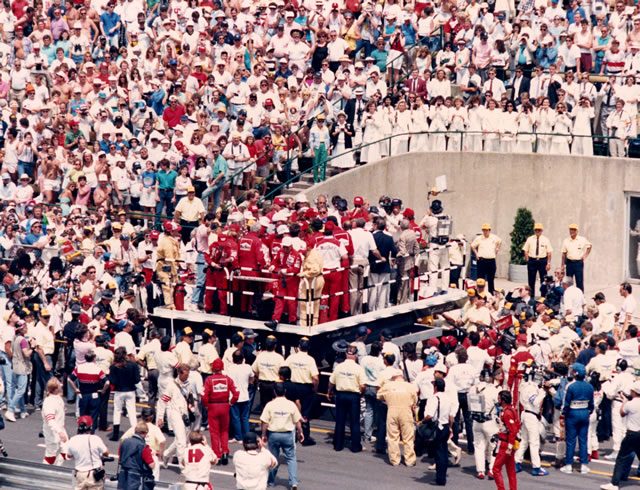
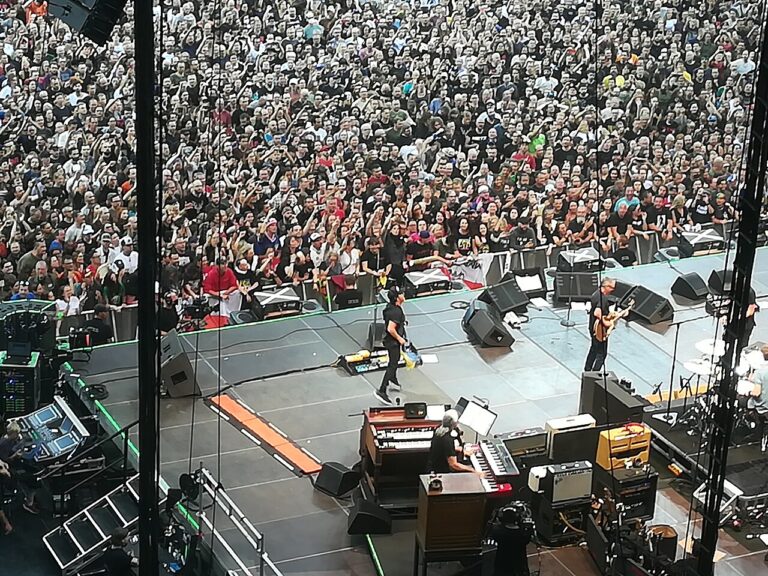
Farm Aid IV brought 45,000 people together under one roof for thirteen hours of music, activism, and raw emotion. The concert raised money for struggling American farmers, but it also became an unplanned memorial for a teenager who had spent the last five years teaching the country what courage looked like. The collision of these two stories — the fight to save family farms and the fight against AIDS stigma — made April 7, 1990 a day that still resonates more than three decades later.
The Birth of Farm Aid and the Road to Indianapolis
Farm Aid started with a single sentence. At the 1985 Live Aid concert in Philadelphia, Bob Dylan stood at the microphone and wondered aloud whether some of the money being raised for famine relief in Africa might also go to help American farmers who were losing their land. Willie Nelson heard that comment and ran with it. Within weeks, he’d recruited Neil Young and John Mellencamp, and the first Farm Aid concert took place on September 22, 1985, in Champaign, Illinois.


By 1990, the agricultural crisis that had sparked Farm Aid showed no signs of ending. Family farms continued to disappear at an alarming rate. Corporate agriculture was swallowing up small operations across the Midwest. The organizers chose Indianapolis for Farm Aid IV — right in the heart of farm country, where the issues hit closest to home. The Hoosier Dome, a massive indoor stadium that could hold tens of thousands, seemed like the right venue for what they had planned.
Tickets were priced at $30 — affordable by design, because this was supposed to be a concert for working people. They sold out in ninety minutes. That speed sent a message that was hard to ignore: people cared about farmers, and they were willing to show up.
Seventy-Two Musicians, Thirteen Hours, One Mission
Willie Nelson opened the show at 12:20 in the afternoon, strapping on his battered guitar and kicking things off the way only Willie can — loose, easy, like he was playing on his front porch instead of in front of 45,000 screaming fans. From there, the lineup unfolded like a who’s who of American music spanning every genre that mattered.

John Mellencamp brought his blue-collar rock anthems to the stage, channeling the frustration of Indiana farmers who watched banks foreclose on land their families had worked for generations. Neil Young plugged in and turned up the volume, because that’s what Neil Young does when something matters. Jackson Browne sang about justice. Kris Kristofferson brought gravitas. Arlo Guthrie connected the whole thing to the folk tradition of Woody Guthrie and the Dust Bowl, reminding everyone that American farmers had been fighting for survival since long before anyone put on a benefit concert.

A young Garth Brooks performed early in the day — still building his career, not yet the stadium-filling phenomenon he’d become within a year. Taj Mahal brought blues. The Soviet rock group Gorky Park added an unexpected international flavor to a deeply American event, a reminder that the Berlin Wall had only fallen five months earlier and the world was still figuring out what came next. Jesse Jackson appeared onstage, turning the concert into something more than music — it was a political rally, a cultural statement, a collective act of defiance against the forces threatening rural America.
The organizers had hoped to raise $1.35 million. By the time the last note faded, pledges had exceeded the goal. But the money wasn’t what people would remember about Farm Aid IV.
The Surprise Nobody Saw Coming
Elton John’s name was nowhere on the original lineup. He wasn’t booked. He wasn’t scheduled. He was in Indianapolis for a completely different reason — one that had nothing to do with farming and everything to do with a friendship that had developed between one of the biggest rock stars on the planet and a teenager from Kokomo, Indiana.

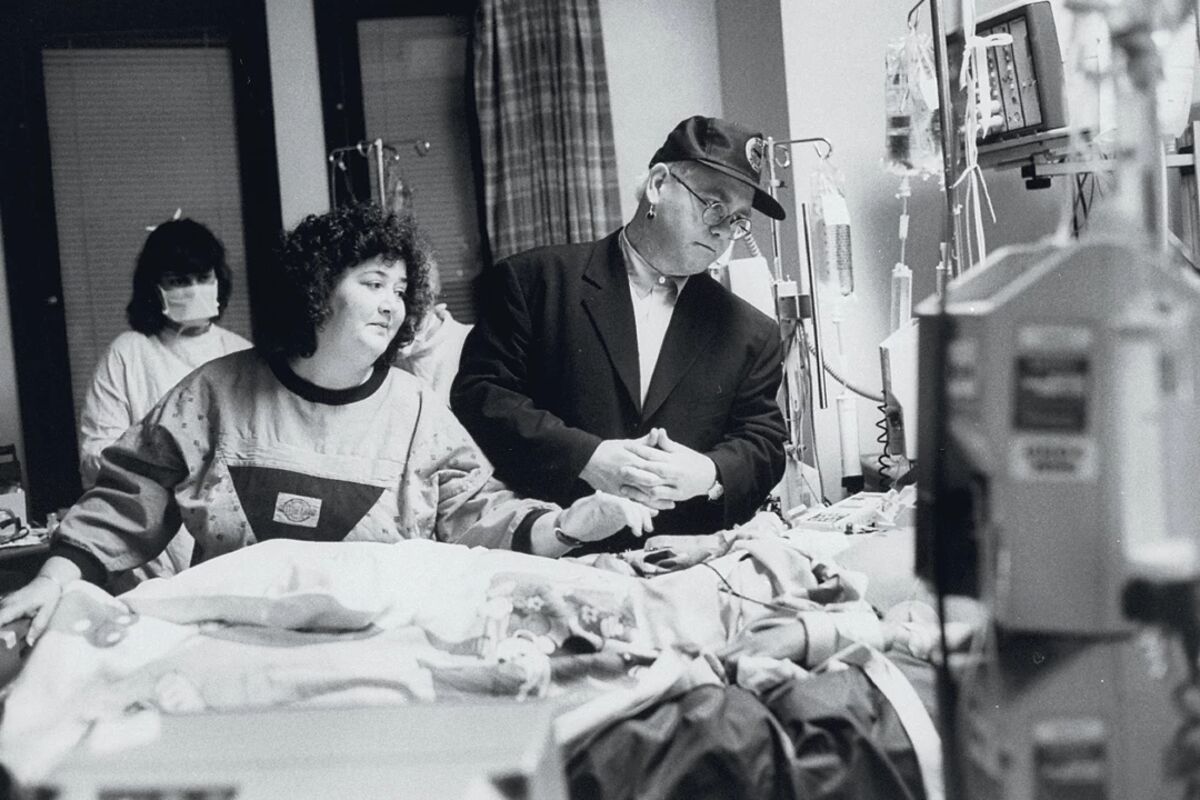
Ryan White had been in Riley Hospital for Children for weeks. His condition was deteriorating rapidly. Elton had been at his bedside for nearly a week, sitting with the White family, holding Ryan’s hand, doing the quiet work of being present when someone you love is dying. But when the Farm Aid organizers heard that Elton was in town, they asked if he’d be willing to come over and play. He agreed — but only briefly. He had somewhere more important to be.
When Elton took the stage, the crowd erupted. This was a genuine surprise, an unscheduled appearance by one of the most famous musicians alive. He played with the kind of intensity that only comes from real emotion, not performance. And then, before launching into “Candle in the Wind,” he paused.
“This one’s for Ryan,” he said.
Forty-five thousand people raised their hands and swayed. Many of them knew exactly who Ryan was. Many of them were crying. The song, originally written about Marilyn Monroe, took on an entirely different meaning in that moment. It wasn’t about Hollywood glamour or tragic stardom. It was about a kid from Indiana who just wanted to go to school and got punished for being sick.
After his set, Elton didn’t linger backstage. He didn’t schmooze. He went straight back to the hospital.
Ryan White: The Boy Who Fought Back
Ryan White was born on December 6, 1971, in Kokomo, Indiana. He was diagnosed with hemophilia as a baby — a condition that required regular infusions of a blood-clotting protein called factor VIII. In December 1984, at the age of thirteen, one of those treatments gave him something no one expected: HIV. The blood supply was contaminated. Doctors told his mother, Jeanne, that Ryan had six months to live.

Ryan didn’t die in six months. He lived for five more years, and he spent those years fighting a battle that was about far more than a virus. When he tried to return to school in Kokomo, the community turned against him. Parents pulled their children from classes. Teachers refused to have him in their rooms. Someone fired a bullet through the White family’s living room window. The message was clear: Ryan was not welcome.
The fear was irrational, fueled by misinformation about how AIDS spread. In 1985, many Americans believed you could catch HIV from a handshake, a toilet seat, a shared classroom. Ryan became the face of that ignorance — and the face of the fight against it. His family moved to Cicero, Indiana, where they were received with compassion instead of hostility. Ryan went back to school. He made friends. He lived as normal a life as a teenager with a terminal diagnosis could live.
Along the way, he became a national figure. He testified before the Presidential Commission on AIDS. A TV movie, The Ryan White Story, aired in 1989 with Lukas Haas in the title role. He befriended celebrities — Michael Jackson, who was at the peak of his fame in 1990, became a close friend and supporter. And Elton John, who understood something about being an outsider, became like family.
Ryan was one month away from graduating high school when his health collapsed for the final time.
Guns N’ Roses Debut “Civil War”
While Elton John’s performance was the emotional centerpiece of Farm Aid IV, another act made history that day for very different reasons. Guns N’ Roses took the stage and debuted “Civil War,” a song that wouldn’t appear on an album for another year. It was the first time the public heard the track, and it landed like a grenade.

Opening with a sample from the movie Cool Hand Luke — “What we’ve got here is a failure to communicate” — “Civil War” was an anti-war anthem that channeled the anger and confusion of a generation watching the Cold War end while new conflicts erupted. Axl Rose prowled the stage with his signature intensity, and Slash’s guitar work cut through the Hoosier Dome like a blade. They also played “Down on the Farm,” a track that fit the occasion perfectly.
What makes the Guns N’ Roses set even more notable in hindsight: it was drummer Steven Adler’s last live performance with the band. He’d be fired within months, another casualty of the excess that defined late-’80s rock. The chaos of the era was everywhere — onstage, offstage, in the culture at large.
The Day After: April 8, 1990
Ryan White died at 7:11 a.m. on April 8, 1990 — less than twenty-four hours after Elton John dedicated “Candle in the Wind” to him at Farm Aid. He was eighteen years old. He died at Riley Hospital for Children in Indianapolis, with his mother Jeanne at his side. Elton was there too.

The timing felt impossible. The whole country had watched Farm Aid IV the day before. Many had heard Elton’s dedication, had seen the footage, had felt the weight of it. And now Ryan was gone. The juxtaposition — the celebration of life at the concert, followed immediately by death — gave both events a gravity that neither would have carried alone.
Ryan’s funeral was held on April 11 at the Second Presbyterian Church in Indianapolis. Elton John performed “Skyline Pigeon.” The pall bearers included Elton, Phil Donahue, and Howie Long. First Lady Barbara Bush attended. So did Michael Jackson. The service was carried live on national television.
Four months later, Congress passed the Ryan White Comprehensive AIDS Resources Emergency (CARE) Act, which President George H.W. Bush signed into law in August 1990. It became the largest federally funded program for people living with HIV/AIDS in the United States, providing funding for medical care, support services, and medication. The legislation has been reauthorized multiple times and continues to serve millions of people. Ryan’s mother, Jeanne White-Ginder, spent decades advocating for the law’s renewal, making sure her son’s legacy translated into real, lasting change.
Why Farm Aid IV Still Matters
Farm Aid IV occupies a unique place in American cultural history because of everything that collided on that single day. It was a benefit concert for farmers that became a farewell to a teenager who changed how America thought about AIDS. It was the debut of a song that would define a generation of rock music. It was a gathering of artists who believed music could do something — not just entertain, but move people, change minds, open wallets, and break hearts.
The 1980s and early 1990s were full of moments where music and social justice intersected — Live Aid, Sun City, the Amnesty International tours. But Farm Aid IV stands apart because of how personal it was. This wasn’t about a crisis happening on another continent. This was about your neighbor’s farm. This was about a kid who grew up down the road. This was about Elton John leaving a dying boy’s bedside to sing one song and then going right back.
Thirty-six years later, Farm Aid continues. Willie Nelson, now in his nineties, still shows up. The organization has raised more than $75 million since 1985. Family farms are still under pressure, still fighting, still surviving. And Ryan White’s name is still attached to the legislation that saves lives every single day.
That’s the thing about April 7, 1990. It wasn’t just a concert. It was a convergence — of grief and hope, of music and activism, of celebrity and ordinary courage. The 45,000 people who were there knew they were witnessing something extraordinary. The rest of us are still catching up.