The Dead Hand System: The Soviet Doomsday Machine That Still Exists
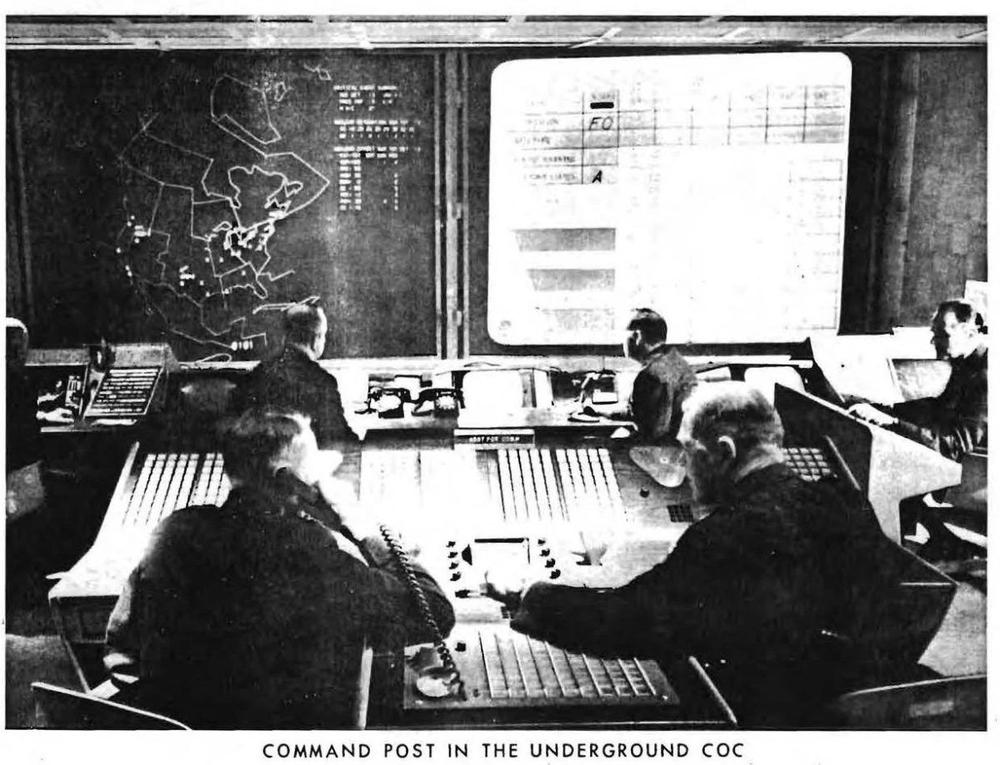
Picture this. It’s 1985, somewhere in the Ural Mountains. A reinforced concrete sphere sits buried under sixty feet of rock. Inside, a handful of low-ranking Soviet officers wait at a console wired to every nuclear silo in the country. They are not the people who decide to end the world. They are the people who finish the job after the world has already decided.
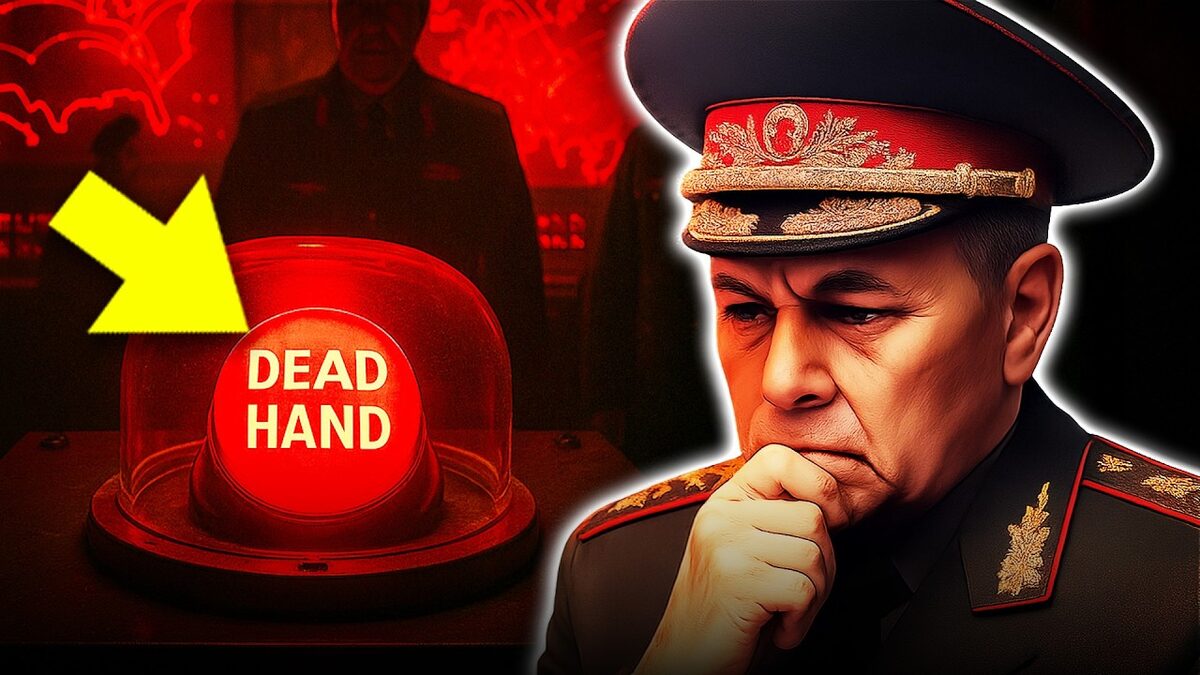
This was Perimeter. Western intelligence learned the name later and started calling it the dead hand system. The name stuck because nothing else captured the idea quite right: a switch that ticked on automatically when Moscow stopped sending signals, when seismic sensors detected the unmistakable shaking of a decapitation strike, when the radiation crossed a certain ugly threshold. If the Politburo died, the missiles still flew.
The wild part, the part that does not feel like history, is that nobody ever shut it off.
The Retro Almanac
A monthly roundup of "on this day" highlights from that month, decades back — plus first dibs on new retro merch drops. No spam, just the good stuff.
How a Soviet Computer Got Permission to End the World
The dead hand system grew out of a real and specific fear. Soviet planners during the late Brezhnev years studied U.S. Pershing II deployments in West Germany and concluded that a first strike could reach Moscow inside ten minutes. Ten minutes is not enough time for an old man with a heart condition to read a briefing, much less authorize a retaliation that would liquidate a billion people. Whatever was going to answer the strike had to be ready before the briefcase even opened.
So they built a machine that would not panic. The engineering started in 1974 at the Yuzhnoye Design Bureau in Dnipropetrovsk. By 1985 the network was on combat duty. The classified name was Sistema Perimetr. The receivers sat inside those buried concrete spheres, the shariki, hardened to withstand a direct nuclear hit. If communications with the General Staff dropped and ground sensors confirmed nuclear detonations on Soviet soil, the surviving duty crew had the option to launch UR-100N command rockets. Those rockets did not carry warheads. They carried radio transmitters. Once airborne, they shouted launch codes to every silo in the country.
Inside that paragraph there sits the most terrifying word. Option. The system was designed so that the final human consent could come from a major or a lieutenant colonel who had spent the morning thinking about cabbage rations. Cold War deterrence in its purest form was a 28-year-old with a wedding ring and a launch key.
The Night Stanislav Petrov Stared Down Five Mushroom Clouds
Two years before Perimeter went live, on the night of September 26, 1983, the Soviet early-warning network screamed. Five U.S. ICBMs inbound. The protocol said report immediately up the chain. Lt. Col. Stanislav Petrov, working a shift at the Serpukhov-15 bunker, did the opposite. He waited.
His reasoning was almost insulting in its plainness. If the Americans really meant to start a war, they would not send five missiles. They would send hundreds. Petrov sat with his hands flat on the desk while a klaxon counted down. The alarm turned out to be a glitch — sunlight glancing off cloud tops fooled the Oko satellite into reading missile plumes. The History Channel later called Petrov the man who saved the world, which is accurate but also incomplete. He saved the world by deciding, in the most literal sense, to do nothing.
That moment haunts engineers in two ways. First, because it shows how thin the wire was. Second, because Petrov’s whole purpose was to override a machine. Within a decade, the Soviets would build a machine the whole point of which was to override Petrov.
Why WarGames Stopped Being Funny in 1983
The summer of 1983 had a strange double feature. In May, Reagan watched WarGames, the John Badham film where Matthew Broderick accidentally dials into NORAD and almost triggers Armageddon by playing a computer game called Global Thermonuclear War. Reagan called General John Vessey, chairman of the Joint Chiefs, and asked, in essence, could a teenager really do that. According to Fred Kaplan’s reporting in The Wizards of Armageddon, the answer Vessey brought back made everyone in the room go pale.
That same year, Soviet engineers were polishing the final tests on Perimeter. American kids worried about WOPR were watching a fictional supercomputer learn that the only winning move was not to play. The Soviet kids were not allowed to watch WarGames, but their fathers were quietly building the real version. The fictional NORAD computer was a movie. Perimeter was a procurement order.
There is a precise reason this stuff lodged so hard in the Gen X brain. The fear was abstract enough to ignore on a school day and concrete enough to ruin sleep at night. You’d ride your bike to the arcade, drop quarters into Missile Command, and the joke would land sideways. The kid two hours ahead of you on the high-score list was practicing for something the news anchors kept hinting at after dinner.
The TV Movie That Made 100 Million People Cry
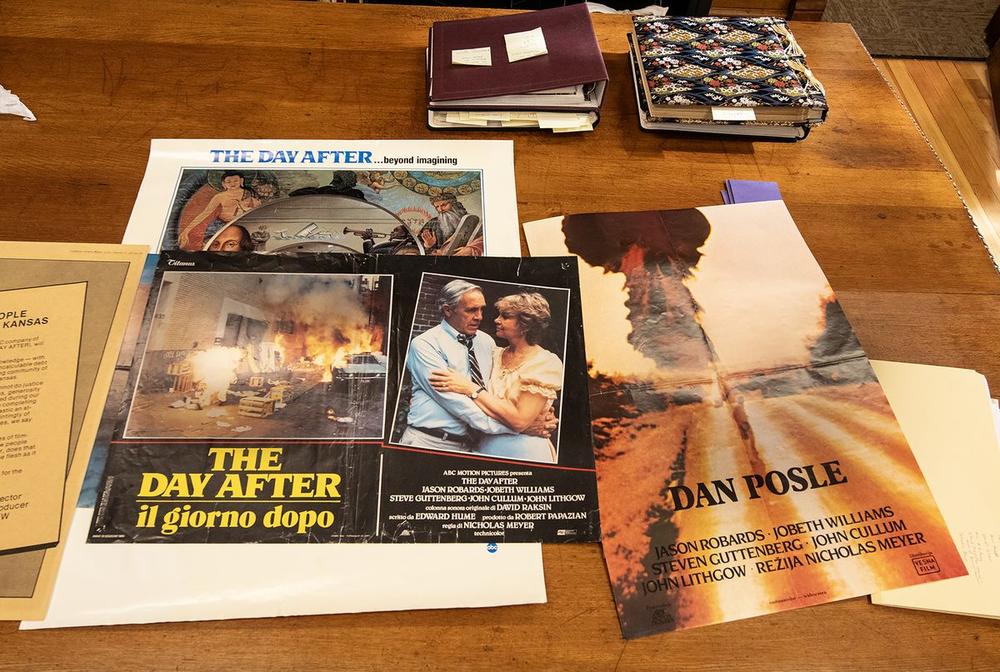
ABC aired The Day After on November 20, 1983. An estimated 100 million Americans watched. The plot was simple: a midwestern town, a sudden missile exchange, the slow grim aftermath. Jason Robards plays a doctor walking through the ash. Steve Guttenberg plays a kid who survives long enough to wish he hadn’t. Reagan watched it in advance. His diary entry from October 10, 1983 reads: “It is powerfully done. It’s very effective and left me greatly depressed.”
That movie, more than any briefing, pushed him toward serious arms reduction talks. The cultural ricochet was global, and it sits right next to the way The Day After hard-wired Cold War paranoia into an entire generation. There were lawn signs. There were special PSAs from Carl Sagan. There were 1-800 numbers. ABC built the broadcast like a public health intervention, and they were not wrong to.
Combine that movie with the news from September, with Perimeter coming online quietly in Moscow, with Reagan’s own Star Wars speech earlier that March announcing SDI, and you have a year in which a generation locked in a specific dread that never quite left. People who were eight years old that fall still remember exactly where they were sitting when the missiles came up out of the wheat field.
Reykjavik, the Wall, and the Machine That Refused to Die
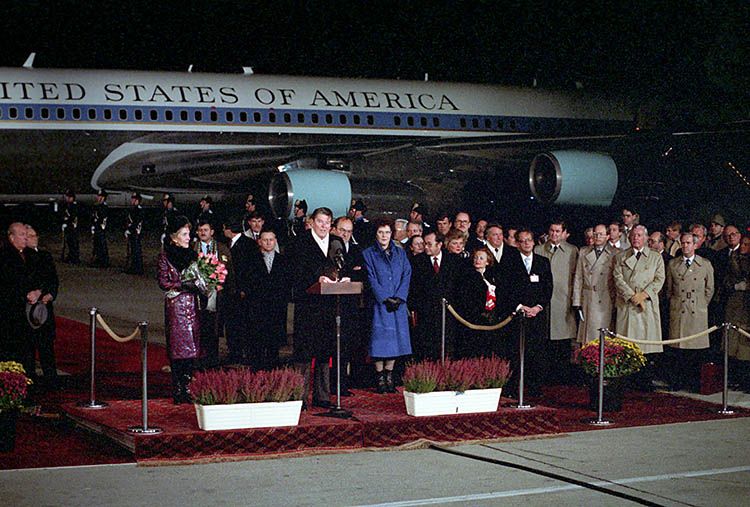
The official end of the Cold War feels tidy in hindsight. Reagan and Gorbachev met at Reykjavik in October 1986 and stunned everyone by nearly agreeing to abolish all nuclear weapons. The talks collapsed over SDI, but the wedge was driven. Two years later came the INF Treaty. In 1989 the Berlin Wall went. In 1991 the Soviet Union itself ceased to exist.
Perimeter did not go away. The Russian Federation inherited the network. Strategic Rocket Forces general Vladimir Yarynich confirmed its existence to Wired magazine’s Nicholas Thompson in 2009. The system was modernized rather than retired. By the time the smoke cleared from the Soviet pullout from Afghanistan in 1988 and the chain of independence declarations that followed — including Lithuania breaking free of Moscow in 1990 — the dead hand stayed wired into the new Russian command-and-control architecture.
In 2011 the chief of Russia’s Strategic Rocket Forces, General Sergei Karakayev, told Komsomolskaya Pravda the system was active and had been modernized. In 2018 a deputy commander confirmed the same on state television. There is no public statement that it has ever been switched off, and nobody who would say so has any reason to lie about it.
What Still Sits Buried in the Russian Hills
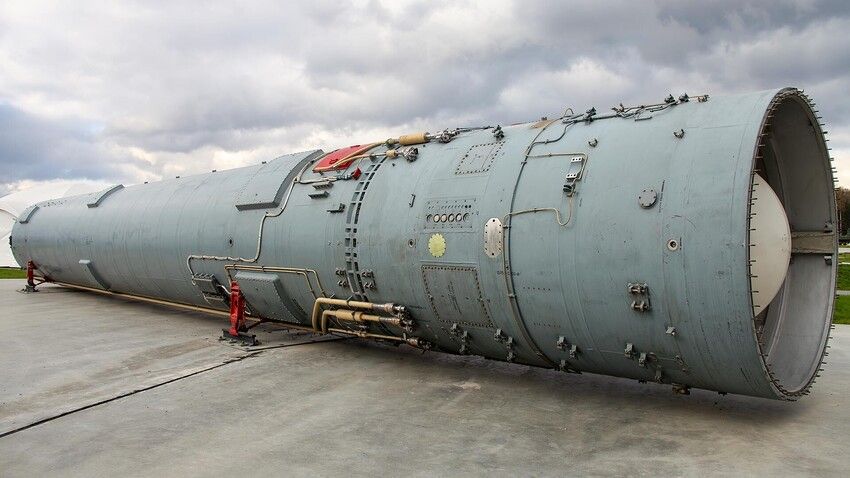
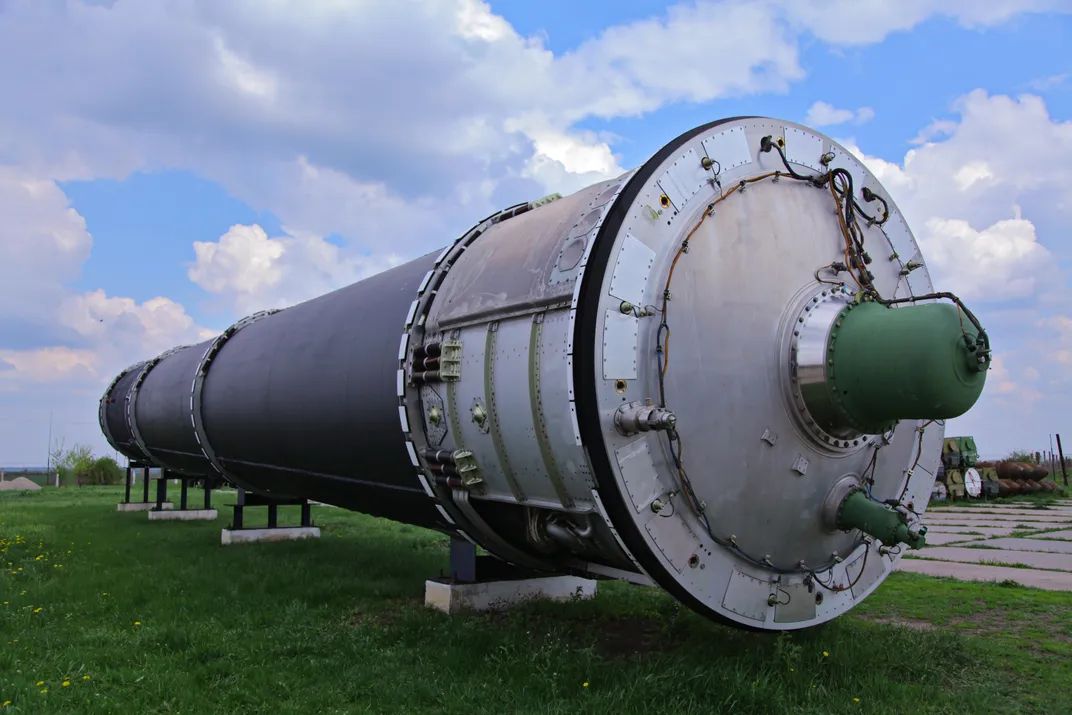
The hardware is real. Russia still fields roughly 46 SS-18 “Satan” missiles in silos across the Orenburg and Krasnoyarsk regions, each one capable of carrying ten warheads. The new RS-28 Sarmat is being phased in beside them. The command rockets that would broadcast the launch order after Moscow’s destruction are reportedly stored at multiple sites the West cannot reliably locate. That is by design.
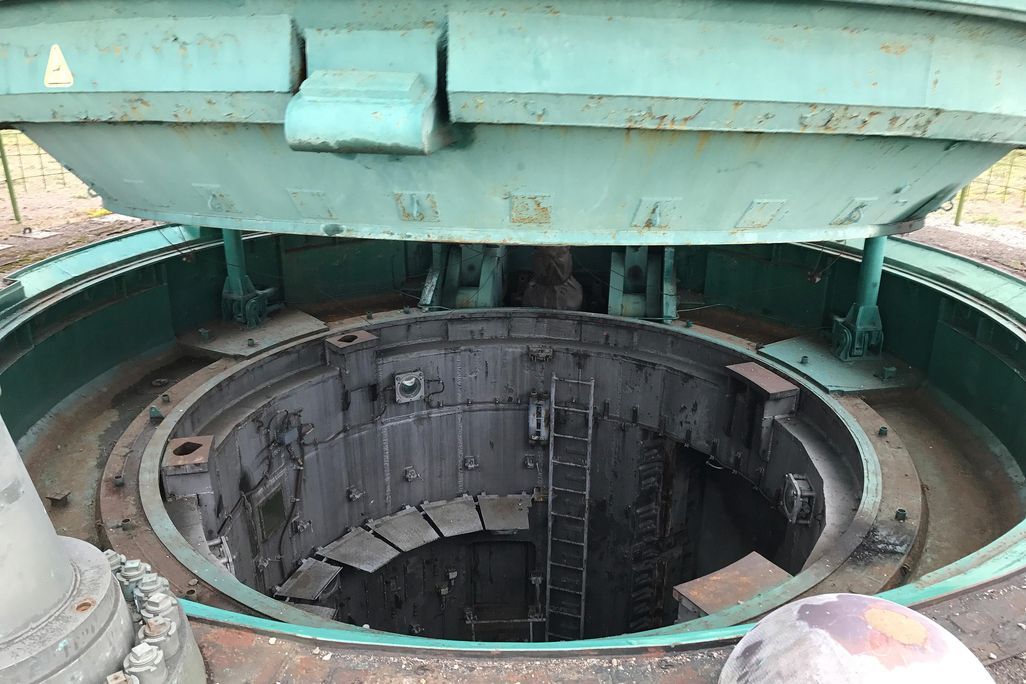
One decommissioned SS-18 silo near Pervomaisk in Ukraine has been turned into a museum and gives the most visceral sense of the program’s scale. The launch tubes go down forty meters. The blast doors weigh a hundred tons. The Smithsonian’s tour of the surviving silo reads like a horror story written in concrete and steel.
What hasn’t survived is the original Soviet officer corps. Stanislav Petrov died at home in Fryazino on May 19, 2017. He was 77. He had spent his last decades in a one-room apartment subsisting on a small pension and the occasional check from peace-prize foundations that finally noticed him. The man who saved everyone watched television alone.
Why This Story Still Haunts the Gen X Brain
There is a reason the dead hand system keeps surfacing in Reddit threads, podcasts, and YouTube documentaries every few months. It is a Cold War artifact that did not become history. It became infrastructure. The system that scared us into hiding under desks in 1984 is still there, still kept current, and occasionally bragged about by Russian generals in moments of geopolitical tension.
Gen X grew up with a specific gift and a specific curse. The gift was a sharp sense of pop culture as a real argument with the world. WarGames, The Day After, Red Dawn — these were not just movies. They were how a whole age cohort processed the actual chance that someone might miscalculate. If you want to see how those movies still echo, look at why 80s nostalgia hits so hard for Gen X — there are surface reasons, but the underlying one is that you grew up rehearsing the end of the world and the world refused to oblige.

The curse is the residue. People who lived through the late Reagan years notice things younger viewers miss. The faint klaxon under every modern news cycle about nuclear posture. The way “tactical nuclear weapon” sounds reassuring only to people who have never heard the phrase pronounced by a person with a clipboard. The cold edge in a Putin speech that the kids on TikTok read past.

The Switch Is Still On
It is reasonably safe to assume Perimeter, in some form, will outlive every reader of this article. The political will to dismantle a deterrent system that never fired and never failed simply does not exist on either side of any conceivable Russian government. The hardware sits in concrete that will not erode in any useful timeframe, and the engineers who built it are mostly proud of what they did.
The takeaway is not panic. The takeaway is a kind of dark fluency. You grew up understanding something about the actual geometry of the late twentieth century that most younger writers have to look up. That fluency is worth something. It is also worth a moment of acknowledgment to the man who decided not to call Moscow on September 26, 1983, and the engineers who never had to flip the switch they built.
The dead hand is still warm. Some Saturday night while the neighborhood is asleep, that fact will land on you again. Pour something. Watch WarGames. Try to enjoy the small dark joke that the only winning move was, against everyone’s predictions, not to play.
Sources
- Dead Hand (nuclear war) — overview of the Perimeter system
- Nicholas Thompson, “Inside the Apocalyptic Soviet Doomsday Machine,” WIRED, 2009
- History.com — The Man Who Helped Avert Nuclear Armageddon
- 1983 Soviet nuclear false alarm incident
- Smithsonian — Inside a Soviet ICBM Silo
- Russia Beyond — 5 questions about the Dead Hand system
- Bulletin of the Atomic Scientists — 35 years after The Day After
Browse retro and vintage-inspired apparel at the RetroRadical shop →
The Retro Almanac
A monthly roundup of "on this day" highlights from that month, decades back — plus first dibs on new retro merch drops. No spam, just the good stuff.