Simon Game: 9 Wild Facts About the 80s Toy
Simon didn’t ask you to play. It ordered you to. You’d sit cross-legged on shag carpet, thumb hovering, while a plastic UFO flashed green-red-red-blue and dared you to fumble. The Simon game turned “pay attention or lose” into a bedroom sport, and for a stretch of the late 1970s and early ’80s, nearly every North American kid had one buzzing at them. Here are nine wild facts about the toy that treated a five-year-old like a memory athlete.
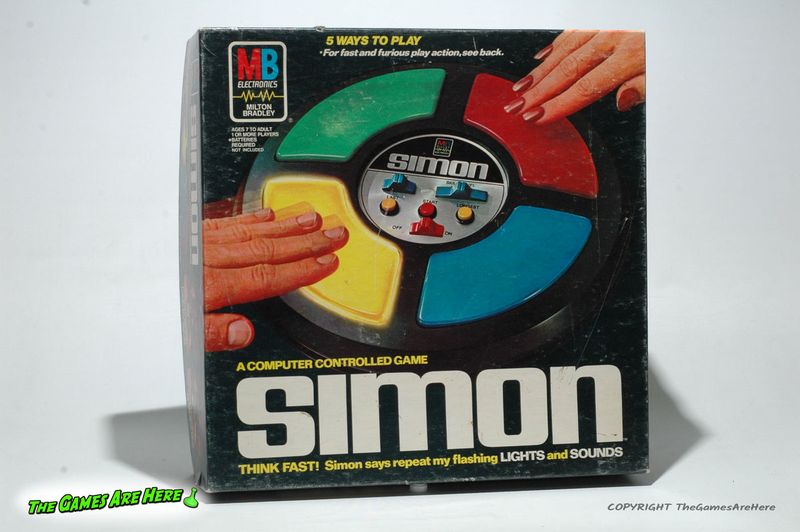
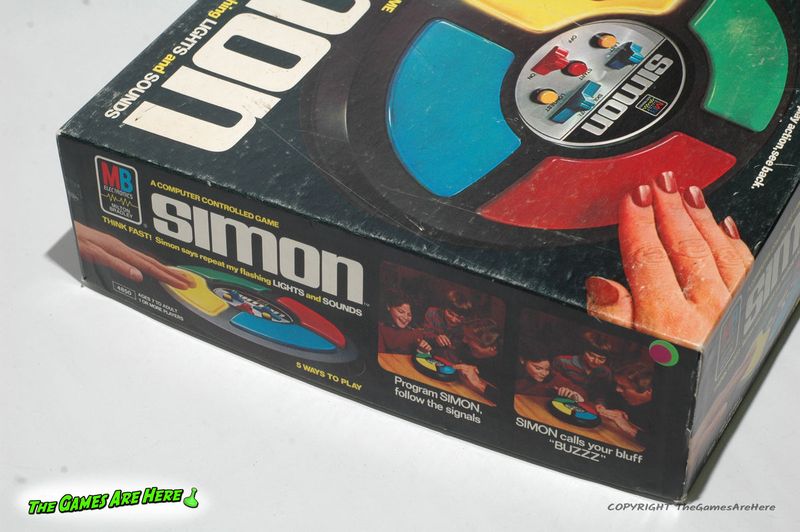
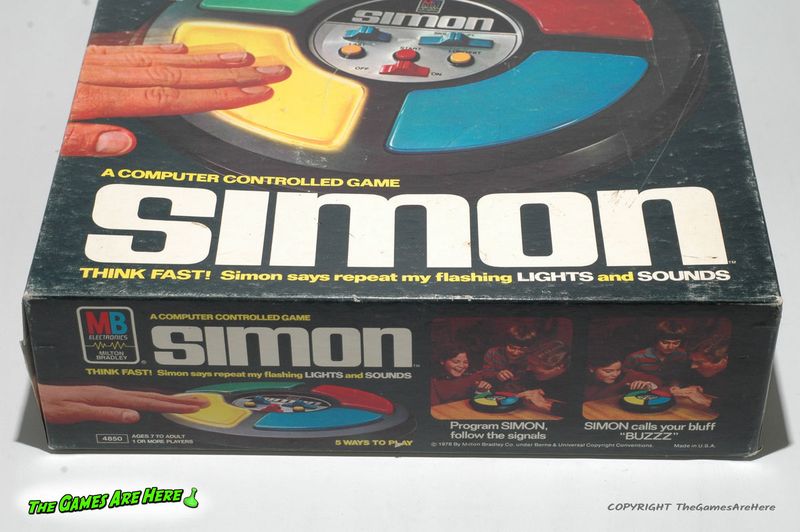
The original 1978 packaging leaned hard on the taunt: “Simon says repeat my flashing lights and sounds.”
The Retro Almanac
A monthly roundup of "on this day" highlights from that month, decades back — plus first dibs on new retro merch drops. No spam, just the good stuff.
It Threw Its Launch Party Inside Studio 54
Most toys debut at a trade show in a fluorescent convention hall. Simon debuted at the most notorious nightclub on Earth. In 1978, Milton Bradley rented Studio 54 in New York — the same disco where Bianca Jagger rode a white horse across the dance floor — and set the glowing disc up as the centerpiece. Picking a club soaked in strobe lights and pulsing sound to launch a toy built from strobe lights and pulsing sound was a clever bit of theater, and it worked. Simon became one of the top sellers of that Christmas season and never really left the shelves.
The price tag stung, though. Simon retailed for $24.95 in 1978 — roughly $120 in today’s money. That’s a serious chunk of a kid’s Christmas list for a battery-powered frisbee, which tells you how badly people wanted one.
How the Simon Game Actually Works
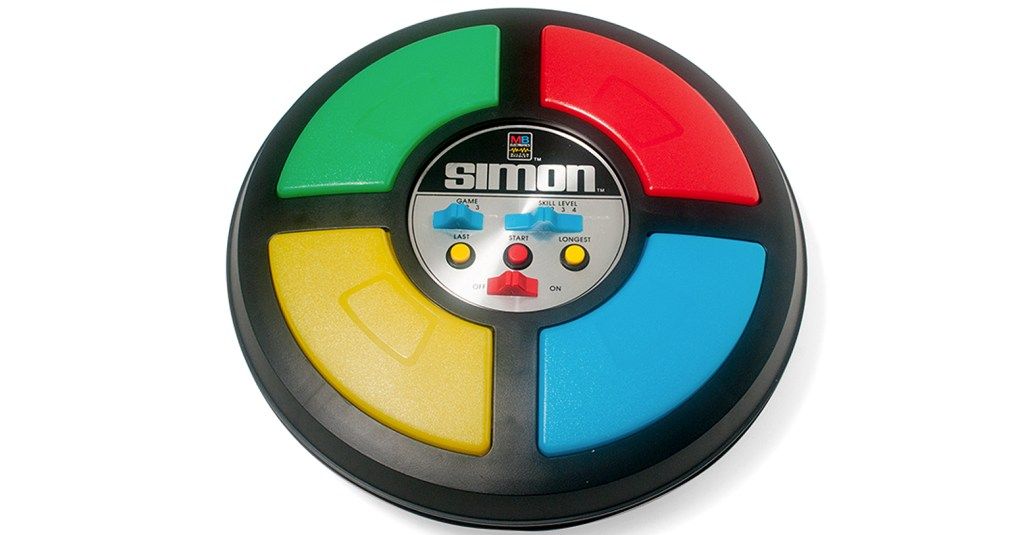
The whole thing runs on one cruel idea: watch, then copy. Simon lights one of its four wedges and plays a matching tone. You press it back. Then it repeats that flash and adds a new one. Then three. Then four. The sequence grows until your memory cracks, and the moment it does, Simon lets out a flat electronic razz to announce your failure to the room.
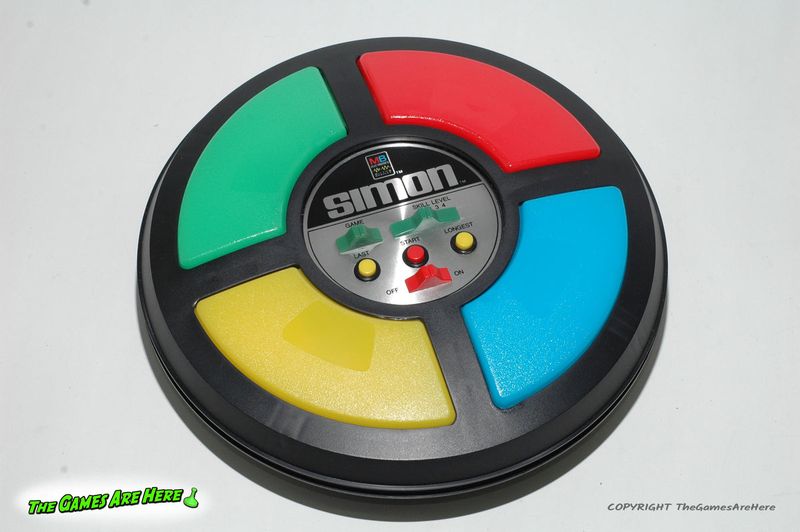
The center console gave you options that most kids ignored: a skill-level switch (1 through 4) and a game selector that changed the rules — one mode even let you add your own notes to the chain and pass it around a circle of friends, like a musical version of the telephone game. Most of us just cranked it to level one and tried to beat our own best streak. A perfect run in the hardest setting meant repeating a 31-step sequence without a single slip.
There’s a reason it hooked people so hard, and it’s not luck. Simon is a live demonstration of how human memory actually works. Your brain can only juggle a handful of loose items at once — the classic estimate is about seven — so the only way to survive past step ten is to stop hearing individual beeps and start hearing patterns. Green-red-red becomes a single “word.” Simon quietly forced kids to chunk information, the same trick memory champions use to rattle off strings of numbers. It felt like a toy. It was a workout.
The Four Beeps Are Secretly a Guitar Chord
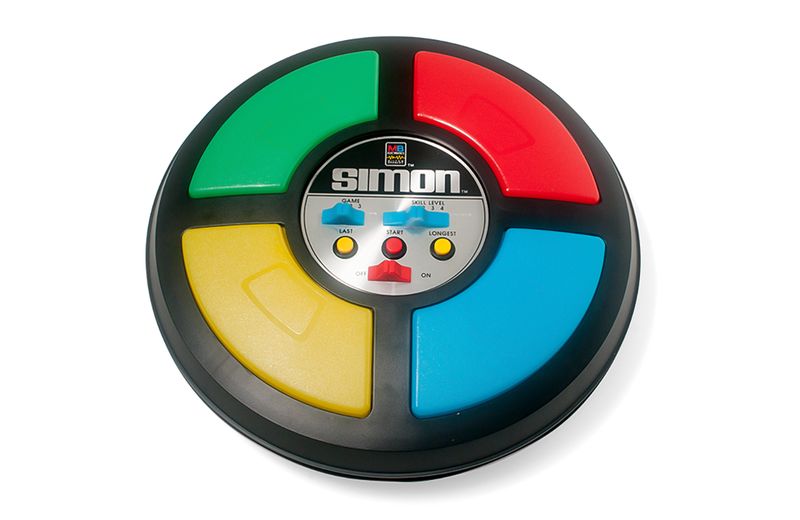
This is the detail that turns Simon from a gimmick into a small piece of design genius. The four buttons don’t play random blips — they play the notes of an A-major chord: A on red, E on green, C-sharp on yellow, and a lower E on blue. Ralph Baer, the engineer behind it, tuned them that way on purpose so that no matter what order Simon fired them off, the result sounded vaguely musical instead of like a smoke alarm. Some early 1978 units used a slightly different chord, but the goal was the same — make the noise pleasant enough that parents wouldn’t hurl the thing out a window.
It Was Basically a Better Atari Rip-Off
Simon didn’t invent the copy-the-pattern concept. Atari did, with a 1974 arcade box called Touch Me — a drab little cabinet with four buttons and a harsh buzz. Ralph Baer, who also fathered the first home video game console, played it at a trade show and hated it. His verdict was blunt: “Terrible execution. Visually boring. Miserable, rasping sounds.” So he stole the idea and fixed everything wrong with it — bigger colored buttons, a satisfying shape, and those tuned musical notes. Simon buried Touch Me so thoroughly that most people have never heard of the original.
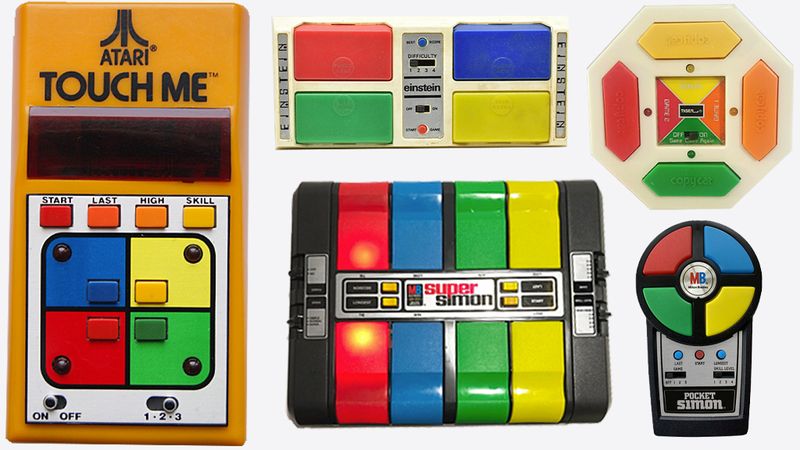
Simon’s rivals and knockoffs — Atari’s Touch Me, the Einstein, Castle’s Copycat, plus Milton Bradley’s own Super Simon and Pocket Simon.
Baer’s résumé makes this even funnier. The man is widely credited as the “father of video games” for creating the Magnavox Odyssey, the first home console. Simon was almost a side quest for him — and it may be the invention more people actually touched. That pedigree is why Simon holds a spot in the Smithsonian’s collection today, sitting alongside the tech that reshaped the American living room, right next to icons like the Nintendo Game Boy in the story of how play went electronic.
9 Wild Facts About the Simon Game
Some of Simon’s best trivia doesn’t need a full section. Here’s the rapid-fire round:
- The name is a nod to “Simon Says.” The whole design riffs on the schoolyard command game where you only obey when Simon gives the order.
- It runs on a 9-volt battery plus two C cells — the same 9V block that powered your smoke detector, tucked into the underside.
- A working sequence can hit 31 steps on the top skill level, which is well past what most adult brains can hold.
- Milton Bradley shipped spin-offs fast: Super Simon (1979) with two-player rows, and Pocket Simon (1980) for the car.
- Hasbro never let it die — Simon Squared, Simon Trickster, Simon Flash, Simon Swipe, Simon Air, and a headset version called Simon Optix all followed.
- It cameoed in film and TV for decades, becoming visual shorthand for “the ’80s” in everything from music videos to nostalgia reboots.
- The disc shape was deliberate — a saucer with no obvious top or bottom so a group could sit around it and share.
- That buzz is unforgettable on purpose; the losing sound was designed to be blunt and a little humiliating.
- It made the “Top 100 Games” list in Games magazine in 1980, rare company for a single-button toy.
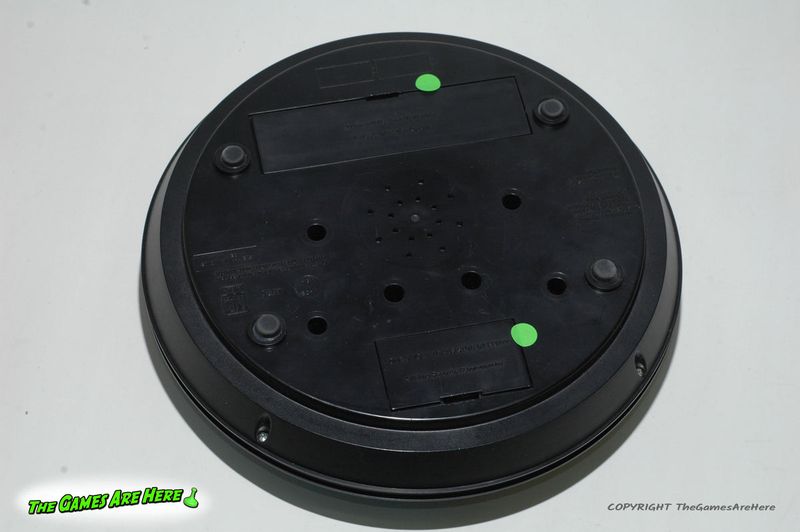
Flip Simon over and you’ll find the speaker grille and the battery bay that ate 9-volts for breakfast.
How to Play the Simon Game Today
The rules never got complicated, which is the point. Slide the power switch to on, pick a game number and a skill level, and hit start. Simon flashes and beeps its first move; you press the matching color. It repeats and extends. You keep mirroring the chain until you flub it, and then it razzes you and displays your streak by flashing the last successful count. That’s it — no menus, no tutorial, no update. A five-year-old in 1979 and a five-year-old today learn it in under a minute.
That simplicity is why Simon aged better than most of its electronic cousins. It shares a bloodline with the other pocket-sized noise machines of the era — the bleeping handhelds, the beeper you decoded with secret pager codes, the block-stacking hypnosis of Tetris. All of them proved that a single, clean mechanic could out-live consoles a hundred times more powerful.
Why Simon Still Won’t Shut Up
Here’s the honest take: Simon shouldn’t have survived. It’s a one-trick toy with a mechanic a phone app could clone in an afternoon. Yet Hasbro still sells new units, thrift-store hunters pay real money for clean 1978 originals, and the flashing-disc silhouette instantly reads as “retro” to people who weren’t even born when it launched. The reason is that Simon nailed something most modern games chase and miss — it’s genuinely hard, it’s fair, and it never once explains itself. You lose because you weren’t good enough, full stop.
If you want a hit of the era’s other electronic obsessions, dig into how the boombox turned volume into a personality. But the Simon game earns its own shelf. Four colors, one taunt, zero mercy — and forty-plus years later it’s still winning.
Frequently Asked Questions
When did the Simon game come out?
Milton Bradley released Simon in 1978, unveiling it at a party inside New York’s Studio 54 nightclub. It sold for $24.95 and became a top toy that holiday season.
Who invented the Simon game?
Ralph Baer and Howard Morrison designed it while working with Marvin Glass and Associates. Baer, often called the father of video games, based it on Atari’s earlier arcade game Touch Me and improved nearly everything about it.
What are the four colors on Simon?
Green, red, blue, and yellow. Each plays a distinct musical note — the buttons are tuned to an A-major chord so the sequences always sound roughly harmonious.
Is the Simon game still made?
Yes. Hasbro, which owns the Milton Bradley line, still produces Simon and has released many variants over the years, including Simon Swipe, Simon Air, and Simon Optix. Original 1978 units are also popular with collectors.
Sources
- Simon (game) — Wikipedia — Inventors, launch details, musical notes, and version history.
- 40 Years of Simon — Fast Company — Ralph Baer’s take on Atari’s Touch Me and the toy’s reinvention.
- Simon Electronic Game, 1978 — Smithsonian National Museum of American History — Museum record of the original unit.
Browse retro and vintage-inspired apparel at the RetroRadical shop →
The Retro Almanac
A monthly roundup of "on this day" highlights from that month, decades back — plus first dibs on new retro merch drops. No spam, just the good stuff.